




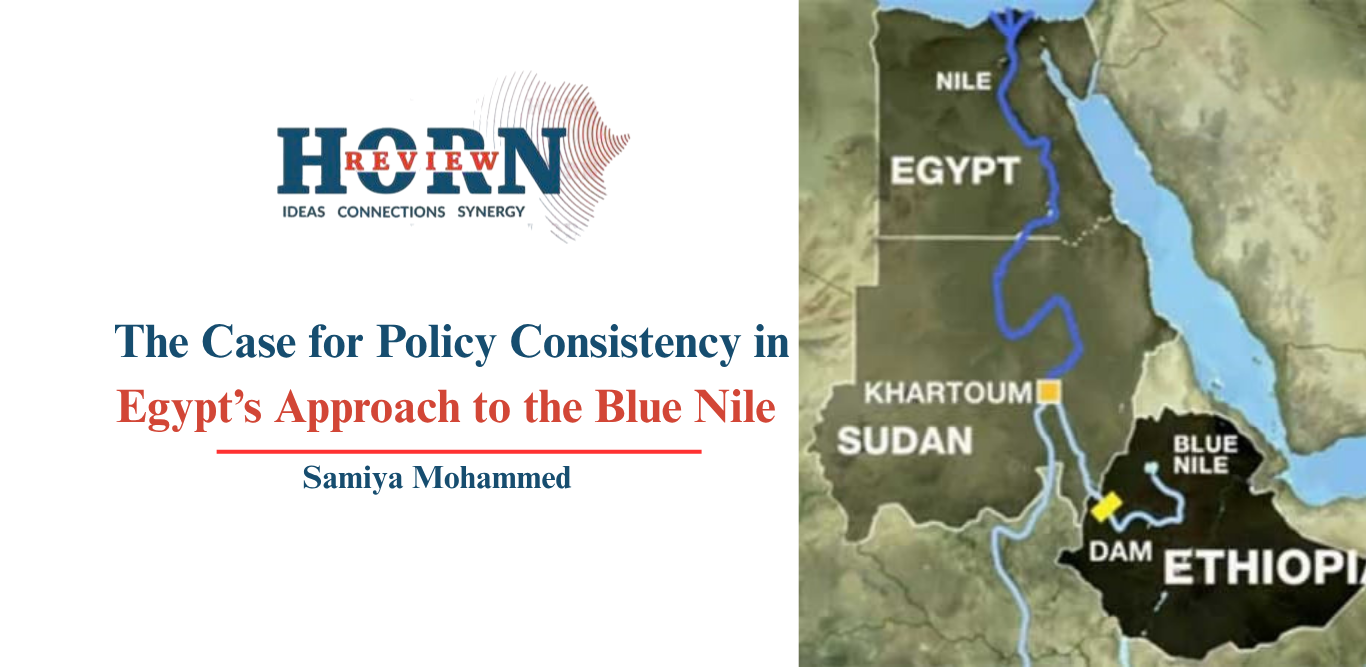
What the Juba‑Shabelle Experience Means for the Future of the Blue Nile
Focus keyword: Blue Nile water governance
Introduction: A Parallel Between Two African River Basins
The Juba and Shabelle rivers in the Horn of Africa illustrate a common challenge in trans‑boundary water management: how to balance the developmental ambitions of upstream states with the water‑security concerns of downstream users. Like the Blue Nile, most of the flow in these basins originates in Ethiopia before crossing international borders to sustain millions of people downstream in Somalia. Historically, such asymmetrical arrangements have sparked political friction and competing legal claims. Yet recent interactions between Ethiopia and Somalia show that cooperation rooted in mutual interest can offer a far more constructive path—one that carries important lessons for the ongoing debate over the Blue Nile and Egypt’s water‑rights strategy.
H2 – Why the Juba‑Shabelle Basin Lacks a Formal Treaty
Despite their importance, the Juba and Shabelle basins remain notable for the absence of a comprehensive bilateral water‑sharing agreement. No treaty presently defines:
- Fixed allocation percentages
- Notification procedures for new projects
- Dispute‑settlement mechanisms
- Joint management institutions
Instead, the two countries have relied on general principles of international water law and ad‑hoc political dialogue. Given Somalia’s downstream dependence and Ethiopia’s upstream dominance, many observers expected chronic disputes. The reality, however, has been more nuanced.
“The void of a formal treaty does not automatically translate into conflict; rather, it creates space for flexible, case‑by‑case cooperation.” – International Water Law Review, 2022
H2 – From Tension to Cooperation: How Ethiopia and Somalia Are Engaging
H3 – Historical Obstacles
Decades of state fragility, regional instability, and competing national priorities made formal arrangements seem unattainable. Ethiopia’s strategic push for water‑linked maritime access through Somalia added another layer of complexity. (Maastricht Diplomacy, 2021)
H3 – A Shift Toward Political Understanding
Recent diplomatic exchanges reveal a growing recognition that shared challenges demand joint solutions. Both governments have:
- Established regular high‑level contacts on water issues
- Adopted confidence‑building measures such as joint fact‑finding missions
- Preferred negotiation over confrontation for emerging disputes
Although these steps fall short of a basin‑specific treaty, they represent a significant shift in mindset: Somalia is willing to view Ethiopia as a partner rather than an adversary, even while acknowledging the stark geographic asymmetry.
H2 – Why Downstream States Do Not Always Oppose Upstream Development
Traditional trans‑boundary water politics often assume that downstream countries will automatically resist upstream projects to protect their own water supplies. Somalia’s conduct challenges that notion:
- Predictability over veto power: Somalia seeks reliable water flows but does not demand an indefinite veto over Ethiopian dams or irrigation schemes.
- Alignment with modern international law: Contemporary practice emphasizes equitable and reasonable utilization, the obligation not to cause significant harm, prior notification, and information exchange rather than absolute territorial sovereignty. (MDPI Water, 2023)
These principles acknowledge that no state has exclusive entitlement to an international watercourse. Upstream nations may develop resources within their territory, provided they consider downstream interests through cooperative mechanisms.
H2 – Lessons for the Blue Nile: Comparing the Two Basins
H3 – Similar Hydrological Realities
- Source: The majority of the Blue Nile’s water also originates in the Ethiopian highlands before flowing into Sudan and Egypt.
- Downstream dependence: Egypt’s agriculture, industry, and domestic water supply heavily rely on Nile flows, mirroring Somalia’s reliance on the Juba and Shabelle.
H3 – Divergent Approaches
| Aspect | Juba‑Shabelle (Somalia) | Blue Nile (Egypt) |
|---|---|---|
| Legal framing | Emphasis on modern equitable use principles | Heavy reliance on historic “acquired rights” and colonial‑era agreements |
| Political stance | Consultation, accommodation, and flexible negotiation | Frequent legal‑maximalist positions, emphasizing historic entitlements |
| Cooperation level | Growing political dialogue, informal joint studies | Limited institutional cooperation; disputes often framed in legal terms |
The Egyptian focus on historical claims risks drifting away from the evolving norms of international water law, which now prioritize balance, sustainability, and shared benefits.
H2 – How Egypt Could Benefit from Somalia’s Model
- Adopt a consultation‑first approach – Regular technical exchanges and joint monitoring could replace adversarial legal battles.
- Create joint institutions – Even without a full treaty, a trans‑boundary water commission would institutionalize data sharing and early‑warning systems.
- Embrace equitable utilization – Recognize Ethiopia’s legitimate development needs while negotiating safeguards for downstream users.
- Move beyond legal maximalism – Shift the narrative from “rights versus rights” to “shared stewardship of a common resource.”
“The future of the Blue Nile depends on whether all basin states can move from historic entitlement to practical cooperation.” – Atlantic Council, 2022
H2 – Toward a Sustainable Water Governance Framework
While the absence of a formal Juba‑Shabelle treaty remains a shortfall, the political willingness demonstrated by Ethiopia and Somalia provides a foundation for:
- Structured information exchange – Real‑time flow data, dam operation schedules, and climate forecasts.
- Technical consultation – Joint impact assessments for new projects.
- Dispute‑avoidance mechanisms – Early‑stage mediation panels staffed by experts from both sides.
If such mechanisms can be institutionalized in the Horn of Africa, they could serve as a template for the Nile Basin. A similar framework—tailored to the larger scale of the Blue Nile—could reduce reliance on contentious legal battles and foster predictable, mutually beneficial water management.
Conclusion: The Choice Ahead for the Blue Nile
Somalia’s pragmatic engagement with Ethiopia demonstrates that downstream security and upstream development are not mutually exclusive. The key lies in embracing equitable, reasonable utilization, cooperative institutions, and flexible political dialogue.
For Egypt, the strategic question is clear:
Will it continue to anchor its water policy in historic claims that increasingly clash with modern international law, or will it follow Somalia’s example and work toward a collaborative, future‑oriented governance model?
The answer will determine whether the Blue Nile becomes a source of persistent conflict or a catalyst for regional integration and sustainable development.
Keywords used: Blue Nile water governance, Juba and Shabelle basins, transboundary water cooperation, equitable utilization, Ethiopia‑Somalia water relations, Nile Basin dispute, international water law.
