




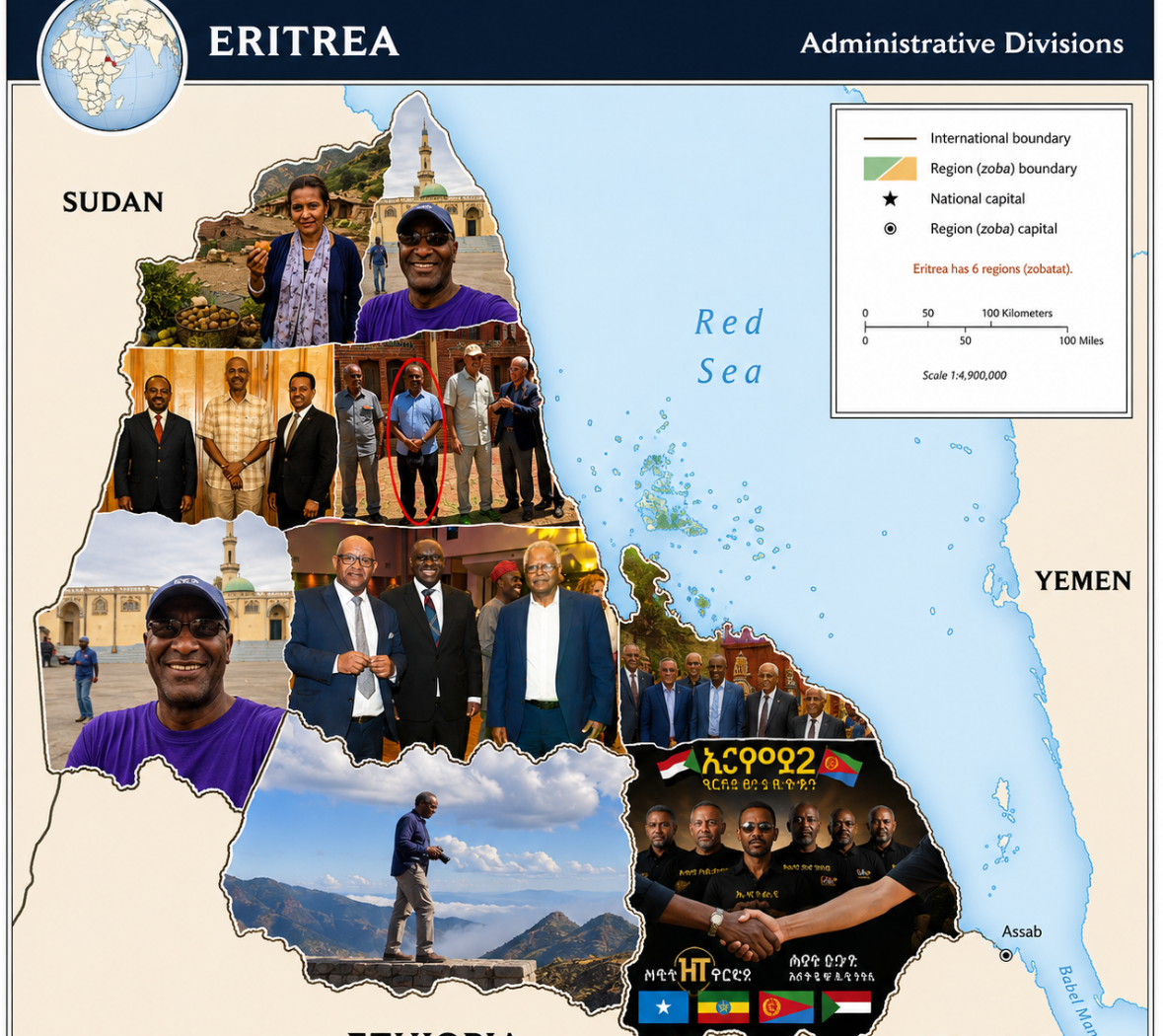
A 20 page dossier with unique image exhibits, fundraising table, and policy recommendations. Prepared as a structured political and media analysis. The allegations and interpretations discussed here are presented as critics’ claims and should be independently verified where they involve sensitive legal or factual questions.
A recognizable political and media pattern has emerged around Eritrea, Ethiopia, diaspora activism, and the monetization of suffering. It can be summed up as the ‘Eritrea Effect’. The phrase captures a perceived contradiction: certain commentators, former opposition figures, conflict photographers, and diaspora media personalities travel to Eritrea, interact with Eritrean political spaces, publicly praise Eritrean order or hospitality, and then become laser focused on Ethiopia’s sins while remaining comparatively quiet about Eritrean repression.
The argument is not that Ethiopia should be shielded from criticism. Ethiopia has endured real violence, displacement, insurgencies, government failures, ethnic tensions, and humanitarian disasters. The argument is that the moral lens appears selective. Ethiopia becomes the permanent courtroom. Eritrea becomes the protected silence. Ethiopia is described as collapse, genocide, dictatorship, ethnic evil, religious extremism, institutional failure, or national disaster. Eritrea is often described through sovereignty, order, resilience, discipline, anti imperialism, or nostalgia.
This dossier develops every point raised in the discussion: Eritrea travel, individual evidence, media narratives, Oromo government claims, attacks on Ethiopia’s national symbols, election delegitimization, insurgency sympathy, genocide rhetoric, fundraising totals, arms procurement discourse, Ximdo and Port Sudan concerns, Sudan and Eritrea alignment concerns, the hunter and prey analysis, the Eyerusalem and Nahusenay controversy, and the recommendation that U.S. Treasury, OFAC, law enforcement, and congressional oversight bodies examine whether humanitarian fundraising overlapped with insurgent financing.
Eritrea as the Bermuda Triangle of Political Memory
Critics invoke the “Bermuda Triangle” metaphor because they believe Eritrea has a peculiar ability to erase moral memory. Visitors enter a country widely criticized for the absence of elections, indefinite national service, arbitrary detention, imprisoned journalists, political repression, and a pervasive climate of fear. Yet, many of the same individuals leave with little sustained advocacy for Eritrean prisoners, conscripts, mothers, refugees, journalists, or political dissidents.
This silence is particularly striking because Eritrea is hardly an unknown case. Reports from Freedom House, Human Rights Watch, and various United Nations bodies have repeatedly documented patterns of repression, detention, enforced disappearances, and restrictions on basic civil liberties. The disparity raises an obvious question: why does the humanitarian concern so often directed toward Ethiopia rarely extend to Eritrea? Why are Amhara victims, Ethiopian political disputes, Oromo politics, state institutions, and national symbols subjected to constant scrutiny, while Eritrean suffering fades into the background?
From this perspective, Eritrea is not merely overlooked—it is shielded by a particular narrative framework. The country is portrayed as a symbol of order, security, discipline, sovereignty, and misunderstood resistance. Ethiopia, by contrast, is frequently depicted as a place of genocide, instability, hatred, crisis, and political illegitimacy. Critics argue that this is not an expression of balanced humanitarian concern, but rather a form of selective empathy.
The Cast of Recurring Personalities
A recurring set of personalities frequently appears within this broader media and political ecosystem, including Senait Senay, Neamin Zeleke, Mesay Mekonen, Ephrem Madebo, Jemal Countess, Andargachew Tsige, and various diaspora media and political actors. The argument is not that these individuals occupy identical positions or play the same role. Some are commentators, others are former opposition figures, media personalities, photographers, or activists connected to earlier political movements. Rather, the observation is that similar narratives, assumptions, and patterns of engagement often emerge across these different roles.
The pattern is rooted in history as much as it is reflected in contemporary rhetoric. From 2013 to 2018 Eritrea served as a base, support environment, or political space for Ethiopian opposition activity directed against the pre-2018 Ethiopian government. Notable armed opposition group in Eritrea included the Ginbot 7, OLF, ONLF and TPDF. According to this interpretation, that experience helped shape a political culture in which Eritrea became normalized as an ally, while Ethiopia increasingly came to be viewed as the primary adversary.
From this perspective, later media narratives, fundraising campaigns, and expressions of sympathy for armed movements cannot be fully separated from that historical context. The current outrage-driven media environment did not emerge in isolation. It grew out of networks, loyalties, ideological habits, regional alignments, and emotional investments cultivated over many years. Asmara had spend decades cultivating these insurgency networks designed to destabilize and weaken Ethiopia. The government is Isais Afewerki has dedicated a significant chuck of his national resources and time on this matter. French academic, Dr. Gérard Prunier described the regime of Isias Afewerki “as biggest exporter of subversive activities” profiting as a conduit of instability for the highest bidder”. The highest bidder in the case of Ethiopia is Egypt.

Senait Senay and Selective Humanitarian Framing
Senait Senay is often cited as an example because she publicly acknowledged traveling to both Eritrea and Ethiopia during the 2018 rapprochement period. The significance, according to this line of analysis, is that firsthand exposure to Eritrea did not result in sustained public advocacy regarding political repression, indefinite national service, or other human rights concerns inside the country. Instead, Ethiopia remained the dominant focus of subsequent criticism and political commentary.
Viewed through this lens, the Senait example reflects a broader pattern: engagement with Eritrea, recognition of its strategic importance or cultural appeal, followed by a continued emphasis on Ethiopia’s political failures and crises. Supporters of this interpretation argue that the issue extends beyond individual opinion. They see it as part of a wider ecosystem shaped by curated outrage, selective empathy, ideological storytelling, perpetual crisis narratives, and the incentives of attention-driven media.
The central argument is that many figures within this space present themselves as humanitarian advocates, truth-tellers, conflict interpreters, and problem-solvers. Yet the suffering they choose to highlight often appears unevenly distributed. Eritrean victims and grievances rarely occupy center stage, while Ethiopian suffering becomes a constant subject of discussion, analysis, and content production.
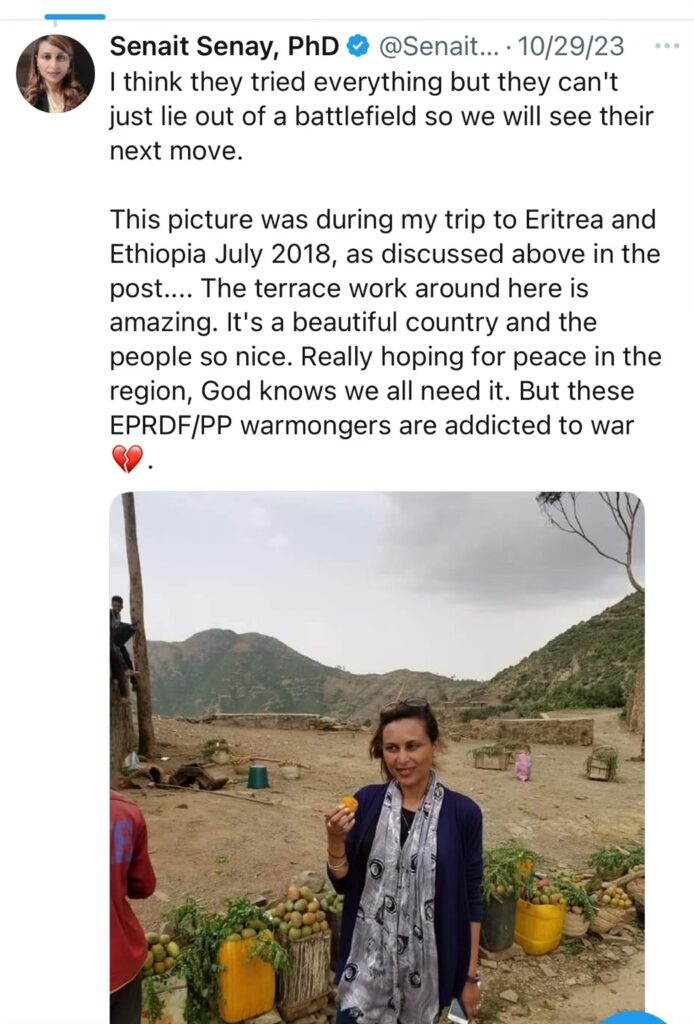
Exhibit 1: Senait Senay publicly acknowledging travel to Eritrea and Ethiopia in 2018.
Neamin Zeleke and Eritrean Opposition Infrastructure
Neamin Zeleke occupies a prominent place in this discussion because his relationship with Eritrea was not merely symbolic. Reports and interviews describe extended periods spent in Eritrea during the Ginbot 7 era, including coordination and logistical activities connected to Ethiopian opposition movements. He has also reportedly expressed appreciation for Eritrea’s support of Ethiopian opposition groups during that period.
Publicly circulated photographs further place Neamin alongside senior Eritrean political figures, including Isaias Afwerki. The significance of these images lies not simply in their symbolism, but in what they represent politically: proximity to Eritrean state power at a time when Eritrea served as a base, host, or support environment for opposition structures challenging the Ethiopian government.
Viewed in this context, Neamin’s later commentary on Ethiopian politics cannot be entirely separated from this historical background. Eritrea is often approached through a lens of strategic understanding, while Ethiopia is frequently portrayed as a site of betrayal, illegitimacy, crisis, and institutional failure. The resulting asymmetry raises important questions about whether these narratives are driven primarily by universal humanitarian principles or by political loyalties, historical alliances, and perspectives shaped during the opposition era.
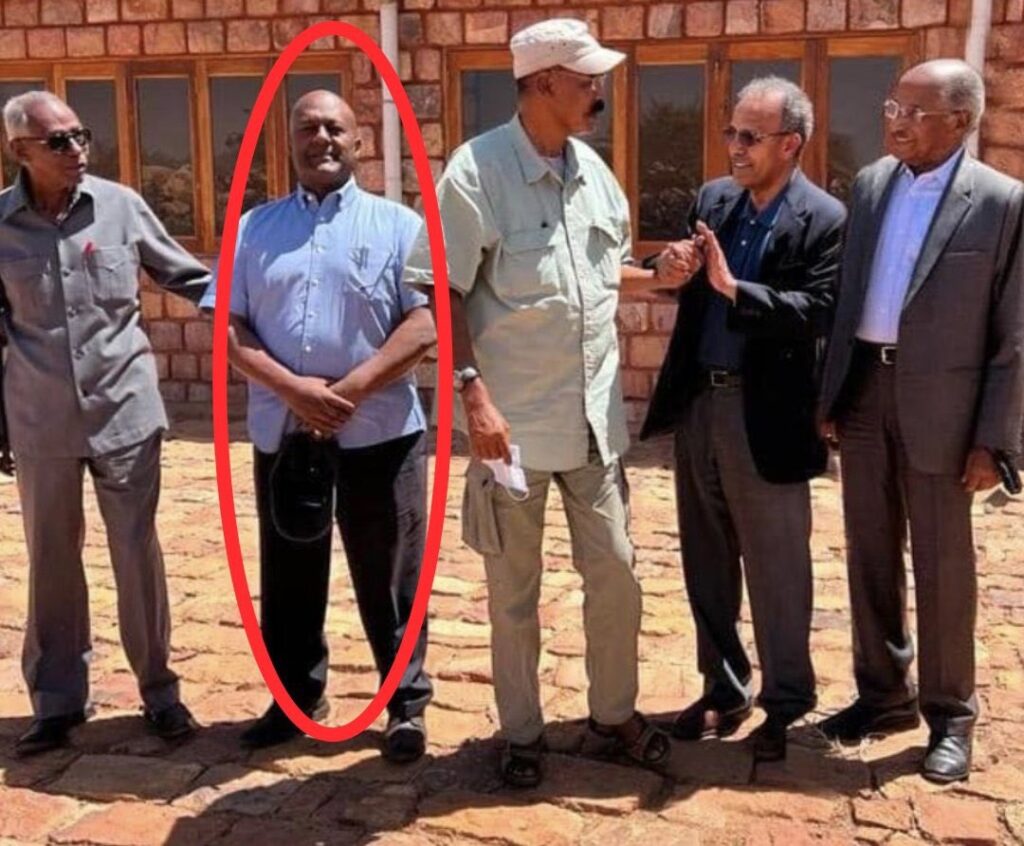
Exhibit 2: Neamin Zeleke pictured alongside Eritrean political figures including Isaias Afwerki.
Page 6: Mesay Mekonen and Media Narratives of Collapse
Mesay Mekonen is included because he has been associated with the broader opposition-era media ecosystem that at times showed visible proximity to Eritrean political spaces. A publicly circulated image places him alongside Eritrean leadership, and this is often interpreted as part of a wider pattern of political normalization.
The concern is not limited to the photograph itself, but extends to the later media environment. Some observers argue that certain media spaces frequently portray Ethiopia through narratives of collapse, betrayal, state failure, ethnic catastrophe, and illegitimacy, creating an impression of a country in a near-permanent state of breakdown. In contrast, Eritrea’s internal repression is seen as receiving comparatively less sustained emotional emphasis.
From this perspective, media personalities do not simply report on conflict; they also shape how audiences emotionally interpret it. When Ethiopia is consistently framed through catastrophe while Eritrea is presented more neutrally or with relative silence, it can influence the audience’s broader moral framing of the region’s political realities.
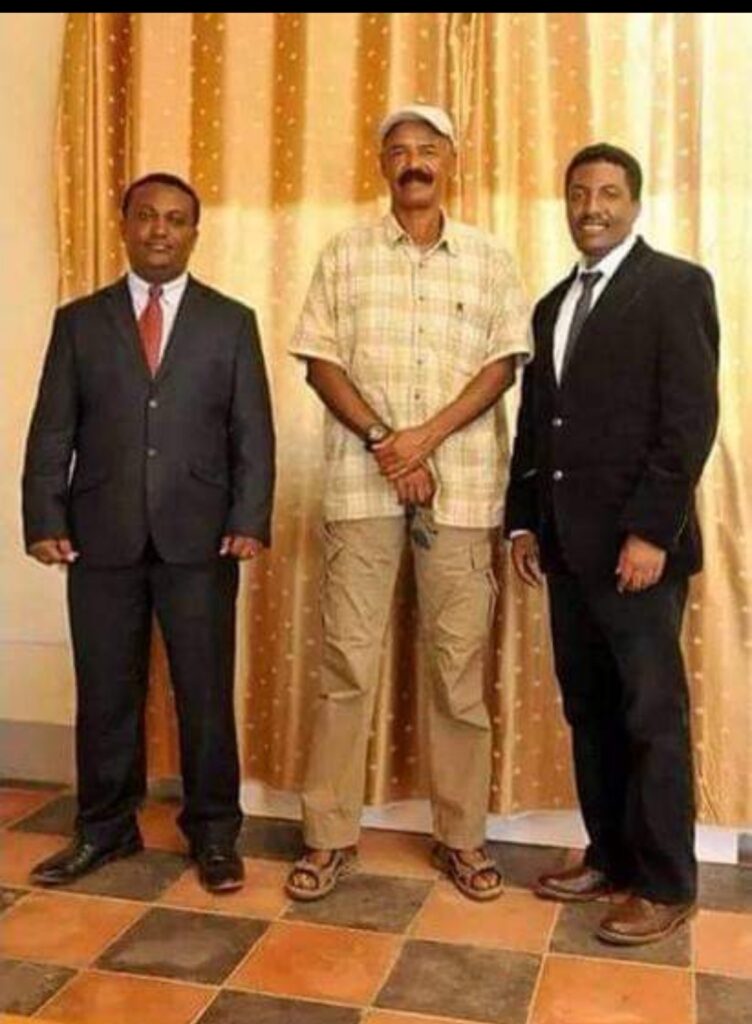
Exhibit 3: Mesay Mekonen pictured with Eritrean political leadership during the opposition exile period.
Ephrem Madebo and the Soft Humanization of Eritrea
Ephrem Madebo is included because his public posts from Keren, Eritrea in 2024 are seen by some observers as part of a broader pattern of emotional asymmetry. In this reading, Eritrea is often portrayed in warm, aesthetic, and personal terms, while Ethiopia is frequently discussed through narratives of anger, crisis, and systemic failure.
Some also connect Ephrem to the wider political history of Ginbot 7 and Arbegnoch Ginbot 7, during which Eritrea was reported as a base or supportive environment for Ethiopian opposition activity. From this perspective, that historical proximity is seen as significant because it may help explain why Eritrea is sometimes presented as a familiar or sympathetic space, while Ethiopia is framed more consistently as an object of critique or accusation.
The argument is not that expressing appreciation for a city is inherently problematic. Rather, it highlights perceived contrast: why Eritrean suffering does not appear to generate the same level of emotional urgency as Ethiopian suffering among those who publicly position themselves as advocates for victims.
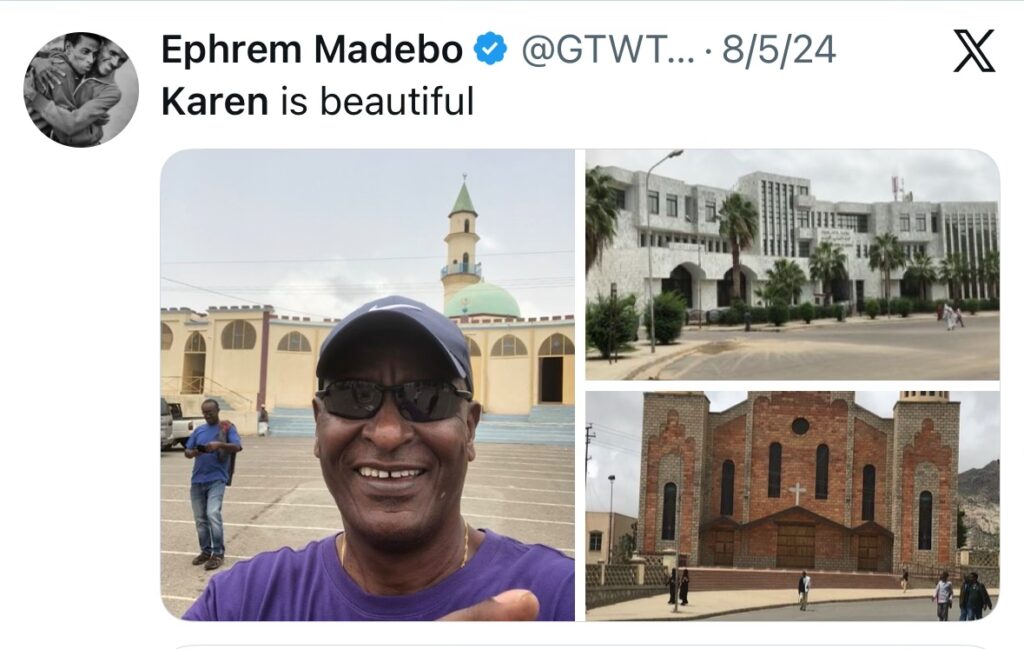
Exhibit 4: Ephrem Madebo publicly posting from Keren, Eritrea, in 2024.
Jemal Countess and the Visual Marketplace of War
Jemal Countess has become a focal point of criticism because Eritrean state-linked media positively profiled his visit and emphasized favorable impressions regarding safety, mobility, and perceived changes in security conditions in Eritrea. This framing is often contrasted with his later Ethiopia-focused work, which highlights Amhara suffering, war photography, exile testimonies, and broader conflict narratives.
Some observers argue that his Ethiopia-related work reflects a wider “visual economy of suffering,” in which images of Ethiopian conflict circulate through books, exhibitions, podcasts, speaking engagements, interviews, and social media platforms. From this perspective, Ethiopian suffering can become embedded in professional visibility, humanitarian branding, and cultural or institutional recognition.
The concern is not that conflict photography is inherently illegitimate—ethical documentation of war and human rights abuses is widely regarded as important. Rather, the critique centers on questions of transparency: how, if at all, revenues from books, exhibitions, and related projects are materially connected to the communities depicted. In this interpretation, Eritrea is often presented through humanized and stabilizing imagery, while Ethiopia is more frequently mediated through narratives of catastrophe and crisis.
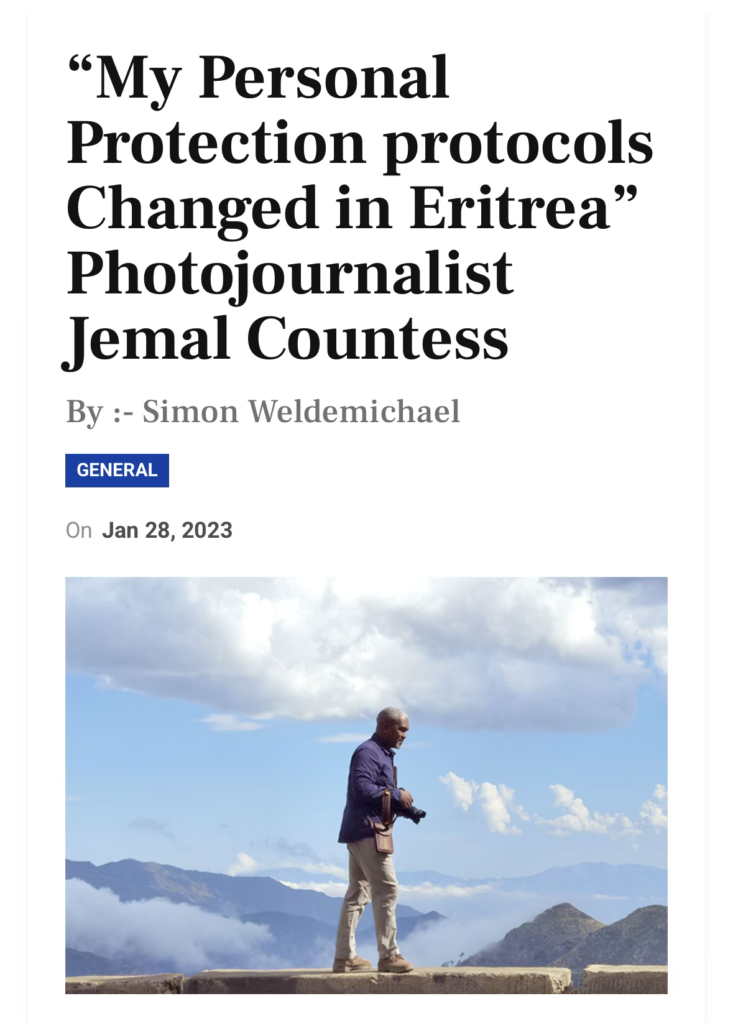
Exhibit 5: Eritrean state linked coverage highlighting Jemal Countess’s favorable reflections following travel in Eritrea.
Jemal, Menelik Symbolism, and Information Recklessness
Concerns have also been raised around narratives connected to Emperor Menelik’s symbolism and misleading claims related to the Menelik statue being demolished in Addis Ababa. In Ethiopia, historical symbols are not merely academic references; they are deeply embedded in questions of identity, sovereignty, Adwa, religious memory, imperial history, ethnic grievance, national pride, and collective trauma.
Certain Ethiopia-focused media voices have amplified highly charged interpretations of Menelik-related symbolism in ways that may have contributed to heightened public tension and emotional escalation on the ground. Claims linking such narratives directly to specific deaths should be treated with caution and require clear, case-specific evidence. However, the broader concern is that in a highly polarized environment, unverified or inflammatory framing of national symbols can intensify real-world divisions.
From this perspective, those who work with powerful imagery, symbols, and narratives carry a heightened responsibility to consider their downstream effects. When historical symbols become instruments within public mobilization, media actors are no longer simply observers of discourse—they also become participants in shaping the symbolic and political terrain in which that discourse unfolds.
Andargachew Tsige, Eritrea Travel, and Ximdo Claims
Andargachew Tsige’s connections to Eritrea are among the most frequently discussed in this context. Accounts point to reported travel to Eritrea around 2009 in connection with opposition activity, an attempted movement toward Asmara in 2014 prior to his arrest in Yemen, and later associations with Eritrea-linked political spaces.
There are also claims that Andargachew discussed being contacted through the Eritrean Embassy in London in relation to travel toward Port Sudan and engagement with Ximdo-related activities. Such assertions should be independently verified through primary recordings or documentary evidence before being treated as established fact. If accurate, however, they would indicate continued points of contact between Eritrean diplomatic channels and Ethiopian opposition or insurgent-aligned networks.
In this framing, Andargachew is significant because he is seen as a bridge between earlier Eritrea-based opposition politics and more recent Ximdo-related allegations. The argument advanced by some observers is that these networks did not simply disappear after 2018; rather, they evolved into new configurations involving diaspora advocacy, media ecosystems, and shifting forms of political coordination.
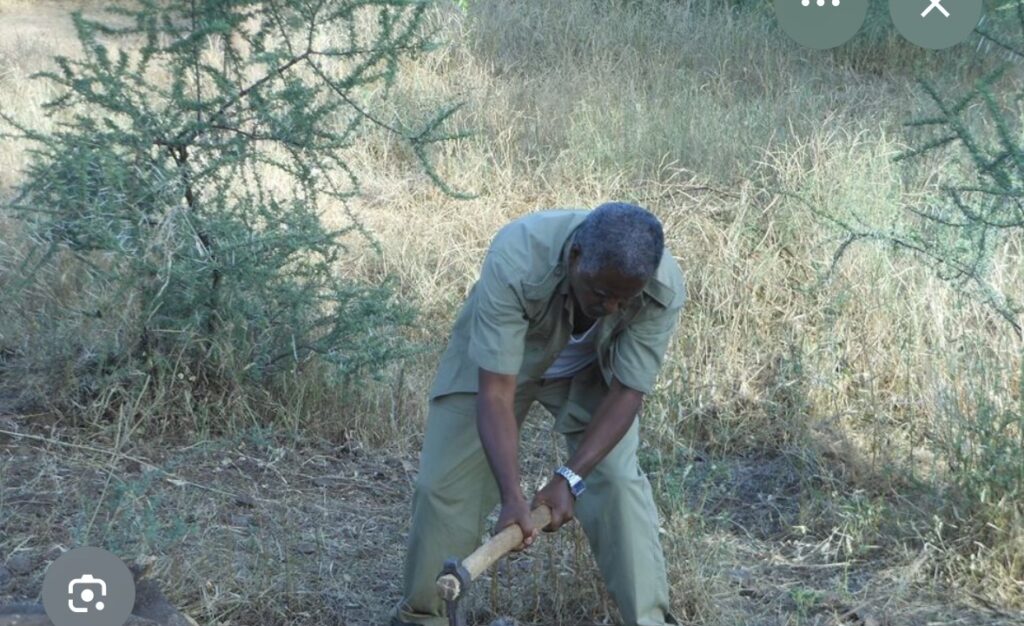
Exhibit 6: Andargachew Tsige pictured digging a trench in Eritrea during the opposition exile period.
Andargachew at Eritrean Embassy Linked Celebration
A publicly circulated image also shows Andargachew Tsige attending an Eritrean independence celebration associated with the Eritrean Embassy in London. This detail is often highlighted because repeated proximity to Eritrean political and diplomatic spaces is seen by some observers as reinforcing perceptions of sustained political alignment.
The concern raised is not that attendance at such events is inherently unlawful or improper, but rather the broader pattern it is interpreted to represent. In this view, Eritrea-linked appearances, combined with Ethiopia-focused political messaging, expressions of insurgency sympathy, and comparatively limited emphasis on Eritrean repression, form a composite picture that some believe warrants closer scrutiny.
The significance of the image lies in what it is understood to demonstrate: that the Eritrea connection was not solely historical or concealed, but also expressed in public ceremonial and diaspora political settings. In these spaces, political identity, historical memory, and symbolic alignment are actively performed and publicly visible.
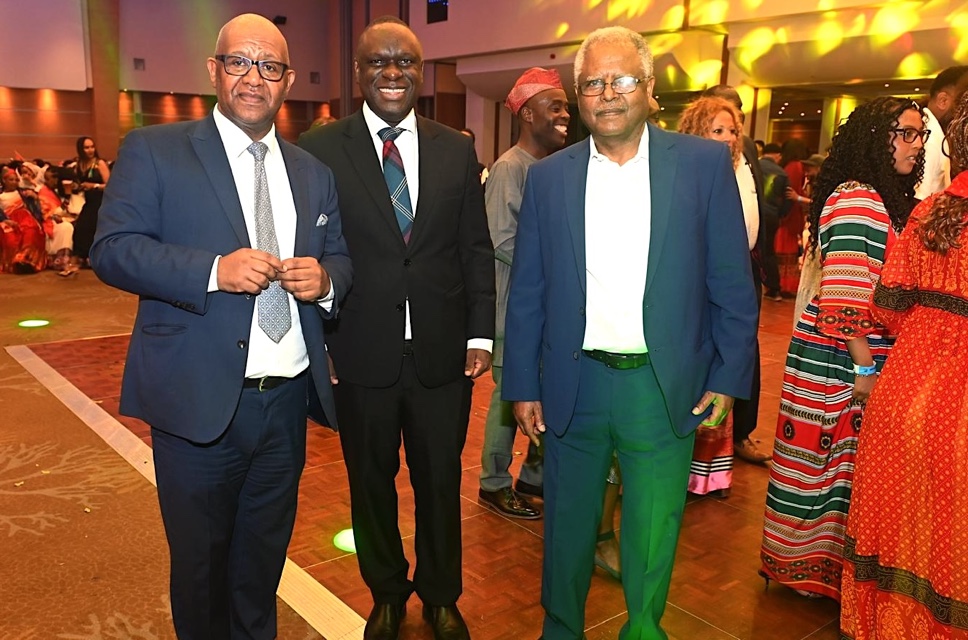
Exhibit 7: Andargachew Tsige is a frequent guest at Eritrean independence Day Day celebration linked to the Eritrean Embassy in London, as well as other Eritrean government platforms
The Oromo Government Narrative and Ethnic Delegitimization
One of the most contested narratives in this debate is the claim that Ethiopia is governed by an “Oromo government” or “Oromuma regime.” Some observers argue that this framing shifts political critique away from institutions and policies and into ethnic delegitimization, with the potential to encourage hostility toward Oromo participation in public life.
They emphasize that Ethiopia’s federal system is multiethnic in structure, and that Prime Minister Abiy Ahmed himself has mixed Oromo and Amhara heritage. They also note that the Ethiopian National Defense Force is a national institution representing the state as a whole, rather than an ethnically defined force. From this perspective, describing the state as being ethnically “owned” or controlled by Oromo actors is seen as an overly reductive interpretation that obscures institutional realities.
The broader concern is that the term “Oromuma” can shift from analysis into mobilization. In that form, it risks framing Oromo political presence as inherently suspect and recasting routine state actions as expressions of coordinated ethnic intent or conspiracy.
The Rotating Enemy Theory
Some observers describe what they see as a “rotating enemy” pattern in Eritrean-aligned rhetoric. In this interpretation, the dominant political “threat” shifts across different eras: during the early post-independence period, Amharas were often framed as the primary obstacle enemy of Eritrea; during the TPLF-dominated era, Tigrayan dominance became the central concern; and under Prime Minister Abiy Ahmed, Oromo political influence has become the newest boogyman, according to Eritrea’s government and the Ethiopia militants it sponsors.
From this perspective, the perceived target appears to shift depending on which group is perceived to be influencing authorities in Addis Ababa at a given time period. The underlying issue, in this reading, is not any single ethnic group, but rather Ethiopia itself as it moves toward greater stability, sovereignty, economic integration, and political consolidation.
The broader argument is that this “rotating enemy” logic can contribute to sustained internal polarization and destabilization. By continuously recasting different Ethiopian power centers as the primary source of instability, it risks reinforcing cycles in which each political era produces a new adversary narrative, keeping internal divisions active and open to external amplification or pressure. This is the manner in which the regime in Asmara seeks weaken Ethiopia from within, fearing a stable and peaceful Ethiopia is dangerous to Eritrea’s very existence. This is a belief also shared by successive Egyptian governments, who played a central role in carving out Eritrea as an independent state.
Attacks on Ethiopian Symbols and Christianity
The rhetoric extends beyond policy disagreement and becomes a critique of core Ethiopian civilizational symbols. Figures such as Menelik II, Ethiopian Orthodox Christianity, Amhara historical identity, Ethiopian nationalism, and the memory of the Adwa era are, in this so called “revolutionary” view, are frequently portrayed as oppressive, outdated, or inherently problematic.
For many Ethiopians, however, these same symbols represent sovereignty, anti-colonial resistance, faith in God, historical continuity, and national identity. From this perspective, indiscriminate or uncontextualized criticism of these symbols can deepen social fragmentation and risk alienating communities that view them as foundational to their historical dignity and collective memory. This is the exact core of Ethiopia that the regime in Eritrea has sought to destroy for decades.
This is why some analysts frame symbolic contestation as a central dimension of the broader political crisis. In this reading, what is at stake is not only disagreement over governance, but also the perceived erosion or contestation of Ethiopia’s moral and historical architecture—its shared narratives of faith, memory, history, and national pride that is inclusive of all.
The Elections Contradiction
These voices systematically delegitimize Ethiopian elections, courts, parliament, and broader constitutional institutions, while applying far less comparable scrutiny to Eritrea’s political system. Ethiopia’s institutions are imperfect, contested, and still developing, but they are functional in the sense that they are open to criticism, reform, political competition, and electoral change. Eritrea, by contrast, has not held national elections under President Isaias Afwerki.
This creates a clear inconsistency in standards. If democratic principles are being applied consistently, it raises a straightforward question: why does Ethiopia attract sustained institutional critique while Eritrea’s lack of electoral politics receives comparatively limited attention? Similarly, if institutional accountability is the benchmark, then the absence of elections and competitive political structures in Eritrea should logically be a central point of concern.
The broader implication is that democratic language is not being applied in a uniform or principled manner. Instead, it is selectively deployed in ways that align with preferred political narratives—where institutions are emphasized or dismissed depending on whether they produce desired outcomes. In this framework, even non-state or insurgent-aligned actors may receive comparatively sympathetic framing when they are positioned as challengers to existing state structures.
Insurgency in Ethiopia and Silence in Eritrea
Insurgencies within Ethiopia are often framed in sympathetic terms—described as defensive, liberatory, historically inevitable, or morally understandable—while comparable armed resistance against Eritrea’s authoritarian system does not receive the same level of amplification from the same voices.
This reflects a form of selective moral framing. Ethiopian state institutions are frequently characterized as illegitimate or oppressive, which can be used to emotionally justify rebellion against them. Eritrea’s political system, despite the absence of elections, independent media, and competitive political space, is not consistently subjected to the same interpretive lens.
The resulting question is straightforward: why is armed resistance against the Ethiopian state often portrayed as morally defensible, while similar forms of opposition to Eritrea are largely absent from or minimized in the same narratives? This asymmetry suggests that political alignment is being presented as humanitarian principle, rather than being evaluated through consistent ethical standards.
Genocide Rhetoric and the Outrage Economy
Repeated use of genocide rhetoric has also been challenged on similar grounds. The argument is that genocide framing attracts disproportionate donor attention, media coverage, social media amplification, lobbying influence, and international political pressure. The concern is not to minimize atrocities, but to question how catastrophic terminology can be repurposed as a tool of mobilization.
In this view, emotionally maximalist language consistently generates higher engagement than measured or nuanced description. It benefits fundraising campaigns, media platforms, political messaging, and advocacy networks by converting complex conflicts into simplified, high-impact narratives. Suffering is thus transformed into a scalable and highly legible form of communication.
This dynamic is often described as a “genocide economy,” in which every conflict is framed as existential, every tragedy is cast in ultimate terms, and every political grievance is interpreted as evidence of systematic extermination. Within such a framework, nuance is not merely absent—it becomes a liability that weakens the effectiveness of the prevailing narrative structure. This dynamic is deliberately designed to preclude healthy conversations and generate a toxic environment.
The Humanitarian Cloak and Career Infrastructure
The humanitarian framing is often described as the most powerful component of this broader ecosystem. Books, exhibitions, GoFundMe campaigns, YouTube programs, TikTok livestreams, X subscriptions, speaking engagements, advocacy panels, and diaspora conferences are frequently presented as efforts centered on victim advocacy, awareness-raising, truth-telling, and humanitarian concern.
However, this framing raises more difficult structural questions: how much money is being raised, who controls it, how funds are allocated, and what proportion reaches affected communities. It also prompts scrutiny of how much is directed toward media production, travel, conferences, platform development, or personal visibility, versus direct support for victims.
In this analysis, suffering can function not only as a humanitarian concern but also as an infrastructure for professional and institutional advancement. It generates networks, audiences, credentials, speaking opportunities, donor ecosystems, and public authority. This is why, in many cases, demands for financial transparency are met with resistance or reframed as attacks on victims themselves—effectively insulating the financial and organizational structure from scrutiny.
The Millions Raised For the Cause of “Amhara”
The financial dimension is a central concern in this discussion. Publicly visible fundraising linked to Amhara suffering narratives is estimated to exceed approximately 2.9 million dollars, based on identified campaigns and reported totals referenced during the research process. This includes emergency relief funds, child sponsorship initiatives, media campaigns, exhibition production costs, and diaspora-driven appeals.
However, this figure represents only the visible layer of activity. It does not account for additional revenue streams such as TikTok livestream donations, YouTube monetization, X subscriptions, Telegram-based fundraising, church collections, conference contributions, speaking fees, book royalties, exhibition income, private donor transfers, cash-based collections, or potentially undisclosed organizational financial flows.
The issue is not whether victims deserve assistance—they unequivocally do. The core concern is transparency. When suffering becomes the primary fundraising language, it raises legitimate questions about financial governance: who raises the funds, who controls them, how they are distributed, and whether any portion is diverted toward political advocacy or support for armed actors.
Follow the Money
The table below is not a forensic audit but a public transparency map. It compiles campaigns, references, and support structures discussed throughout the thesis. Some figures are drawn from publicly visible fundraising totals, others from reported commentary, and some entries reflect related procurement, advocacy, or support activity rather than confirmed fundraiser amounts.
The purpose of this mapping is to illustrate the scale and diversity of the financial ecosystem in question. Humanitarian organizations, media projects, exhibitions, emergency appeals, and insurgent-associated messaging can, in practice, operate within overlapping emotional and fundraising environments. It can also mask funding of violent insurgencies in humanitarian do-gooder language. It even masks funding of Ethiopian militant groups and media by states opposed to Ethiopia’s government, such as Egypt.
This is why the central demand is for audit-level clarity rather than assumption. If funds are strictly humanitarian, there should be clear documentation of allocation and impact. If they are political in nature, that should be transparently disclosed to donors. And if any portion is linked to armed activity, it falls within the scope of regulatory oversight and public accountability.
Fundraising and Media Money Trail Table
This page lists the public fundraising and related support references discussed in the thesis. The amounts are included as visible, reported, or discussed figures. They should be treated as a starting point for transparency review, not as a complete audit.
| Campaign or reference | Approximate amount or status | Bottom of the Article For Source | Transparency issue |
| Amhara Emergency Fund ecosystem | Approx. $2.37M discussed publicly | Abren article | Audit receipts and disbursement |
| Wonfel child sponsorship programs | $260,083 previously visible | Wonfel pages | Victim support versus admin costs |
| Support The Amhara and Ethio Fact Media | $41,637 previously visible | GoFundMe | Media project versus relief |
| Wonfel IDP children, meals, farmers, emergency pages | Multiple visible totals | Wonfel pages | Campaign by campaign accounting |
| Tears of Wollega Exhibition Production | $17,860 previously visible | GoFundMe | Exhibition proceeds and victim benefit |
| Urgent Help for Amhara people facing starvation and war | $18,405 previously visible | GoFundMe | Relief verification |
| Fano Media | $3,850 visible, $500K goal | GoFundMe | Media branding and armed narrative overlap |
| Dawit Woldegiorgis drone discussion | No fundraiser total in clip | X video | Military procurement discourse |
| Eskinder and Dawit Fano support commentary | Over $1M alleged in commentary | Borkena commentary | Needs direct verification |
Page 22: Dawit Woldegiorgis, Drone Procurement, and the Collapse of the Humanitarian Cloak
A widely circulated X video involving Dawit Woldegiorgis has been cited in this context, in which he discusses the need to acquire drones in relation to Fano-linked efforts. This moment is significant because it appears to shift the discourse from humanitarian relief toward explicit military procurement.
Humanitarian fundraising typically focuses on displaced civilians, children, widows, and survivors. In contrast, procurement-oriented language centers on acquiring equipment in support of armed activity. The concern raised is that when both types of messaging exist within the same ecosystem, it becomes necessary to examine whether donors clearly understood what their contributions were intended to support.
For this reason, the Dawit Woldegiorgis video is treated less as a fundraising datapoint and more as a structural indicator. If emotionally charged humanitarian narratives—such as genocide, starvation, and victimhood—are interwoven with discussions of drone acquisition or armed mobilization, the issue extends beyond political expression into questions of financial transparency, donor intent, and regulatory compliance.
Eyerusalem Mekonnen, Nahusenay, and Exile Hero Narratives
Jemal Countess’s Uganda interviews with Ethiopian exiles, including Eyerusalem Mekonnen, have also been cited in this discussion. A publicly circulated Facebook reel is said to show Eyerusalem acknowledging terrorism-related charges and referencing a connection to Nahusenay Gede—also referred to in some reporting as Nahusenay Andarge—who was killed in a shootout with Ethiopian security forces in Addis Ababa.
Because this material is drawn from social media rather than court records or verified legal documentation, it should be treated with caution and independently verified before being accepted as fact. The core concern raised, however, is not limited to the legal status of any single individual but extends to the broader framing of such figures in public narratives.
The argument is that when exile figures associated with unresolved allegations or armed networks are presented in sympathetic or heroic terms without sufficient scrutiny, humanitarian storytelling can function as a form of political sanitization. In this reading, contested insurgent histories are recast as simplified narratives of moral resistance for international audiences, with complex legal and security contexts significantly reduced or omitted.
Ximdo, AFNM, Sudan, and Regional Alignment
Ximdo-related imagery and gatherings involving Eritrean, Sudanese, Ethiopian opposition, and insurgent-aligned symbolism have also been cited in this context. In this interpretation, the setting appears less like a neutral Ethiopian democratic forum and more like a regional convergence space involving Eritrean state-linked actors, Sudanese political environments, Amhara-associated AFNM or Fano-linked actors, TPLF-aligned currents, and other insurgent or secessionist political histories.
The focus here is not limited to attendance alone, but extends to questions of structure and influence: who organized these events, who financed them, who provided hosting platforms, and who ultimately benefits from their outcomes. The concern raised is that when Eritrean and Sudanese political environments provide the staging ground while Ethiopian actors supply the grievances, the resulting ecosystem may function in ways that serve broader regional strategic interests rather than contributing to internal Ethiopian reconciliation.
Additional allegations have also been raised regarding SAF-related environments, Muslim Brotherhood-aligned currents, and possible regional coordination involving Egypt and Eritrea. These claims require independent, evidence-based verification. However, the underlying concern is that they cannot be dismissed without serious inquiry, particularly given the argument that sustained fragmentation within Ethiopia carries clear geopolitical value for external regional actors.
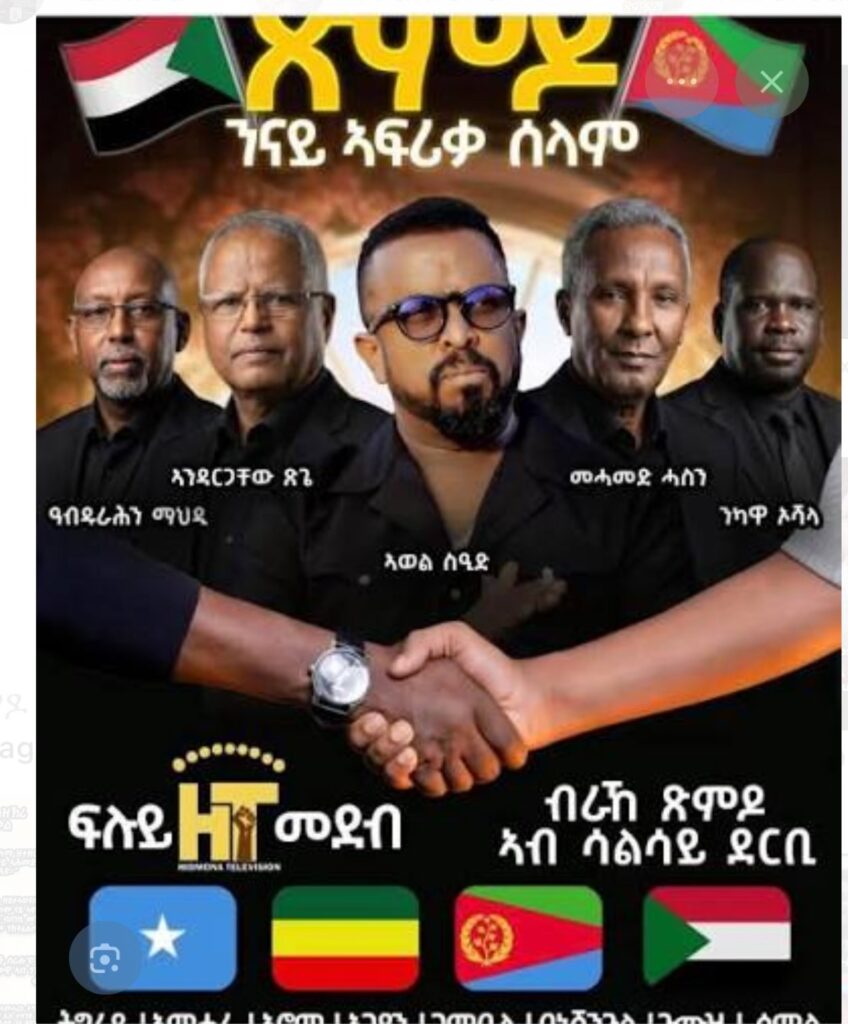
Exhibit 8: Ximdo related promotional image cited by critics in discussions of Eritrean, Sudanese, Ethiopian, and regional political symbols.
The Hunter and the Prey
The hunter and prey question is one of the deeper analytical points. Ethiopian insurgent and opposition aligned actors may believe they are using Eritrean or Sudanese spaces for leverage, visibility, and support. They may believe they are the hunters. Critics argue they may actually be the prey.
From this perspective, Eritrean and Sudanese state linked actors may use Ethiopian grievances, ethnic tensions, Amhara suffering, Oromo anxieties, Tigrayan resentments, anti Abiy narratives, and diaspora fundraising to weaken Ethiopia itself. The Ethiopian groups believe they are gaining allies. But those allies may be using them as instruments against Ethiopia’s state stability.
In this reading, the real prey is not one politician. It is the Ethiopian public. Their grief becomes a recruitment tool. Their trauma becomes fundraising language. Their divisions become regional leverage. Their future becomes collateral in a broader geopolitical contest.
United States Treasury, OFAC, and Oversight Recommendations
Calls have been made for U.S. authorities to examine this broader ecosystem, given that U.S. policy has consistently treated Ethiopia’s stability, territorial integrity, humanitarian conditions, and regional security as matters of strategic importance. Agencies such as the Treasury Department, OFAC, law enforcement bodies, and congressional oversight committees are positioned to assess whether diaspora fundraising activities remained within humanitarian bounds or crossed into insurgent financing, military procurement, sanctions-sensitive transactions, or unregistered foreign political coordination.
This is not a call to restrict speech or legitimate humanitarian assistance. It is a call for financial clarity and due diligence. The key questions are straightforward: who raised the funds, how were they managed, where did they go, who controlled the accounts, and whether any cross-border transfers occurred that may have supported military equipment, including drones or other procurement-linked activity. It also includes examining whether foreign state-linked actors facilitated any part of the ecosystem, and whether donors fully understood the ultimate use of their contributions. This work become all the more important, as shadow money and undeclared financing continues to fund diaspora based media groups, lobbyists and activist circles.
If all activity is legitimate and properly categorized, a formal audit should confirm that clearly. If not, the public interest lies in establishing whether humanitarian framing was used to obscure political or destabilizing activity, and ensuring appropriate accountability where necessary.
Source Links and Evidence Appendix
Key links discussed include the Dawit Woldegiorgis X video on drone acquisition, the Ximdo related X post supplied for regional coordination analysis, the Facebook reel cited by critics regarding Eyerusalem, public GoFundMe campaigns for Fano Media, Ethio Fact Media support, and Tears of Wollega Exhibition Production, along with reporting and advocacy pages concerning Amhara Emergency Fund discussions, Wonfel, AAA, and broader humanitarian fundraising.
This appendix is included to make clear which claims are based on public pages, which are based on critic supplied social media evidence, and which require further verification. The distinction matters. A thesis dossier should not confuse allegation with adjudicated fact. But neither should it ignore public evidence that raises serious questions.
Dawit Woldegiorgis drone discussion video: link
Ximdo related X post supplied by user: link
Facebook reel cited by critics about Eyerusalem: link
GoFundMe Fano Media: link
GoFundMe Support The Amhara and Ethio Fact Media: link
GoFundMe Tears of Wollega Exhibition Production: link
Abren article on Amhara Emergency Fund controversy: link
Borkena Nahusenay Andarge case: link
Shabait profile of Jemal Countess: link
Final Synthesis
The full thesis is that Ethiopia’s suffering has become a political, media, and financial ecosystem. Eritrea remains the quiet center of gravity for many relationships, but Ethiopia supplies the outrage, images, fundraising language, political drama, and international visibility.
Critics argue that the same people who present themselves as humanitarian defenders, truth tellers, conflict interpreters, problem identifiers, and solution builders often normalize insurgent narratives, delegitimize elections, attack Ethiopian symbols, demonize Oromo political participation, and remain comparatively silent about Eritrean repression.
This is why critics insist that the media trail, money trail, Eritrea trail, Ximdo trail, insurgency trail, and fundraising trail all deserve serious scrutiny. The issue is not whether Ethiopian victims deserve help. They do. The issue is whether their suffering has been used, monetized, weaponized, and folded into a regional destabilization architecture.
