




No project plan, no project budget, and no revenue model.
Since the groundbreaking of the Grand Ethiopian Renaissance Dam in April 2011, the geopolitical landscape of the Nile Basin and the Red Sea has fundamentally changed. What began as an Ethiopian hydroelectric project evolved into one of the most consequential strategic disputes in modern African politics. For Egypt, GERD represented not only a challenge to Nile water security, but also a symbolic erosion of Cairo’s traditional regional dominance.
Ethiopia financed much of GERD through domestic mobilization campaigns, bond sales, salary contributions, and public fundraising after international lenders hesitated to support the $5 billion dam. GERD became not only an infrastructure project but also a political symbol of Ethiopian sovereignty and economic ambition.
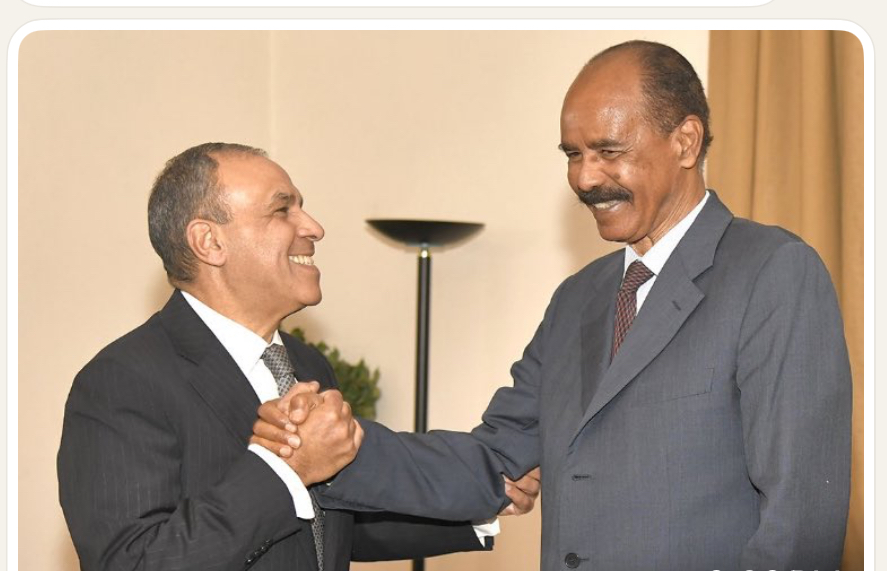
In response, Egypt intensified diplomatic and security engagement designed to isolate and pressure Ethiopia across the Horn of Africa, particularly with Eritrea. Over the last decade, Cairo and Asmara signed cooperation agreements, expanded security coordination, pursued maritime partnerships, and aligned politically on regional issues involving Ethiopia and the Red Sea.
Yet beneath the headlines and diplomatic choreography lies a contradiction. Egypt’s regional ambitions expanded precisely as its economic position weakened. Since GERD’s construction began, Egypt has faced mounting debt, repeated currency devaluations, high inflation, foreign currency shortages, and increasing dependence on IMF support and Gulf financing. At the same time, Cairo began projecting maritime ambitions in Eritrea without publicly disclosing project financing, implementation costs, timelines, or commercial feasibility.
This contradiction raises a central question: can Egypt realistically finance transformative maritime infrastructure in Eritrea while struggling under intensifying domestic economic pressures?
The evidence increasingly suggests that Egypt’s Eritrea strategy is strategically ambitious but economically constrained. The maritime vision remains economically locked because the trade base in Eritrea is virtually non-existent, the financing structure remains undisclosed, and the only economy capable of sustaining Eritrean ports at scale is Ethiopia itself. In Addis Ababa officials know Egypt’s interest in Eritrean ports is largely political theater.
GERD and the Transformation of Regional Politics
GERD fundamentally altered the balance of power in Northeast Africa. Ethiopia’s decision to construct Africa’s largest hydroelectric dam on the Blue Nile represented an assertion of economic sovereignty and regional ambition. The project was estimated to cost approximately $5 billion and was financed largely through domestic mobilization after international financing proved difficult to secure.
The financing challenge itself reflected the political sensitivity of Nile politics. Ethiopia relied heavily on domestic bond sales, salary contributions, and state mobilization campaigns because external lenders remained cautious about financing a project opposed by Egypt. Additional reporting on GERD’s self financing model documented how Ethiopia used internal financing mechanisms to sustain construction despite years of political pressure and diplomatic resistance.
Despite years of negotiations, mediation efforts, and diplomatic pressure, Egypt failed to halt the dam’s construction. Ethiopia gradually completed multiple filling stages while continuing development of the project.
GERD also exposed broader shifts in African geopolitics. Ethiopia demonstrated that regional power no longer rested solely with historic diplomatic influence or military prestige. Economic scale, population growth, energy generation, and infrastructure capacity increasingly shaped regional power dynamics.
As Ethiopia rose economically, Egypt sought alternative strategic leverage.
Egypt’s Turn Toward Eritrea
Within this context, Eritrea became increasingly valuable to Egyptian regional strategy.
Eritrea occupies a strategically important position along the Red Sea near critical maritime routes connecting Europe, the Middle East, and Asia. Its ports at Assab and Massawa have long attracted geopolitical interest because of their proximity to Gulf shipping lanes and the Bab el Mandeb Strait.
Following the deterioration of Ethiopia-Eritrea relations after the 1998 border war, Egypt found an opportunity to cultivate closer ties with Asmara. Diplomatic visits increased. Security cooperation expanded. Intelligence coordination reportedly deepened. Over time, Egypt also pursued maritime and logistical agreements tied to Red Sea security.
The relationship intensified further after tensions surrounding GERD escalated. In October 2024, Egypt, Eritrea, and Somalia announced plans to strengthen regional security cooperation, a move widely viewed through the lens of rising tensions with Ethiopia.
Egypt increasingly framed Eritrea as part of a broader Red Sea and Horn of Africa strategy designed to counterbalance Ethiopian influence. However, while the political symbolism of the relationship expanded, the economic substance remained remarkably thin.
The Maritime Vision and the Missing Economics
The most revealing aspect of Egypt’s maritime engagement with Eritrea is not what has been announced, but what has not.
Public statements surrounding maritime cooperation emphasized regional connectivity, trade facilitation, strategic cooperation, and port development.
Over the past decade, Cairo and Asmara have repeatedly announced or signaled new phases of maritime cooperation, security coordination, and economic partnership. Egyptian and Eritrean officials have held multiple high level meetings discussing Red Sea coordination, infrastructure cooperation, and regional integration. The October 2024 Egypt Eritrea Somalia summit produced another pledge to deepen security cooperation, while regional reporting described the summit as part of a broader alignment against Ethiopian influence.
Yet despite years of diplomatic signaling and strategic rhetoric, no publicly documented port construction program, disclosed financing package, named engineering consortium, commercially verified implementation schedule, or measurable large scale maritime rollout has emerged from these announcements. The repetition of ambitious declarations without corresponding economic disclosure has increasingly fueled skepticism that the initiative functions more as geopolitical messaging than as a financially grounded infrastructure strategy.
Neither Egypt nor Eritrea has publicly disclosed the basic financial and technical architecture required for a credible port development strategy. There is no published project plan explaining how Assab or Massawa would be transformed into commercially competitive ports. There are no project milestones showing when dredging, terminal construction, logistics integration, customs modernization, or transport connectivity projects would begin or conclude. No design firms, engineering contractors, or investment consortiums have been publicly attached to the proposed maritime vision. Cairo and Asmara have also failed to disclose any comprehensive project budget, cargo capacity targets, or revenue models explaining how the ports would generate returns, attract shipping traffic, or recover infrastructure costs. Equally important, neither government has transparently identified the sources of funding behind the initiative, despite the fact that Egypt’s debt to GDP ratio remains above 80 percent while Eritrea’s public debt burden has surpassed 160 percent of GDP.
That omission is significant because modern port development is extraordinarily expensive. Transforming a regional port into a competitive commercial hub requires dredging operations, container terminals, logistics infrastructure, customs modernization, warehousing, rail and road connectivity, energy infrastructure, digital systems, and long term shipping contracts. Such projects routinely cost hundreds of millions or billions of dollars.
Serious maritime developments are normally accompanied by detailed investment frameworks because ports are not political monuments. They are commercial systems dependent on cargo volume, industrial demand, and long term trade flows.
In the Egypt Eritrea case, the economics remain largely invisible.
That absence has fueled growing skepticism that the maritime initiative represents more strategic theater than commercially viable infrastructure planning.
Egypt’s Economic Constraints Since GERD
The timing of Egypt’s Eritrea ambitions is particularly striking given Cairo’s worsening domestic economic position.
Since 2011, Egypt has experienced multiple currency devaluations, rising inflation, expanding debt burdens, declining purchasing power, and increasing reliance on external financing.
The country entered repeated arrangements with the International Monetary Fund, including an $8 billion reform package approved amid continuing financial strain.
At the same time, Egypt suffered additional external shocks including reduced Suez Canal revenues linked to Red Sea instability, global commodity price increases, pressure on foreign currency reserves, and heavy debt servicing obligations.
The IMF itself warned that Egypt’s state dominated economic model and dependence on mega projects created structural vulnerabilities while crowding out private sector growth. Concerns regarding military linked economic expansion and pressure on private sector activity were also highlighted in IMF assessments and international reporting.
This creates a major contradiction in Egypt’s Eritrea policy.
Cairo is promoting expensive geopolitical and maritime ambitions abroad while simultaneously struggling with subsidy pressures, external financing needs, inflation management, and sovereign debt concerns at home.
This does not mean Egypt cannot sign agreements or provide symbolic support. Egypt can still pursue security cooperation, diplomatic coordination, military training, humanitarian assistance, and limited maritime coordination.
But financing transformative infrastructure abroad requires far greater fiscal capacity than Egypt currently appears willing or able to deploy transparently.
The Trade Problem
The economic weakness of the maritime initiative becomes even clearer when bilateral trade is examined.
Trade between Egypt and Eritrea remains extremely limited. Egypt exports modest quantities of refined petroleum products, fertilizers, and consumer goods to Eritrea, while Eritrean exports to Egypt remain negligible.
The trade relationship is simply too small to sustain major port expansion on its own.
This is the core structural problem behind the maritime vision.
Ports survive on cargo volume. Without sufficient throughput, shipping lines avoid regular routes, logistics companies hesitate to invest, container traffic remains weak, and infrastructure costs become difficult to recover.
In practical terms, Eritrea’s domestic economy is too small to independently sustain major commercial port transformation.
That leaves one unavoidable reality.
The only economy capable of making Eritrean ports commercially viable at scale is Ethiopia.
Historically, more than 90 percent of Ethiopian trade moved through Djibouti because Ethiopia’s population, industrial demand, and import volume generate the scale necessary to sustain modern port infrastructure. The World Bank notes that more than 95 percent of Ethiopia’s import and export trade by volume uses the Addis Djibouti corridor.
Without Ethiopian participation, Eritrean ports remain strategically important but commercially constrained.
This is the paradox at the center of Egypt’s maritime strategy.
Egypt appears to be pursuing maritime influence in Eritrea partly to pressure Ethiopia politically, while the economic viability of Eritrean ports ultimately depends on Ethiopian cargo.
Ghost Funding and Strategic Theater
The absence of disclosed financing has created what can reasonably be described as ghost funding.
The projects are discussed politically, but the money itself remains largely invisible.
There are no publicly identified sovereign financing packages, multilateral lending structures, major private investment consortiums, disclosed engineering contracts, or publicly available implementation budgets tied to transformative Egyptian investment in Eritrean ports.
In serious infrastructure development, financing is normally the centerpiece of the announcement. Investors want to know who pays, how returns are generated, what guarantees exist, and whether sufficient cargo demand justifies the investment.
In this case, those questions remain unanswered.
That does not necessarily mean nothing will happen. Egypt and Eritrea may pursue gradual or limited maritime cooperation. Small scale upgrades, technical cooperation, or security related port coordination remain possible.
But the gap between rhetoric and disclosed economics remains substantial.
The result is a maritime strategy that appears politically ambitious but economically underdeveloped.
Conclusion
The Egypt Eritrea partnership reflects the broader transformation of Northeast African geopolitics after GERD. Egypt responded to Ethiopia’s growing regional influence by expanding strategic relationships across the Red Sea and the Horn of Africa. Eritrea became part of that geopolitical recalibration.
However, geopolitical ambition alone cannot substitute for economic fundamentals.
Since GERD’s groundbreaking, Egypt’s own economic position has weakened considerably. Debt burdens increased. External financing dependence deepened. Domestic fiscal pressures intensified. Yet Cairo simultaneously promoted maritime ambitions in Eritrea without clearly identifying funding sources, implementation structures, or commercially viable cargo flows.
The central contradiction remains unresolved.
Eritrean ports cannot become major commercial hubs through political symbolism alone. They require sustained trade volume and large scale economic demand. At present, the only regional economy capable of providing that scale is Ethiopia itself.
Without Ethiopian participation, the maritime strategy risks remaining economically locked: strategically loud, diplomatically useful, but commercially hollow. In fact, all of the regional ports, including Djibouti, Berbera or Lamu are not economically viable unless integrated with Ethiopia, one of the largest populations in the world and also a rapidly growing GDP.
Until Egypt and Eritrea disclose who will finance the projects, how the investments will generate returns, and what economic demand will sustain the ports, the initiative will continue to resemble strategic theater backed by ghost funding rather than a fully credible development strategy.
