




Global Humanitarian Crisis Update: Ethiopia Access Constraints, Ebola Surge in DRC & Kenya, Gaza Water Collapse
Key Developments at a Glance
- Ethiopia: Aid Access Blocked Amid Tigray & Amhara Instability
- DRC: Ebola Transmission Accelerates; Contact Tracing Faltering
- Kenya: First Imported Ebola Case Triggers Regional Alert
- Gaza: Import Restrictions & Funding Gaps Cripple Water Supply for 500,000
- West Bank: Record Displacement in East Jerusalem Demolition
Ethiopia: UN Demands Safe Passage as Hostilities Trap Civilians in North
Humanitarian operations in northern Ethiopia remain critically hampered by active hostilities and bureaucratic hurdles. In a direct appeal via social media, Tom Fletcher, Under-Secretary-General for Humanitarian Affairs and Emergency Relief Coordinator, confirmed that UN teams are mobilized to deliver life-saving food, health, and nutrition assistance. However, he emphasized that “safe and rapid access” from all parties to the conflict is a non-negotiable prerequisite.
<h3>Tigray: Displacement Rises as Verification Falters</h3>
<p>Fighting continues to drive displacement across <strong>Central, North-Western, and Eastern Tigray</strong>. The absence of verified displacement figures underscores the severe access constraints preventing independent monitoring. The UN and its partners maintain a state of operational readiness to resume full-scale aid distributions in Tigray the moment security guarantees and access permits are secured.</p>

<h3>Amhara: Forced Returns Halted Amid Security Collapse</h3>
<p>In the <strong>Amhara region</strong>, a government-facilitated operation to return internally displaced persons (IDPs) from the town of <strong>Kobo</strong> to their areas of origin was abruptly suspended following a sharp deterioration in the security environment. The UN has reiterated its core protection stance: <a href="https://www.unhcr.org/protection/voluntary-repatriation" target="_blank" rel="noopener noreferrer">all returns must be safe, voluntary, informed, and dignified</a>, warning against premature movements into unstable zones.</p>
DRC: Ebola Outbreak Intensifies as Response Gaps Widen in North Kivu & Ituri
The Democratic Republic of the Congo (DRC) is facing a dangerous acceleration in the Ebola Virus Disease (EVD) outbreak. As of October 3, health authorities have confirmed over 8,500 cases and more than 4,100 deaths.
<h3>Transmission Spikes in Eastern Hotspots</h3>
<p>The epidemiological curve is bending sharply upward. Authorities recorded <strong>102 new confirmed cases on October 3 alone</strong>, a significant jump from 66 the previous day. The provinces of <strong>Ituri and North Kivu</strong> remain the epicenter, accounting for <strong>over 94% of new infections</strong>. North Kivu continues to bear the brunt of the caseload.</p>

<h3>Critical Failure in Contact Tracing</h3>
<p>A major operational bottleneck is the collapse of contact tracing efficacy. Coverage in North Kivu stands at <strong>just under 68%</strong>—drastically short of the <strong>95% threshold</strong> required to effectively break chains of transmission. This gap implies that the majority of potential transmission links are going undetected, fueling silent community spread.</p>

<h3>Movement Restrictions Risk Humanitarian Paralysis</h3>
<p>New movement restrictions imposed on key roads in North Kivu—intended as a containment measure—are raising alarm among humanitarian coordinators. OCHA warns these measures risk <strong>further constraining humanitarian access</strong>, delaying the deployment of rapid response teams, and disrupting the continuity of treatment and vaccination operations in hard-to-reach areas.</p>

<h3>Prevention Pivots to High-Risk Mining Communities</h3>
<p>In <strong>Haut-Uélé and Ituri</strong>, OCHA is supporting government efforts to bolster prevention and surveillance specifically within <strong>mining communities</strong>. These transient, high-density populations represent a high-risk vector for cross-border and inter-provincial transmission.</p>
Kenya: First Imported Bundibugyo Case Confirmed; Regional Surveillance Activated
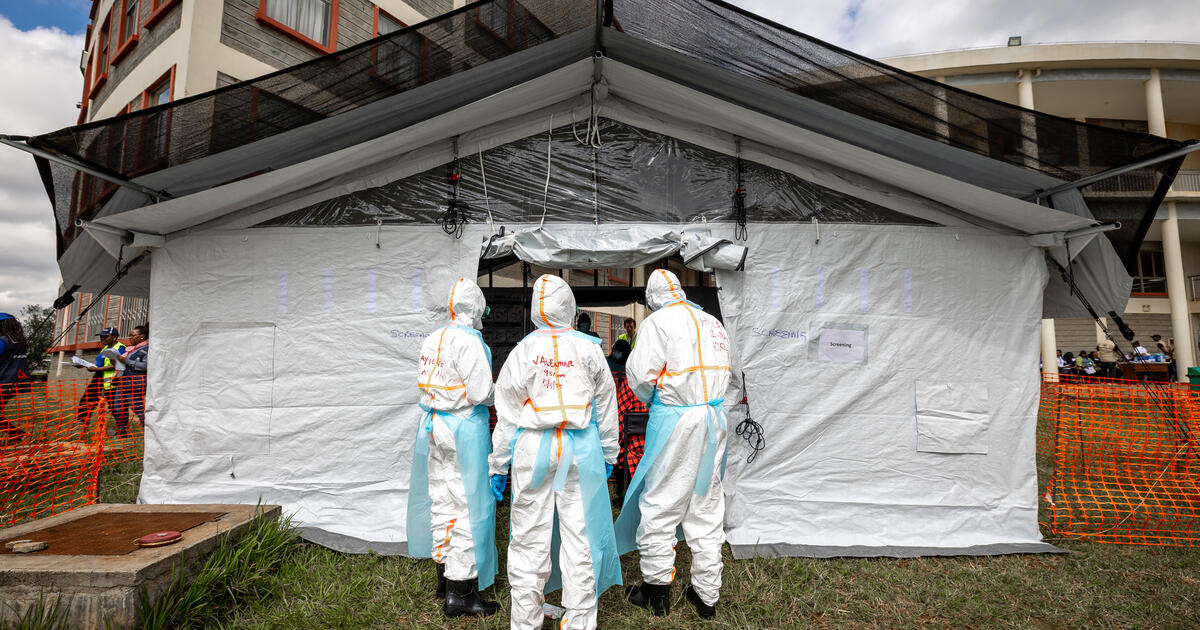
The Government of Kenya has confirmed the country’s first imported case of Ebola disease caused by the Bundibugyo virus (BDBV). This development validates long-standing fears regarding the regional spillover risk posed by the ongoing outbreak in the DRC.
<h3>Rapid Containment Measures Underway</h3>
<p>Kenyan health authorities demonstrated high preparedness, rapidly identifying, isolating, and testing the index case. Comprehensive response protocols are active, including:</p>
<ul>
    <li>Aggressive <a href="https://www.who.int/emergencies/diseases/ebola/contact-tracing" target="_blank" rel="noopener noreferrer">contact tracing</a> operations.</li>
    <li>Enhanced surveillance at points of entry and health facilities.</li>
    <li>Public health monitoring and risk communication campaigns.</li>
</ul>

<h3>WHO & Partners Mobilize Cross-Border Defense</h3>
<p>The <a href="https://www.afro.who.int/" target="_blank" rel="noopener noreferrer">World Health Organization (WHO) Regional Office for Africa</a> is directly supporting Kenya’s Ministry of Health and the National Public Health Institute. Key preparedness milestones achieved include:</p>
<ul>
    <li>Identification and equipping of <strong>isolation units across 27 high-risk counties</strong>.</li>
    <li>Updating of Ebola surveillance tools to ensure rapid identification, reporting, and investigation of suspected cases.</li>
</ul>
<p>The UN system is advocating for a sustained regional strategy: <strong>cross-border surveillance, coordinated screening at borders, and joint readiness planning</strong> must remain priorities until transmission is fully interrupted in the DRC.</p>
Gaza: Water & Sanitation System Near Collapse Amid Supply Blockades & Funding Gaps
According to the latest OCHA Situation Report, the Water, Sanitation, and Hygiene (WASH) response in Gaza is being strangled by a dual crisis: critical funding shortfalls and restrictions on the entry of essential technical supplies.
<h3>Dual-Use Restrictions Paralyze Infrastructure Repair</h3>
<p>Items classified under "dual-use" restrictions—specifically <strong>engine oil, spare parts, and electromechanical equipment</strong>—are being blocked or delayed at entry points. These materials are vital for maintaining the heavy machinery and vehicle fleets that keep water and sanitation infrastructure operational.</p>

<h3>Desalination Output Drops, Impacting 500,000 People</h3>
<p>The consequences are immediate and measurable. Shortages of maintenance supplies have forced a <strong>decline in water production at two major desalination plants in southern Gaza</strong>. This has directly reduced the availability of drinking water for an estimated <strong>500,000 people in Deir al-Balah and Khan Younis</strong>.</p>

<h3>Trucking Dependency & The "Yellow Line" Access Barrier</h3>
<p>With piped networks largely non-functional, <strong>three out of four families in Gaza now rely on water trucking</strong>. Partners are currently delivering <strong>25,000 cubic meters of drinking water daily via 3,200 collection points</strong>. However, this lifeline is fragile:</p>
<ul>
    <li><strong>Vehicle Maintenance Crisis:</strong> The trucking fleet cannot be maintained due to the spare parts blockade.</li>
    <li><strong>Access Denials:</strong> Movement to distribution points is frequently suspended due to insecurity, particularly along the <strong>"Yellow Line"</strong> corridor.</li>
</ul>

<h3>Solid Waste Emergency & Hygiene Distribution</h3>
<p>The blockade on vehicle parts has halted solid waste collection trucks, forcing a regression to <strong>donkey carts and UN trucks</strong> for waste removal. Access to Gaza’s two primary landfills near the perimeter fence remains denied, leading to dangerous waste accumulation in populated areas.</p>
<p>In the last week of September, partners distributed critical hygiene non-food items (NFIs) including:</p>
<ul>
    <li>12,000+ water containers (10L capacity)</li>
    <li>3,000L dishwashing soap, 1,300L bleach</li>
    <li>4,600 PPE sets (gloves/masks)</li>
    <li>200+ emergency latrines & hundreds of hygiene kits</li>
</ul>
<p><strong>Sustained fuel funding</strong> and the immediate approval of restricted technical items are the only barriers preventing a total WASH system failure.</p>
West Bank: Record-Breaking Displacement in East Jerusalem Demolition
In a stark escalation of displacement trends, 69 Palestinians—including over 35 children—were displaced in a single incident today following the demolition of a residential building in the At Tur neighborhood of East Jerusalem by Israeli authorities.
<h3>Highest Single-Demolition Displacement Since 2009</h3>
<p>UN monitoring groups confirm this represents the <strong>largest number of people displaced by a single demolition in East Jerusalem since systematic records began in 2009</strong>.</p>

<h3>Belongings Buried, Families Left Destitute</h3>
<p>Humanitarian partners conducting rapid assessments on the ground reported that affected families were <strong>prevented by Israeli forces from salvaging personal belongings</strong>, which were left buried under the rubble. Immediate needs assessments have been completed, with partners securing emergency rent support and essential non-food items for the displaced households.</p>

<h3>Systemic Planning Discrimination Drives Demolitions</h3>
<p>This incident fits a broader pattern. <strong>Year-to-date, over 1,800 Palestinians have been displaced</strong> across the West Bank due to demolitions or forced self-demolitions. The vast majority are executed on the grounds of lacking <strong>Israeli-issued building permits</strong>—permits which are <a href="https://www.ochaopt.org/content/planning-crisis-east-jerusalem" target="_blank" rel="noopener noreferrer">rarely granted to Palestinians</a> in Area C and East Jerusalem. Humanitarian actors continue to provide emergency shelter, NFIs, and psychosocial support to affected families.</p>