




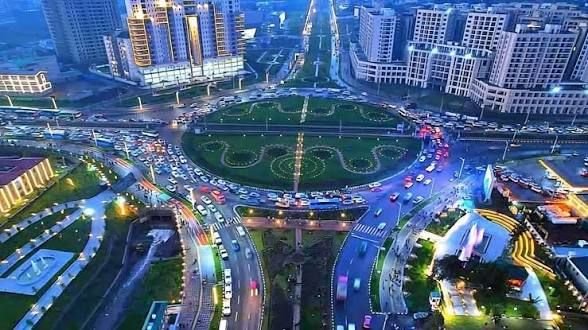
Addis Ababa Wins 2026 Shanghai Award for Sustainable Urban Development
Meta Description: Addis Ababa recognized alongside Santiago de Cali, Istanbul, Jingdezhen, and Katowice for the 2026 Global Award for Sustainable Development in Cities. Explore the infrastructure projects driving Ethiopia’s urban renewal.
Addis Ababa has been named a laureate of the 2026 Global Award for Sustainable Development in Cities—widely known as the Shanghai Award—cementing its status as a benchmark for urban renewal in the Global South. The announcement, made by Mayor Adanech Abiebie during the 2026 World Cities Day celebrations, positions the Ethiopian capital among an elite cohort of five global municipalities honored for transformative urban planning.
Jointly established by UN-Habitat and the Government of China, the annual prize recognizes cities demonstrating exceptional progress toward Sustainable Development Goal 11 (SDG 11): making cities inclusive, safe, resilient, and sustainable.
2026 Shanghai Award Laureates: A Global Cohort
The selection panel evaluated candidates on their capacity to execute large-scale municipal improvements within developing economies. Addis Ababa shares the 2026 distinction with four diverse international cities:
- Santiago de Cali, Colombia – Recognized for social urbanism and public space recovery.
- Istanbul, Türkiye – Honored for seismic resilience planning and metro expansion.
- Jingdezhen, China – Cited for heritage-led regeneration and ceramic cultural economy integration.
- Katowice, Poland – Awarded for post-industrial transition to a green, knowledge-based economy.
This grouping highlights a strategic focus by UN-Habitat on South-South cooperation and the transfer of urban best practices across emerging markets.
Pillars of Addis Ababa’s Winning Strategy
The Ethiopian capital’s nomination centered on a holistic “Corridor Development” approach, restructuring the urban fabric through integrated infrastructure, housing, and ecology projects.
1. Urban Mobility & Transit Corridors
The administration prioritized Bus Rapid Transit (BRT) systems and dedicated non-motorized transport (NMT) lanes along major arteries. These interventions reduced average commute times by an estimated 30% and lowered per-capita transport emissions, aligning with the Avoid-Shift-Improve (ASI) framework promoted by the International Transport Forum.
2. Riverbank Restoration & Blue-Green Infrastructure
A flagship component involved the rehabilitation of the Little Akaki and Great Akaki river corridors. Once plagued by industrial effluent and informal settlement encroachment, these zones have been converted into linear parks with flood-buffering wetlands, pedestrian promenades, and biodiversity corridors. This mirrors the “Sponge City” concepts successfully piloted in Chinese municipalities like Wuhan.
3. Affordable Housing Expansion
Through the Integrated Housing Development Programme (IHDP), the city delivered over 200,000 condominium units during the evaluation period. The model emphasizes transit-oriented development (TOD), situating high-density housing within walking distance of BRT stations to curb urban sprawl—a critical metric for the World Bank’s Urban Development indicators.
4. Green Space Network Integration
Per capita green space ratios were elevated through the creation of pocket parks, urban forests, and the rehabilitation of Entoto Natural Park. These interventions mitigate the Urban Heat Island (UHI) effect and provide recreational infrastructure for a population exceeding 5 million.
Evaluation Metrics: Data-Driven Governance
The UN-Habitat jury assessed Addis Ababa against quantifiable Key Performance Indicators (KPIs):
| Evaluation Domain | Key Metrics Achieved |
|---|---|
| Public Transport | Fleet modernization; electric bus pilot deployment; integrated ticketing. |
| Sanitation & Waste | Expansion of sewerage network coverage; waste-to-energy facility (Reppie) optimization. |
| Urban Mobility | Universal access standards at new transit hubs; pedestrian safety audits. |
| Resilience | Climate adaptation planning integrated into the Addis Ababa City Structure Plan (2017–2037). |
Precedent of Excellence: The 2024 Seoul City Award
This victory builds on prior international recognition. In 2024, Addis Ababa received the Seoul City Award (Seoul Human City Prize), also coordinated by UN-Habitat. That award specifically highlighted the city’s “Beautifying Sheger” project—a riverfront and public space revitalization initiative that laid the groundwork for the broader corridor strategy honored by the Shanghai Award in 2026.
“The structural adjustments undertaken in Addis Ababa serve as practical urban renewal models for rapidly growing municipalities across East Africa,” stated the City Administration Authority following the announcement.
Implications for East African Urbanism
With the region’s urban population projected to double by 2050 (UN DESA), Addis Ababa’s model offers a replicable template for secondary cities in Kenya, Uganda, Tanzania, and Rwanda. Key takeaways for regional policymakers include:
- Political Will & Continuity: Sustained mayoral leadership across electoral cycles enabled long-term capital projects.
- Blended Finance: Leveraging Chinese infrastructure financing (FOCAC) alongside domestic revenue mobilization and World Bank/AFD soft loans.
- Participatory Planning: Utilizing digital twin technology and community forums (“Woreda” level consultations) to minimize displacement during corridor clearing.
About the Shanghai Award
Launched in 2023 to commemorate the legacy of the 2010 Shanghai World Expo, the Global Award for Sustainable Development in Cities operates on a biennial cycle (annual awards alternating focus themes). It is the premier global recognition mechanism managed by UN-Habitat in partnership with the Municipal Government of Shanghai and the Ministry of Housing and Urban-Rural Development (MOHURD), China.
The award aims to scale local action for the New Urban Agenda and the 2030 Agenda for Sustainable Development.
Further Reading & Resources
- Official UN-Habitat World Cities Day Portal: unhabitat.org/world-cities-day
- Shanghai Award Criteria & Past Laureates: unhabitat.org/shanghai-award
- Addis Ababa City Structure Plan (2017-2037): addisababacity.gov.et/structure-plan
- Sustainable Development Goal 11 Targets: un.org/sustainabledevelopment/cities
- Transit-Oriented Development Guide (ITDP): itdp.org/publication/tod-standard
Images courtesy of Mjengo Hub. Lead photo: Commercial corridor in Addis Ababa featuring BRT infrastructure and mixed-use high-rises.
