




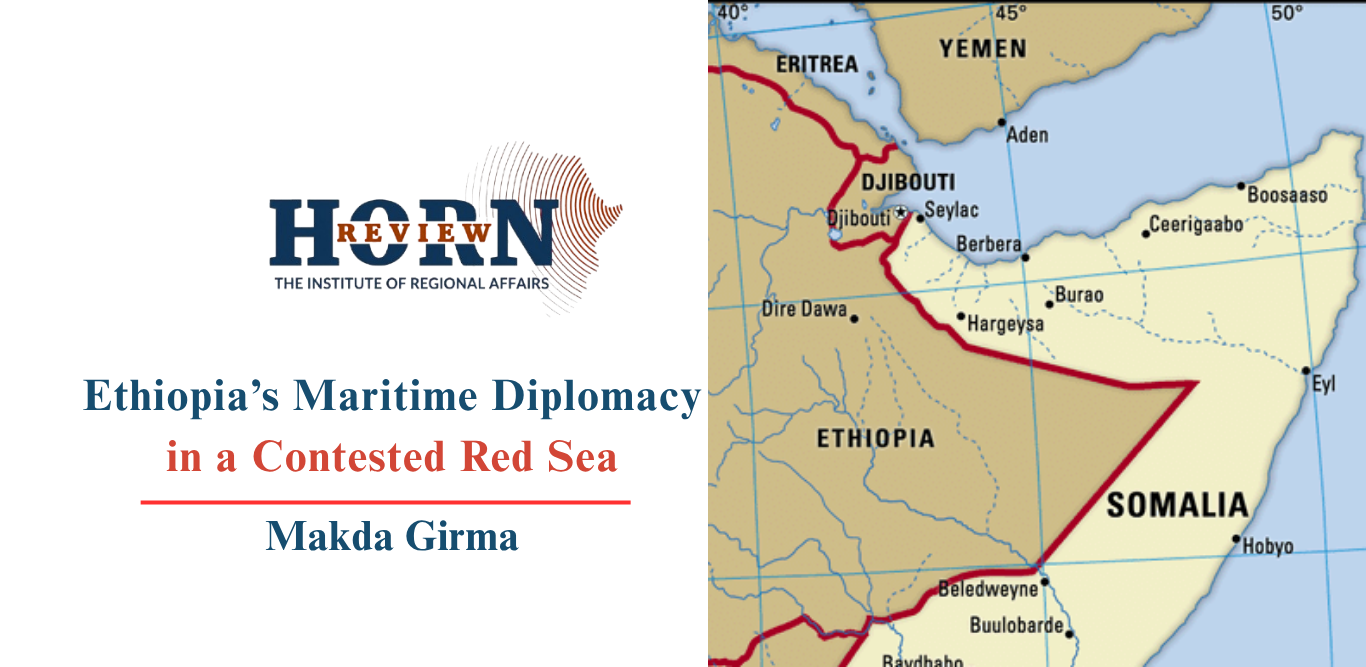
Meta Title: Ethiopia’s Red Sea Strategy: Naval Diplomacy & Maritime Security in a Fragmented Region
Meta Description: Analyzing Ethiopia’s 2026 Addis Ababa maritime workshop, its exclusion from the Red Sea Council, and the diplomatic balancing act with Djibouti, Somaliland, Puntland, and Somalia for trade security.
Focus Keyphrase: Ethiopia Red Sea maritime security
Slug: ethiopia-red-sea-maritime-security-workshop-diplomacy
Ethiopia’s Red Sea Gambit: Naval Diplomacy in a Fragmented Region
On October 26, 2026, Addis Ababa hosted a diplomatic anomaly: a high-level maritime security workshop convened by the Ethiopian Navy in a landlocked capital. For four days, naval commanders and maritime officials from Yemen, Oman, Djibouti, Somaliland, and Puntland gathered to discuss search and rescue (SAR), information sharing, and regional stability in the Red Sea and Gulf of Aden.
While the stated agenda focused on technical coordination—specifically strengthening emergency responses and maritime domain awareness—the subtext was deeply strategic. The workshop illuminated Ethiopia’s determined effort to institutionalize its presence in a maritime theater from which its geography has historically excluded it.
The Landlocked Imperative: Economics Driving Strategy
Since Eritrea’s secession in 1993, Ethiopia has been the world’s most populous landlocked nation. This status carries profound economic vulnerability. According to the World Bank, Djibouti has historically processed approximately 95% of Ethiopia’s import-export traffic, creating a single point of failure for a $120+ billion economy.
Key Stat: Diversification is not optional; it is an existential economic necessity. The development of the Berbera Port corridor in Somaliland—managed by DP World—represents the most tangible alternative route to date.
However, port access alone is insufficient. The security of shipping lanes, the reliability of regional partners, and the robustness of maritime governance institutions directly determine the cost and reliability of Ethiopian trade. This reality forces Addis Ababa to treat maritime security as a domestic economic policy issue.
The Architecture of Exclusion: Competing Regional Frameworks
To understand the significance of the Addis Ababa workshop, one must examine the diplomatic structures Ethiopia is not part of.
The Red Sea Council (2020)
In January 2020, eight littoral states—Saudi Arabia, Egypt, Eritrea, Sudan, Somalia, Djibouti, Yemen, and Jordan—formed the Council of Arab and African States Bordering the Red Sea and Gulf of Aden. Membership was strictly defined by coastal geography, formally excluding Ethiopia from the primary forum governing the security of its primary trade artery.
The New Alamein Declaration (October 2024)
This exclusion hardened in October 2024 when leaders of Egypt, Eritrea, Somalia, and Sudan met in New Alamein. Their joint declaration asserted that Red Sea governance is the “exclusive responsibility of littoral states.” The communiqué also rejected recognition of Somaliland and addressed Nile water disputes—signaling a coalition built on strict sovereignty norms that inherently marginalize non-coastal stakeholders.
The Strategic Dilemma: Ethiopia’s economic lifeline runs through a security architecture that denies it a seat at the table.
The Addis Ababa Workshop: A “Second Track” Maritime Diplomacy
The October 2026 workshop did not overturn the New Alamein framework. Instead, it demonstrated a sophisticated “Track 1.5” diplomacy—operational cooperation below the level of political summits.
Participant Composition: A Map of Economic Interest
The guest list was not random; it mirrored Ethiopia’s logistical dependency map:
| Participant | Strategic Relevance to Ethiopia |
|---|---|
| Djibouti | Primary gateway (95% trade volume); host to Ethiopia’s naval training & basing agreements. |
| Somaliland | Operator of Berbera Port; key to corridor diversification (MoU Jan 2024). |
| Puntland | Controls vast Gulf of Aden coastline; critical for anti-piracy & approach security. |
| Yemen | Sits at Bab al-Mandeb chokepoint; Houthi activity disrupts global shipping. |
| Oman | Indian Ocean access; historical mediator; strategic depth beyond the Red Sea. |
Notable Absence: The Federal Government of Somalia (FGS) was not listed among participants. Whether uninvited or declining, this absence highlights the tightrope Ethiopia walks between Mogadishu and Hargeisa/Garowe.
Navigating the Somali Trilemma: Sovereignty vs. Pragmatism
Ethiopia’s engagement with Somaliland and Puntland introduces complex political friction.
- Somaliland: The January 2024 MoU (offering port access for potential recognition) strained relations with Mogadishu. The Ankara Declaration (Dec 2024), mediated by Türkiye, established a framework for “mutually beneficial arrangements” respecting Somali sovereignty, but implementation remains opaque.
- Puntland: Since March 2024, Puntland has refused to recognize the Federal Government’s authority following constitutional disputes. Engaging Garowe risks signaling support for federal fragmentation.
- Mogadishu: Remains the internationally recognized sovereign authority; essential for long-term regional stability and AUSSOM (African Union Support and Stabilization Mission in Somalia) coordination.
The Balancing Act: Addis Ababa must maintain functional security cooperation with Hargeisa and Garowe (where the ships actually dock and patrol) without politically legitimizing secession or fragmentation in a way that destroys trust with Villa Somalia.
Yemen & Oman: The Chokepoint and the Indian Ocean Link
The inclusion of Yemen and Oman extended the workshop’s scope beyond the Horn.
- Yemen: The Houthi (Ansar Allah) control over northwestern Yemen and Red Sea coastline (per UK Parliament 2026 assessments) means the internationally recognized government has limited operational control over the Bab al-Mandeb. Cooperation here is largely symbolic or limited to de-confliction channels.
- Oman: Offers a gateway to the Western Indian Ocean and brings a tradition of quiet mediation. Muscat’s participation signals Ethiopia’s intent to project interest beyond the immediate Red Sea littoral.
Institutionalizing Capacity: Beyond Workshops to Infrastructure
The Addis Ababa event was not an isolated Ethiopian initiative but part of an EU-supported architecture:
- Crisis Response Project for the Red Sea & Western Indian Ocean
- CRIMARIO II (Critical Maritime Routes Indian Ocean)
- Expertise France implementation
This places Ethiopia inside a Western-backed maritime domain awareness (MDA) network—crucial for intelligence sharing and standardization.
Concrete Progress: The NMISC Roadmap
Perhaps the most tangible outcome of Ethiopia’s recent maritime push predates the October workshop. In August 2026, an IMO (International Maritime Organization) workshop in Addis Ababa produced a roadmap for a National Maritime Information Sharing Centre (NMISC).
Why this matters:
- Inter-agency Coordination: Links Ethiopian Maritime Affairs Authority, Navy, Customs, and Intelligence.
- Regional Integration: Connects to the Djibouti Code of Conduct (DCoC) information sharing centers (est. 2009, Jeddah Amendment 2017).
- Commercial Protection: Real-time tracking of vessels carrying Ethiopian cargo through high-risk zones (Bab al-Mandeb, Somali Basin).
Historical Context: Ethiopia was an original signatory to the Djibouti Code of Conduct (2009), proving its maritime legal personality predates its current naval reconstruction.
The Hard Reality: Navy Without a Coastline
Institutional capacity and diplomatic workshops cannot solve the basics of naval logistics. A credible navy requires:
- Sovereign Basing Rights: Not just access, but guaranteed, unimpeded operational hubs.
- Maintenance Infrastructure: Dry docks, fuel depots, supply chains.
- Legal Status of Forces Agreements (SOFA): Legal protections for deployed personnel.
Currently, Ethiopia relies on Djibouti for training and potential basing. The Berbera MoU implies future naval facilities, but Somaliland’s lack of universal recognition complicates international legal frameworks for warship visits (UNCLOS Article 29/30).
Conclusion: Cooperation as Leverage
The October 2026 workshop will not redraw maps or rewrite the New Alamein Declaration. Its value lies in normalizing Ethiopia’s maritime agency.
By hosting the very authorities who control the waters its economy depends on—Djibouti, Somaliland, Puntland, Yemen, Oman—Addis Ababa converts economic dependency into relational capital.
In a region where hard power (Egypt/Eritrea alliances, Houthi missiles, Somali federalism disputes) dominates headlines, Ethiopia is betting on soft infrastructure: information sharing centers, SAR protocols, IMO compliance, and professional naval relationships.
The verdict: Ethiopia’s maritime future will not be secured by a single port deal or a council seat. It will be built on the cumulative weight of operational necessity—making itself too functionally integrated into Red Sea security to be ignored, and too economically vital to be blocked.
Frequently Asked Questions (FAQ)
Why is Ethiopia building a navy if it is landlocked? Ethiopia lost its coastline in 1993. With 95%+ trade flowing through Djibouti, a navy protects commercial interests, secures alternative corridors (Berbera), and projects sovereignty in the Red Sea/Gulf of Aden where its economic survival is determined.
What was the outcome of the Addis Ababa Maritime Workshop (Oct 2026)? The 4-day workshop focused on Search and Rescue (SAR), information sharing, and regional coordination. It produced no binding treaty but strengthened operational ties with Djibouti, Somaliland, Puntland, Yemen, and Oman under EU/CRIMARIO frameworks.
Is Ethiopia a member of the Red Sea Council? No. The Council of Arab and African States Bordering the Red Sea and Gulf of Aden (2020) restricts membership to littoral states, excluding Ethiopia despite its heavy reliance on the waterway.
How does the Ankara Declaration affect Ethiopia-Somaliland relations? The December 2024 Ankara Declaration mandated technical talks between Ethiopia and Somalia to find “mutually beneficial” maritime access respecting Somalia’s sovereignty. It paused the political fallout from the Jan 2024 MoU but did not resolve the core dispute over Somaliland recognition.
What is the Djibouti Code of Conduct? A 2009 IMO framework (updated 2017 Jeddah Amendment) for Western Indian Ocean/Gulf of Aden states to cooperate on piracy, armed robbery, and illicit maritime activity. Ethiopia was a founding signatory.
External Resources & Further Reading
- World Bank: Djibouti Regional Economic Corridor Project Assessment
- Arab News: Formation of the Red Sea Council (2020)
- Egypt Presidency: New Alamein Joint Declaration (Oct 2024)
- Reuters: Puntland Rejects Federal Government Authority (Mar 2024)
- Türkiye MFA: Ankara Declaration Text (Dec 2024)
- UK Parliament: Yemen/Houthi Control Assessment (2026)
- IMO: Djibouti Code of Conduct Evolution
- DP World: Berbera Port Development
Schema Markup Suggestion (JSON-LD): json black”
