




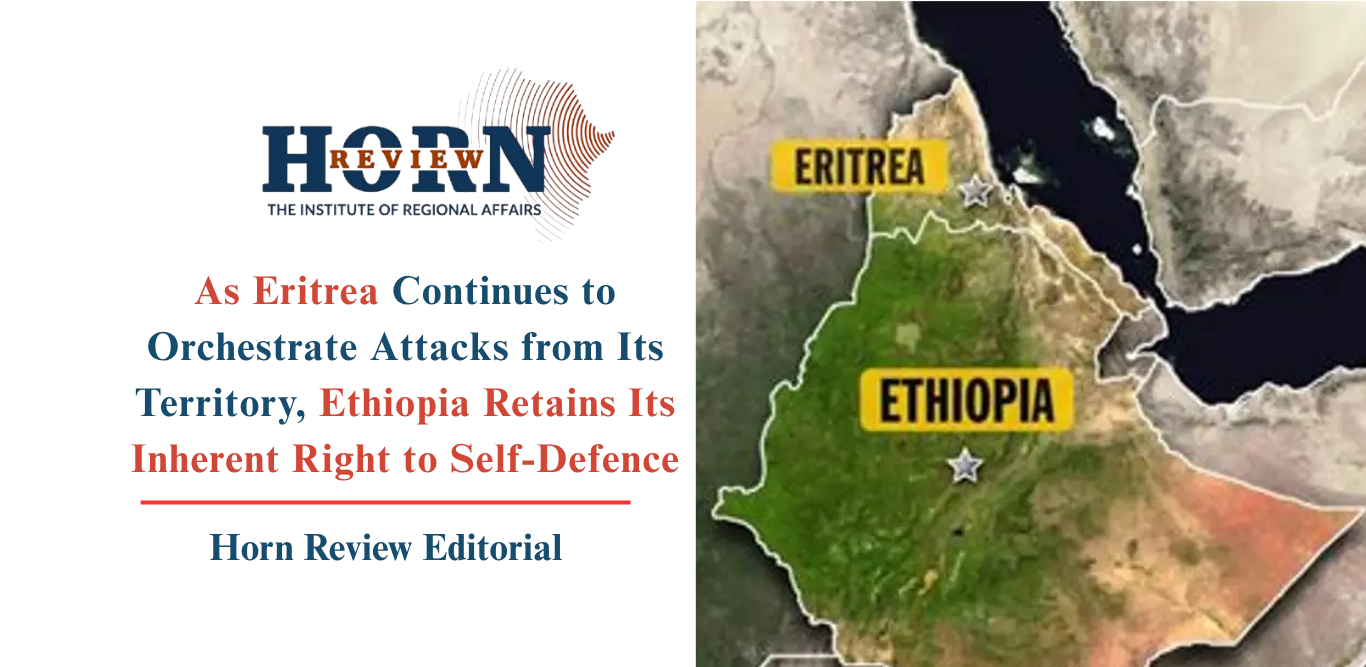
Eritrea’s Proxy War in Ethiopia: The Asmara Coalition, Cross-Border Incursions, and Addis Ababa’s Right to Self-Defense
The security crisis between Ethiopia and Eritrea has evolved beyond a conventional border dispute into a complex, multi-layered threat involving direct military incursions, the orchestration of a heterogeneous proxy coalition, and the illicit diversion of national resources. As of late 2026, Addis Ababa faces a strategic dilemma: how to dismantle the external infrastructure sustaining armed insurrection without triggering a full-scale interstate war that the Horn of Africa can ill afford.
The Dual Threat: Territorial Incursion and Proxy Warfare
Ethiopia’s security calculus now accounts for two interconnected vectors of aggression emanating from Asmara. The first is the physical presence of Eritrean Defence Forces (EDF) inside internationally recognized Ethiopian territory. The second, arguably more insidious, is Eritrea’s provision of political, military, and logistical sanctuary to Ethiopian armed opposition groups, enabling them to coordinate attacks against the federal constitutional order from Eritrean soil.
This strategy came into sharp focus with the September 2026 formation of the Coalition of Ethiopian Peoples’ Forces Alliance for Survival. Announced via Reuters, this seven-group alliance unites organizations with historically irreconcilable ideologies, ethnic bases, and command structures—including the Oromo Liberation Army (OLA), Amhara Fano factions, and the Tigray People’s Liberation Front (TPLF).
The Asmara Coalition: Unity Without Coherence
The inclusion of the TPLF marks a historic reversal. During the EPRDF era, when the TPLF dominated the federal government, Asmara actively supported armed movements fighting against that very government—movements now aligned with the TPLF inside the new coalition. As analyzed in Horn Review’s assessment of the Alliance for Survival as Eritrea’s Proxy Coalition, this extraordinary realignment suggests the coalition’s cohesion rests not on a shared political vision for Ethiopia’s future, but on a singular common denominator: external patronage from Asmara and a shared adversary in Addis Ababa.
This lack of ideological reconciliation—highlighted in discussions with security experts like Ambassador General Bacha Debele—renders the alliance a instrument of Eritrean foreign policy rather than a viable domestic political alternative.
The Asmara Convention: Reviving a Defeated Strategy
Leaked intelligence reports indicate a critical escalation in late October 2026. Key coalition leaders—Jaal Mero (OLA), Zemene Kassie (Amhara Fano), and Debretsion Gebremichael (TPLF)—reportedly convened a convention in Asmara. This meeting occurred despite explicit diplomatic warnings from Addis Ababa and was followed by a joint press release on October 31, 2026.
The timing is strategically significant. The Asmara gathering appears designed to reconstitute a military strategy that had already failed on the battlefield. In late September 2026, Eritrea launched a mechanized offensive on the northern Tigray and northeastern Afar fronts, utilizing the newly assembled coalition as a ground force. That offensive was decisively repelled by the Ethiopian National Defence Force (ENDF), which regained territorial control and forced the retreat of both EDF and coalition elements, as reported by the BBC.
The October convention signals Asmara’s intent to pivot from direct conventional assault to a sustained irregular warfare campaign, using Eritrean territory as a permanent launchpad for insurgent operations.
Regional Dimensions: Sudanese Military Entanglement
Intelligence suggests the destabilization effort benefits from broader regional complicity. Reports indicate that elements within the Sudanese Armed Forces (SAF) are coordinating with Asmara to encourage the coalition to intensify military campaigns, offering assurances of continued logistical and political backing. This tripartite alignment (Asmara, Khartoum hardliners, Ethiopian proxies) threatens to internationalize Ethiopia’s internal security challenges.
The Economic Dimension: Conflict Gold and War Economies
The security crisis carries a distinct economic predicate. Investigations reveal that Ethiopian national wealth, including gold, is being systematically transported into Eritrea via networks linked to the armed opposition. This illicit financial flow sustains the logistical capacity of the coalition, transforming the conflict into a self-financing enterprise that incentivizes the prolongation of instability.
Diplomatic Exhaustion and the Legal Framework for Self-Defense
For two years, Foreign Minister Gedion Timothewos has pursued a diplomatic track, demanding the withdrawal of Eritrean forces and the cessation of support for insurgents. These appeals continued even after Eritrea severed diplomatic ties. The result has been continued violations, culminating in a formal referral to the United Nations Security Council in early October 2026.
In a letter dated October 9, Ethiopia documented the advance of Eritrean mechanized units up to 60 kilometres inside northern Ethiopian territory, a claim corroborated by BBC reporting. This pattern—repeated incursions, ignored warnings, and the outsourcing of violence to proxies—creates a security environment that diplomatic procedures alone cannot rectify.
Article 51 and the Inherent Right to Self-Defense
Under Article 51 of the UN Charter, the inherent right of individual and collective self-defense is triggered by an armed attack. International law recognizes that when a state (Eritrea) exercises “effective control” over non-state actors operating from its territory, or provides them with sanctuary and material support to conduct attacks meeting the threshold of an armed attack, the victim state (Ethiopia) retains the right to respond against the source of the threat.
The existence of an international border does not grant immunity to a state orchestrating aggression across it. As detailed in Horn Review’s legal analyses on Eritrea’s Incursion and Ethiopia’s Right to Self-Defence and the Strategic Fallacy of Symmetrical De-escalation, Ethiopia is not legally required to absorb a first strike—or a second, or a third—before exercising its sovereign right to neutralize imminent threats.
Anticipatory Self-Defense and the Burden of Restraint
While the scope of anticipatory self-defense remains debated, the standard of a “demonstrable and sufficiently imminent threat” is clearly met by the Asmara convention, the documented flow of arms and fighters, and the recent history of a failed conventional invasion launched from the same territory. Ethiopia cannot be expected to wait for the next offensive to materialize, crossing borders en masse and inflicting civilian casualties, before acting to degrade the threat infrastructure.
Strategic Imperatives: A Dual-Track Approach
The objective for Addis Ababa is not the widening of the conflict, but the establishment of credible deterrence. Diplomatic restraint must remain a sovereign choice, not a structural vulnerability exploitable by a hostile neighbor. A sustainable security posture requires the simultaneous pursuit of five pillars:
- Persistent Monitoring & Documentation: Real-time intelligence, surveillance, and reconnaissance (ISR) on EDF dispositions, proxy training camps, and logistics corridors inside Eritrea.
- International Legal Engagement: Sustained pressure at the UNSC, African Union Peace and Security Council (AUPSC), and IGAD, leveraging the documented evidence of Article 51 triggers.
- Hardened Border Security: Physical and electronic fortification of the northern and northeastern frontiers to interdict infiltration and artillery fire.
- Disruption of Financial Networks: Targeted sanctions and intelligence operations against the gold-smuggling and financing pipelines linking Asmara, Khartoum, and the proxy coalition.
- Lawful Use of Force: The reserved right to conduct precision strikes against legitimate military targets—command nodes, logistics hubs, and assembly areas—inside Eritrean territory when intelligence confirms imminent attack preparations, consistent with the principles of necessity and proportionality.
Conclusion: Restraint as Choice, Not Capitulation
Ethiopia does not face a binary choice between diplomacy and defense. It has every strategic reason to avoid a catastrophic interstate war with Eritrea, but no legal or moral obligation to tolerate an indefinitely deteriorating security environment simply to preserve the status quo.
The Asmara regime has demonstrated that it views Ethiopian restraint not as a gesture of peace, but as a permissive vacuum to be filled with proxies, mechanized brigades, and illicit resource extraction. Until the cost of aggression exceeds the perceived benefit, the cycle will not break. Ethiopia retains the inherent right to take necessary and lawful measures to defend its territory, population, and constitutional order. The avoidance of war must never become an obligation to wait for the next round of aggression.
