




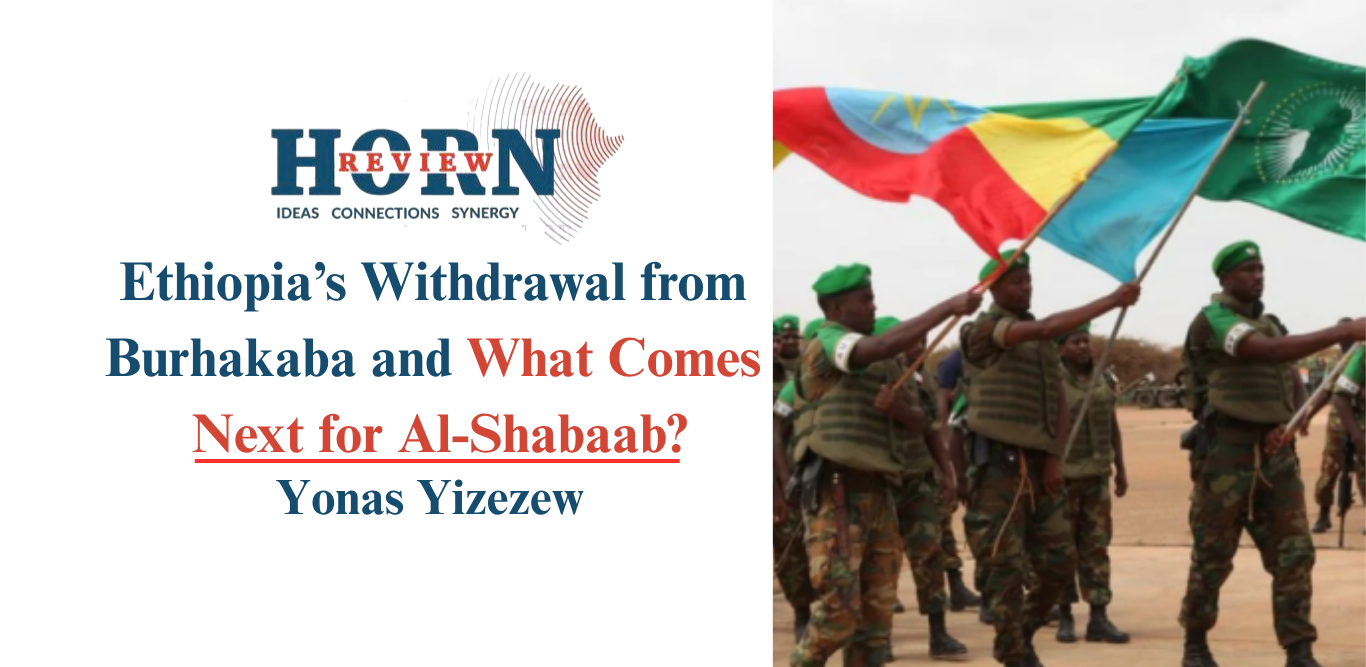
Meta Title: Ethiopia’s Burhakaba Handover Signals High-Stakes AUSSOM Transition Amid Funding Crisis
Meta Description: As Ethiopian forces hand over Burhakaba base to the Somali National Army, a looming UNSOS funding cutoff and rising Al-Shabaab capabilities threaten the AUSSOM transition. Analysis of the security vacuum risks.
Focus Keyword: Ethiopia troop withdrawal Somalia AUSSOM
Secondary Keywords: Burhakaba handover, AUSSOM transition, UNSOS funding crisis, Al-Shabaab capabilities, Somalia security 2026
Ethiopia’s Burhakaba Handover Signals High-Stakes AUSSOM Transition Amid Funding Crisis
The formal transfer of the Burhakaba forward operating base from Ethiopian National Defence Forces (ENDF) to the Somali National Army’s (SNA) 60th Division on August 8 marks a pivotal moment in the AUSSOM transition. While framed as a planned handover under the African Union Support and Stabilization Mission in Somalia, the withdrawal occurs against a backdrop of catastrophic logistical uncertainty, a resurgent Al-Shabaab, and fracturing regional cohesion.
This development is not merely a tactical redeployment; it is a stress test for Somalia’s security architecture at the exact moment its external lifeline is being severed.
The Strategic Weight of the Burhakaba Base Transfer
Burhakaba sits astride the critical Mogadishu-Baidoa supply corridor, the main artery linking the federal capital to the administrative heart of South West State. Since 2014, Ethiopian troops—operating successively under AMISOM, ATMIS, and now AUSSOM—have held this position continuously.
The handover to the SNA 60th Division, facilitated logistically by the United Nations Support Office in Somalia (UNSOS), represents the “progressive handover framework” central to the AUSSOM mandate. Unlike its predecessors, AUSSOM was designed as a lighter, more focused support operation intended to accelerate the transfer of security responsibility to Somali forces.
However, the geography of Burhakaba magnifies the risk. The town is encircled by areas under varying degrees of Al-Shabaab influence. Local reporting confirms the physical withdrawal of the Ethiopian contingent followed the ceremonial transfer swiftly, with similar handovers anticipated across the Bay region in the coming weeks.
Key Context: Ethiopian forces maintain a presence at multiple other locations in Bay and Bakool. Addis Ababa describes this as a “calibrated adjustment rather than a wholesale retreat,” reiterating its commitment to preserving gains made over two decades.
Political Friction: From the Somaliland MoU to the Ankara Declaration
The current deployment of Ethiopian troops under AUSSOM exists only because of intensive diplomatic repair work.
In 2024, Mogadishu initially sought to exclude Ethiopia from the successor mission following Addis Ababa’s controversial Memorandum of Understanding with Somaliland. The deadlock was broken by the Ankara Declaration, mediated by Turkey in late 2024, which restored cooperation and allowed Ethiopian forces to remain—albeit in reduced numbers.
Despite this framework, the source text highlights “residual unpredictability” in Somalia’s posture:
- Fluctuating political alignments.
- Internal federal–member-state tensions complicating unified security planning.
- Occasional hostility toward Ethiopian interests.
This volatility forces Ethiopia to manage its force posture with extreme caution, balancing mission mandates against bilateral trust deficits.
The UNSOS Funding Cliff: An Existential Crisis for AUSSOM
The most immediate structural threat to the transition is not tactical but financial. In early July 2026, the United States notified the African Union it would no longer support the extension of UNSOS beyond December 31, 2026.
Why UNSOS Matters
UNSOS provides the logistical backbone without which AUSSOM cannot function at scale:
- Fuel and transport
- Medical evacuation (MEDEVAC)
- Communications infrastructure
- Base construction and maintenance
The US Rationale
Washington judges that Somalia has failed to translate years of external investment into sustainable national ownership of security. While the US will not block the AUSSOM mandate renewal, it will oppose any UN Security Council resolution preserving logistical support.
Immediate Consequences
- No Credible Alternative: Troop-contributing countries (TCCs) meeting in Kampala (July 2026) called for an 18–24 month extended transition but produced no alternative financing mechanism.
- Asset Liquidation: UNSOS has reportedly begun processes for the commercial disposal of substantial equipment inventories—a tangible signal planners anticipate a contraction of the mission’s footprint.
Asymmetric Trajectories: Al-Shabaab Gains vs. Partner Drawdown
A dangerous convergence is underway: Al-Shabaab is expanding capabilities while the coalition is contracting.
Al-Shabaab’s Evolving Arsenal
Recent analysis from the Africa Center for Strategic Studies and UN monitoring groups indicates significant upgrades:
- Drone Operations: Expanded surveillance use with growing potential for armed strikes.
- Houthi Linkages: Training, equipment supply, and technical expertise facilitated via Yemen’s Houthi network.
- Rocket Systems: Refined indirect fire capabilities threatening forward bases and Mogadishu.
- Counter-Surveillance: Technology to evade ISR (Intelligence, Surveillance, Reconnaissance) assets.
- Resilient Financing: Sophisticated taxation networks funding expansion.
The Somali Force Readiness Gap
The SNA units assuming control—like the 60th Division—lack the depth of experience, heavy weapons, organic aerial support, and sustained logistics Ethiopian units developed over a decade. History offers a grim precedent: earlier drawdowns in Dinsoor, Mahas, and Lower Shabelle towns were rapidly followed by Al-Shabaab advances that recovered territory and severed supply lines.
Burhakaba’s encircled geography makes it exceptionally vulnerable to isolation and siege tactics.
Regional Geopolitics: Fragmented Deployments and Rival Agendas
The AUSSOM crisis risks dissolving the unified command structure into a patchwork of bilateral deployments driven by national interests.
| Actor | Interest | Risk Factor |
|---|---|---|
| Kenya / Uganda / Djibouti | Stabilization, border security | Equally dependent on UNSOS pipeline; sustainment at risk. |
| Egypt | Nile water leverage vs. Ethiopia; Red Sea access | Deployment under AUSSOM/bilaterally assessed as not primarily intended to strengthen unified effort. Risks introducing competing spheres of influence. |
| Gulf States | Influence projection | Backing rival Somali political actors, further fragmenting the security landscape. |
In this environment, Al-Shabaab exploits the narrative of being the “sole coherent alternative” to a divided, externally dependent political order.
Ethiopia’s National Security Calculus
For Addis Ababa, the stakes are existential. A resilient Al-Shabaab is viewed as a direct threat to Ethiopia’s eastern border and regional stability.
Historically, ENDF deployments in Gedo, Bay, and Bakool have functioned as a strategic buffer:
- Containing cross-border infiltration.
- Denying militants secure rear bases.
- Protecting trade routes and local populations.
A disorderly contraction raises the specter of:
- Increased militant activity along the Ethiopian frontier.
- Potential refugee flows into Somali Region (Ethiopia).
- The necessity to redeploy domestic forces to border defense, stretching national military resources.
Managed Transition vs. Disorderly Exit: The Decisive Fork
The source analysis identifies two distinct pathways for the remaining months of 2026:
Scenario A: Managed Transition (The Narrow Path)
- Carefully sequenced transfers tied to verifiable SNA readiness metrics.
- Residual partner enabling support (airlift, ISR, MEDEVAC) funded via emergency bilateral bridges.
- Credible political reconciliation between Mogadishu and Federal Member States (FMS) to unify command and control.
Scenario B: Accelerated/Under-Resourced Drawdown (The Likely Trajectory)
- Handovers driven by fiscal calendars and political deadlines, not force readiness.
- Cascading base losses isolating remaining AUSSOM contingents.
- Collapse of supply route security, forcing further contractions.
- Al-Shabaab territorial recovery, enabling expanded taxation, recruitment, and projection toward major population centers.
Historical Parallel: The current trajectory echoes the aftermath of the 2006–2009 Ethiopian intervention and subsequent partial ATMIS withdrawals, where vacuums were instantly filled by a more capable insurgent force.
Conclusion: A Symptom of Converging Pressures
The Burhakaba handover is less an isolated tactical adjustment than a visible symptom of five converging pressures:
- Structural weaknesses in Somali security institutions.
- Political contestation undermining unity of effort (Federal vs. State).
- Abrupt withdrawal of the logistical underpinnings (UNSOS) sustaining AU operations for nearly two decades.
- Al-Shabaab’s concurrent capability gains (drones, external alliances, financing).
- A shifting regional order where external actors (Egypt, Gulf states, Turkey) pursue parallel national interests.
How these pressures are navigated before the December 2026 UNSOS cliff will determine whether the transition consolidates a fragile equilibrium or opens space for a significant strategic reversal—with direct consequences for Ethiopia’s border security and the stability of the Horn of Africa as a whole.
Frequently Asked Questions (FAQ)
What is AUSSOM? The African Union Support and Stabilization Mission in Somalia (AUSSOM) replaced ATMIS in January 2025. It is mandated to provide a lighter, more focused support role to Somali security forces during the final phase of the transition.
Why is the US cutting UNSOS funding? The Biden administration determined that the Federal Government of Somalia has not achieved “sustainable national ownership” of security despite billions in investment, citing a lack of political reform and force generation.
How does the Ankara Declaration affect Ethiopia’s role? The 2024 Ankara Declaration, mediated by Turkey, resolved a diplomatic crisis caused by the Ethiopia-Somaliland MoU. It permitted Ethiopian troops to remain in the new AUSSOM framework, though at reduced strength compared to ATMIS peaks.
What is the significance of the Al-Shabaab/Houthi connection? Reporting indicates the Houthis in Yemen are providing Al-Shabaab with drone technology, training, and potentially advanced weaponry, representing a dangerous escalation in the group’s power projection capabilities across the Red Sea.
What happens if AUSSOM collapses? Analysts warn of a rapid reversion to pre-2022 territorial control for Al-Shabaab, threatens to major population centers (Baidoa, Kismayo, Mogadishu), massive displacement, and the empowerment of a transnationally networked insurgency capable of threatening neighbors like Kenya and Ethiopia.
