




Meta Title: Ethiopia Launches Africa’s First AI Policy: Startups Graduate to Drive National Digital Transformation
Meta Description: Ethiopia celebrates its first AI startup cohort graduation as Deputy PM Temesgen Tiruneh unveils Africa’s pioneering AI Policy. Discover how the Ethiopian Artificial Intelligence Institute is building a sovereign digital workforce for healthcare, justice, and smart cities.
Focus Keyword: Ethiopia AI Policy and Strategy
Slug: ethiopia-africa-first-ai-policy-startup-graduation-2026
Ethiopia Unveils Africa’s First AI Policy as Pioneer Startup Cohort Graduates
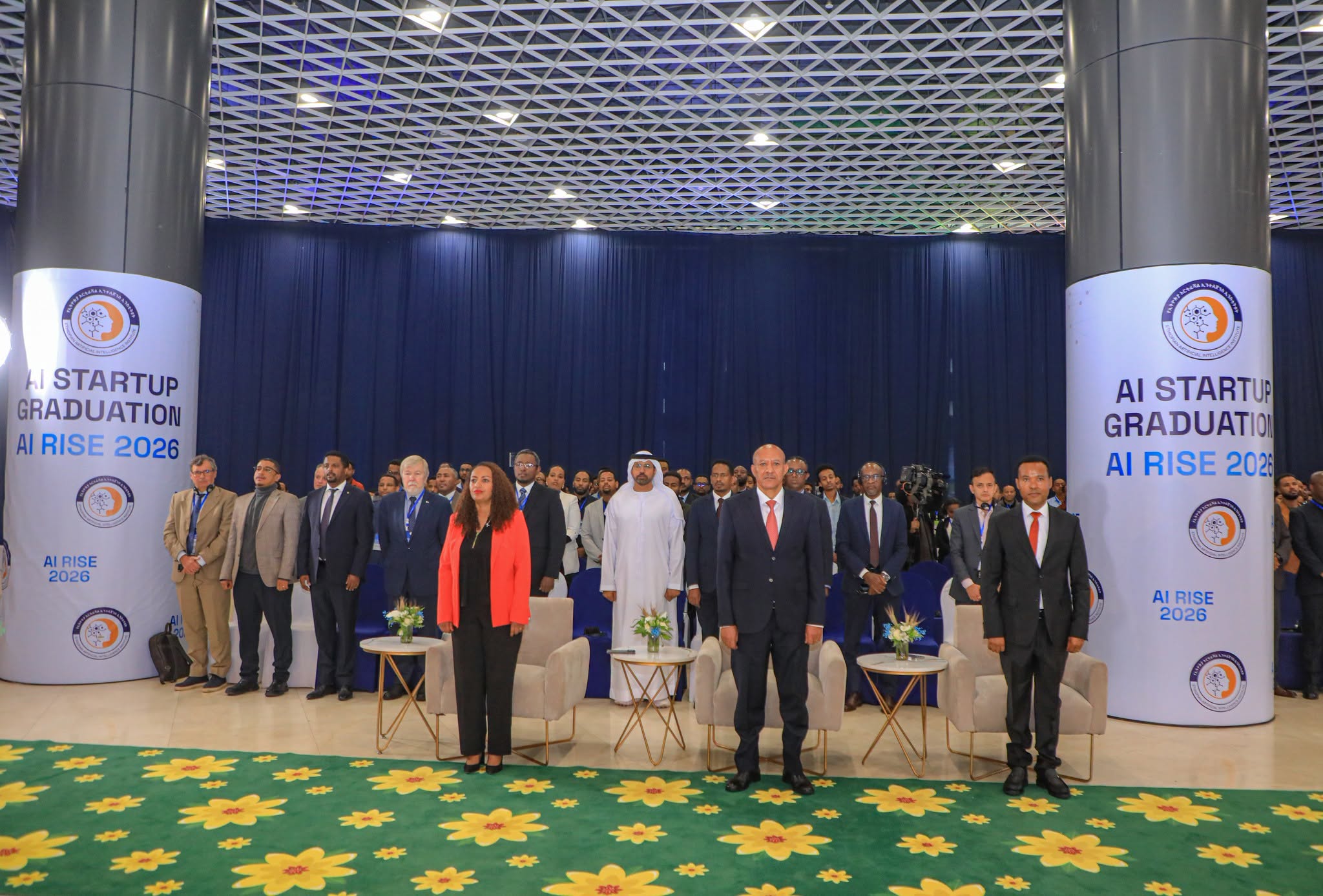
ADDIS ABABA — In a landmark move positioning the nation at the forefront of the continent’s Fourth Industrial Revolution (4IR), Ethiopia has officially commenced the implementation of Africa’s first comprehensive Artificial Intelligence Policy and Strategy. The announcement coincided with the graduation of the inaugural cohort of AI startups incubated by the Ethiopian Artificial Intelligence Institute (EAII), signaling a concrete shift from policy formulation to tangible ecosystem building.
Speaking at the graduation ceremony in Addis Ababa on July 25, 2026, Deputy Prime Minister Temesgen Tiruneh emphasized that developing a sovereign, skilled AI workforce is no longer optional but a strategic imperative for national security and economic competitiveness.
“Artificial intelligence is shaping and determining the course of tomorrow’s world,” DPM Temesgen stated. “Ethiopia is investing in developing and empowering the next generation in the AI sector so that the country can harness the opportunities presented by the technology for national benefits and compete effectively in the future global landscape.”
A Strategic Pivot: From Policy to Practice
The graduation of the first startup cohort—trained intensively over six months—serves as the first major proof-of-concept for the Ethiopia AI Policy and Strategy. According to Worku Gachena, Director-General of the EAII, this policy framework has already catalyzed the production of skilled digital professionals and the development of innovative technologies designed to address real-world Ethiopian challenges.
Read the full Ethiopian Artificial Intelligence Institute mandate on their official portal.
This achievement aligns directly with the broader Digital Ethiopia 2025 strategy, which identifies digital transformation as a core pillar for economic diversification. By formalizing an AI-specific policy—reportedly the first of its kind on the continent—Ethiopia aims to create a regulatory and ethical sandbox that encourages innovation while safeguarding data sovereignty.
Explore the African Union’s Continental AI Strategy for regional context.
Government Vision: Sovereignty, Inclusion, and Pan-African Leadership
Deputy Prime Minister Temesgen outlined a three-pronged mandate for the new graduates and the ecosystem at large:
- National Interest First: Graduates were urged to translate acquired knowledge into practical innovations that solve domestic problems—ranging from agricultural optimization to bureaucratic efficiency.
- Ecosystem Replication: The DPM called on both government and non-government institutions to emulate the EAII’s incubation model, effectively decentralizing AI capacity building across ministries and regional states.
- Pan-African Scalability: The government reaffirmed its commitment to strengthening a startup ecosystem that benefits not only Ethiopian youth but young innovators across Africa, positioning Addis Ababa as a potential AI hub for the Global South.
Learn how the World Bank supports Digital Economy for Africa (DE4A) initiatives.
Real-World Deployment: AI in Public Service Delivery
Beyond the incubator, the EAII Director-General revealed that AI technologies are already being widely deployed across critical public sectors. This operationalization distinguishes Ethiopia’s approach from purely theoretical policy exercises.
Current deployment verticals include:
- Justice Sector: Algorithmic case management and legal analytics.
- Government Service Delivery: Citizen-facing chatbots and automated workflow systems.
- Public Administration: Predictive analytics for resource allocation.
- Healthcare: Diagnostic support tools and health data management.
- General Public Services: Smart city infrastructure pilots.
This public-sector-first approach mirrors global best practices where governments act as the “first customer” for domestic tech startups, de-risking early-stage ventures. UNESCO’s Recommendation on the Ethics of AI highlights the importance of such human-rights-centered public deployment.
Building the Talent Pipeline: Incubation, Camps, and Curriculum
The EAII’s success is attributed to a multi-layered human capital development strategy that targets every educational tier:
| Initiative | Target Audience | Objective |
|---|---|---|
| Startup Incubation | Early-stage founders | Commercialize R&D; build investable products. |
| Summer Camps | Youth / K-12 students | Demystify AI; inspire STEM career paths. |
| School Integration | Primary/Secondary | Embed AI literacy into national curriculum. |
| Higher Education Partnerships | University researchers | Advance deep tech R&D; retain PhD talent. |
This “cradle-to-career” pipeline is essential for addressing the global AI talent gap, which the International Telecommunication Union (ITU) identifies as a primary barrier to equitable AI adoption. Review the ITU AI for Good Global Summit outcomes.
Innovation Showcase: Startups Solving Ethiopian Problems
The graduation ceremony featured an exhibition where trainees demonstrated AI-powered Minimum Viable Products (MVPs) across seven strategic sectors. These prototypes offer a glimpse into the immediate commercial and social ROI of the national strategy.
Key Innovation Verticals
- Healthcare: AI-driven diagnostic imaging for rural clinics with limited radiologists.
- Education: Adaptive learning platforms in local languages (Amharic, Afaan Oromo, Tigrinya).
- Transportation: Traffic flow optimization and accident prediction models for Addis Ababa corridors.
- Language Technology: Natural Language Processing (NLP) tools for low-resource Ethiopian languages—critical for digital inclusion.
- Smart Cities: Waste management routing and energy consumption forecasting.
- Finance: Credit scoring algorithms for the unbanked using alternative data.
- Human Development: Job matching platforms and skills gap analysis for the labor ministry.
The focus on Low-Resource Language NLP is particularly strategic. With over 80 languages spoken domestically, solving language technology unlocks digital access for millions currently excluded by English-centric platforms. See Masakhane Research on African NLP.
The Road Ahead: Challenges and Opportunities
While the graduation marks a significant milestone, the path to a mature Ethiopia AI ecosystem requires navigating known hurdles:
- Compute Infrastructure: Reliance on foreign cloud providers creates latency and data sovereignty risks. Investment in local High-Performance Computing (HPC) is the next logical step.
- Regulatory Sandboxes: The new policy must evolve into agile legislative frameworks for data protection (Personal Data Protection Proclamation), cybersecurity, and AI liability.
- Venture Capital Gap: Early-stage graduates require patient capital. The recently launched Ethiopia Securities Exchange and diaspora bonds could be leveraged for a dedicated “AI Fund.”
Conclusion: Writing Africa’s Algorithmic Future
The graduation of the EAII’s first cohort is more than a ceremonial milestone; it is the operationalization of a sovereign vision. By codifying the continent’s first AI Policy and Strategy, Ethiopia is not merely adopting technology—it is architecting the governance frameworks, talent pipelines, and indigenous innovation capacity required to own its digital future.
As these startups move from incubation to market, the true test of the policy will be its ability to scale solutions from Addis Ababa’s exhibition halls to the farms, clinics, and classrooms of rural Ethiopia—and eventually, to export those solutions across the African Continental Free Trade Area (AfCFTA).
Track AfCFTA Digital Trade Protocol developments.
Frequently Asked Questions (FAQ)
What is the Ethiopian Artificial Intelligence Institute (EAII)? The EAII is the federal government agency mandated to coordinate national AI research, development, policy implementation, and talent cultivation. It operates under the Ministry of Innovation and Technology (MInT).
Why is Ethiopia’s AI Policy called “Africa’s First”? While several African nations (e.g., Rwanda, Mauritius, Egypt) have national AI strategies, Ethiopia’s framework is distinguished as a comprehensive, legally gazetted Policy and Strategy document covering ethics, data governance, compute infrastructure, and sector-specific deployment mandates simultaneously.
Which sectors are prioritized for AI deployment in Ethiopia? The government prioritizes Healthcare, Agriculture, Justice, Public Administration, Finance, Education, and Smart Cities—sectors with high social impact and data availability.
How can Ethiopian youth join the AI training programs? Applications for EAII summer camps, incubation cycles, and university partnership programs are announced via the official EAII website and the Ministry of Innovation and Technology channels.
What is the significance of Language Technology in this strategy? Developing NLP for Amharic, Afaan Oromo, Tigrinya, and other local languages ensures Digital Inclusion, allowing non-English speakers to access government services, education, and financial tools via voice and text interfaces.
