




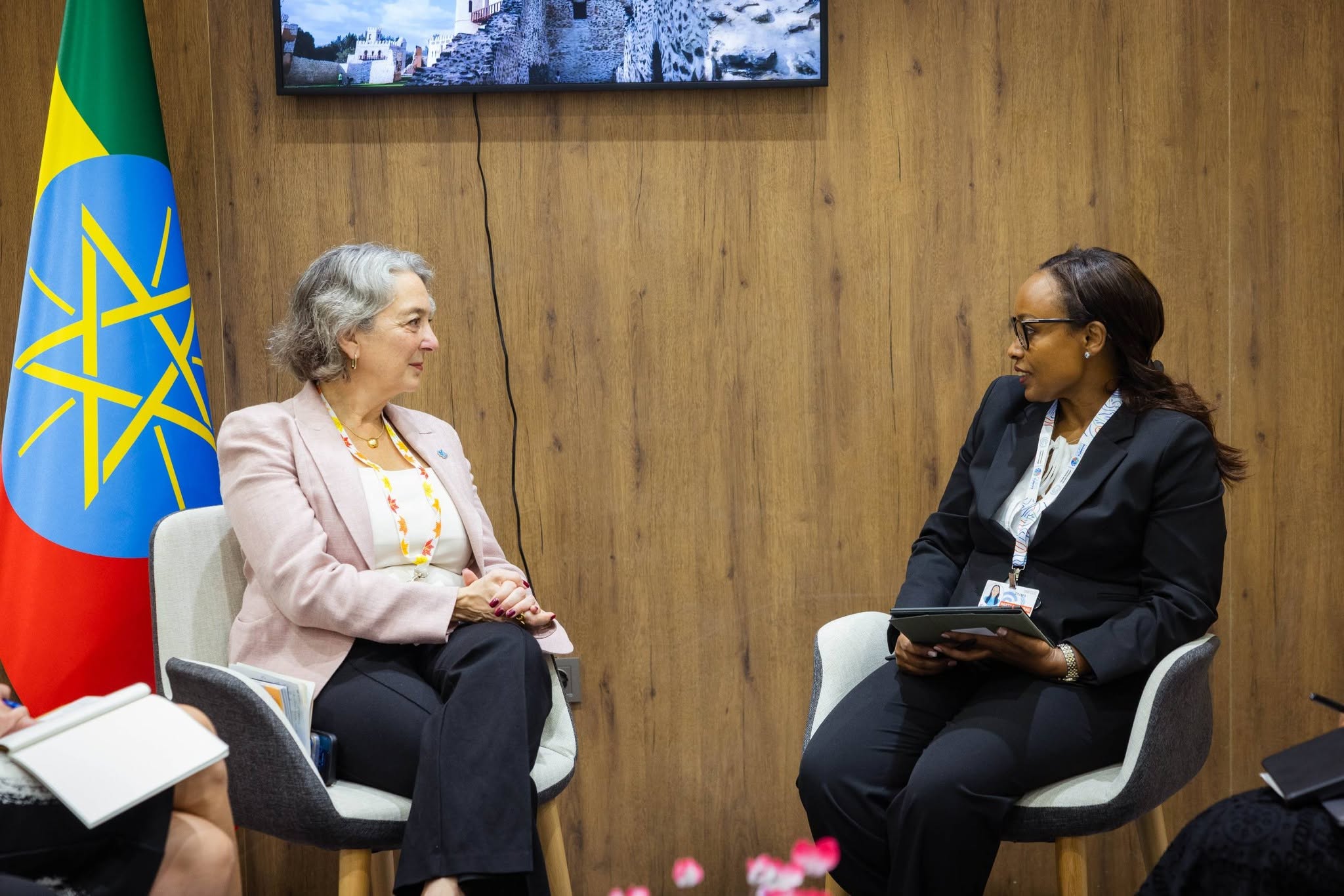
Ethiopia, Canada Forge Climate Alliance Ahead of Historic COP32 in Addis Ababa
Meta Description: Ethiopia and Canada deepen bilateral cooperation on climate resilience and green investment as Addis Ababa prepares to host COP32 in 2027. Read key outcomes from the Fitsum Assefa–Julie Dabrusin talks at COP31.
Ethiopia and Canada Strengthen Climate Ties on Road to COP32
ADDIS ABABA — Ethiopia and Canada have agreed to deepen bilateral cooperation on climate action, signaling a strategic alignment on resilience, sustainable development, and climate finance ahead of the 32nd UN Climate Change Conference (COP32), which Ethiopia will host in November 2027.
The commitment was solidified during high-level talks held on the sidelines of COP31 in Antalya, Türkiye, between Ethiopia’s Minister of Finance and COP32 Chief Negotiator, Fitsum Assefa, and Canada’s Minister of Environment, Climate Change and Nature, Julie Dabrusin.
Strategic Dialogue at COP31: Resilience and Shared Priorities
The meeting in Antalya underscores Ethiopia’s proactive diplomatic strategy: leveraging the current COP presidency cycle to build the political capital necessary for a successful summit in Addis Ababa.
According to the Ethiopian News Agency (ENA), discussions centered on three core pillars:
- Climate Resilience: Enhancing adaptive capacity for vulnerable communities.
- Sustainable Development: Aligning green growth pathways with national economic plans.
- Shared Negotiating Priorities: Coordinating positions on the global stage, particularly regarding the New Collective Quantified Goal (NCQG) on climate finance.
Key Takeaway: The talks reaffirmed a mutual commitment to strengthening the Ethiopia-Canada bilateral partnership as a vehicle for broader international cooperation, directly supporting Ethiopia’s vision for an “action-oriented COP32.”
Why COP32 in Addis Ababa Matters for Africa
Hosting COP32 represents a watershed moment for Ethiopia and the African continent. It is the second time a UN Climate Change Conference will be held on African soil, following COP27 in Sharm El-Sheikh, Egypt (2022).
For the Ethiopian government, the summit is far more than a logistical undertaking; it is a strategic lever to achieve three transformative objectives:
1. Unlocking Climate Investment and Green Finance
Ethiopia aims to translate its diplomatic engagement into tangible climate investment. By showcasing bankable green projects—ranging from renewable energy (hydro, solar, geothermal) to climate-smart agriculture—the host nation seeks to attract foreign direct investment (FDI) and concessional financing.
- External Context: The World Bank’s Country Climate and Development Report for Ethiopia highlights the urgent need for $40 billion in climate investments by 2030.
2. Forging Green Development Partnerships
The bilateral track with Canada exemplifies the type of technology transfer and capacity-building partnerships Ethiopia hopes to catalyze at scale. Canada’s expertise in carbon pricing, nature-based solutions, and clean technology innovation aligns with Ethiopia’s Green Legacy Initiative and its updated Nationally Determined Contribution (NDC).
3. Amplifying the African Voice in Global Negotiations
As the seat of the African Union (AU) headquarters, Addis Ababa offers a unique platform to center the “African Common Position” on critical issues:
- Loss and Damage: Operationalizing the fund agreed upon at COP27/COP28.
- Adaptation Finance: Closing the massive gap between needs and flows (currently estimated at 5-10x below requirements by UNEP Adaptation Gap Reports).
- Just Transition: Ensuring the global shift from fossil fuels does not strand African development aspirations.
Diplomatic Momentum Building: The “Road to Addis” Strategy
The engagement at COP31 in Antalya is not an isolated event but part of a calculated “Road to Addis” diplomatic offensive. Ethiopia is utilizing the interim presidency year to:
- Convene Pre-COP Consultations: Hosting regional ministerial meetings to harmonize African negotiating blocs.
- Engage Non-State Actors: Integrating civil society, youth, indigenous groups, and the private sector into the COP32 agenda-setting process.
- Operationalize the Presidency Programme: Defining thematic days (Finance, Energy, Nature, Adaptation) early to allow deep substantive preparation.
Minister Fitsum Assefa’s dual role as Finance Minister and Chief Negotiator signals a “whole-of-government” approach, integrating fiscal policy with climate diplomacy—a model increasingly adopted by climate-vulnerable nations to mainstream resilience into budget planning.
Canada’s Strategic Interest in the Partnership
For Canada, the partnership serves its Indo-Pacific and Africa Strategies, which prioritize climate leadership and critical mineral supply chains essential for the green transition. Ethiopia’s vast renewable potential and mineral resources (lithium, graphite, rare earths) position it as a strategic partner for Canadian clean tech firms and development finance institutions like FinDev Canada.
Minister Dabrusin’s engagement reflects Ottawa’s commitment to the Paris Agreement’s Article 6 (carbon markets) and the Global Goal on Adaptation (GGA), areas where Ethiopia’s lived experience offers valuable lessons for global policy design.
Looking Ahead: Milestones on the Path to November 2027
With less than two years until the gavel falls in Addis Ababa, the timeline is tightening. Key upcoming milestones include:
| Timeline | Milestone | Significance |
|---|---|---|
| June 2025 | SB62 (Bonn Climate Conference) | Technical negotiations on COP32 agenda items; Ethiopia outlines Presidency priorities. |
| Nov 2025 | COP32 (Belém, Brazil) | Formal handover of COP presidency from Brazil to Ethiopia; launch of “Road to Addis” high-level segment. |
| 2026 | Pre-COP / African Climate Summit | Final political negotiation of COP32 cover decision text; mobilization of host country agreements. |
| Nov 2027 | COP32 Opens in Addis Ababa | Execution of the “Implementation & Action” COP vision. |
Conclusion: A Defining Moment for Climate Diplomacy
The Ethiopia-Canada bilateral meeting at COP31 is a microcosm of the broader geopolitical shift underway: climate diplomacy is becoming development diplomacy. As Ethiopia prepares to welcome the world to Addis Ababa in 2027, its success will be measured not by the smoothness of the logistics, but by the volume of green capital mobilized, the ambition of adaptation outcomes secured, and the strength of the African consensus delivered.
The foundation laid in Antalya suggests Addis Ababa is on track to host a conference that moves the needle from pledges to implementation.
Frequently Asked Questions (FAQ)
When and where is COP32 taking place? COP32 (the 32nd Session of the Conference of the Parties to the UNFCCC) is scheduled for November 2027 in Addis Ababa, Ethiopia.
Who is leading Ethiopia’s COP32 preparations? Fitsum Assefa, Ethiopia’s Minister of Finance, serves as the COP32 Chief Negotiator, leading a whole-of-government preparation strategy.
What were the main topics discussed between Ethiopia and Canada? The ministers discussed climate resilience, sustainable development, climate finance (NCQG), and shared negotiating priorities ahead of COP32.
Why is hosting COP32 significant for Africa? It provides a platform to center the African Common Position on Loss and Damage, Adaptation Finance, and Just Transition, hosted from the diplomatic capital of the continent (AU Headquarters).
How does this fit into the Global Stocktake (GST) cycle? COP32 will be the first major conference following the conclusion of the first Global Stocktake at COP28, tasked with translating the “UAE Consensus” on transitioning away from fossil fuels into nationally driven implementation plans (NDCs 3.0 due 2025).
Related Reading:
