




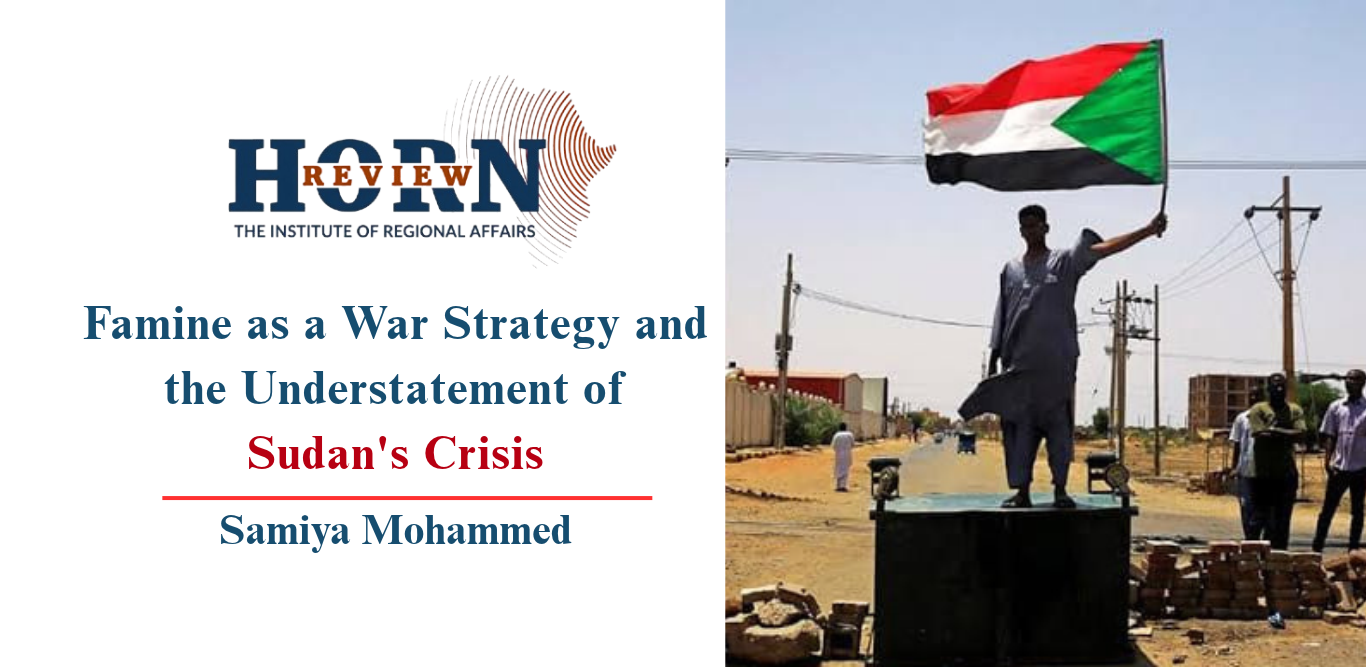
Sudan Famine Crisis 2026: A Deliberate Man-Made Catastrophe, Not a Natural Disaster
The Sudan famine crisis 2026 is not a marginal humanitarian emergency. It is not a natural disaster explicable by drought, failed harvests, or climate variability. It is a severe, man-made catastrophe deteriorating rapidly in key areas, its true severity systematically understated by the very limits of what can be measured in an active war zone. The most recent Integrated Food Security Phase Classification (IPC) analysis confirms that roughly 19.5 million people—approximately 41 percent of the population—face high levels of acute food insecurity (IPC Phase 3 or above) through May 2026. Within this staggering figure, over five million people are in Phase 4 (Emergency) and approximately 135,000 are in Phase 5 (Catastrophe), facing extreme food gaps, starvation, critical acute malnutrition, and elevated mortality risk.
These numbers are grave, but they represent a floor, not a ceiling. The gap between published totals and the reality on the ground is itself a direct product of the war.
Starvation as a Weapon: The Conflict Is the Driver
The central, unavoidable reality is that starvation in Sudan was planned, not incidental. The dominant driver is not climate shock or harvest failure in isolation, but the deliberate conduct of the SAF and RSF conflict since 2023. Warring parties have employed tactics that produce hunger as a foreseeable—often intended—outcome:
- Sieges of population centers.
- Systematic obstruction of commercial traffic and aid convoys.
- Destruction of markets and agricultural infrastructure.
- Forced emptying of cities.
Framing this famine risk solely as a humanitarian emergency or a climate shock erases the element of choice. It recasts deliberate conduct as misfortune, making accountability for starvation as a method of warfare significantly harder to pursue. The correct framing is not that Sudan is experiencing a food crisis despite the war, but that the war is producing famine as one of its intended and foreseeable effects.
The Numbers Are a Floor: The Geography of the Unmeasured
The IPC’s figure of 19.5 million and the 135,000 in Catastrophe rest exclusively on data that could be collected. Large swathes of North Darfur, South Kordofan, and contested zones remain only partially surveyed due to active fighting and deliberate access denial.
Where measurement is possible—in accessible IDP camps—the data is already terrifying. Surveys show Global Acute Malnutrition (GAM) rates of 30 to 38 percent alongside elevated death rates. The unmeasured areas, where the war’s tactics are most intense, are almost certainly worse.
This creates an inverted geography of measurement: the areas most likely to be in famine are the areas least likely to be surveyed. Consequently, the official classification understates rather than overstates the catastrophe.
Catastrophic Malnutrition Among Children and Displaced Populations
The nutritional collapse is accelerating. In 2026, approximately 825,000 children under five are expected to suffer Severe Acute Malnutrition (SAM)—a 7 percent increase from 2025 and roughly 25 percent above pre-conflict levels, according to Action Against Hunger. Untreated SAM is frequently fatal.
Broader needs are enormous: 8.4 million people require nutrition assistance and 4.19 million are expected to suffer acute malnutrition. In Greater Darfur, 13 of 17 SMART surveys conducted since January 2026 were classified as Critical (IPC AMN Phase 4). Several recorded GAM above 20 percent; specific IDP camps hit 38 percent and 30.8 percent—well above typical famine-related malnutrition thresholds. Death rates in multiple locations have reached Emergency levels.
These are not the signatures of a seasonal lean season. They are the signatures of a war economy that has been allowed to function unchecked.
Why “No Famine Declaration” Does Not Mean No Famine
Precision regarding classification is critical. No entire area is currently classified in Famine (IPC Phase 5 Area Classification), which requires specific thresholds on food gaps, malnutrition, and mortality across a defined population. However, the absence of a formal declaration is not evidence of the absence of catastrophe.
- 14 areas in North Darfur, South Darfur, and South Kordofan are at risk of Famine under a reasonable worst-case scenario (intensified conflict, worse access, further displacement, health/WASH collapse).
- An October 2026 IPC Alert confirmed this risk is growing, citing new malnutrition evidence.
- Conditions were projected to worsen during the June–September lean season.
- Projections for later periods covered only part of the country due to access limits imposed by conflict.
The picture is one of clear catastrophe-level pockets with a documented, growing risk of famine, and a formal classification system that cannot keep pace with a war that controls the territory where the worst outcomes are occurring.
The Humanitarian System’s Structural Mismatch
Even when funding exists, the aid system faces a structural mismatch. The combination of insecurity, bureaucratic access negotiations with warring parties, and the sheer scale of displacement means assistance reaches only a fraction of those classified in Phase 4 and 5.
- Local mutual aid networks and community kitchens have filled lethal gaps that international systems cannot, yet they receive little sustained support or visibility.
- The gap between the 19.5 million in need and those actually reached is not merely a funding problem—it is an access and design problem.
- The humanitarian architecture is built for a world where parties consent to access and needs can be assessed. Sudan’s war has removed both conditions.
The result: the aid system reports needs it cannot meet, while the actors producing those needs control the narrative and the terrain.
There Are No Safe Zones: The Collapse of the East
A dangerous geographical misreading persists. Port Sudan and the eastern states are frequently presented as stable refuges from the collapse in the west. The data contradicts this:
- Rising malnutrition rates, including in Port Sudan hospitals.
- Drone strikes on power and water infrastructure cutting treatment capacity and irrigation.
- Economic free fall driving up food prices.
- Displaced families arriving from the west into areas with limited services and high disease risks.
The distinction between active conflict zones and “safer” areas collapses once power grids, markets, and health systems are degraded nationwide. Malnutrition and excess mortality are not confined to the front lines. This undermines the comforting assumption that displacement equals protection; in Sudan, displacement often moves people from one form of exposure to another.
External Enablers: Sustaining the War Economy
External actors are keeping the machine running while denying responsibility. A confidential UN Panel of Experts report from late 2026 establishes conclusively that the famine risk is sustained in part by external material support that faces little sustained consequence. This is not a peripheral observation; it is central to any serious account of why the famine risk persists.
The cycle is self-reinforcing:
- Warring parties have incentives to deny or downplay famine while continuing tactics that produce it.
- Access restrictions prevent full measurement and documentation.
- External backers face limited pressure.
- Atrocities—sexual violence, forced recruitment, infrastructure attacks—continue with little consequence.
Without a change in the military balance or external leverage, the famine risk remains a structural feature of the war, not a temporary side effect.
Accountability Is Blocked by Design
Accountability is structurally impossible under current conditions—and this is not an accident of circumstance but a design of the conflict.
- Both sides incentivize famine denial while continuing starvation tactics.
- Access restrictions block evidence collection.
- External enablers operate with impunity.
- The international system is asked to classify a famine while the parties producing it control the conditions under which classification occurs.
That is why the published figures must be read as a conservative floor. That is why the absence of a full area famine classification should not be read as reassurance. And that is why the language of “humanitarian emergency” is insufficient to the task.
Conclusion: Naming the Crime
What is happening in Sudan is a man-made famine crisis, severe and still deteriorating in key areas, with clear catastrophe-level pockets and a documented risk of famine that the formal system has not yet captured.
The analytical and moral imperative is to state this plainly:
- Starvation here is a method of war.
- The numbers understate the reality.
- The aid system cannot reach the scale of the need.
- The external support sustaining the war faces little consequence.
Until these dynamics change, the Sudan famine crisis 2026 will remain a permanent feature of the conflict, not a temporary side effect.
