




Post 2018 Ethiopia is presented as a series of separate conflicts: the fall of TPLF dominance, massacres in Oromia and Benishangul, the Tigray War, the rise of OLA and Fano, renewed tension with Eritrea, and finally the emergence of Tsimdo.
That chronology encourages belief that each conflict developed independently. However, the alliances now emerging make that interpretation harder to sustain. ACLED describes an unprecedented alignment between elements of TPLF and Fano and identifies signs of operational coordination. Critical Threats reports discussions involving TPLF, Fano, OLA and ONLF actors, together with Eritrean support and facilitation. The evidence does not establish that every massacre since 2018 originated from one hidden command, but it does establish that movements presented as mortal enemies can cooperate when their strategic interests converge.
That convergence becomes easier to understand by asking what each actor gains from weakening Ethiopia’s federal center. TPLF gains greater leverage over Tigray’s territorial and political future, particularly “Western Tigray”. Hardline Oromo nationalism gains greater room for its maximalist self-determination. Eritrea gains security from an Ethiopia less capable of exerting pressure over Assab due to ongoing internal conflicts. Egypt gains from a weaker upstream Nile and Red Sea competitor. These actors do not need to agree on Ethiopia’s final political map. They need only find common advantage in reducing the power of Addis Ababa. The most glaring contradiction lies in Amhara, because the current armed Fano mobilization conflicts with the historic positioning of the Amhara, whose elites have backed central power for centuries. What was done to antagonize them to abandon their historic position is an important question.
Massacre and mobilization
The political environment that produced this alignment was shaped by repeated civilian massacres. At Gawa Qanqa in November 2020, at least 54 ethnic Amhara civilians were killed. Amnesty International reported witnesses attributing the attack to suspected OLA members. Days later, Mai Kadra became another symbol of communal violence when Tigrayan militia killed Amhara civilians and retaliatory killings of Tigrayans followed. These massacres did more than produce casualties. They strengthened the belief that ethnic communities could not rely on then Ethiopian state for protection and therefore required their own armed defenders. Thise was by design, to weaken Ethiopia, long and historic statehood.
The Tigray War multiplied this process. Eritrean troops committed the Axum massacre, where Amnesty International concluded that hundreds of unarmed civilians were systematically killed. Tigrayan forces later committed documented killings, rape and looting in Amhara, including in Chenna and Kobo. In Western Tigray, Tigrayan civilians suffered killings, displacement, detention and other serious abuses. Each community consequently emerged with documented experiences of victimization and political movements capable of converting those experiences into recruitment, territorial claims and demands for armed protection.
The massacre at Tole in June 2022 intensified the same mechanism. Human Rights Watch documented roughly 400 Amhara civilians killed, including many women and children. Ethiopian authorities blamed OLA, which denied responsibility. Regardless of unresolved responsibility, Tole became a powerful symbol of Amhara vulnerability and strengthened the argument for independent armed protection. Yet Fano expansion and violence affecting Oromo civilians subsequently produced the opposite grievance. Violence against Amharas strengthened Fano mobilization; violence against Oromos strengthened Oromo mobilization. Ethiopia entered a self-reinforcing cycle in which every atrocity could become political ammunition for another armed movement.
Pretoria and the surviving military structure
The Pretoria Agreement was intended to end that cycle by requiring comprehensive disarmament, demobilization and reintegration of TPLF combatants and prohibiting support for armed groups, renewed mobilization and unconstitutional foreign relationships. Tigrayan forces surrendered heavy weapons, so it would be inaccurate to claim that no disarmament occurred. The larger problem is that weapons are only one part of military power. Commanders, fighters, intelligence relationships, organizational structures, light weapons and the ability to remobilize can survive formal disarmament.
Unresolved military capacity matters because TPLF is no longer operating within the alliance structure of the 2020 war. ACLED now describes growing alignment between TPLF, Eritrea and some Fano formations, while assessing that TPLF aligned Fano forces could conduct diversionary operations designed to overstretch federal forces during a renewed confrontation. Pretoria therefore left behind not simply an unfinished DDR program but the possibility that surviving military networks could later be incorporated into a new opposition architecture.
Tsimdo makes the convergence visible
Tsimdo is important because it exposes relationships that once appeared politically impossible. TPLF and Fano fought one another during what has been termed the “Tigray War” and remain divided over Western Tigray. Eritrea fought TPLF and committed atrocities against civilians in Tigray. Fano and Oromo armed actors represent competing territorial and nationalist projects. Yet current reporting shows that former enemies can cooperate against Addis Ababa without resolving their deeper disagreements.
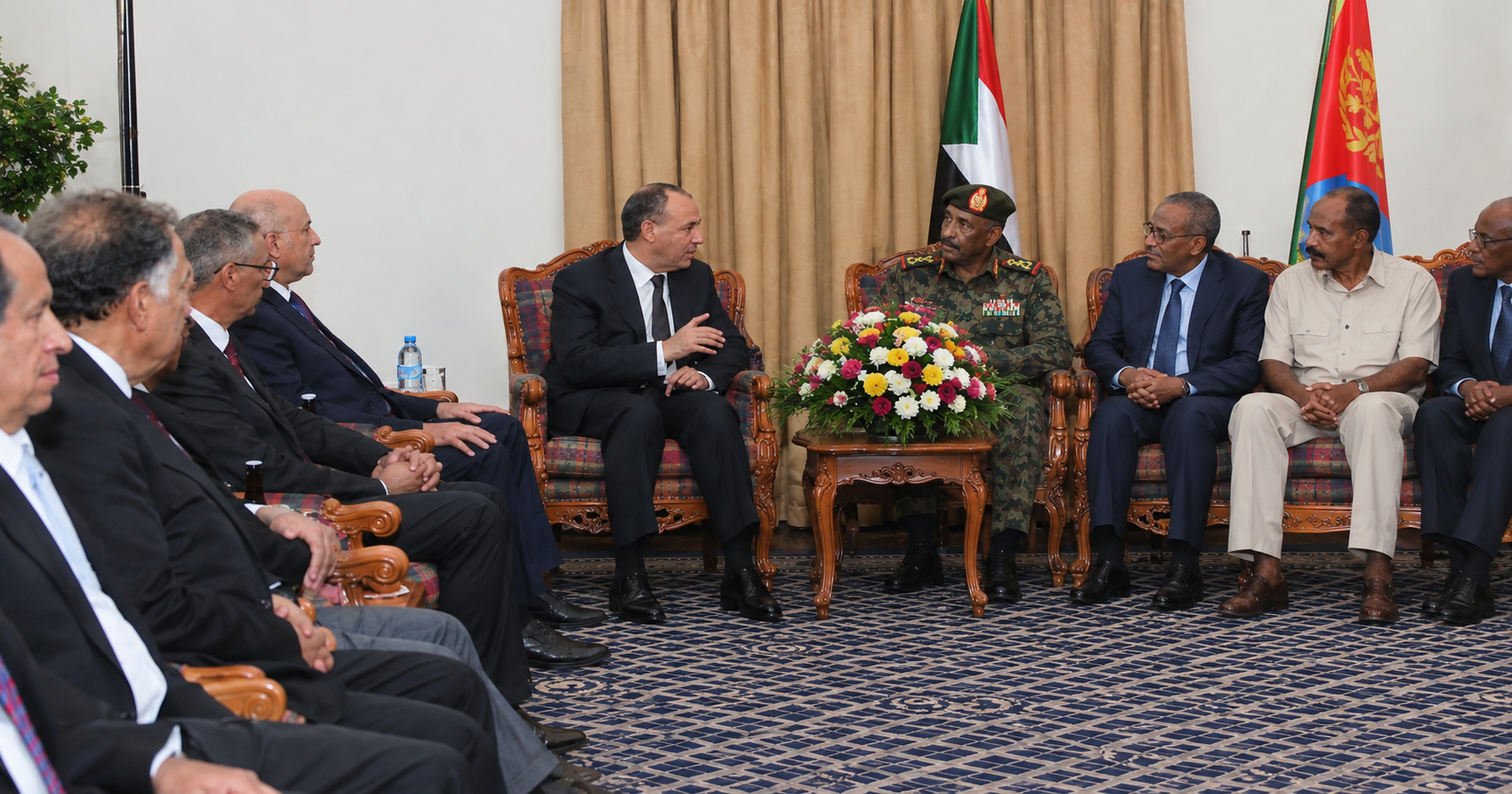
ACLED describes an emerging multi front alignment involving TPLF, Fano forces , Eritrean and Sudanese dimensions and reports a Port Sudan meeting involving regional state and nonstate actors opposed to the Ethiopian government. Critical Threats reports broader discussions involving TPLF, Fano, OLA and ONLF. The significance is not that all these organizations have merged into one command. It is that geographically separate forces can produce a coordinated strategic effect by compelling the federal government to divide troops and resources across several fronts.
This also changes how the period before Tsimdo became public should be investigated. Coalitions do not normally begin on the day they are announced. Contacts, intermediaries, negotiations, training relationships and logistical arrangements usually precede public acknowledgement. Tsimdo therefore does not prove that every earlier operation belonged to the same network, but it creates a legitimate question about how far back these relationships extend and whether some apparently separate insurgent activities were connected before the alliance became visible.
Eritrea and the logistical advantage
Eritrea’s role is no longer merely theoretical. ACLED reports claim of Eritrean training and assistance to Fano formations and assesses that Eritrea could provide weapons, territory and support to TPLF and aligned actors. Critical Threats also reports Eritrean support for Ethiopian armed organizations and facilitation of Tsimdo contacts.
The strategic motive is closely connected to Assab. Eritrea has strong reasons to oppose the emergence of an Ethiopian government powerful enough to exert sustained pressure over Red Sea access. An Ethiopia fighting major insurgencies in Tigray, Amhara and Oromia cannot easily concentrate military or diplomatic pressure on Eritrea. Fragmentation therefore serves Eritrean security interests even if Asmara does not share the nationalist objectives of the Ethiopian movements it supports.
The reversal in relations between the TPLF and Eritrea demonstrates how political interests can override even the deepest memories of war. Eritrean troops fought Tigrayan forces and were responsible for the massacre of Tigrayan civilians, yet despite this bloodshed, a marriage of convenience now appears to have emerged between Tigray’s political leadership and the regime in Asmara. The lesson is sobering: the enemies remembered by ordinary people are not necessarily permanent enemies for political leaders pursuing strategic interests. For many in Tigray, this reversal risks deepening an already profound sense of disillusionment, particularly as accountability and justice for the crimes committed during the war appear increasingly elusive.
Egypt and containment
Egypt’s motive is different but compatible with the same outcome. Cairo’s dispute with Ethiopia over the Nile and the Grand Ethiopian Renaissance Dam is well established. But it goes well beyond one dam. It is about protecting Egypt’s historically lopsided share of the entire Nile Basin and the water that flow from it. Critical Threats describes a broader regional strategy in which Egypt strengthens relationships with Eritrea, Somalia and other actors capable of constraining Ethiopian power. A unified Ethiopia with the GERD, a large population and ambitions for Red Sea access is a far stronger strategic competitor than an Ethiopia consumed by simultaneous internal conflicts.
The claim that Egypt directly finances or commands Tsimdo requires stronger evidence than currently exists publicly. But Egypt does not need to direct individual massacres to benefit from fragmentation. Persistent internal conflict consumes Ethiopian resources, weakens economic growth, reduces diplomatic flexibility and limits Addis Ababa’s ability to project regional power. The distinction is therefore between proven motive and still developing evidence of operational sponsorship.
The territorial ambitions beneath the alliance
For TPLF, weakening federal authority increases leverage over disputed Western Tigray and creates space for a stronger Tigrayan territorial position. Historical currents associated with a broader Greater Tigray idea deepen the significance of that territorial question, although historical ideology should not automatically be treated as current official policy. The present dispute alone shows why a weaker federal government benefits TPLF bargaining power.
For hardline Oromo nationalism, a weaker center similarly expands the space for maximal self-determination and stronger Oromo territorial and political autonomy. TPLF and Oromo hardliners do not need to agree on Ethiopia’s future borders. Both can benefit from diminishing the federal authority that presently constrains their separate ambitions.
This is how a loose confederal outcome could emerge without a written agreement establishing one. The participants need not agree today on Ethiopia’s final map. They need only weaken the institution capable of preventing each from pursuing its own preferred map tomorrow. A state containing powerful armed regions, weak federal enforcement, persistent territorial disputes and growing foreign influence could become confederal in practice even while retaining the constitutional name of a federation.
The Amhara contradiction
This is where Fano’s position becomes particularly consequential. Amhara mobilization grew in part from documented atrocities, displacement and unresolved territorial disputes. These included the Mai Kadra massacre, in which more than 1,000 civilians were reportedly killed, as well as continued violence in parts of Oromia, where armed groups including the OLA have been implicated. Such events deepened legitimate fears over civilian security and contributed to growing support for Fano’s armed insurgency. Yet Fano’s emerging cooperation with the TPLF and Eritrea raises a difficult question: whether legitimate Amhara grievances are now being channeled into a broader military strategy whose objectives may ultimately diverge from Amhara interests—particularly given the extensive allegations of TPLF and Eritrean abuses against Amhara communities.
TPLF’s claims over Western Tigray remain directly at odds with important Amhara territorial interests, while hardline Oromo nationalism carries territorial and constitutional ambitions that do not naturally align with those of Amhara nationalists. Eritrea, meanwhile, has a strategic interest in a weaker Ethiopian state, particularly if diminished federal power reduces Addis Ababa’s ability to challenge Eritrean control of Assab. Egypt has its own interest in limiting Ethiopia’s regional influence, given the longstanding dispute over the Nile and the Grand Ethiopian Renaissance Dam (GERD). Fano can therefore become useful to several actors pursuing very different objectives, united primarily by their opposition to the federal government.
The danger is that legitimate Amhara grievances could become manpower for a strategy designed by others. Fano may view cooperation with the TPLF and Eritrea as a means of weakening Addis Ababa, while the TPLF could view Fano as a way to stretch federal forces across multiple fronts. Eritrea, meanwhile, could benefit from the diversion of Ethiopian military resources, while external powers may see strategic advantage in the cumulative weakening of the Ethiopian state. Such relationships can be mutually useful in the short term while remaining fundamentally unequal in their long-term strategic consequences.
For Fano, the central question is therefore what happens after the common adversary is weakened. Tactical cooperation does not erase the competing political and territorial ambitions of the actors involved. The TPLF, Eritrea, Oromo nationalist forces and external powers may each have their own reasons for supporting a weaker federal center, but none of those objectives necessarily guarantees that Amhara interests will be protected afterward.
The unresolved dispute over Welkait makes this contradiction particularly difficult to ignore. Fano and the TPLF have not resolved their competing territorial claims; they have, at most, placed them alongside a more immediate common objective. If cooperation succeeds in weakening the federal government, these unresolved disputes could eventually resurface in an environment where the national institutions capable of mediating them have themselves been weakened. That outcome could ultimately serve Ethiopia’s historic adversaries far more than it serves the communities whose grievances helped drive the conflict in the first place.
Massacre as infrastructure for fragmentation
The massacres that followed 2018 therefore matter for more than their immediate death toll. They contributed to a progressive erosion of confidence in the state’s ability to protect its citizens, while creating fertile ground for armed movements to mobilize around fear, grievance and communal insecurity. In Amhara areas, attacks such as those at Gawa Qanqa and Tole became powerful symbols of vulnerability, reinforcing the perception that Amhara communities could not rely on national institutions for protection. The killings at Chenna and Kobo, meanwhile, deepened distrust of the TPLF and reinforced the memory of violence associated with the Tigray War. In this sense, violence became not only a humanitarian tragedy but also a source of political mobilization.
The same dynamic extended beyond Amhara communities. The Axum massacre became a defining source of Tigrayan grievance, while subsequent violence involving Fano and Oromo communities has contributed to competing narratives of victimization and insecurity. Each episode creates another constituency more susceptible to the argument that security must ultimately be sought through one’s own ethnic or regional political movement. Over time, these risks producing something resembling bellum omnium contra omnes—a political atmosphere in which communities increasingly view the insecurity of others through the lens of their own vulnerability, and where every new grievance becomes evidence that the state cannot be trusted to protect them.
Tsimdo exposes the deeper contradiction within this dynamic. Communities can remain divided by memory and experience even as political and armed leaders discover tactical reasons to cooperate. A Tigrayan survivor may remember Eritrean atrocities while TPLF leaders calculate that cooperation with Asmara serves their current interests. An Amhara survivor may remember violence committed by Tigrayan forces while a Fano commander sees tactical value in cooperation with the TPLF. Oromo and Amhara civilians may remain deeply suspicious of one another’s armed movements while political actors explore broader arrangements against the federal government. What appears contradictory at the level of communities can therefore become entirely rational at the level of political strategy.
This is the unsettling political atmosphere that now surrounds Ethiopia: not a society inherently condemned to violence, but one in which accumulated grievances can be repeatedly activated, redirected and repurposed by political actors. The victims remember their enemies through lived experience; political organizations can redefine those enemies according to changing interests. Tsimdo demonstrates just how quickly yesterday’s enemies can become today’s tactical partners when the strategic objective changes.
Weaken the center, divide the future
The central danger revealed by Ethiopia’s current trajectory is not that its communities are destined to remain locked in perpetual conflict. It is that accumulated grievances, unresolved territorial disputes and declining confidence in national institutions have created an environment in which political actors can repeatedly mobilize fear and insecurity for strategic purposes. Tsimdo is significant precisely because it demonstrates how quickly political alliances can change when yesterday’s enemies discover a common interest in weakening the federal center. What appears impossible at the level of collective memory can become entirely possible at the level of political calculation.
This creates a vicious cycle. Violence and insecurity generate legitimate grievances; grievances strengthen communal mobilization; communal mobilization weakens confidence in the state; and a weaker state creates even greater space for armed groups and external actors to pursue their interests. If this cycle continues, Ethiopia risks reaching a point where political differences that could once have been negotiated become increasingly defined by territorial and security calculations.
Breaking that cycle requires strengthening, rather than further weakening, Ethiopia’s national institutions. The country needs a strong, legitimate and accountable federal center capable of providing security, enforcing the rule of law and protecting citizens regardless of their ethnicity or political affiliation. But a strong center cannot simply mean a stronger security apparatus. It must be accompanied by a genuine national dialogue that reaches beyond political elites and armed organizations to include grassroots communities, traditional and local leaders, civil society and other voices whose lives have been directly affected by the country’s conflicts. Longstanding territorial, constitutional and political grievances must ultimately be addressed through political processes rather than left to armed actors.
Ethiopia must also confront the regional dimension of its crisis. Foreign governments have their own strategic interests, and some may see advantage in an Ethiopia weakened by internal division. Eritrea and Egypt are particularly important in this regard. Eritrea has an obvious strategic interest in limiting the emergence of a powerful Ethiopia capable positioning itself on the Red Sea, while Egypt has longstanding strategic concerns over the Nile River Basin, the GERD and Ethiopia’s growing influence in the Horn of Africa. Ethiopia therefore has a legitimate interest in resisting external efforts—whether overt or covert—that intensify its internal divisions or add fuel to existing conflicts.
The way out is ultimately neither ethnic mobilization nor the further decentralization of coercive power. It is to rebuild confidence in a national political order strong enough to protect its citizens, flexible enough to accommodate legitimate diversity and credible enough to resolve disputes without violence. Ethiopia does not need fewer identities; it needs institutions capable of making those identities compatible within one political community. The alternative is a country in which yesterday’s enemies become tomorrow’s allies, grievances become instruments of political warfare, and the weakening of the center becomes an end.
