




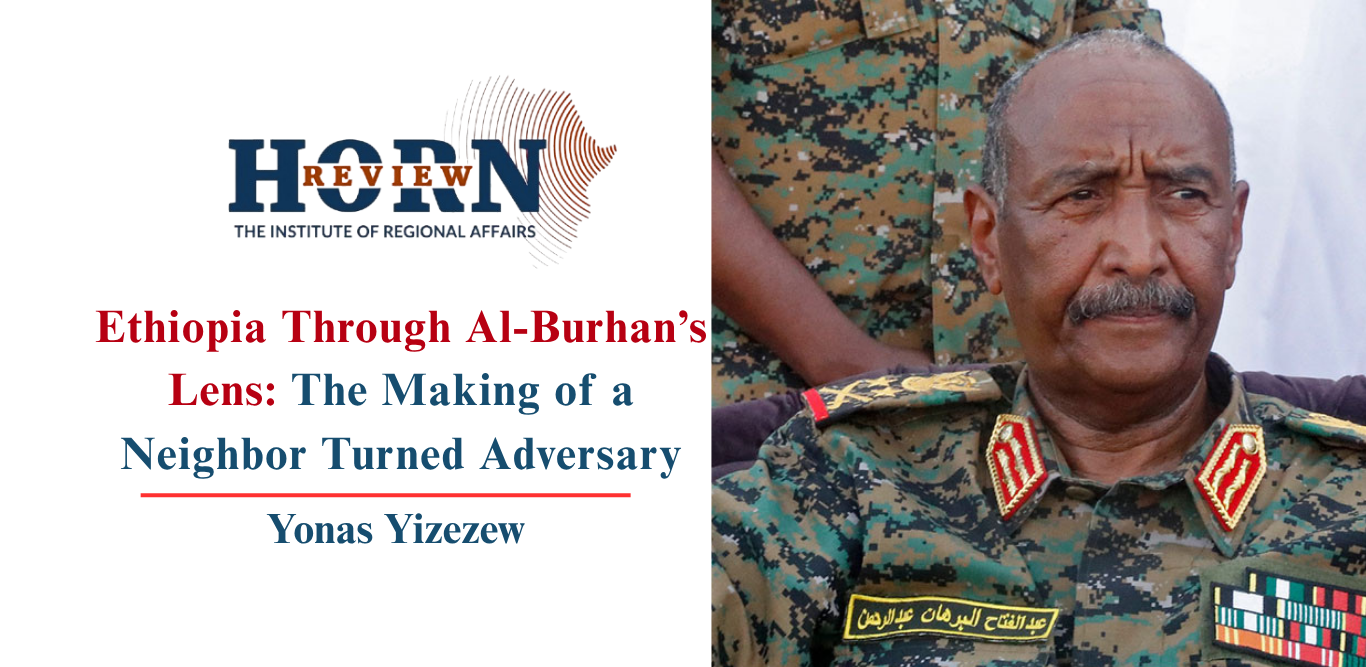
In the volatile geopolitics of the Horn of Africa, the trajectory of nations is frequently determined not by institutional doctrine alone, but by the personal histories and psychological frameworks of individual leaders. Nowhere is this dynamic more evident than in the current friction between Sudan and Ethiopia. Under the leadership of General Abdel Fattah al-Burhan, Chairman of Sudan’s Transitional Sovereignty Council, a long-standing border dispute over the Al-Fashaga region has metastasized into a multifaceted strategic rivalry. This confrontation is fueled by Burhan’s personal military history, the Sudanese Armed Forces’ (SAF) entrenched economic interests, shifting regional alliances centered on the Nile and Red Sea, and the spillover effects of Sudan’s devastating civil war.
The Personalization of State Policy: Burhan’s Formative Years
To understand Sudan’s current posture toward Ethiopia, one must examine the formative experiences of its de facto leader. Unlike career politicians shaped by diplomatic corps, Burhan’s worldview was forged in the borderlands. His career trajectory—spanning the Sudan Border Guards, command of Ground Forces, a stint as a military attaché in Beijing, and training in Egypt and Jordan—instilled a security-first perspective heavily influenced by Khartoum’s historical strategic partnerships.
The 1995 Al-Fashaga Deployment: A Defining Humiliation
A pivotal moment occurred during Burhan’s deployment to Al-Fashaga in 1995–96. This period coincided with a severe crisis in Sudanese-Ethiopian relations following the assassination attempt on Egyptian President Hosni Mubarak in Addis Ababa. Accused of complicity by Cairo and Addis Ababa, Khartoum faced immense pressure. Simultaneously, Egypt consolidated control over the Hala’ib Triangle, and the Bashir regime, preoccupied with the southern insurgency led by the SPLA, declined a military response in Al-Fashaga.
For a young border guard officer, this strategic restraint was perceived not as prudence, but as national humiliation. Analysts suggest this experience cemented a personal conviction that Sudan’s territorial integrity requires proactive military assertion—a conviction that would resurface decades later when he commanded the state.
The 2020 Offensive: Opportunity, Planning, and Nationalist Branding
When the Tigray War erupted in November 2020, Ethiopia’s federal government diverted military resources northward. Burhan seized the strategic window. In late 2020, SAF units rapidly deployed into Al-Fashaga, displacing Ethiopian farmers and establishing control over fertile agricultural land long cultivated by Ethiopian settlers.
Calculated Escalation vs. Improvisation
The speed and logistical coordination of the operation—deploying thousands of troops supported by artillery and armor—indicated extensive prior planning rather than reactive improvisation. Burhan’s immediate visit to Gedaref to declare the army’s determination to “liberate” the territory signaled that this was a flagship political project for the Sovereignty Council Chairman.
“Burhan’s War”: Domestic Legitimacy and Military Economics
The confrontation acquired a distinctly personalized character. Sudanese observers and International Crisis Group reports began referring to the standoff as “Burhan’s war on Ethiopia.” By rejecting negotiations in March 2021 unless Addis Ababa pre-acknowledged Sudanese sovereignty, Burhan boxed himself into a maximalist corner, abandoning the decades-old *status quo* of joint administration and soft borders.
Domestically, the operation served a dual purpose. Amid a fragile civil-military transition, the nationalist narrative bolstered Burhan’s standing within the officer corps and projected an image of sovereignty protection. Crucially, Al-Fashaga’s fertile sesame and sorghum lands are not merely strategic territory; they are economic assets. Senior SAF officers reportedly hold significant commercial stakes in the area’s agribusiness, part of a vast military-economic complex mirroring the Egyptian model, where the armed forces control vast portfolios in agriculture, banking, and import sectors.
Regional Chessboard: The Cairo-Khartoum Axis and the GERD Factor
The Al-Fashaga escalation did not occur in a vacuum. It unfolded alongside a dramatic realignment in Nile Basin politics. Following Omar al-Bashir’s ouster, Sudan and Egypt deepened military cooperation, conducting joint exercises (“Nile Eagles”) and signing a military cooperation agreement in March 2021.
For Cairo, a militarized Sudanese border with Ethiopia serves as strategic leverage in the deadlocked negotiations over the Grand Ethiopian Renaissance Dam (GERD). For Burhan, the Egyptian alliance provides diplomatic cover, intelligence sharing, and military hardware. This convergence saw Sudan’s military leadership reaffirm the colonial-era 1959 Nile Waters Agreement—effectively adopting Egypt’s hydro-political stance—despite arguments that the deal undermines Sudan’s own developmental autonomy.
Expanding the Front: Proxies, Peacekeepers, and the Tigray Connection
Khartoum’s pressure campaign extended beyond Al-Fashaga. In a significant diplomatic escalation, Sudan demanded the removal of Ethiopian peacekeepers from the UN Interim Security Force for Abyei (UNISFA). Simultaneously, Rift Valley Institute research documented SAF support for dissident factions from Ethiopia’s Benishangul-Gumuz region (BPLM and Gumuz groups), utilizing Sudan’s Blue Nile state as a rear base for incursions into western Ethiopia.
The outbreak of the Sudan civil war in April 2023 between SAF and the Rapid Support Forces (RSF) added a dangerous new layer. Historical ties between veteran Tigrayan generals and the Sudanese military—rooted in the TPLF’s use of eastern Sudan as a supply route during the struggle against the Derg regime—resurfaced. Reports indicate the “Army 70” (a TPLF-aligned paramilitary) fought alongside SAF, transforming a bilateral border dispute into a theater of regional proxy warfare.
The Port Sudan Nexus: Convergence of Eritrean, Sudanese, and Ethiopian Opposition Networks
As Ethiopia-Eritrea relations soured following the Pretoria Agreement, Asmara intensified outreach to Ethiopian opposition groups. This track converged with Eritrea’s warming ties to Burhan’s SAF. A critical milestone occurred in mid-May 2026, when Port Sudan hosted a gathering under the “Tsimdo Initiative”. The forum convened Ethiopian opposition figures alongside representatives linked to Eritrea and the SAF.
This convergence foreshadowed the September 2026 formation of the Ethiopian Peoples’ Forces Alliance for Survival and subsequent armed clashes in northern Ethiopia. It signaled a qualitative shift: Sudan’s internal battlefield had become a launchpad for a broader coalition aimed at reshaping the Ethiopian political order, backed by a Cairo-Asmara-Khartoum alignment wary of Addis Ababa’s regional dominance.
Internal Dissent: The “Doves” Within the Military Establishment
Despite the hardline trajectory, a counter-current exists within Sudan’s power structure. Malik Agar, Deputy Chairman of the Sovereign Council, has emerged as a prominent advocate for de-escalation. His behind-the-scenes mediation facilitated direct communication between Burhan and Ethiopian Prime Minister Abiy Ahmed during the May 2026 flare-up. Agar’s calculation is grounded in the geography of the Blue Nile region, where he commands influence; he recognizes that a two-front war—against RSF internally and Ethiopia externally—is existential.
Other pragmatists include Gibril Ibrahim (JEM leader and Finance Minister) and General Ahmed Ibrahim Mufaddal (GIS Chief). They have engaged in backchannel diplomacy to lower temperatures. However, these efforts have struggled to constrain the SAF’s public rhetoric or its operational posture on the ground, highlighting a fracture between the diplomatic and security wings of the military government.
Diplomatic Collapse: The UN Security Council Gambit
The deterioration reached a new peak when Sudan formally accused Ethiopia before the UN Security Council of supporting the RSF and facilitating operations from Ethiopian territory. This move—following the mutual closure of consulates and withdrawal of diplomats—represents a “point of no return” in diplomatic normalization. It internationalizes the bilateral dispute, inviting external scrutiny but also locking both capitals into rigid positions that make quiet compromise politically costly.
Conclusion: A Rivalry Rooted in Personality, Sustained by Structure
The Sudan-Ethiopia crisis is no longer a simple border demarcation issue. It is a composite crisis where Burhan’s personal quest for historical vindication intersects with the SAF’s institutional economic interests, the exigencies of a civil war, and a regional cold war over the Nile and Red Sea access.
While figures like Malik Agar offer a potential off-ramp, the structural incentives for confrontation remain potent. As long as Khartoum views Addis Ababa as an existential threat to its internal cohesion and Cairo views the GERD as an existential threat to its water security, the Al-Fashaga flashpoint will remain a loaded gun on the region’s most volatile fault line. The stability of both nations now hinges on whether institutional restraint can overcome the personalized momentum of a conflict decades in the making.
