




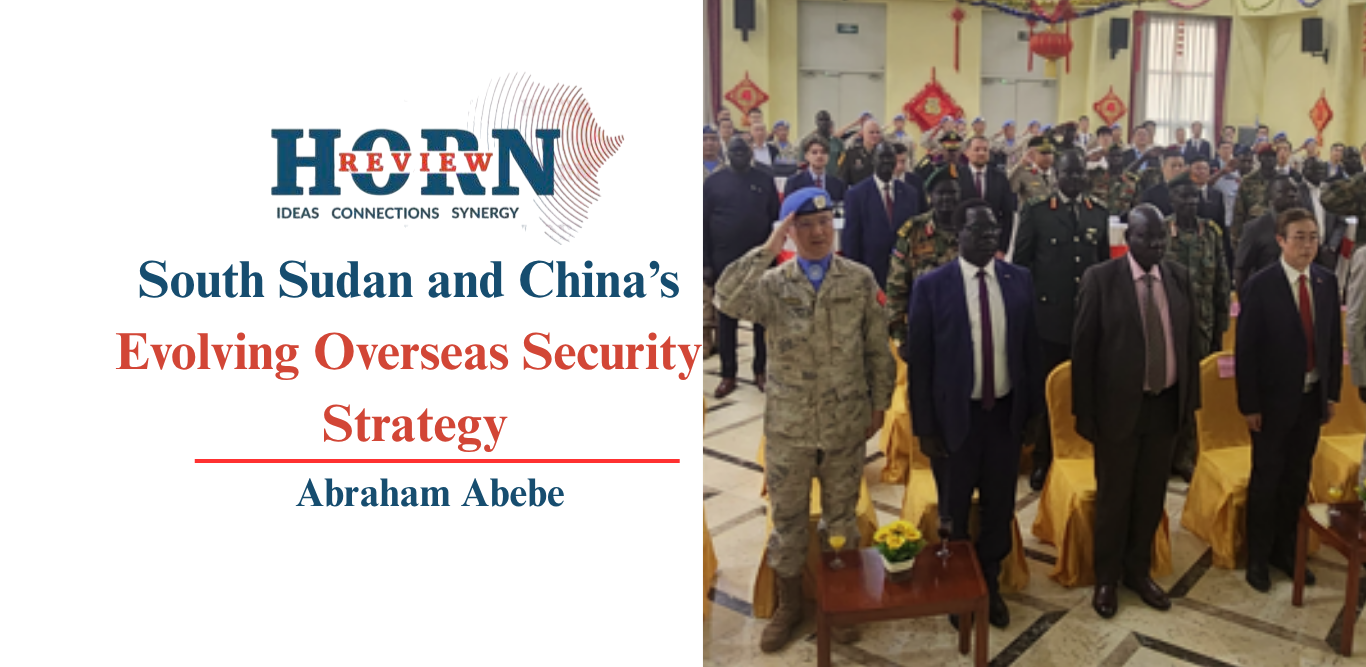
China’s pledge to deepen military ties with South Sudan marks a pivotal waypoint in Beijing’s evolving overseas security architecture. Announced in Juba on July 24, 2026, the commitment to expand defence exchanges and institutional cooperation signals a strategic recalibration: security is no longer a peripheral concern but an enabling condition for protecting vast economic investments and sustaining political partnerships across fragile states.
Focus Keyphrase: China South Sudan military cooperation
This development does not herald a conventional drive for military expansionism. Instead, it reflects a selective security model built on defence diplomacy, UN peacekeeping, and institutional capacity-building. For Beijing, the objective is clear: create a predictable security environment where economic interests—particularly in energy—can survive the volatility of weak governance and regional conflict.
From Oil Fields to Strategic Partnership: The Historical Foundation
Beijing’s footprint in the Sudans predates South Sudan’s 2011 independence. The China National Petroleum Corporation (CNPC) entrenched itself as the dominant investor in Sudan’s hydrocarbon sector. However, independence created a structural dilemma: while Juba inherited the vast majority of oil reserves, the export infrastructure—pipelines, refineries, and Port Sudan—remained locked in Khartoum.
This geography forced Beijing into a delicate diplomatic balancing act, maintaining relations with both capitals to safeguard energy flows. The model worked until the 2013 civil war shattered the illusion that economic diplomacy alone could insulate assets. The conflict halted production, endangered Chinese personnel, and exposed the hard limits of a purely commercial approach.
UNMISS: The Laboratory for a New Security Model
The 2013 crisis catalyzed a shift toward multilateral security engagement. In 2015, Beijing deployed its first infantry battalion to the UN Mission in South Sudan (UNMISS). This was a watershed moment: it provided the People’s Liberation Army (PLA) with operational experience in complex, unstable environments while cloaking the deployment in international legitimacy.
Operationalizing Presence: The 12th Battalion Patrol
The practical utility of this framework was visible in July 2026, when the 12th Chinese Peacekeeping Infantry Battalion conducted an armed patrol in the Mongalla region. Securing the vital supply route linking Juba to northern states—and coordinating directly with local police and government officials—demonstrated how Beijing uses UN mandates to gain granular situational awareness and protect logistical corridors critical to its economic interests.
The 2026 Inflection Point: Institutionalizing Defence Ties
The July 2026 agreement did not emerge in a vacuum. It followed the elevation of bilateral ties to a comprehensive strategic partnership at the 2024 FOCAC Summit. This diplomatic upgrade moved the relationship beyond transactional energy deals toward a architecture where security cooperation is a standing pillar.
The new framework emphasizes military dialogue, professional exchanges, and institutional capacity building. As reported by Radio Tamazuj, the goal is to establish reliable communication channels with Juba’s security apparatus. For South Sudan, this offers professional development and institutional support; for Beijing, it reduces the opacity of the local security landscape, allowing for earlier risk mitigation.
Djibouti vs. Juba: Two Models, One Strategy
A critical distinction defines China’s African security posture. In Djibouti, Beijing operates its first overseas military support facility—a permanent, logistics-oriented base supporting anti-piracy and evacuation operations. In South Sudan, the model is relational and institutional, devoid of permanent basing.
This “flexible partnership” approach allows China to:
- Avoid the political sovereignty sensitivities triggered by permanent bases.
- Scale engagement up or down based on local stability.
- Leverage the UN system for legitimacy and burden-sharing.
The Regional Variable: Sudan’s War and Pipeline Politics
The strategic calculus in Juba cannot be separated from the war in Sudan (ongoing since April 2023). Repeated pipeline stoppages have strangled South Sudan’s oil revenues, proving that Juba’s economic survival remains hostage to Khartoum’s instability. This regional contagion reinforces Beijing’s incentive to stabilize its partner in Juba—not merely for bilateral returns, but to preserve the viability of the entire export corridor.
The Limits of Defence Diplomacy
However, the World Bank underscores that South Sudan’s fragility is structural: elite competition, weak institutions, and near-total dependence on oil rents. Military training and peacekeeping patrols can mitigate symptoms of insecurity—ambushes on supply routes, localized clashes—but they cannot resolve the root causes of state failure.
This reality defines the ceiling of China’s current model. Beijing seeks the minimum effective security investment required to protect maximum economic exposure. It is a pragmatic hedge against overextension, but one that remains vulnerable to a total collapse of the host state’s political order.
Conclusion: The Architecture of Selective Security
The trajectory of China South Sudan military cooperation illustrates a broader doctrinal evolution. Beijing has moved beyond the “hide and bide” era of pure commercial engagement, yet it stops short of the “global policeman” role played by traditional powers.
The emerging playbook combines:
- Peacekeeping for operational experience and legitimacy (UNMISS).
- Defence Diplomacy for institutional access and signalling (2026 exchanges).
- Economic Statecraft as the anchor (CNPC investments).
As Chinese capital penetrates deeper into high-risk zones—from the Red Sea to the Great Lakes—the South Sudan template offers a blueprint: secure the enabling environment through partnerships, not garrisons. The unresolved question is whether this “light footprint” can withstand the intensifying great-power competition and the deepening governance crises of host nations. For now, Juba remains the primary test case for a strategy that refuses to choose between economic ambition and strategic restraint.
