




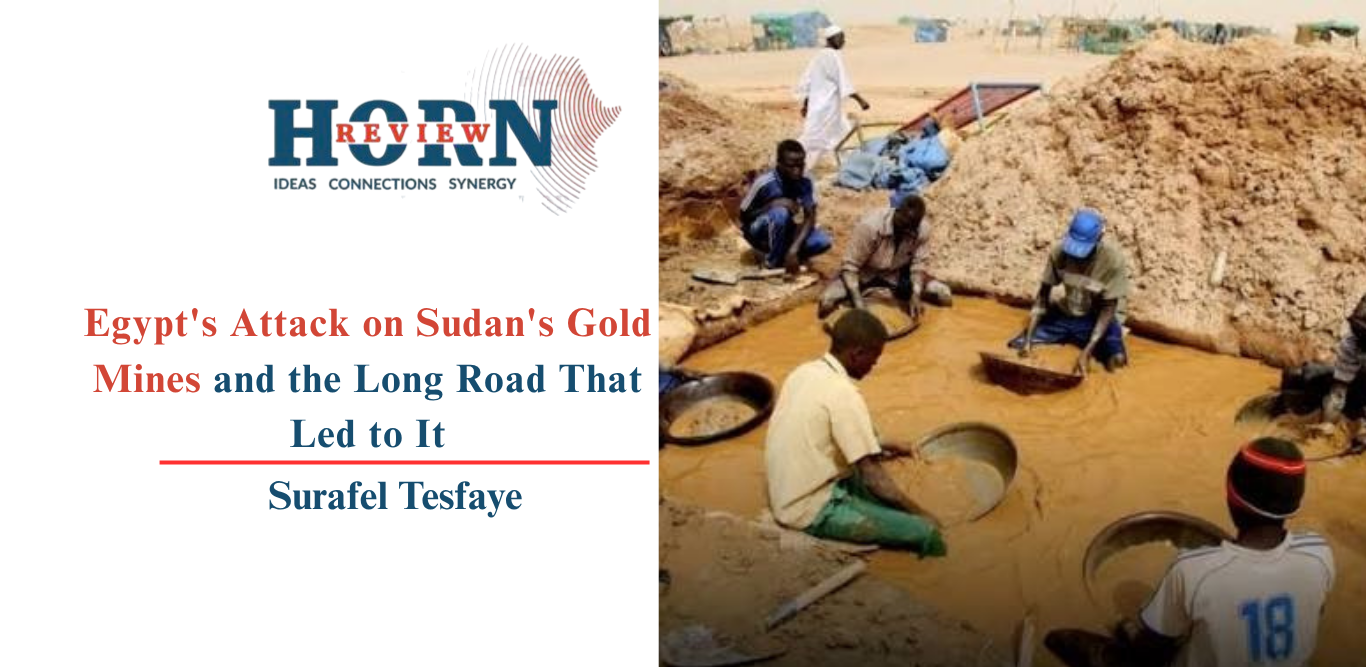
The airstrikes that devastated artisanal gold mining camps near the Sudanese-Egyptian border on Saturday were not an isolated eruption of violence. They represent the latest, deadliest chapter in a conflict where geopolitics, resource plunder, and military strategy have fused into a single, lethal logic. Survivors described aircraft striking at least five times on a site teeming with thousands of civilian miners. The Emergency Lawyers network confirmed at least 72 workers killed, while the Sudan Founding Alliance and civilian political groups placed the death toll above 200. The Sudan Doctors Network warned the true figure would climb, citing hundreds of wounded and rugged terrain that made evacuation nearly impossible.
A Pattern of Impunity: The Second Strike in Months
This was not the first time this specific patch of desert near the disputed Halayeb Triangle had drawn fire. It was the second major attack on the same area in 2026 alone, following a June raid that killed at least 23 workers. The repetition signals a calculated strategy rather than a tactical error. As the BBC reported, Cairo has not claimed responsibility for Saturday’s strikes nor issued public comment, yet the operational pattern—hitting the same economic target twice in months—is difficult to decouple from Egypt’s deepening military footprint in Sudan.
From Diplomatic Backup to Direct Combat: Egypt’s Evolving War Posture
To understand why the borderlands bleed gold and blood, one must trace Egypt’s trajectory from cautious observer to active belligerent since the war erupted in April 2023.
The Merowe Flashpoint (April 2023)
When fighting broke out between the Sudanese Armed Forces (SAF) and the Rapid Support Forces (RSF), Cairo’s instinct was to back General Abdel Fattah al-Burhan’s government without committing overt forces. Egyptian military aircraft were stationed at Merowe Airport—a key early battleground—ostensibly for joint training exercises. The RSF’s capture of 28 Egyptian soldiers there exposed the vulnerability of Egypt’s “hands-off” posture and how quickly its assets could become hostages to Sudan’s chaos.
Open Accusations and Covert Operations (2024)
By 2024, the veneer had cracked. The RSF openly accused Egypt of conducting aerial bombardments around Khartoum. The relationship between Cairo and the SAF had moved decisively beyond diplomacy into direct military enablement, setting the stage for deeper intervention.
The El Fasher Red Line (October 2025)
The fall of El Fasher in October 2025 marked a strategic inflection point. President Abdel Fattah el-Sisi described the RSF capture of the city as a “red line.” Cairo pivoted to overt military support. Satellite imagery reviewed by The New York Times and Reuters revealed Egypt had deployed Turkish-made Bayraktar Akinci drones to a remote airstrip at East Oweinat, near the Sudanese border. Egyptian security officials confirmed to Reuters that southern airports had been supplied with military equipment for cross-border strikes framed as “national defense.”
Sustained Drone Warfare (Early 2026)
By early 2026, Egyptian drones had reportedly conducted strikes against RSF targets inside Sudan for at least six months. Operations targeted supply convoys and paramilitary positions, while Egyptian MiG-29 jets were reported striking RSF convoys moving from eastern Libya into Sudan—a critical logistical artery for the paramilitary group.
The Golden Thread: How Mineral Wealth Fuels the Fire
The military escalation cannot be separated from the economic anatomy of the war. Research by Chatham House indicates that as much as 60% of Sudan’s unofficial gold production flows into Egypt, where it enters formal trading circuits. The numbers reveal a staggering dependency:
- 2025 Imports: Egypt imported 4.9 tons of Sudanese gold worth $517 million.
- Growth Rate: A twenty-fold increase compared to the previous year.
- Policy Catalyst: In May 2023, the Egyptian government removed import duties on gold, a decision that effectively lubricated the pipeline for Sudanese bullion crossing the border.
A Dual-Purpose War Economy
This illicit trade serves Cairo’s strategic interests on two fronts simultaneously:
- Hard Currency: It provides a vital source of foreign reserves to stabilize Egypt’s own pressured economy.
- Leverage over SAF: The Sudanese Armed Forces, which control the largest gold-producing areas, increasingly route gold through Egypt to finance their war effort. This makes the SAF dependent on Egyptian border permeability and supply routes for weapons and ammunition.
Conversely, the RSF funds its operations by smuggling gold from Darfur and Kordofan, often through Libyan and Chadian networks. The battle for Sudan is, fundamentally, a battle for the logistics of gold.
The Halayeb Triangle: Where Geology Meets Geopolitics
The mining camps targeted on Saturday sit precisely at the intersection of these competing interests. The airstrikes appear designed to force the gold trade back into channels Cairo can control, disrupting independent tribal supply chains that undercut state-dictated prices and challenge Egyptian border sovereignty.
Following the June strikes, Egyptian security forces conducted a large-scale operation against “illegal gold mining” within their own borders, detaining over 200 people, including foreign nationals. The Emergency Lawyers group accused Egyptian authorities of seeking to expand and assert control over Sudan’s natural resources. The silence from Cairo regarding Saturday’s attack—contrasted with the aggressive domestic crackdown—paints a picture of a state securing the upstream supply chain by any means necessary.
Why This Strike Changes the Calculus
What makes the October 2026 attack more consequential than the June precedent is not a single new variable, but the accumulated weight of three years of mission creep:
- 2023: Diplomatic backing and troop presence (Merowe).
- 2024: Covert air support and denial.
- 2025: Overt drone deployment (Bayraktar Akinci at East Oweinat) and “Red Line” declarations.
- 2026: Sustained cross-border drone/jet campaign targeting economic infrastructure.
The miners killed near the Halayeb Triangle were not combatants. They were civilians laboring in a zone where the war’s economic dimensions and military dimensions have become impossible to separate. The gold they dug funds the armies fighting over their country; the pursuit of that gold has turned borderlands into free-fire zones where civilians are treated as obstacles to resource extraction rather than human beings.
Key Takeaways
- Death Toll Dispute: Official monitors cite 72+ dead; local alliances claim 200+. Hundreds wounded face fatal delays in evacuation due to terrain.
- Repeat Targeting: Second strike on same Halayeb border mines in 2026 (June & October), indicating intentional economic targeting.
- Egypt’s Military Footprint: Confirmed deployment of Bayraktar Akinci drones at East Oweinat base; MiG-29 strikes on Libya-Sudan supply routes.
- Gold as Fuel: 60% of Sudan’s illicit gold flows to Egypt; $517M imported in 2025 (20x surge post duty removal).
- Strategic Goal: Strikes likely aim to monopolize gold corridors, eliminate independent tribal networks, and secure SAF dependency on Cairo.
Frequently Asked Questions (FAQ)
Who carried out the airstrikes on the Sudan-Egypt border gold mines?
While Egypt has not claimed responsibility and issued no public comment, the strikes originated from the direction of the Egyptian border, utilized assets (Bayraktar Akinci drones, MiG-29s) confirmed deployed by Egypt at the East Oweinat base, and align with Cairo’s stated “red lines” and economic interests in controlling the gold trade.
Why is gold so central to the war in Sudan?
Gold is the primary revenue stream for both warring factions. The SAF uses gold exports via Egypt to buy weapons; the RSF smuggles gold via Darfur/Libya. Egypt acts as the primary financial gateway for SAF gold, importing nearly $517M worth in 2025 alone, making control of mining zones a strategic military objective.
What is the Halayeb Triangle and why does it matter?
The Halayeb Triangle is a disputed territory on the Red Sea coast claimed by both Egypt and Sudan. The nearby mining camps sit in a grey zone of sovereignty. Control over this area allows the controlling state to tax, regulate, or interdict the flow of artisanally mined gold, making it a flashpoint for resource competition.
How has Egypt’s role in the Sudan war changed since 2023?
Egypt evolved from hosting SAF-aligned troops at Merowe (framed as training) in April 2023, to denying RSF accusations of airstrikes in 2024, to openly deploying advanced drones (Bayraktar Akinci) to a forward base at East Oweinat in 2025/2026 for sustained cross-border strike operations against RSF logistics and, allegedly, independent economic actors.
