




Meta Title: Saudi Arabia’s Red Sea Strategy Tested by Ethiopia Conflict Escalation
Meta Description: As northern Ethiopia’s war regionalizes, Riyadh faces a complex strategic dilemma balancing ties with Cairo, Asmara, and Addis Ababa amid Houthi threats in the Bab el-Mandeb.
Focus Keyword: Saudi Arabia Red Sea strategy Ethiopia conflict
Slug: saudi-arabia-red-sea-strategy-ethiopia-conflict
Saudi Arabia’s Red Sea Strategy Tested by Ethiopia Conflict Escalation
The renewed confrontation in northern Ethiopia has evolved from an internal power struggle into a pivotal stress test for Saudi Arabia’s Red Sea strategy. As fighting intensifies between federal forces and an emerging opposition alliance—coinciding with Eritrea’s severing of diplomatic ties, Egyptian diplomatic expulsions, and a deepening Sudanese civil war—Riyadh confronts a destabilizing regional equation. Developments in Addis Ababa no longer remain confined to Ethiopian territory; they reverberate across the Red Sea security architecture, the Bab el-Mandeb Strait, and the broader Horn of Africa.
For the Kingdom, the central challenge is preserving strategic interests—maritime security, energy export routes, and the Vision 2030 economic framework—without being drawn into a multi-theater regional competition involving Egypt, Eritrea, Sudan, and non-state actors like the Houthis.
The Regionalized Security Environment: Beyond Ethiopia’s Borders
The current escalation cannot be understood in isolation. It unfolds within an increasingly regionalized security environment where Ethiopian internal dynamics are merging with interstate rivalries.
Opposition Alliance and the Eritrean Rupture
The conflict has expanded beyond the Tigray Defense Forces. A broader coalition of Ethiopian armed groups has emerged, operating amid a catastrophic breakdown in Addis Ababa–Asmara relations. In a significant diplomatic escalation, Eritrea cut ties with Ethiopia following the closure of the Ethiopian embassy in Asmara, removing a critical diplomatic off-ramp. Simultaneously, Eritrea maintains a military presence in disputed border areas and has reportedly deepened political ties with groups opposed to the federal government, creating a cross-border security nexus that directly fuels Ethiopia’s internal instability.
The Egypt–Sudan Vector
Cairo and Khartoum are deepening coordination with Ethiopia’s regional rivals. Ethiopia and Egypt have exchanged diplomatic expulsions, driven largely by the Grand Ethiopian Renaissance Dam (GERD) dispute and competing Red Sea ambitions. Meanwhile, the Sudanese civil war has become deeply internationalized, drawing in external actors who now view the Horn as an extension of their strategic depth. This convergence creates a “ring of pressure” around Ethiopia that Riyadh cannot afford to ignore.
Bab el-Mandeb Crisis: The Houthi Factor Elevates African Coast Importance
The strategic calculus for Riyadh has fundamentally shifted due to the deterioration on the Yemeni side of the Red Sea.
- Expanded Houthi Presence: Houthi forces have consolidated control along Yemen’s Red Sea coast, directly threatening shipping lanes connected to Saudi energy infrastructure.
- Direct Infrastructure Attacks: Strikes on Saudi territory have added a homeland security dimension to what was previously a proxy conflict.
- Rerouting Imperative: Riyadh has been forced to rely on alternative routes and infrastructure to protect hydrocarbon exports.
Consequence: As the Arabian coastline becomes less secure, the strategic value of the African coastline—specifically Eritrea, Djibouti, Sudan, and Ethiopia’s Afar corridor—skyrockets. Instability in northern Ethiopia now threatens the “back-up” maritime corridor essential for Saudi economic survival.
The Ghost of Jeddah 2018: Erosion of a Gulf-Brokered Order
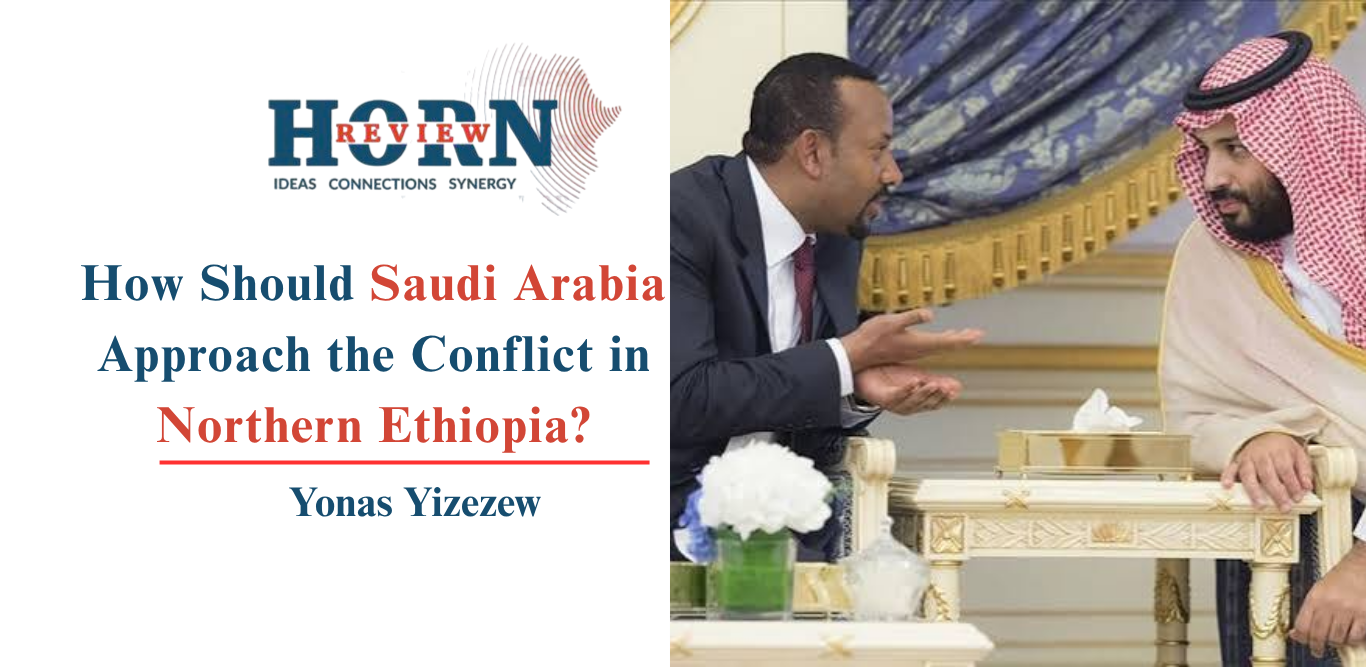
The current deterioration represents the unraveling of a security architecture Riyadh helped build. In September 2018, the Jeddah Peace Agreement—signed under the patronage of King Salman with Crown Prince Mohammed bin Salman and UAE Foreign Minister Sheikh Abdullah bin Zayed present—ended the two-decade Ethiopia-Eritrea stalemate.
This was not merely a bilateral peace deal; it was the cornerstone of a Gulf-led effort to reshape the Red Sea political order following the Yemen war intervention. Eritrea’s Assab port became a logistical hub for the coalition, while Ethiopia was engaged as the Horn’s primary economic anchor.
Eritrea: Geographic Utility vs. Strategic Reliability
While Eritrea’s geography—opposite the Bab el-Mandeb—remains vital, its reliability is questionable. President Isaias Afwerki’s shifting alignments have historically diverged from Saudi interests. A 2010 U.S. diplomatic cable (WikiLeaks) revealed the Saudi ambassador in Asmara expressing deep concerns regarding Eritrea’s support for neighboring opposition groups, suspected Houthi links, Iranian military activity, and the treatment of Saudi diplomatic personnel.
Today, Asmara’s confrontational posture toward Addis Ababa converges with Cairo’s strategy to constrain Ethiopia, placing Eritrea within a regional alignment that operates against the very stability Riyadh sought to foster in 2018.
The Nile Dispute: Riyadh’s Balancing Act Between Cairo and Addis
The GERD dispute illustrates Riyadh’s tightrope walk most clearly. The Kingdom’s close strategic partnership with Cairo has shaped public positions that Addis Ababa views as hostile.
- 2020 Saudi Cabinet Declaration: Affirmed that the water security of Egypt and Sudan constitutes “Arab national security,” explicitly backing their Nile interests.
- 2022 Reiteration: Riyadh stressed support for Egyptian water security and urged Ethiopia to avoid unilateral measures on GERD filling and operation.
While Riyadh maintains independent interests in the Nile Basin and Red Sea, sustained public alignment with Cairo on the Nile—combined with deepening engagement with Asmara—reinforces an Ethiopian perception of strategic encirclement. This risks pushing Ethiopia toward alternative partnerships (Turkey, UAE, Qatar, Russia) that dilute Saudi leverage.
Why Ethiopia Matters: Agency, Diversification, and Vision 2030
Ethiopia is too consequential to be viewed solely through the lens of Egyptian or Eritrean interests.
- Demographic & Economic Weight: Africa’s second-most populous nation and a major economic engine.
- Red Sea Access: The Afar corridor and potential port access (via Assab or Zeila) are critical to the Red Sea security architecture underpinning Vision 2030.
- Post-2018 Foreign Policy Shift: Prime Minister Abiy Ahmed’s administration actively diversified toward the Gulf. The UAE’s 2018 $3 billion aid/investment package and deepening Saudi ties signaled Addis Ababa’s strategic preference for Riyadh.
Ignoring Ethiopia’s agency—or treating its defensive reactions to regional pressure as the primary driver of instability—risks a self-fulfilling prophecy where Addis Ababa pivots away from the Gulf orbit.
Strategic Imperatives: Preserving the Red Sea Architecture
The immediate Saudi objective must be preventing the northern Ethiopian conflict from becoming a fully regionalized proxy war. The geography is unforgiving: Northern Ethiopia borders Eritrea and Sudan; the Afar region extends toward Djibouti and the Red Sea coast. A sustained Ethiopia-Eritrea confrontation would militarize the African coastline precisely when the Yemeni coastline is already a conflict zone.
Policy Recommendations for Riyadh
| Strategic Pillar | Action Item |
|---|---|
| De-confliction of Alliances | Maintain strategic space between relationships with Egypt, Eritrea, and Sudan. Their interests increasingly converge on limiting Ethiopia; Riyadh must avoid letting this convergence dictate its Ethiopia policy. |
| Differentiated Diplomacy | Develop a clearer, independent reading of Addis Ababa’s strategic calculations. Distinguish between Ethiopia’s stated interests (Nile rights, Red Sea access, territorial integrity) and the coercive strategies of actors seeking to constrain it. |
| Conflict Containment | Leverage the Jeddah Agreement legacy and Saudi-UAE coordination to impose a diplomatic freeze on cross-border military support to Ethiopian opposition groups by Asmara or Cairo. |
| Red Sea Security Forum | Institutionalize a multilateral mechanism for the western Red Sea littoral states (Saudi Arabia, Egypt, Sudan, Eritrea, Djibouti, Ethiopia, Somalia, Yemen) to manage maritime security, delinking it from bilateral political disputes. |
Conclusion: A Partner for Stability, Not an Arena for Competition
Saudi Arabia does not need to determine Ethiopia’s internal political outcome. However, it cannot afford a scenario where the Horn becomes a second front interacting with the Yemen war, the Sudan crisis, and the Nile dispute.
By recognizing Ethiopia as a capable partner for Red Sea peace and stability—as enshrined in Vision 2030—and preserving an independent diplomatic channel to Addis Ababa, Riyadh strengthens its position as the primary stabilizer of the Red Sea system. The alternative is a fragmented, militarized coastline where the Kingdom manages endless variables rather than shaping a secure maritime order.
