




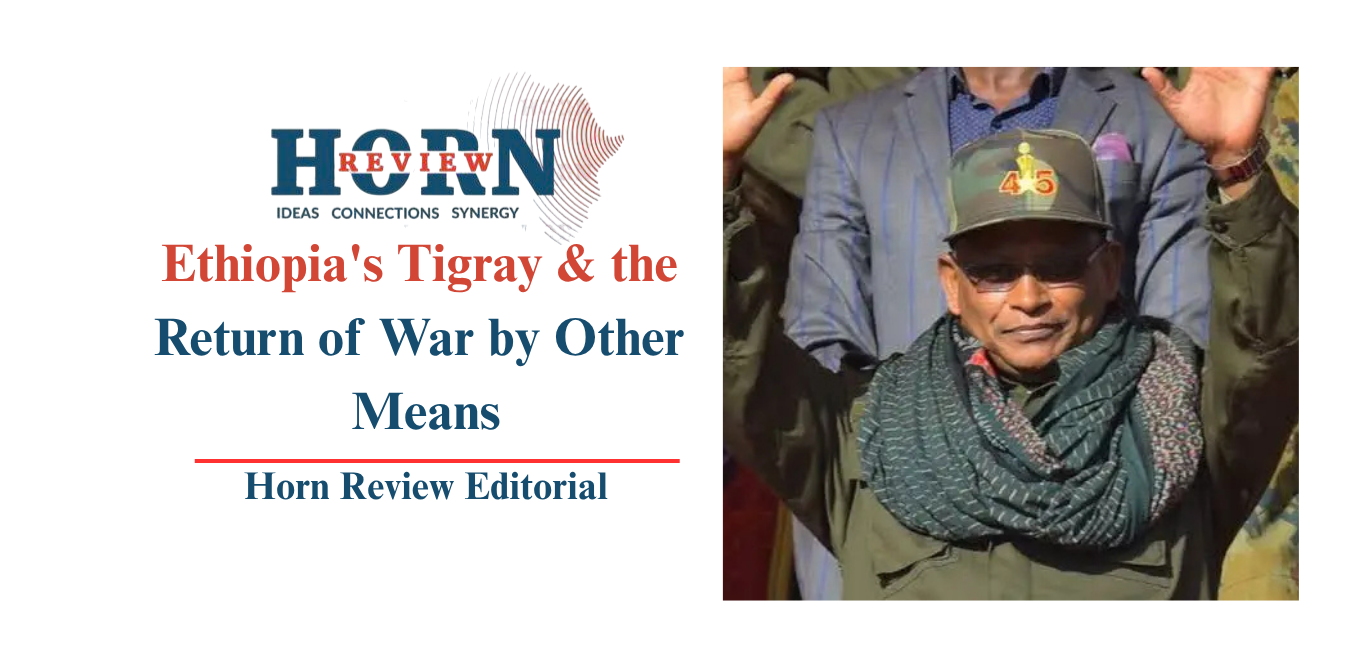
The August 1, 2026 Incursion: Decoding the Strategic Shock to Ethiopia’s Post-Pretoria Security Architecture
The attempted incursion of August 1, 2026, launched from Sudanese territory near Sherarina by TPLF-aligned forces known as “Army 70,” represents a critical inflection point for the Horn of Africa. While the Ethiopian National Defense Forces (ENDF) militarily repelled the assault within hours, the operation’s true significance lies in what it exposes: the fracturing of the Pretoria Agreement, the emergence of a dangerous regional proxy alignment, and the shift from post-conflict stabilization to a contested peace defined by hybrid warfare.
Operational Anatomy: Beyond Insurgency, Toward State-Sponsored Proxy Warfare
At the tactical level, the Sherarina attack demonstrated a level of planning, coordination, and logistical sophistication inconsistent with a fragmented insurgent group. The deployment of mechanized capabilities, heavy weaponry, and the utilization of cross-border staging grounds points directly to access to state-level support infrastructure.
Intelligence assessments and regional reporting indicate a triangulation of external patronage involving:
- Sudan’s SAF (Sudanese Armed Forces): Providing territorial access and logistical rear areas amid their own internal conflict.
- The Eritrean Government: Leveraging historical animosity toward the TPLF to destabilize the current Ethiopian federal order.
- Egyptian Establishment Elements: Seeking leverage over Nile hydro-politics and regional influence.
This transforms the incident from a localized border breach into a manifestation of a broader geopolitical contest. Sub-state actors are functioning as instruments within a layered regional confrontation aimed at the systemic destabilization of the Ethiopian state. For a deeper understanding of the regional dynamics, see the African Union Peace and Security Council analyses on Horn of Africa security.
The Fracturing of the Pretoria Agreement: Compliance vs. Rejectionism
The Pretoria Agreement (November 2022) was designed as a cessation-of-hostilities framework predicated on mutual de-escalation, disarmament, and reintegration under federal authority. However, its durability always relied on asymmetrical compliance incentives and the internal cohesion of the signatories.
The August 1 incursion confirms a structural bifurcation within the TPLF:
- Compliance-oriented actors engaging in political reintegration.
- Rejectionist hardliners (“Army 70”) seeking to renegotiate the balance of power through coercion.
This divergence is evidenced by reported mass mobilization and forced conscription in Tigray, alongside a rhetorical shift from defensive posturing to offensive revisionism. Senior hardline figures have publicly invoked regime change in Addis Ababa and explicitly referenced external alliances. This mirrors the strategic miscalculation of November 2020, when the TPLF attacked the ENDF Northern Command, triggering a devastating two-year war. The current rhetoric reduces bargaining space by embedding maximalist objectives within identity-driven mobilization narratives. The full text of the agreement remains a benchmark for implementation, hosted by the South African Department of International Relations and Cooperation.
Regionalization of the Conflict Space: Sudan’s Western Frontier as a Proxy Theater
The utilization of Sudanese territory as a launchpad introduces a volatile new variable. Sudan’s western frontier has evolved into a zone of strategic ambiguity, where state authority is uneven, contested, and fragile due to the ongoing SAF-RSF conflict.
This raises critical questions for Addis Ababa’s security calculus:
- Command & Control: Does the SAF leadership authorize these operations, or are rogue elements within the military acting independently?
- Institutional Coherence: Can Khartoum police its borders against instrumentalization by third parties (Eritrea, Egypt, TPLF hardliners)?
- Proxy Theater Risk: The borderlands are becoming a low-cost, high-impact arena for regional adversaries to pressure Ethiopia without direct state-on-state confrontation.
When coupled with Eritrea’s historical willingness for asymmetric intervention, Ethiopia faces a multi-vector threat environment that challenges conventional deterrence frameworks. The UN Office for the Coordination of Humanitarian Affairs (OCHA) regularly monitors the spillover effects of the Sudan crisis on neighboring states.
Ethiopia’s Strategic Restraint: Legitimacy as a Force Multiplier
The federal government’s response—tactical decisiveness paired with strategic restraint—warrants analysis. While critics may view restraint as vulnerability, it functions as a legitimacy-preserving mechanism at the strategic level.
By adhering to the Pretoria framework and avoiding precipitous escalation, Addis Ababa:
- Reinforces its status as the principal custodian of the peace process.
- Consolidates diplomatic capital with the US, EU, and AU.
- Isolates rejectionist actors politically, framing them as spoilers rather than legitimate belligerents.
However, restraint has limits. The persistence of low-intensity provocations risks eroding deterrence credibility. The ENDF’s rapid repulsion of the August 1 attack served a dual purpose: reaffirming state capacity while carefully avoiding escalation thresholds that could trigger a broader regional conflagration.
The Limits of Conventional Diplomacy: Sanctions and Hybrid Networks
The apparent ineffectiveness of recent U.S. sanctions and European calls for de-escalation highlights the limitations of conventional tools against non-compliant factions embedded in hybrid state–non-state networks.
Sanctions often fail when:
- Targeted actors possess alternative support structures (regional patrons).
- Strategic calculus prioritizes ideological rigidity over economic rationality.
- Financial networks operate outside formal banking channels accessible to Western leverage.
This reality demands a more integrated approach: combining diplomatic pressure with targeted financial sanctions against spoilers while simultaneously offering incentives for compliant factions to reinforce the peace dividend. The U.S. Department of the Treasury (OFAC) sanctions programs provide the legal architecture for such targeted measures.
The Path Forward: A Dual-Track Strategy for a Contested Peace
The central question is whether the Pretoria Agreement can be reinforced to address this evolving threat environment without collapsing under renewed militarization. A sustainable path requires a dual-track approach:
1. Political Reinforcement: Revitalizing the Implementation Architecture
- Credible Dispute Resolution: Establishing rapid-response mechanisms for ceasefire violations to prevent “facts on the ground” from hardening.
- Inclusive Dialogue: Creating pathways for disaffected Tigrayan constituencies that bypass rejectionist leadership.
- Transitional Justice & Development: Accelerating tangible peace dividends (reconstruction, IDP return) to undermine the recruitment narrative of “Army 70.”
2. Security Adaptation: Hardening the Periphery
- Border Intelligence Fusion: Enhanced ISR (Intelligence, Surveillance, Reconnaissance) capabilities along the Sudan/Eritrea corridors.
- Civil-Military Coordination: Integrating local administration and community early-warning networks in vulnerable border weredas.
- Regional Diplomatic Engagement: Sustained dialogue with Khartoum, Asmara, and Cairo—backed by IGAD and AU mechanisms—to establish red lines regarding territorial instrumentalization. The Intergovernmental Authority on Development (IGAD) remains the primary regional bloc for such mediation.
Conclusion: Navigating the Protracted Transition
The August 1, 2026 incursion is emblematic of a broader transition: the Horn of Africa is moving from post-conflict stabilization to a contested peace characterized by hybrid threats, fluid alliances, and proxy utilization of fragile state peripheries.
While the immediate military outcome favors the Ethiopian state, the underlying dynamics point to a protracted struggle over the terms of political order in northern Ethiopia and the regional balance of power. The durability of peace will ultimately depend not only on the enforcement of existing agreements but on Addis Ababa’s demonstrated capacity to navigate this complexity through a calibrated synthesis of strategic restraint, credible deterrence, and sustained political engagement.
