




Meta Description: Analyzing PM Abiy Ahmed’s Kenya visit amid rising Horn of Africa tensions. Explore the Ethiopia-Kenya partnership, Somalia’s political crisis, AUSSOM transition, and regional security dynamics involving Egypt and Eritrea.
Ethiopia-Kenya Partnership Deepens Amid Somalia Crisis and Shifting Horn of Africa Security Dynamics
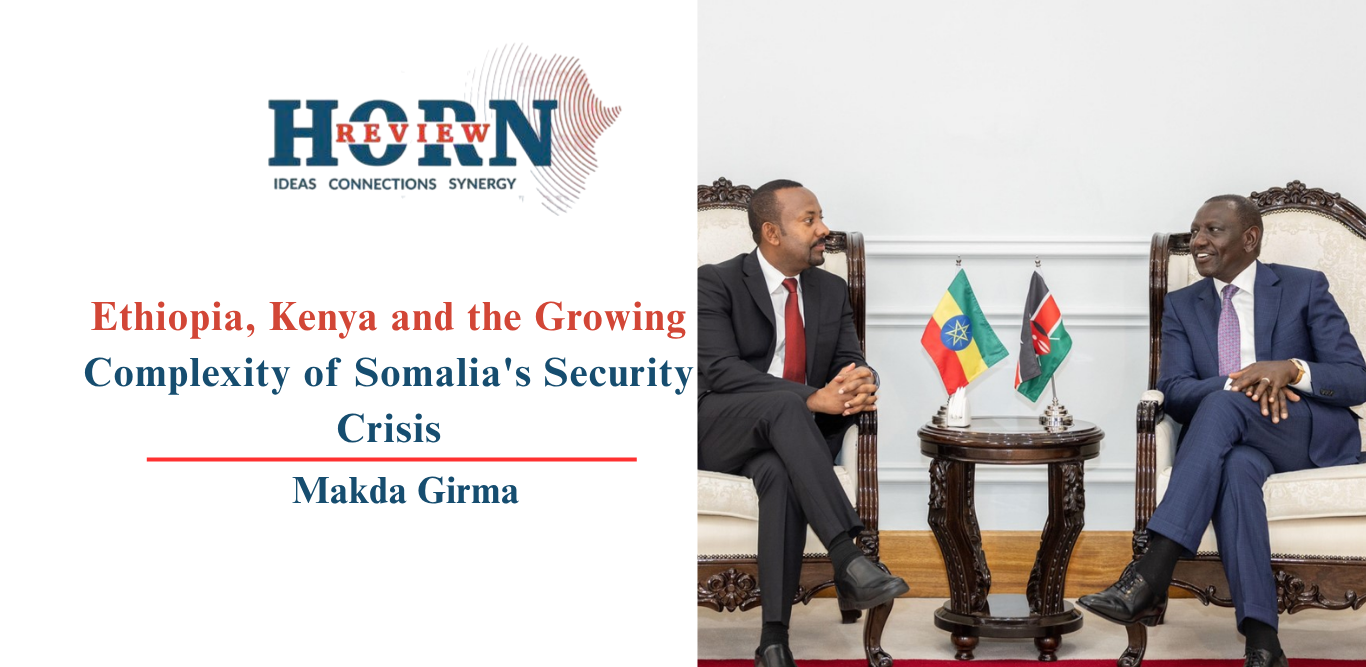
Prime Minister Abiy Ahmed’s state visit to Kenya on October 20, 2026, for the Mashujaa Day celebrations underscored a pivotal moment in Horn of Africa geopolitics. As the guest of honour of President William Ruto, Abiy reinforced a strategic bilateral alliance built on electricity trade, telecommunications, and transport connectivity. However, the diplomatic pageantry masked a complex regional backdrop: a deepening political crisis in Somalia, the delicate transition to the African Union Support and Stabilization Mission in Somalia (AUSSOM), and shifting security alignments involving Egypt and Eritrea.
The Strategic Core of Ethiopia-Kenya Relations
Beyond Ceremony: Concrete Economic Integration
The Addis Ababa-Nairobi axis has evolved into the region’s most stable economic partnership. During the visit, PM Abiy highlighted Ethiopia’s electricity exports to Kenya and the expansion of Safaricom’s operations in Ethiopia as flagship projects. These aren’t merely commercial ventures; they create structural interdependencies that insulate the relationship from political volatility elsewhere.
LAPSSET and Shared Security Interests
Both nations are anchored by the Lamu Port-South Sudan-Ethiopia Transport (LAPSSET) Corridor, a mega-infrastructure project designed to diversify Ethiopia’s maritime access and boost Kenya’s northern frontier economy. Security along this corridor is paramount. On September 19, 2026, suspected Al-Shabaab militants attacked Kenyan Defence Forces (KDF) patrols in Garissa, a stark reminder that instability in Somalia directly threatens Kenyan infrastructure and, by extension, Ethiopian trade routes.
Somalia’s Internal Crisis: The South West State Flashpoint
The most immediate friction point lies in Somalia’s South West State. The March 2026 removal of regional president Abdiaziz Hassan Mohamed “Laftagareen” failed to settle local power struggles. By mid-October, forces loyal to Laftagareen reportedly controlled five towns in the Bay region—including Buurhakaba, Qansaxdheere, and Dinsoor—directly challenging Federal Government authority in Mogadishu.
Ethiopia’s Calculated Non-Intervention
According to Somali Guardian reporting on October 19, Mogadishu requested Ethiopian military support against Laftagareen’s forces. Ethiopian commanders reportedly declined, characterizing the request as involvement in an internal political dispute rather than a counterterrorism operation. This refusal highlights a critical doctrinal line for Addis Ababa: distinguishing between counterterrorism (fighting Al-Shabaab) and political mediation (arbitrating federal-regional disputes).
Kenya’s Diplomatic Balancing Act
Nairobi faces parallel pressure. Laftagareen’s presence in Kenya prompted Somalia’s Parliamentary Speaker, Abdikadir Mohamed Nur Jama, to accuse individuals in Kenya of fueling the conflict on October 19. While Kenya denies official support for armed opposition to Mogadishu, hosting Somali political elites is a long-standing practice. Nairobi must balance its role as an IGAD mediator and troop contributor with its domestic legal obligations and national security imperatives.
The AUSSOM Transition: Mandates, Bilateral Troops, and the Egypt Factor
The January 1, 2025, transition from ATMIS to AUSSOM under UN Security Council Resolution 2767 reshaped the legal framework for foreign troops. AUSSOM’s mandate focuses on degrading Al-Shabaab, protecting civilians, and supporting the gradual handover of security to Somali forces. Crucially, it authorizes support for political processes but does not grant a mandate to decide internal power struggles.
Dual-Track Deployments: AU vs. Bilateral
A December 2025 African Union Peace and Security Council communiqué explicitly acknowledged that Ethiopia and Uganda maintain troops in Somalia under separate bilateral agreements alongside their AUSSOM contingents. This distinction is vital: bilateral troops operate under national command and bilateral MoUs with Mogadishu, not the AU Force Commander. This allows Addis Ababa operational flexibility but complicates coordination.
Egypt’s Entry and the Nile Shadow
The June 2025 AU bilateral MoU negotiations included Egypt as a prospective troop contributor. For Ethiopia, the potential deployment of significant Egyptian forces near its operational zones in the Bay/Bakool regions introduces a new strategic variable. Given the unresolved Grand Ethiopian Renaissance Dam (GERD) dispute, Addis Ababa views Cairo’s military expansion in Somalia through a security prism that goes beyond counterterrorism. “Careful coordination” is the diplomatic euphemism for preventing a proxy standoff.
Historical Baggage: The Somaliland MoU and the Ankara Declaration
Current tensions are inextricably linked to the January 2024 Ethiopia-Somaliland Memorandum of Understanding on maritime access. Mogadishu condemned it as a violation of sovereignty, prompting a diplomatic rupture and Somalia’s pivot toward Egypt and Turkey. The December 2024 Ankara Declaration, brokered by Türkiye, restored diplomatic ties by reaffirming Somalia’s sovereignty while leaving the door open for “mutually beneficial” commercial access.
Crucially, the Ankara Declaration lowered the temperature but did not resolve the structural competition. President Hassan Sheikh Mohamud’s September 2026 visit to Addis Ababa proved dialogue continues, yet the underlying strategic distrust—fueled by competing visions of regional order—persists.
Domestic Pressures Compounding Regional Complexity
Ethiopia’s foreign policy bandwidth is stretched thin. The October 2026 escalation in Tigray and renewed tensions with Eritrea demand significant military and diplomatic capital. Simultaneously, Somalia is gearing up for a presidential election scheduled for May 15, 2027, a process that will inevitably intensify federal-regional friction.
Outlook: Managing Competition Without Confrontation
The coming months will test the durability of the Ethiopia-Kenya-Somalia triangle. Three indicators warrant close watching:
- Baidoa Security: The stability of the South West State capital, where Ethiopian, AUSSOM, and Somali forces converge.
- Troop Configurations: The finalization of Egyptian AUSSOM deployments and the status of Ethiopian bilateral forces.
- Electoral Dynamics: Whether Somalia’s 2027 electoral process exacerbates or resolves the federal-regional impasse.
PM Abiy’s Mashujaa Day visit signaled that despite these storms, the Ethiopia-Kenya “anchor partnership” holds. For Addis Ababa, the optimal path remains compartmentalization: deepening economic integration with Nairobi, maintaining a security-first (non-political) posture in Somalia, and utilizing regional mechanisms like IGAD or Turkish mediation to prevent Somalia’s domestic disputes from igniting a wider interstate confrontation. In a neighborhood defined by shifting alliances, the reliability of the Addis-Nairobi corridor remains the most reliable hedge against chaos.
Key Takeaways
- Focus Keyword: Ethiopia-Kenya partnership serves as a stabilizer amid Somalia’s political fragmentation.
- Security vs. Politics: Ethiopia draws a hard line: troops fight Al-Shabaab (AUSSOM/Bilateral), they do not arbitrate Federal Member State disputes.
- Egypt Variable: Cairo’s entry into AUSSOM adds a GERD-dimension to Somali theater coordination.
- Economic Glue: LAPSSET, power trade, and telecoms create a “floor” under the bilateral relationship.
- Upcoming Flashpoint: Somalia’s May 2027 election will stress-test the current fragile equilibrium.
