




Meta Title: Ethiopia-Netherlands 100-Year Partnership: Unlocking New Investment & Trade Opportunities
Meta Description: Celebrating a century of ties, Ethiopia and the Netherlands pivot from raw material exports to value-added manufacturing, renewable energy, and tech. Discover key sectors for Dutch investment and EIC reforms.
Focus Keyphrase: Ethiopia-Netherlands investment partnership
Slug: ethiopia-netherlands-investment-partnership-100-years
Ethiopia and Netherlands Pivot from Century-Old Trade to Strategic Investment Partnership
ADDIS ABABA — Marking a historic milestone, Ethiopia and the Kingdom of the Netherlands are actively restructuring their century-long economic relationship, shifting focus from traditional commodity trade toward a diversified, high-value investment partnership driven by technology transfer, industrialization, and sustainable development.
At a high-level forum in Addis Ababa commemorating 100 years of diplomatic and commercial ties, Ethiopian Investment Commission (EIC) Commissioner Hana Tehelku outlined an ambitious roadmap. The strategy prioritizes moving up the global value chain by leveraging Dutch technological prowess and market access alongside Ethiopia’s vast natural resources, youthful workforce, and expanding industrial base.
Key Takeaway: The bilateral agenda is pivoting from extractive trade (raw materials) to transformative investment (processing, manufacturing, and services), targeting sectors critical for Ethiopia’s structural economic transformation.
From Wonji Sugar to Heineken: A Legacy of Commercial Cooperation
The economic bond between the two nations dates back to the 1920s. Early landmark ventures—most notably the Wonji Sugar Factory and Desta Candy—laid the groundwork for a relationship that has endured regime changes and global economic shifts.
Today, that legacy is visible in the operational footprint of major Dutch-linked enterprises driving Ethiopia’s private sector:
- Heineken Ethiopia: A major beverage manufacturer and significant taxpayer.
- Holland Dairy (Holland Yogurt): Pioneering the domestic dairy value chain.
- Zequala Horticulture & Floriculture: A key player in Ethiopia’s position as Africa’s second-largest flower exporter.
These entities represent the evolution from simple trade transactions to Foreign Direct Investment (FDI) that generates employment, exports, and local supply chain development.
Strategic Sectors Targeted for Dutch Investment Expansion
Commissioner Tehelku identified five high-priority sectors where Dutch expertise aligns perfectly with Ethiopia’s development goals under the Homegrown Economic Reform Program (HGER). This alignment is critical for investors seeking first-mover advantages in emerging African markets.
1. Manufacturing & Value-Added Processing
The core of the new strategy is import substitution and export diversification. Ethiopia aims to end the export of raw agricultural commodities (coffee, sesame, leather, horticulture) without processing.
- Opportunity: Joint ventures in agro-processing, textile finishing, leather goods, and food packaging.
- Dutch Value Add: Advanced processing technology, EU market compliance standards, and global branding networks.
2. Renewable Energy & Green Hydrogen
With Ethiopia generating over 95% of its electricity from renewables (hydro, wind, solar) and pursuing Green Hydrogen development, the Netherlands— a global leader in offshore wind and hydrogen technology—is a natural partner.
- Focus: Grid modernization, off-grid solutions for industrial parks, and feasibility studies for hydrogen export corridors.
3. Water Management & Climate-Smart Agriculture
Dutch mastery in delta technology, irrigation efficiency, and water governance is globally renowned. Ethiopia’s vulnerability to climate volatility makes this a strategic necessity.
- Synergy: Public-Private Partnerships (PPPs) for large-scale irrigation schemes, watershed management, and potable water infrastructure for growing urban centers.
4. Logistics & Multimodal Transport
As a landlocked nation, Ethiopia’s competitiveness hinges on logistics costs. The Djibouti corridor remains vital, but diversification via Berbera (Somaliland) and Lamu (Kenya) is underway.
- Dutch Expertise: Port management (Rotterdam model), dry port operations, digital customs corridors, and supply chain digitization.
5. Digital Services & The Knowledge Economy
Ethiopia’s recent liberalization of the telecom sector (granting licenses to Safaricom Ethiopia and Ethio Telecom’s modernization) opens doors for FinTech, EdTech, and AgTech.
- Focus: Digital identity, e-government services, and startup ecosystem incubation—areas where the Dutch “Startup Delta” ecosystem excels.
The “Software” of Investment: Reform, Human Capital & Ease of Doing Business
Hardware (factories, farms, cables) requires compatible software (regulation, skills, governance). Commissioner Tehelku was explicit: sustaining the next century requires fixing the investment climate.
Regulatory Reforms & The EIC Mandate
The EIC is currently implementing reforms to address perennial investor pain points:
- One-Stop Shop Services: Centralizing licensing, land allocation, and work permits.
- Transparent Administrative Procedures: Digitizing government-to-business (G2B) interfaces to reduce discretion and corruption risks.
- Land Bank Development: Pre-feasibility studied, serviced industrial land ready for immediate allocation—a critical bottleneck historically.
Investor Note: The recently amended Investment Proclamation No. 1180/2020 and subsequent regulations have expanded sectors open to foreign investors and improved profit repatriation guarantees. Investors should consult the EIC’s official investment guide for updated negative lists and incentives.
Human Capital: The Demographic Dividend
With a median age of roughly 19, Ethiopia offers a massive labor pool. However, the skills mismatch remains a constraint. The forum emphasized a “Triple Helix” collaboration model:
- Universities & TVETs: Curriculum alignment with industry needs (mechatronics, horticulture tech, coding).
- Private Sector: Apprenticeships and on-the-job training (Dutch companies like Heineken already run acclaimed academies).
- Inclusive Focus: Targeted programs for women-led SMEs and youth entrepreneurship to ensure broad-based growth.
“100 Years of Living Trade”: Connecting Heritage to the Future
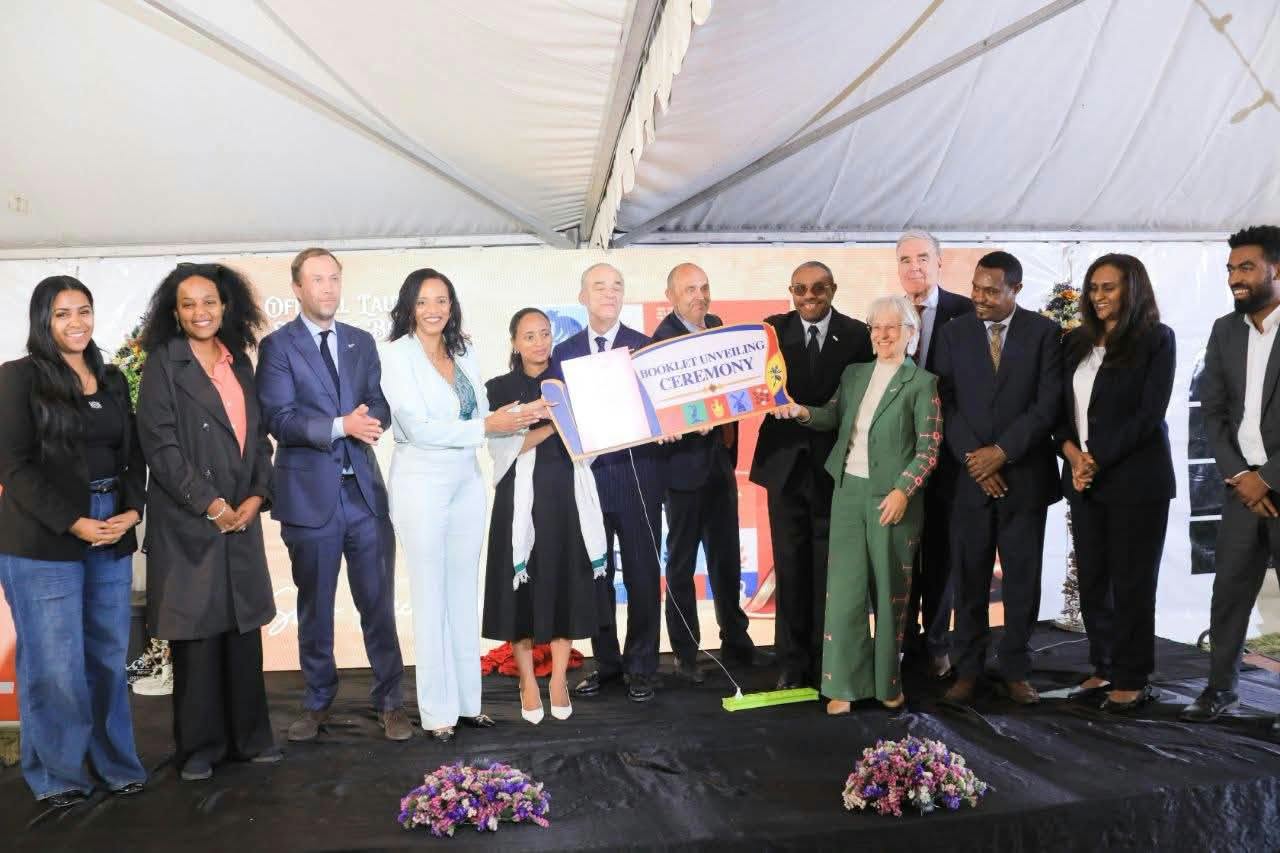
The forum, jointly organized by the Ethiopia-Netherlands Business Association (ENLBA) and the Embassy of the Kingdom of the Netherlands, operated under the theme: “100 Years of Living Trade: Connecting Heritage, Investment and the Future.”
High-profile attendance—including former Prime Minister Hailemariam Desalegn, senior ministers, diplomats, and CEOs—signaled the political weight behind this pivot.
A highlight of the event was the launch of a commemorative book documenting the bilateral history, serving as both an institutional memory and a marketing tool for the next phase of engagement.
Panel Insights: Reform Progress & Realities
During an ENLBA-moderated panel, Commissioner Tehelku provided a candid assessment of the Homegrown Economic Reform Agenda (HGER 2.0):
- Macro Stability: Progress on FX liberalization (move to competitive market-based exchange rate) and interest rate reforms.
- Debt Management: Ongoing restructuring under the G20 Common Framework provides macro-fiscal breathing room.
- Remaining Hurdles: Bureaucratic inertia at regional levels, foreign currency availability for intermediate goods, and security/logistics costs in specific corridors.
Why This Matters for Global Investors Now
The Ethiopia-Netherlands recalibration is a bellwether for East African investment trends.
- Strategic Geography: Ethiopia is the anchor economy of the Horn of Africa (120M+ population) and HQ of the African Union.
- AfCFTA Gateway: Investments here serve the wider African Continental Free Trade Area market (1.3B consumers).
- De-risking via Partnership: The Dutch government actively supports its private sector through instruments like Atradius DSB (export credit insurance), FMO (entrepreneurial development bank), and RVO (Netherlands Enterprise Agency) subsidies for feasibility studies and sustainable business models.
Conclusion: A Blueprint for the Next Century
The message from Addis Ababa is clear: History is the foundation, but investment is the future.
By explicitly targeting value addition, green industrialization, and digital transformation, Ethiopia is offering Dutch investors—and by extension, European and global capital—a structured entry point into one of Africa’s largest untapped markets. The success of this “next century” will depend less on goodwill and more on the speed of bureaucratic reform, the reliability of power/logistics, and the depth of skills development.
For Dutch businesses, the window to establish “first-mover” dominance in Ethiopia’s green manufacturing and digital transition is open now.
Frequently Asked Questions (FAQ)
What are the main sectors for Dutch investment in Ethiopia currently? Priority sectors include agro-processing/manufacturing, renewable energy (hydro/solar/green hydrogen), water management/irrigation, logistics/dry ports, and digital services (FinTech/AgTech).
How has the Ethiopia-Netherlands trade relationship evolved? It began with trade in the 1920s (Wonji Sugar, Desta Candy), evolved into major FDI projects (Heineken, Holland Dairy, Floriculture), and is now targeting strategic technology transfer and value-chain integration.
What incentives does Ethiopia offer foreign investors? Incentives under Proclamation No. 1180/2020 include income tax holidays (up to 6 years for manufacturing), duty-free import of capital goods/construction materials, and guaranteed profit repatriation. Specifics depend on sector, location (industrial park vs. outside), and export orientation.
What role does the Ethiopian Investment Commission (EIC) play? The EIC is the primary facilitation agency—providing “One-Stop Shop” services for licensing, land acquisition, work permits, and aftercare services. They act as the advocate for investors inside the government bureaucracy.
How can Dutch companies access risk mitigation tools? Key instruments include Atradius DSB for political/commercial risk insurance, FMO for direct funding/co-financing, and RVO subsidies (e.g., SDG Partnership Facility, DHI) for pilot projects and feasibility studies.
