




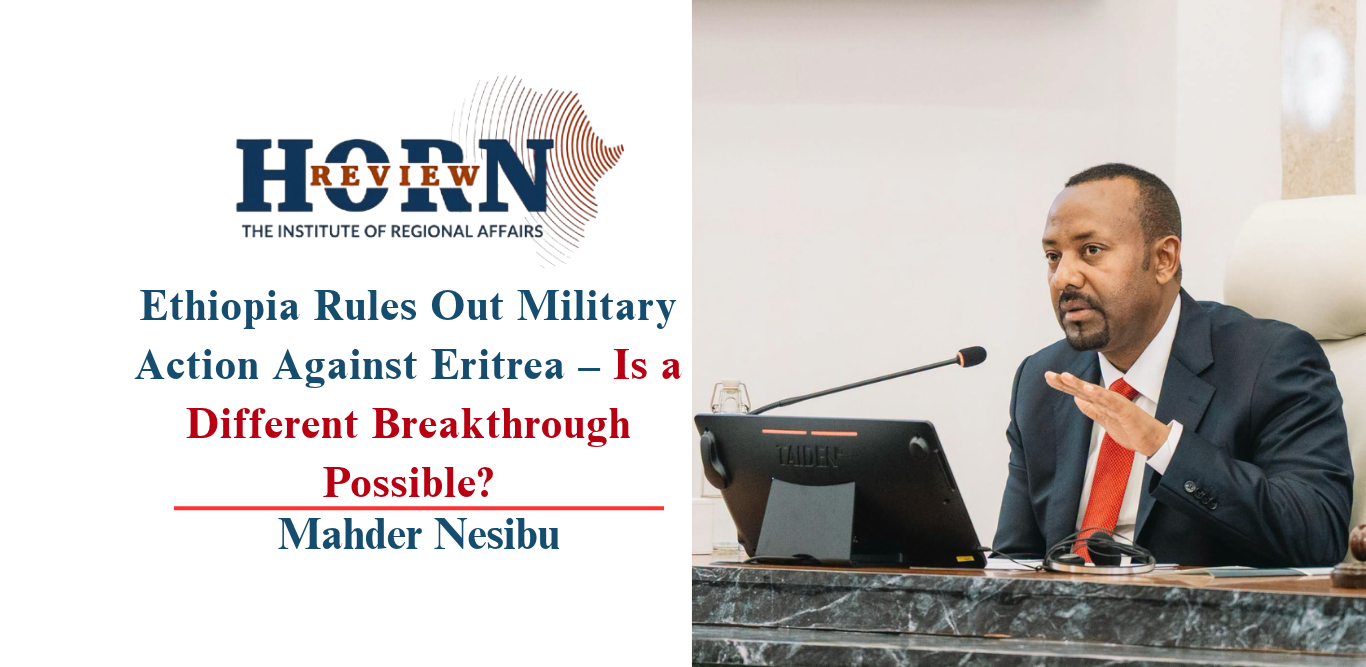
Meta Title: Abiy Ahmed Rules Out War with Eritrea: Diplomacy, Red Sea Access & Border Tensions Explained
Meta Description: PM Abiy Ahmed tells parliament Ethiopia seeks diplomacy over war with Eritrea, demanding Red Sea access and an end to proxy support. Analysis of the Horn of Africa standoff.
Focus Keyphrase: Ethiopia Eritrea tensions
Slug: /ethiopia-eritrea-tensions-abiy-parliament-diplomacy
Abiy Ahmed Rules Out Military Action Against Eritrea, Demands Sea Access and End to Proxy War
ADDIS ABABA — Prime Minister Abiy Ahmed has effectively taken military conflict with Eritrea off the table, telling Ethiopia’s new parliament that Addis Ababa remains committed to a diplomatic resolution despite a dangerous military buildup along the shared border.
The remarks, delivered during the parliamentary session that convened in October following the June national elections, come at a critical juncture. Ethiopian and Eritrean troops currently face off along the frontier following a September rebel incursion—backed by Asmara—in which Eritrean soldiers reportedly crossed into Ethiopian territory.
Key Takeaway: Despite active border hostilities and Eritrean support for anti-government proxies, Ethiopia’s official posture remains anchored in dialogue and regional integration, contingent on two non-negotiable demands.
The Two Pillars of Ethiopia’s Eritrea Policy
According to the Prime Minister, Ethiopia’s stance toward its northern neighbour has not fundamentally shifted despite the recent escalation. It rests on two core conditions:
1. Mutual Cooperation for Red Sea Access
Abiy reiterated Ethiopia’s longstanding pursuit of secure access to the sea based on the “principles of give and take.” This references the administration’s push for a maritime outlet—potentially via ports in Assab or Massawa—to reduce dependence on Djibouti, which currently handles over 95% of Ethiopia’s import-export traffic.
- Context: Landlocked since Eritrea’s 1993 secession, Ethiopia views sea access as an existential economic and strategic necessity. Read the World Bank analysis on landlocked developing countries.
2. National Security: Ending Proxy Warfare
The second condition demands Asmara cease interference in Ethiopia’s internal affairs, specifically by halting support for armed rebel groups operating against the federal government.
“Asmara’s entrenched foreign policy returned to the fore,” Abiy told lawmakers, referencing Eritrea’s mobilization of Ethiopian rebel groups as proxies—most notably the Tigray People’s Liberation Front (TPLF). Following the federal victory in the Tigray War (2020–2022), Abiy stated TPLF leadership crossed into Eritrea and found safe haven there.
Historical Context: From Garrison State to Rapprochement and Back
To understand the current standoff, one must look at the trajectory of Eritrea’s foreign policy since independence.
The “Garrison State” Strategy (1993–2018)
Following secession in 1993, Eritrea—under President Isaias Afwerki—pursued a strategy of regional domination rather than integration. This manifested in a series of conflicts:
- 1998–2000: The devastating Eritrean-Ethiopian War (Badme War).
- Conflicts with Sudan, Djibouti, and Yemen over territorial disputes and regional influence.
This militarized adventurism solidified Eritrea’s evolution into a highly isolated, authoritarian garrison state, characterized by indefinite national service and a closed economy. See Human Rights Watch reports on Eritrea.
The 2018 Thaw and Missed Opportunities
Abiy’s rise in 2018 triggered a historic rapprochement. The Joint Declaration of Peace and Friendship ended the state of war, earned Abiy the Nobel Peace Prize, and allowed Eritrea to exit diplomatic isolation.
However, Abiy argued before parliament that structural reform in Asmara never followed. Instead, Eritrea rapidly re-engaged in regional meddling, including military involvement in Sudan’s 2019 transition and, critically, the Tigray War (2020–2022), where Eritrean forces fought alongside Ethiopian federal troops against the TPLF—only to later pivot toward hosting TPLF remnants.
Why Diplomacy Now? The Military Asymmetry Factor
Despite ruling out offensive war, Abiy issued a stark warning: Ethiopia is “guaranteed to emerge victorious” should conflict erupt.
This confidence stems from Ethiopia’s exponential military buildup in recent years—driven by the Tigray conflict, domestic arms production (notably drones), and expanded manpower. Read SIPRI data on Ethiopian military expenditure.
Strategic Implication: The asymmetry creates a paradox.
- For Ethiopia: Military superiority reduces the need for war; diplomacy achieves goals (sea access, security) without the cost of conflict.
- For Eritrea: The guarantee of defeat should theoretically incentivize Asmara to negotiate, yet the regime’s survival logic often prioritizes brinkmanship over compromise.
International Community’s Role: Deterrence and Dialogue
Ethiopia’s diplomatic framing serves a dual purpose: it signals restraint to Western allies and the African Union (AU) while placing the onus for de-escalation squarely on Asmara.
The diplomatic imperative involves:
- Deterrence: Pressuring Eritrea to withdraw troops from the border and expel/disarm proxy groups (TPLF, Fano splinters, OLA links).
- Incentivization: Offering a structured framework for Ethiopia’s Red Sea access—potentially via equity stakes in ports, lease agreements, or special economic zones—mirroring the Berbera (Somaliland) or Lamu (Kenya) corridor models.
Analyst View: “Addis Ababa is calling the international community’s bluff,” notes a Horn of Africa security researcher. “They are saying: We can win a war, but we choose peace. You (the West/AU) must now deliver the political framework that makes peace viable for Asmara.“
What Happens Next? Scenarios to Watch
| Scenario | Likelihood | Key Indicators |
|---|---|---|
| Managed De-escalation | Moderate | Back-channel talks (UAE/Saudi/AU mediated); Eritrea reduces border troop density; TPLF leaders relocated. |
| Frozen Conflict / Cold Peace | High | No shooting war, but no port deal; continued proxy pressure; heavy militarization of border (DMZ-style). |
| Miscalculation / Limited Clashes | Low-Moderate | Local commanders engage; drone strikes on supply lines; rapid international intervention to cap escalation. |
FAQ: Ethiopia-Eritrea Relations 2024
Why does Ethiopia want access to the Red Sea? Ethiopia has been landlocked since 1993. With a population exceeding 120 million and a fast-growing economy, reliance on Djibouti’s port creates a strategic chokepoint and high logistics costs. Abiy frames this as an existential economic right.
Is the TPLF still a threat from Eritrea? While the TPLF was militarily defeated in Tigray (Nov 2022), Abiy claims its leadership operates from Asmara. The group retains political relevance and latent mobilization capacity, making its hosting by Eritrea a primary casus belli for Addis Ababa.
What was the September 2024 border incident? Ethiopia repelled a rebel attack it attributes to Eritrean-backed proxies. Eritrean regular forces allegedly crossed the border during the engagement, marking the most serious direct military contact since the 2022 Pretoria Agreement.
Can Eritrea afford a war? Economically and demographically, no. Eritrea’s economy is fragile, and its manpower is depleted by decades of indefinite national service. However, the Afwerki regime has historically prioritized regime survival over national interest calculations.
Bottom Line
Prime Minister Abiy Ahmed has drawn a clear red line: no war by choice, but no surrender on sea access or proxy tolerance. The ball is effectively in Asmara’s court—and in the hands of international guarantors who must now translate “support for peace” into a concrete political deal that satisfies Addis Ababa’s strategic depth without triggering Asmara’s survival instincts.
Related Reading:
- The Pretoria Agreement: Text and Implementation Status
- Ethiopia’s Red Sea Ambitions: Geopolitics of the Horn
- Eritrea’s Foreign Policy Under Isaias Afwerki
Schema Markup (JSON-LD) for SEO: json
