




Meta Title: Ethiopia’s Quest for Sovereign Sea Access: Economic Imperative & Regional Stability
Meta Description: Explore why sovereign seaport access is critical for Ethiopia’s economy, regional prosperity, and strategic survival. Expert insights on logistics costs, diplomacy, and historical rights.
Focus Keyphrase: Ethiopia sovereign sea access
Slug: ethiopia-sovereign-sea-access-economic-regional-impact
Ethiopia’s Quest for Sovereign Sea Access: A Pillar for Regional Prosperity and Strategic Survival
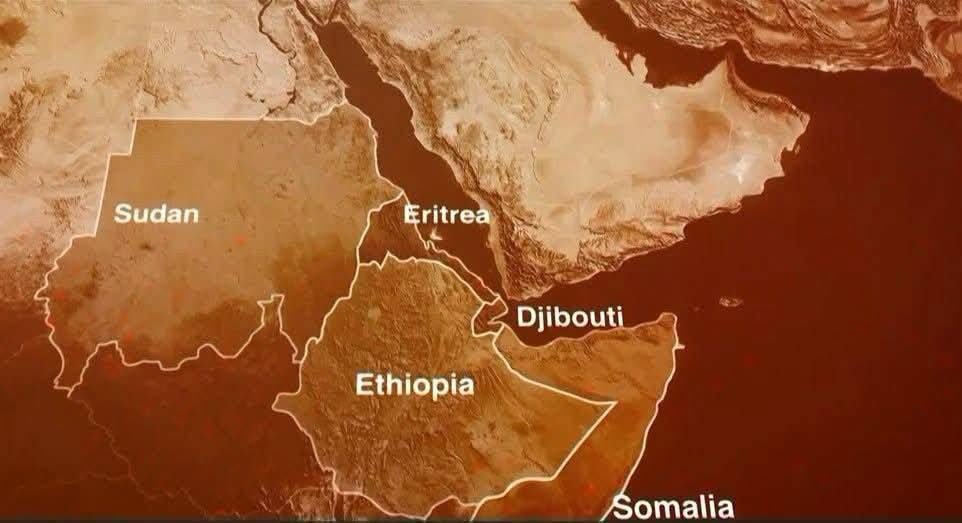
Scholars and policymakers increasingly recognize that Ethiopia’s sovereign sea access is not merely a territorial ambition but a fundamental prerequisite for shared regional prosperity. As the most populous landlocked nation globally, Ethiopia’s geographic reality imposes severe structural constraints on its economic trajectory. However, a renewed determination backed by diplomatic momentum is reshaping the discourse, positioning maritime access as a catalyst for Horn of Africa integration.
Historical Context: From Ancient Maritime Power to Landlocked Status
Ethiopia’s historical narrative is deeply intertwined with maritime trade. For centuries, the civilization thrived as a prominent actor in international commerce and diplomacy, leveraging secured sovereign ports along the Red Sea coast. Historical records indicate that ports such as Adulis served as critical nodes connecting the African interior with the Roman, Persian, and Indian Ocean trade networks.
This status was disrupted by a convergence of internal fragmentation and external political conspiracies during the late 19th and 20th centuries. The loss of coastline—formalized following the Eritrean War of Independence and the subsequent 1993 referendum—stripped Ethiopia of its natural, historical, and legal maritime resources. For over three decades, the nation has navigated the complexities of international trade entirely through neighboring jurisdictions, primarily the Port of Djibouti.
The Economic Burden of Landlockedness
The absence of a sovereign outlet to the sea extracts a heavy toll on Ethiopia’s competitiveness. According to logistics researcher Temesgen Walelign, speaking to the Ethiopian News Agency (ENA), the lack of port ownership incurs prohibitive additional logistics costs. These expenses manifest in delayed cargo clearance, demurrage charges, and dependency on a single transit corridor.
“Ethiopia’s lack of port has been incurring additional logistics costs and burdens, preventing products from reaching the global market on time and competitive prices,” Walelign explained.
Data from the World Bank’s Logistics Performance Index (LPI) consistently ranks landlocked developing countries (LLDCs) significantly lower than coastal peers due to transit inefficiencies. For Ethiopia, these costs inflate the price of imported consumer goods—directly impacting household welfare—and erode the profit margins of export commodities like coffee, sesame, and horticulture. Economist Nemomsa Mengesha emphasizes that securing a sovereign port is a “fundamental solution for achieving the country’s long-term development goals and improving the living standards of its people.”
Key Economic Impacts:
- Export Competitiveness: High transit times reduce shelf life for perishables and increase FOB costs.
- Import Inflation: Tariffs, handling fees, and transport surcharges on imports drive up domestic consumer prices.
- Investment Deterrence: Uncertainty regarding transit reliability discourages Foreign Direct Investment (FDI) in manufacturing and agro-processing.
Diplomatic Momentum: The “Give-and-Take” Framework
Recognizing that military confrontation is counterproductive, the current administration has pivoted toward peaceful, diplomatic engagement grounded in mutual benefit. The government’s strategy articulates a “give-and-take” proposition: offering equity stakes in flagship state-owned enterprises (Ethiopian Airlines, Ethio Telecom, Grand Ethiopian Renaissance Dam) and access to vast domestic markets in exchange for equitable, sovereign port access.
This approach aligns with the principles of the African Continental Free Trade Area (AfCFTA), which seeks to boost intra-African trade through infrastructure connectivity. Recent agreements—most notably the Memorandum of Understanding (MoU) with Somaliland (January 2024) and ongoing dialogues with Eritrea, Djibouti, and Kenya (Lamu Port-South Sudan-Ethiopia Transport Corridor – LAPSSET)—signal a pragmatic shift. The international community, including key partners like the European Union and United States, has increasingly acknowledged the legitimacy of Ethiopia’s demand for predictable maritime access, urging regional dialogue over escalation.
Regional Stability: Beyond Economics
Temesgen Walelign underscores a critical geopolitical dimension: maritime access fosters lasting regional peace. Economic interdependence created by shared port infrastructure and transit corridors transforms zero-sum security dilemmas into positive-sum cooperation.
- Interdependency: Joint port management creates vested interests in stability.
- Resource Sharing: Access negotiations often bundle energy (hydropower), telecom, and logistics, weaving a web of mutual reliance.
- Conflict Prevention: Addressing the “strategic survival” anxiety of a 120-million-strong nation reduces the risk of destabilizing unilateral actions.
The African Union (AU) and IGAD (Intergovernmental Authority on Development) frameworks provide the institutional architecture to mediate these arrangements, ensuring they conform to international law and the UN Convention on the Law of the Sea (UNCLOS) provisions regarding Transit Rights of Landlocked States (Part X).
The Legal and Moral Argument
Ethiopia’s claim rests on three pillars cited by experts:
- Historical Right: Continuous sovereignty over coastal territories for millennia prior to colonial demarcations.
- Legal Basis: The Almaty Programme of Action (2003) and Vienna Programme of Action (2014) for LLDCs mandate transit states to cooperate on infrastructure and regulatory reforms. Ethiopia argues current arrangements fall short of “most favorable treatment.”
- Demographic & Developmental Justice: With a population exceeding 120 million and a rapidly growing economy, the scale of Ethiopia’s need distinguishes its case from other LLDCs. The demand is framed not as charity, but as a right proportional to its contribution to regional GDP and stability.
Conclusion: A Strategic Imperative for the 21st Century
The pursuit of Ethiopia sovereign sea access has transcended immediate economic necessity to become the bedrock of the nation’s strategic survival. As the government advances its diplomatic offensive—backed by expert consensus on the dire cost of the status quo—the Horn of Africa stands at a crossroads.
Success will not only unlock Ethiopia’s latent economic potential, lowering living costs and boosting exports, but it will also architect a new regional security architecture based on shared infrastructure, shared prosperity, and shared destiny. The coming years will determine whether the Red Sea becomes a barrier or a bridge for the continent’s second-most populous nation.
Frequently Asked Questions (FAQ) Schema
Q: Why does Ethiopia need sovereign sea access?
A: As a landlocked nation of 120+ million people, Ethiopia relies entirely on foreign ports (mainly Djibouti) for 95% of its trade. This dependency creates high logistics costs, supply chain vulnerabilities, and inflation on imported goods, hindering economic competitiveness and strategic autonomy.
Q: What is Ethiopia offering in exchange for port access?
A: Ethiopia proposes a “give-and-take” model, offering equity shares in strategic state assets (Ethiopian Airlines, Ethio Telecom, GERD), access to its massive consumer market, and renewable energy (hydropower) to neighboring coastal states in return for sovereign or long-term leased port facilities.
Q: Is Ethiopia’s demand supported by international law?
A: Yes. Under UNCLOS Part X (Right of Access of Landlocked States to and from the Sea), landlocked states have the right to transit through neighboring states. The Almaty and Vienna Programmes of Action further obligate transit states to reduce bureaucratic and infrastructure bottlenecks.
Q: How does this affect regional stability?
A: Experts argue that formalizing maritime access through commercial agreements transforms security competition into economic interdependence, reducing conflict risks and fostering integration under frameworks like the AfCFTA and IGAD.
