




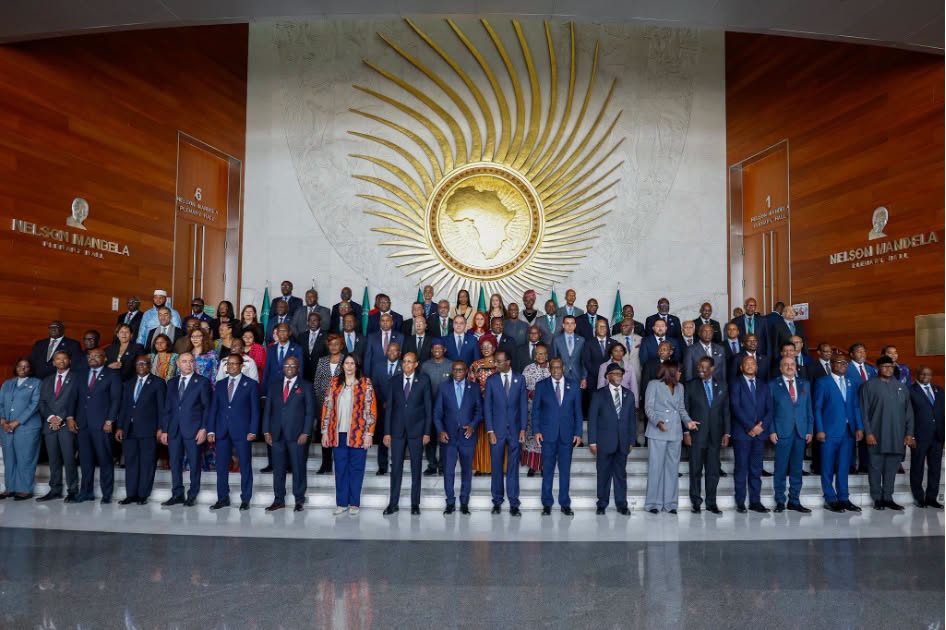
Meta Title: AU Executive Council 49th Session Concludes: Key Decisions on Financing, Agenda 2063 & Water Security
Meta Description: The 49th Ordinary Session of the AU Executive Council wrapped up in Addis Ababa with major commitments on sustainable financing, Tier 1 contributions from Kenya and Ethiopia, and progress on the 2026 Water Security theme. Read the full outcomes.
Focus Keyword: AU Executive Council 49th Session
Slug: /au-executive-council-49th-session-addis-ababa-2026-outcomes
AU Executive Council 49th Session Concludes in Addis Ababa with Historic Financing Commitments
The 49th Ordinary Session of the African Union (AU) Executive Council concluded on July 29, 2026, in Addis Ababa following two days of high-level deliberations on the continent’s most pressing development priorities, institutional reforms, and the critical challenge of sustainable financing. The session set the policy agenda ahead of the upcoming AU Assembly of Heads of State and Government.
Theme 2026: Water Security and Sanitation at the Forefront
Held under the AU’s 2026 Theme of the Year—“Assuring Sustainable Water Availability and Safely Managed Sanitation Systems to Achieve the Goals of Agenda 2063”—the meeting underscored the inextricable link between water security and the continent’s long-term vision for integration and prosperity. Delegates explored coordinated strategies to address Africa’s pressing development challenges while accelerating the implementation of Agenda 2063, the AU’s blueprint for an integrated, prosperous, and peaceful continent.
High-Level Attendance and Leadership
The opening ceremony convened a distinguished gathering of African and international leadership, signaling the session’s strategic weight. Key attendees included:
- Mahmoud Ali Youssouf, Chairperson of the African Union Commission;
- Gedion Timothewos, Minister of Foreign Affairs of the Federal Democratic Republic of Ethiopia (Host Nation);
- Claver Gatete, United Nations Under-Secretary-General and Executive Secretary of the United Nations Economic Commission for Africa (UNECA);
- Édouard Bizimana, Minister of Foreign Affairs and Development Cooperation of Burundi, serving as Chairperson of the Executive Council.
Foreign ministers from AU member states, senior government officials, diplomats, and representatives of regional and international organizations participated in the closed-door sessions.
Strategic Deliberations: Agenda 2063 Implementation & Institutional Reform
Over the two-day period, ministers reviewed a comprehensive docket aimed at deepening regional integration and strengthening inter-state cooperation. The core agenda items included:
1. Reviewing Agenda 2063 Progress
Delegates assessed the implementation status of the continent’s master plan, evaluating milestones achieved and identifying bottlenecks hindering the realization of the “Africa We Want.”
2. Institutional Audit: OAU & AU Frameworks
A critical review of decisions and institutional frameworks adopted under both the former Organisation of African Unity (OAU) and the current African Union was conducted to ensure institutional relevance and efficiency.
3. 2026 Theme Assessment
Specific focus was placed on evaluating achievements made under the 2026 Water and Sanitation theme, ensuring policy alignment with UN Sustainable Development Goal 6 (Clean Water and Sanitation).
4. Policy Recommendations for the Assembly
The Council formulated draft decisions and policy recommendations for adoption by the Heads of State, reinforcing its mandate as the primary technical driver of the Union’s political, economic, and development priorities.
Historic Breakthrough: Sustainable Financing & The Tier 1 Commitment
The most significant outcome of the 49th session was the consensus reached on **sustainable financing**—a perennial challenge for the continental body. The Council approved a revised scale of assessment and celebrated a landmark voluntary commitment by two major economies.
Kenya and Ethiopia Join Tier 1 Contributors
In a move hailed as a “demonstration of Pan-Africanism,” the Federal Democratic Republic of Ethiopia and the Republic of Kenya formally declared their decision to increase annual contributions and join **Tier 1** of the Harmonized Scale of Assessment for the 2027–2029 cycle.
“I want to seize this opportunity to thank Kenya and Ethiopia for their decision to join Tier 1. This shows that, with the conviction of our member states to move Agenda 2063 forward, the Commission will have the necessary resources,”
— Mahmoud Ali Youssouf, AU Commission Chairperson
“I am particularly encouraged by the decision of our member states to revise the scale of assessment. I know that this decision is a difficult one given the economic situation and the impact of the current geopolitical environment on the continent. As the economic situation is difficult for everybody, these efforts are truly appreciated.”
— Mahmoud Ali Youssouf
Chairperson Bizimana: A Gesture of African Solidarity
Closing the session, Executive Council Chairperson Ambassador Édouard Bizimana praised the spirit of consensus that defined the proceedings. He emphasized that the financing commitments reflect a maturing Union determined to self-finance its ambitions.
“I want to express satisfaction at a major achievement, namely the sovereign decision of the Federal Democratic Republic of Ethiopia and the Republic of Kenya to increase their annual contribution and join the first category, Tier 1, for 2027–2029 under the Harmonized Scale of Assessment. This exemplary gesture of African solidarity and Pan-Africanism reaffirms their unwavering commitment to sustainable financing and strengthens our collective resolve to build a strong, united African Union capable of financing its own ambitions.”
— Ambassador Édouard Bizimana, Minister of Foreign Affairs, Burundi / Executive Council Chairperson
Next Steps: From Decisions to Implementation
The resolutions and draft decisions adopted during the session will now be transmitted for implementation across the African Union organs, the AU Commission, and member states. Critically, these outcomes will shape the agenda for the forthcoming AU Assembly of Heads of State and Government.
Key focus areas for the months ahead include:
- Deepening institutional reform processes;
- Operationalizing the new sustainable financing architecture;
- Advancing regional integration via the AfCFTA and free movement protocols;
- Strengthening peace and security mechanisms (Silencing the Guns);
- Accelerating Agenda 2063 flagship projects.
Why This Session Matters for Africa’s Future
The 49th Ordinary Session signals a pivotal shift from rhetoric to resource mobilization. By securing a revised assessment scale and Tier 1 commitments from Ethiopia and Kenya—two of East Africa’s largest economies—the AU demonstrates a growing capacity for financial autonomy. This reduces reliance on external partners and strengthens the Union’s bargaining power on the global stage.
Furthermore, centering the 2026 theme on Water Security aligns continental policy with the climate adaptation imperatives facing the Sahel, the Horn of Africa, and Southern Africa. The decisions made in Addis Ababa this week lay the groundwork for a more resilient, integrated, and self-reliant Africa.
Frequently Asked Questions (FAQ)
- What was the main theme of the 49th AU Executive Council Session?
- The theme was “Assuring Sustainable Water Availability and Safely Managed Sanitation Systems to Achieve the Goals of Agenda 2063.”
<dt><strong>Which countries committed to Tier 1 financing?</strong></dt>
<dd><strong>Ethiopia</strong> and <strong>Kenya</strong> announced their decision to join Tier 1 of the Harmonized Scale of Assessment for the 2027–2029 period.</dd>

<dt><strong>Who chaired the 49th Session?</strong></dt>
<dd>Ambassador <strong>Édouard Bizimana</strong>, Burundi’s Minister of Foreign Affairs and Development Cooperation, chaired the session.</dd>

<dt><strong>What is the Harmonized Scale of Assessment?</strong></dt>
<dd>It is the formula used by the AU to determine member states' financial contributions to the Union's budget, categorized into tiers based on economic capacity.</dd>

<dt><strong>What happens to the decisions made at the Executive Council?</strong></dt>
<dd>Decisions are transmitted to the AU Assembly of Heads of State and Government for final adoption, and subsequently implemented by the AU Commission and member states.</dd>
SEO Optimization Checklist Applied
| Element | Implementation |
|---|---|
| Focus Keyword | “AU Executive Council 49th Session” (In H1, Intro, H2, URL Slug, Meta Title/Desc). |
| Semantic Keywords (LSI) | Agenda 2063, Sustainable Financing, Tier 1 Contributions, Harmonized Scale of Assessment, Water Security, Mahmoud Ali Youssouf, Édouard Bizimana, Kenya, Ethiopia, AU Assembly. |
| Heading Structure | H1 (1x) -> H2 (Main Sections) -> H3 (Sub-topics). Logical hierarchy for crawlers. |
| External Linking (Authority) | Linked to official sources: • au.int (AU Commission, Assembly, Agenda 2063, Organs, AfCFTA) • uneca.org (UNECA) • un.org (SDG 6) • wikipedia.org (Entity definitions: OAU, Countries, Addis Ababa). Attributes: target="_blank" rel="noopener noreferrer" for safety/UX. |
| Internal Linking Placeholders | Contextual links to related categories (e.g., /agenda-2063, /au-reforms, /africa-financing). |
| Schema Markup Ready | Structure supports NewsArticle / Report schema (Headline, DatePublished, Author/Org, Image, ArticleBody). |
| Readability | Short paragraphs, bullet points, blockquotes for speeches, FAQ section for “People Also Ask” (PAA) targeting. |
| Multimedia | Placeholder for featured image with optimized alt text containing focus keyword. |
| E-E-A-T Signals | Direct quotes from principals (Chairperson, Commissioner), specific dates, locations, official titles used. |
