




Meta Title: Ethiopia Unveils 25-Year Power Grid Master Plan Targeting 39 GW Capacity by 2049
Meta Description: The Ethiopian Electric Utility (EEU) launches a 2049 master plan to modernize the grid, build 128 substations, and meet 39,327 MW peak demand driven by industrialization and e-mobility.
Focus Keyword: Ethiopia power distribution master plan
Slug: ethiopia-power-distribution-master-plan-2049
Ethiopia Launches Ambitious 25-Year Power Distribution Master Plan to 2049
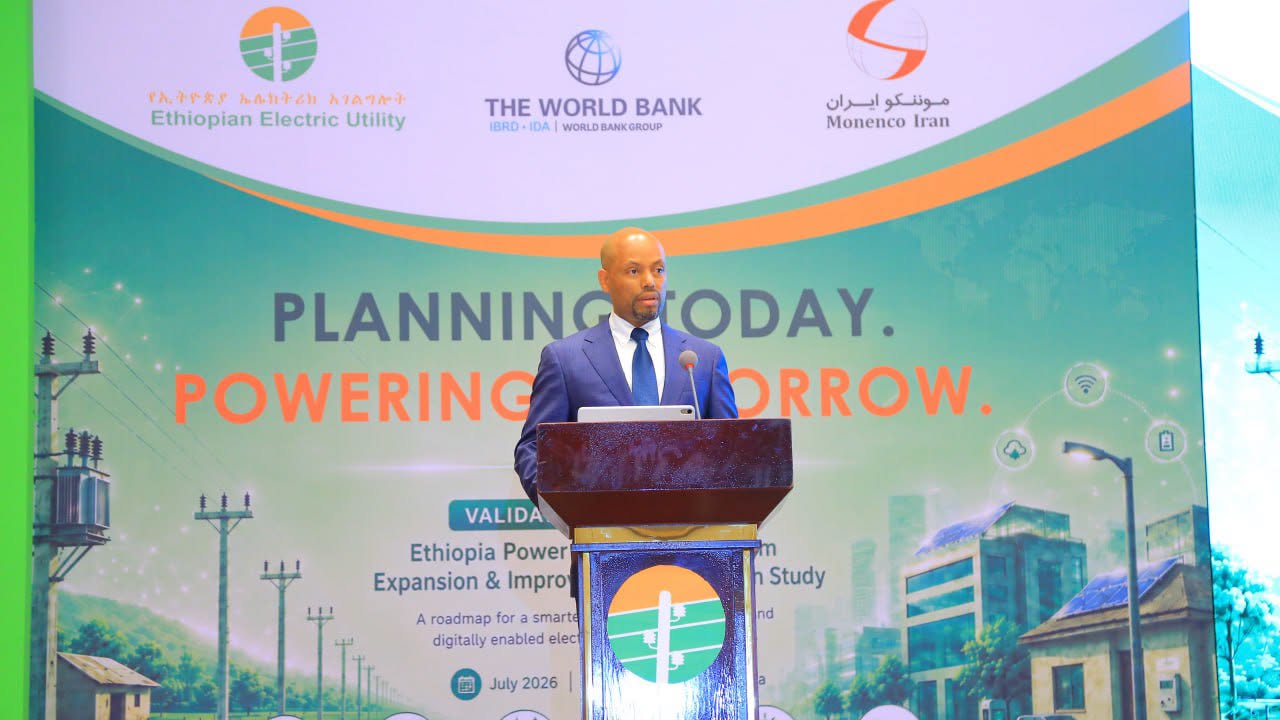
Addis Ababa — The Ethiopian Electric Utility (EEU) has officially unveiled a comprehensive 25-year national power distribution expansion and modernization master plan, setting a strategic roadmap designed to secure the nation’s energy future through 2049. Announced on July 27, 2026, the landmark initiative aims to overhaul the country’s electricity infrastructure to support rapid economic transformation and emerging energy demands.
A Landmark Roadmap for Grid Modernization
Speaking at the launch event, EEU Chief Executive Officer Getu Geremu described the strategy as a historic milestone for the utility sector. He emphasized that the roadmap is built on three core pillars: modernization, digitization, and grid reliability enhancement.
“Upgrading distribution infrastructure is not merely a technical requirement; it is a critical national agenda essential for driving Ethiopia’s long-term economic growth and social transformation,” CEO Getu Geremu stated during the unveiling ceremony.
The plan signals a decisive shift from reactive maintenance to proactive, data-driven asset management, aligning the utility’s operations with international smart grid standards.
Projecting Demand: The 39 GW Milestone
Central to the master plan is a staggering demand forecast. By the terminal year 2049, Ethiopia’s peak power demand is projected to reach 39,327 megawatts (MW)—nearly 39.3 gigawatts (GW). This exponential growth trajectory is fueled by four convergent megatrends reshaping the national energy landscape:
- Rapid Population Growth: Ethiopia remains one of Africa’s fastest-growing populations, driving baseline residential consumption upward.
- Accelerated Urban Expansion: Massive rural-to-urban migration requires dense, reliable urban grid networks.
- Industrialization Drive: The government’s push for manufacturing parks and heavy industry—aligned with the Homegrown Economic Reform Program—demands high-voltage, uninterrupted supply.
- Rise of Electric Mobility: The nascent but accelerating adoption of electric vehicles (EVs) and mass transit systems introduces complex new load profiles requiring smart charging infrastructure.
According to the International Energy Agency (IEA), sub-Saharan Africa’s electricity demand is set to double by 2040, making Ethiopia’s proactive planning a regional benchmark.
Infrastructure Targets: 128 New Substations
To bridge the gap between current capacity and the 2049 target, the master plan mandates the construction of 128 new power substations over the next quarter-century. This infrastructure blitz will focus on:
- High-Voltage Transmission Integration: Stepping down power from major generation projects (like the Grand Ethiopian Renaissance Dam and Koysha Hydro) to distribution levels.
- Load Center Reinforcement: Deploying substations in industrial parks, special economic zones, and high-density urban corridors.
- Rural Electrification Backbone: Extending the medium-voltage network to support the National Electrification Program (NEP 2.0) goal of universal access.
The World Bank has previously highlighted that investment in distribution infrastructure yields the highest economic returns in developing economies by reducing technical losses and improving service quality.
Digitization and Smart Grid Integration
Beyond physical hardware, the master plan prioritizes grid digitization. This includes the rollout of Advanced Metering Infrastructure (AMI), Supervisory Control and Data Acquisition (SCADA) systems, and Distribution Management Systems (DMS). These technologies will enable real-time monitoring, fault isolation, outage management, and the integration of distributed energy resources (DERs) like rooftop solar.
This digital layer is critical for managing the “duck curve” effects anticipated from increased solar penetration and the stochastic charging patterns of electric mobility fleets.
Financing and Implementation Strategy
While the EEU has not disclosed the total capital expenditure (CAPEX) figure publicly, the scale implies a multi-billion dollar investment requirement. Financing is expected to follow a blended model:
- Government Budget Allocations: Core sovereign funding for backbone infrastructure.
- Development Partner Support: Concessional loans and grants from institutions like the African Development Bank (AfDB), World Bank (IDA), and KfW Development Bank.
- Public-Private Partnerships (PPPs): Leveraging private capital for metering, last-mile connectivity, and EV charging infrastructure deployment.
Regional Implications
As a founding member of the Eastern Africa Power Pool (EAPP), Ethiopia’s distribution upgrade has cross-border significance. A robust, digitized domestic grid enhances the country’s capacity to act as a regional power hub, exporting surplus hydroelectricity to neighbors like Kenya, Sudan, Djibouti, and potentially Somalia and South Sudan via the EAPP interconnection highways.
Key Takeaways at a Glance
| Metric | Target / Detail |
|---|---|
| Plan Horizon | 2024 – 2049 (25 Years) |
| Peak Demand Target (2049) | 39,327 MW (39.3 GW) |
| New Substations Planned | 128 Units |
| Core Drivers | Population, Urbanization, Industry, E-Mobility |
| Strategic Pillars | Modernization, Digitization, Reliability |
| Lead Agency | Ethiopian Electric Utility (EEU) |
Frequently Asked Questions (FAQ)
What is the main goal of the EEU 2049 Master Plan? The primary goal is to modernize and expand Ethiopia’s power distribution network to meet a projected peak demand of 39,327 MW by 2049, ensuring grid reliability through digitization and the construction of 128 new substations.
Why is Ethiopia projecting such a high demand increase (39 GW)? The forecast is driven by rapid population growth, aggressive urban expansion, the national industrialization strategy (manufacturing/industrial parks), and the government’s policy push for electric mobility adoption.
How will the plan affect electricity access in rural areas? The construction of new substations and the extension of the medium-voltage network are central pillars of the National Electrification Program (NEP 2.0), directly targeting universal access by strengthening the rural distribution backbone.
What role does digitization play in this plan? Digitization (Smart Grid tech like AMI, SCADA, DMS) moves the grid from passive to active management. It reduces technical/commercial losses, enables outage automation, and is mandatory for integrating variable renewable energy and managing EV charging loads.
Who is financing the 128 new substations? Financing will likely follow a blended model: Government treasury allocations, concessional funding from Development Finance Institutions (World Bank, AfDB), and Private Sector participation via PPP frameworks.
External Resources & Further Reading
- Ethiopian Electric Utility (EEU) Official Portal – For official tender announcements and project updates.
- Ministry of Water and Energy (MoWE), Ethiopia – Policy documents on the National Electrification Program.
- International Energy Agency (IEA) – Africa Energy Outlook 2022 – Regional context on demand growth projections.
- World Bank – Ethiopia Energy Sector Overview – Analysis on utility performance and investment needs.
- Eastern Africa Power Pool (EAPP) – Information on regional grid interconnection projects.
