




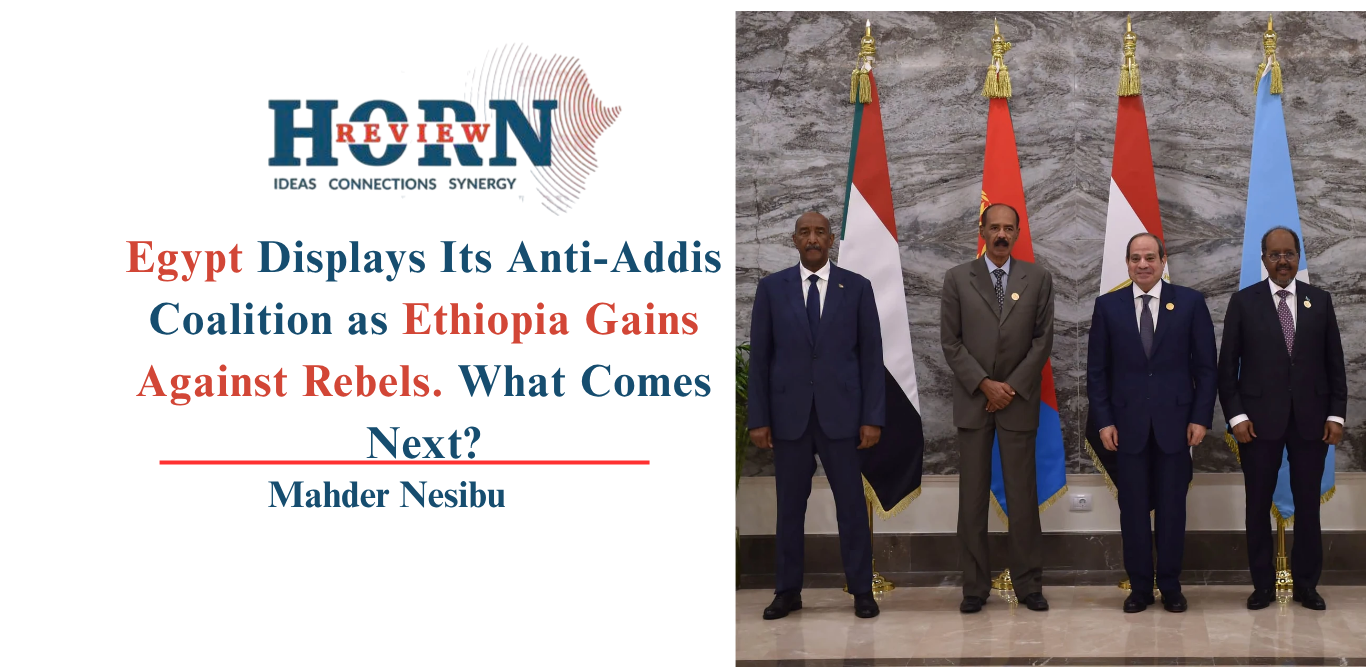
Egypt’s Encirclement Strategy: Inside the El-Alamein Summit and the Shifting Geopolitics of the Horn of Africa
Meta Description: Analysis of the El-Alamein summit hosting Eritrea, Somalia, and Sudan’s army chief. Explore Egypt’s strategy to pressure Ethiopia amid renewed Tigray fighting, GERD tensions, and Red Sea access disputes.
The geopolitical fault lines in the Horn of Africa shifted visibly this week as the Egyptian city of El-Alamein hosted a high-profile summit bringing together the leaders of Eritrea, Somalia, and the head of Sudan’s army, General Abdel Fattah al-Burhan. Billed officially as a gathering for regional security and stability, the meeting signaled a deepening alignment between Cairo and Addis Ababa’s primary regional rivals, setting the stage for a new phase of proxy competition centered on the Nile, the Red Sea, and the internal cohesion of Ethiopia.
The Catalyst: Renewed War in Northern Ethiopia
The immediate trigger for the diplomatic flurry was the dramatic resumption of large-scale hostilities inside Ethiopia. On September 23, the Tigray People’s Liberation Front (TPLF) launched a major offensive against federal positions in the neighboring Amhara and Afar regions, shattering the fragile calm established by the 2022 Pretoria Agreement.
The federal response was swift and decisive. Ethiopian National Defence Force (ENDF) units reversed the initial rebel gains and pushed deep into Tigray, with recent reports confirming the recapture of Mekelle, the regional capital, by federal forces. This rapid military turnaround underscores a significant imbalance in conventional capabilities between the federal government and the coalition of armed groups arrayed against it.
Eritrea’s Pivot: From Partner to Proxy Sponsor
Central to the current crisis is the role of Asmara. Ethiopian regional officials, including the President of the Afar region, have explicitly accused the Eritrean Defence Forces (EDF) of direct battlefield engagement alongside the Tigray Defence Forces (TDF). This marks a stark reversal from the previous conflict (2020–2022), where Eritrea fought alongside Addis Ababa against the TPLF.
Since the Pretoria Agreement—which Eritrea viewed as sidelining its interests—Asmara has systematically realigned. It has cultivated a broad coalition of Ethiopian opposition groups, including Fano militias in Amhara, the Oromo Liberation Army (OLA) in Oromia, and smaller factions like the Afar Revolutionary Democratic Unity Front. Analysts note this coalition bears the “heavy imprint” of Eritrean strategic calculations, reviving a decades-old playbook of proxy warfare aimed at destabilizing the Ethiopian center.
Related Reading: Understanding the Pretoria Agreement and its collapse
The Red Sea Flashpoint: Sovereignty vs. Access
The breakdown in Addis Ababa–Asmara relations is rooted in a fundamental dispute over maritime access. Following Eritrea’s secession in 1993, Ethiopia became landlocked, losing direct access to the ports of Assab and Massawa. Prime Minister Abiy Ahmed’s administration has elevated the quest for sovereign Red Sea access to a matter of national survival, arguing the 1993 separation was illegal under domestic law and left Ethiopia unfairly landlocked.
This demand directly threatens Eritrea’s sovereignty and economic lifeline, pushing President Isaias Afwerki into a strategic embrace of any actor opposed to Addis Ababa. Cairo has emerged as the primary architect of this counter-coalition.
Egypt’s Grand Strategy: Encirclement via the Nile and the Sea
The rivalry between Egypt and Ethiopia remains the overarching dynamic of the region. Since the launch of the Grand Ethiopian Renaissance Dam (GERD) in 2011, Cairo has watched its historic hegemony over the Nile Basin erode. Unable to halt the dam’s construction, reservoir filling, or its completion in September 2024, Egypt has pivoted toward a strategy of undermining Ethiopian stability to force concessions on water sharing.
The El-Alamein summit declaration leaned heavily on rhetoric regarding sovereignty and territorial integrity, explicitly insisting the Red Sea belongs exclusively to its littoral states—a pointed rebuke to Ethiopia’s maritime ambitions. Ethiopian officials accuse Cairo of deep involvement in the current rebellion, a charge supported by the intensity of the Cairo-Asmara axis over the past two years, marked by frequent leadership exchanges and joint military drills.
External Context: GERD Negotiations: A Timeline of Deadlock
Sudan: The Critical Theatre of Proxy War
Sudan’s catastrophic civil war, now in its fourth year, has become a primary theater for this regional proxy battle. General al-Burhan’s Sudanese Armed Forces (SAF)—locked in a power struggle with the Rapid Support Forces (RSF)—are a key pillar of Egypt’s regional posture.
Cairo, alongside Asmara, is a principal backer of the SAF, providing logistics, air support, and diplomatic cover to legitimize al-Burhan as Sudan’s sovereign representative. This alliance has come at a strategic cost: the SAF reversed Khartoum’s previously cooperative stance on the GERD, aligning with Cairo’s hardline position.
Furthermore, Sudan has transformed into a logistical hub for anti-Ethiopia actors. The SAF hosts TPLF fighters and facilitates Eritrean military presence on Sudanese soil, effectively turning Sudanese territory into a launchpad for operations against the ENDF. Border disputes in Al-Fashaga and mutual accusations of backing each other’s internal enemies have pushed Khartoum and Addis Ababa into a dangerous spiral of hostility.
Somalia’s Balancing Act: Security, Somaliland, and AUSSOM
Somalia’s participation in the summit revealed the complexities of President Hassan Sheikh Mohamud’s position. Days before El-Alamein, he met with PM Abiy Ahmed and publicly signaled openness to negotiating Ethiopian sea access via Somali ports.
However, Mogadishu’s actions tell a different story. Furious over a 2024 Memorandum of Understanding between Ethiopia and Somaliland (a breakaway region seeking recognition), Hassan Sheikh moved to eject Ethiopian troops from the AU peacekeeping mission (AUSSOM) and counterterrorism operations. In a historic first, he welcomed Egyptian troops into Somalia, placing Cairo’s military directly on Ethiopia’s doorstep.
This pivot is driven by anxiety over Somaliland’s momentum—bolstered by Israel’s recognition in December 2024—and a calculation that Cairo’s backing on the sovereignty issue outweighs the security benefits of the Ethiopian partnership.
Deep Dive: Somaliland’s Quest for Recognition and Regional Implications
Ethiopia’s Counter-Moves: Resilience and Diplomatic Pushback
Despite the apparent encirclement, Addis Ababa is not on the back foot. The ENDF’s rapid recapture of Mekelle demonstrates superior conventional military capacity compared to the fragmented rebel coalition. Ethiopia has responded to external interference with sharp diplomatic signaling:
- Expulsions: Addis Ababa expelled ten Eritrean diplomats and one Egyptian diplomat, signaling zero tolerance for documented interference.
- Powerful Allies: Ethiopia retains heavyweight partners—the UAE, Israel, and Türkiye—all of whom support its Red Sea access ambitions and provide critical military and economic ballast.
- Defiant Rhetoric: The Ethiopian Foreign Ministry dismissed the El-Alamein declaration as changing “little on the ground,” reaffirming the intent to pursue Nile development and Red Sea access regardless of regional pressure.
Strategic Outlook: Stalemate or Escalation?
The historical record offers mixed signals. Egypt’s aggressive posturing failed to stop the GERD; its new strategy of “stability undermining” may similarly fail to break Ethiopian resolve. Conversely, Addis Ababa may view Eritrea’s direct military involvement as a casus belli to revisit the Red Sea question by force, potentially targeting Eritrean ports or territory to force a corridor.
The Horn of Africa now sits at a dangerous inflection point. The El-Alamein summit did not create these tensions, but it formalized a bloc of resistance against Ethiopia’s rise. Whether this bloc holds—or fractures under the weight of Sudan’s collapse, Somalia’s ambivalence, and Ethiopia’s military momentum—will define the region’s trajectory for the next decade.
Key Takeaways:
- El-Alamein Summit: Formalized the Cairo-Asmara-Mogadishu-Khartoum (SAF) axis against Addis Ababa.
- Trigger: TPLF offensive (Sept 23) and Eritrean military involvement exposed the proxy war.
- Core Drivers: Nile waters (GERD), Red Sea access, and the fallout from the Pretoria Agreement.
- Ethiopia’s Position: Militarily ascendant (Mekelle retaken), diplomatically defiant, backed by UAE/Israel/Türkiye.
- Wildcards: Sudan’s state collapse, Somaliland recognition bids, and the risk of direct Eritrea-Ethiopia conventional war.
Further Reading & Sources:
