




Drone Strike Kills 12 Civilians Collecting Grain in Ethiopia’s Tigray Region Amid Escalating Aerial Campaign
Meta Description: At least 12 civilians died in a drone strike in Rama, Tigray, while scavenging grain from a previous attack. The incident highlights a disturbing pattern of aerial warfare targeting civilians across Tigray, Amhara, and Oromia.
Drone Strike Hits Civilians Scavenging Grain in Rama, Tigray
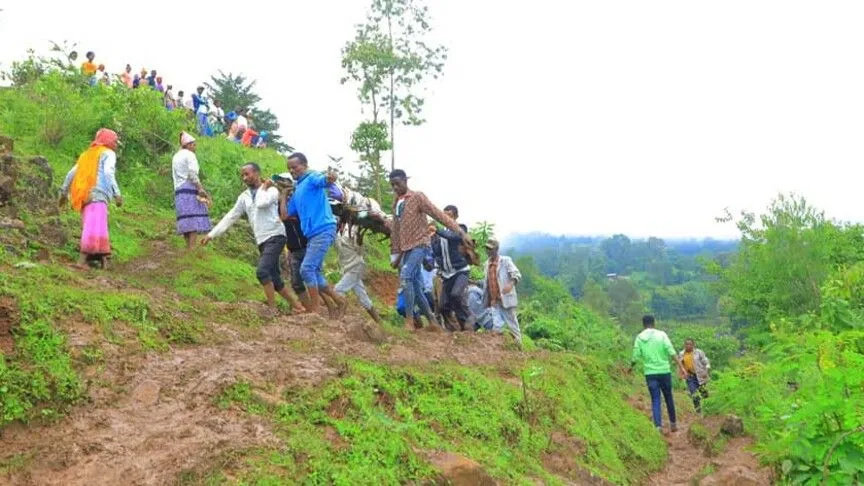
At least 12 civilians were killed and several others seriously injured on Friday following a drone strike in the town of Rama, located in Ethiopia’s northern Tigray region. According to local authorities, hospital sources, and monitoring groups confirmed on Saturday, the victims had gathered to collect sorghum spilled across a roadway from a privately owned truck struck the previous night.
The sequence of events underscores the lethal risks faced by populations living under active aerial bombardment. On Thursday night, a drone targeted a commercial truck transporting grain for local traders. When residents converged on Friday to salvage the scattered food supplies—a desperate act amid severe humanitarian restrictions—a second strike hit the crowd.
Addis Standard, an independent Ethiopian news outlet, cited local sources confirming the death toll at the scene. The Armed Conflict Location & Event Data Project (ACLED), a global conflict monitoring organization, independently documented the Friday attack, recording 12 fatalities alongside injuries and property damage.
A Pattern of Indiscriminate Aerial Warfare in Northern Ethiopia
The Rama incident is not isolated. It represents a sharp escalation in the use of unmanned aerial vehicles (UAVs) against civilian infrastructure in Tigray, despite the November 2022 Cessation of Hostilities Agreement (CoHA) intended to end the two-year war.
Recent Deadly Strikes in Tigray (October 2024):
- Medebay Terer: Separate drone strikes killed seven civilians, including an 8-year-old girl, and injured six others.
- Hintalo District: Attacks resulted in civilian deaths, notably a 2-year-old child.
These incidents raise profound concerns regarding adherence to International Humanitarian Law (IHL), specifically the principles of distinction and proportionality. The targeting of objects indispensable to the survival of the civilian population—such as food trucks and gatherings for food collection—may constitute a violation of the Geneva Conventions.
Escalation Spreads to Amhara and Oromia Regions
The drone campaign has expanded geographically, impacting neighboring regions already grappling with distinct internal conflicts.
Amhara Region: Strike on Displacement Camp On Thursday, a drone strike hit the Hayiq Jari 2 Turk displacement camp in the Amhara region, killing at least 16 civilians and injuring 22 others. The camp housed internally displaced persons (IDPs) fleeing fighting between the Ethiopian National Defense Force (ENDF) and Fano militia groups. Strikes on designated displacement sites are prohibited under international law, as they afford specific protection to non-combatants.
Oromia Region: Continued Operations Western Oromia has also witnessed persistent drone operations targeting the Oromo Liberation Army (OLA), though civilian casualties are frequently reported by local monitors and human rights groups like the Ethiopian Human Rights Commission (EHRC) and Amnesty International.
Geopolitical Tensions: Eritrea’s Role and Regional Stability
The resurgence of heavy fighting in Tigray has reignited diplomatic friction between Addis Ababa and Asmara. The Ethiopian federal government has accused Eritrea of supporting armed opposition groups and deploying troops inside Tigrayan territory—allegations that, if proven, would violate the sovereignty provisions of the CoHA and the 2018 Peace Agreement.
- Eritrea’s Response: Asmara has categorically rejected the accusations.
- Regional Risk: Analysts warn that proxy dynamics and cross-border military movements heighten the risk of a wider Horn of Africa confrontation, potentially drawing in actors from the Red Sea arena.
The United Nations and the African Union (AU) have repeatedly called for de-escalation, unimpeded humanitarian access, and the establishment of a transparent investigative mechanism for alleged war crimes—calls that have largely gone unheeded by warring parties.
Humanitarian Catastrophe Deepens Amid Aid Obstacles
The timing of the Rama strike—targeting people collecting spilled grain—viscerally illustrates the man-made famine conditions persisting in Tigray. Despite the CoHA, humanitarian access remains restricted by bureaucratic hurdles, checkpoint blockades, and the destruction of logistics infrastructure.
- Food Insecurity: The Integrated Food Security Phase Classification (IPC) continues to project Crisis (IPC Phase 3) and Emergency (IPC Phase 4) outcomes across Tigray.
- Aid Diversion: Previous suspensions of food aid by USAID and the World Food Programme (WFP) over diversion schemes have only recently resumed, but distribution capacity remains critically low.
Calls for Accountability and Investigation
Human rights advocates argue that the frequency and pattern of strikes hitting civilians—marketplaces, displacement camps, and food distribution points—suggest a systemic failure of targeting protocols or a deliberate strategy of terror.
“The repetition of strikes on civilian gatherings, especially those driven by hunger, indicates a blatant disregard for the laws of war,” stated a researcher familiar with ACLED methodology. “Without an independent investigative body, impunity remains the norm.”
The International Commission of Human Rights Experts on Ethiopia (ICHREE), whose mandate was not renewed by the UN Human Rights Council in 2023 amid heavy lobbying by Addis Ababa, previously documented reasonable grounds to believe all parties committed war crimes. The current vacuum in international oversight leaves victims with little recourse.
Key Takeaways
| Aspect | Detail |
|---|---|
| Latest Incident | Drone strike in Rama, Tigray (Friday) killing 12 civilians collecting grain. |
| Verification | Confirmed by local medics, Addis Standard, and ACLED. |
| Broader Trend | Escalating drone warfare in Tigray, Amhara (IDP camp strike kills 16), and Oromia. |
| Legal Framework | Potential violations of IHL (Geneva Conventions): Distinction, Proportionality, Starvation as a method of warfare. |
| Geopolitics | Ethiopia accuses Eritrea of troop deployment/support for armed groups; Eritrea denies. |
| Humanitarian Status | Severe food insecurity persists; aid access remains inconsistent. |
Frequently Asked Questions (FAQ)
Who is responsible for the drone strikes in Ethiopia? While the Ethiopian National Defense Force (ENDF) possesses the primary drone fleet (including Turkish Bayraktar TB2s, Iranian Mohajer-6s, and Chinese CH-4s), the federal government rarely comments on specific strikes. In Amhara, the ENDF is the primary operator. In Tigray, the command structure remains opaque post-CoHA.
What is the Cessation of Hostilities Agreement (CoHA)? Signed in Pretoria on November 2, 2022, between the Federal Government and the Tigray People’s Liberation Front (TPLF), the CoHA mandated the cessation of hostilities, disarmament, restoration of services, and humanitarian access. Fighting has resumed sporadically since mid-2023.
Does International Law prohibit attacking people collecting food? Yes. Article 54 of Additional Protocol I to the Geneva Conventions prohibits attacking, destroying, or rendering useless objects indispensable to the survival of the civilian population (foodstuffs, crops, livestock). Deliberately striking civilians gathering spilled humanitarian or commercial food aid is a grave breach.
What is ACLED? The Armed Conflict Location & Event Data Project is a non-governmental, non-partisan organization that collects, codes, and analyzes data on political violence and protest events globally. Their data is widely used by the UN, World Bank, and major media outlets.
How can the international community respond? Options include targeted sanctions on military commanders responsible for unlawful strikes, supporting a renewed UN investigative mechanism (like ICHREE), conditioning bilateral military aid on IHL compliance, and increasing diplomatic pressure for a permanent ceasefire and humanitarian corridor enforcement.
