




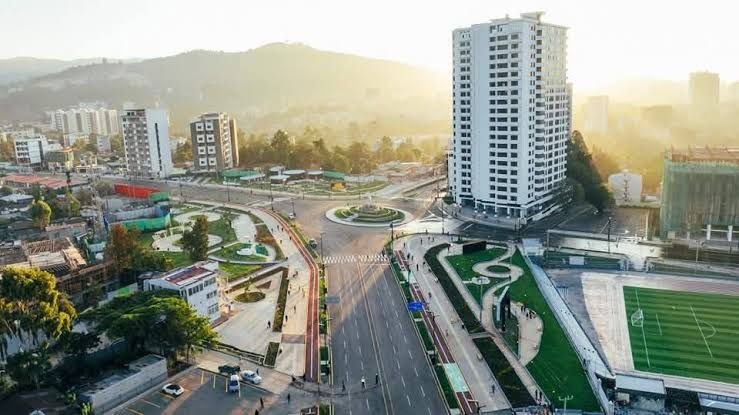
Addis Ababa Urban Transformation: Kazanchis Renewal & Global Recognition Drive Africa’s Diplomatic Capital Forward
Meta Description: Explore how the Addis Ababa urban transformation is reshaping Ethiopia’s capital. From the Kazanchis district renewal to winning the Shanghai Award for sustainability, discover why the city is solidifying its status as Africa’s premier diplomatic and economic hub.
Addis Ababa is undergoing a profound metamorphosis. Driven by ambitious infrastructure projects and strategic policy shifts, the Addis Ababa urban transformation is rapidly repositioning the Ethiopian capital from a political center into a dynamic, sustainable, and globally recognized metropolis. This evolution is most visible in the accelerated renewal of the historic Kazanchis district and the city’s recent acquisition of prestigious international accolades for sustainable development.
As the headquarters of the African Union (AU) and the United Nations Economic Commission for Africa (UNECA), Addis Ababa has long held the title of Africa’s diplomatic capital. Today, massive investments in urban regeneration are ensuring the city’s physical landscape matches its geopolitical stature.
The Kazanchis District Renewal: A Catalyst for Modernization
At the heart of the current overhaul lies the Kazanchis urban renewal project. Long characterized by aging infrastructure and informal settlements, this strategically located district—bordering the AU headquarters and major arterial roads—is being reimagined as a high-density, mixed-use corridor.
According to updates from the Addis Ababa City Administration, the project has advanced into critical implementation phases. Key developments include:
- High-Rise Development: Construction of modern commercial and residential towers designed to maximize land value and accommodate the city’s booming population.
- Infrastructure Overhaul: Comprehensive upgrades to road networks, stormwater drainage, and underground utility corridors (power, fiber optics, water) to support smart city capabilities.
- Public Realm Enhancement: Creation of pedestrian-friendly zones, green parks, and public squares to foster community interaction and reduce vehicular congestion.
This initiative aligns directly with the Addis Ababa Riverside Green Development Project, creating a contiguous green spine through the city. By replacing vulnerable informal structures with resilient, planned developments, the city administration aims to improve housing standards for thousands while unlocking significant commercial value. The project serves as a pilot model for urban regeneration in Ethiopia, demonstrating how strategic densification can finance public infrastructure without displacing communities into periphery zones lacking services.
Related Reading: World Bank Report on Urban Development in Ethiopia | Addis Ababa City Administration Official Portal
Global Stage: Shanghai Award Validates Sustainability Strategy
The tangible progress on the ground has not gone unnoticed internationally. In a landmark achievement, Addis Ababa was recently named among the five global winners of the Shanghai Award for urban sustainability. Organized by UN-Habitat and the Shanghai Municipal Government, this biennial award recognizes cities that demonstrate outstanding contributions to sustainable urbanization in line with the New Urban Agenda and Sustainable Development Goal 11 (SDG 11).
The selection jury highlighted Addis Ababa’s integrated approach—specifically citing the River Side Green Development Project and the Non-Motorized Transport (NMT) strategy—as exemplary models for rapidly growing cities in the Global South. The award underscores a critical shift: the city is no longer just building more infrastructure; it is building smarter, climate-resilient infrastructure.
Winning the Shanghai Award places Addis Ababa in the company of previous laurels like Guangzhou, Vienna, and Medellín, signaling to international investors and development partners that the city’s governance frameworks meet global best-practice standards.
External Resource: UN-Habitat Shanghai Award Winners Announcement | UN Sustainable Development Goal 11
Strengthening Africa’s Diplomatic & Economic Hub Status
Beyond bricks and mortar, the Addis Ababa urban transformation is a geopolitical strategy. The fourth source emphasizes the city’s role in strengthening “Africa’s Shared Vision, Dialogue, and Cooperation.” The physical upgrades—new conference facilities, improved transit links (including the Light Rail Transit and upcoming BRT corridors), and world-class hospitality infrastructure—directly support the AU’s Agenda 2063.
The city is actively leveraging its built environment to host high-profile summits, such as the AU Assembly, the Africa Climate Summit, and various intra-African trade negotiations under the African Continental Free Trade Area (AfCFTA). A modern, functional capital reduces transaction costs for diplomacy and business, reinforcing Addis Ababa’s competitive edge against other emerging African hubs like Nairobi, Kigali, and Accra.
Key pillars supporting this hub status include:
- Connectivity: Bole International Airport expansion and the Addis-Djibouti railway corridor.
- Institutional Density: Co-location of AU, UNECA, and over 100 embassies creates a unique “international district” ecosystem.
- Knowledge Economy: Partnerships with local universities (Addis Ababa University, AAiT) and international think tanks to drive urban policy research.
International Recognition Fuels Investment Momentum
The convergence of local execution and global recognition creates a powerful feedback loop. As reported by The Afro Times and Addis Media Network, the global recognition of Addis Ababa’s urban transformation is translating into heightened investor confidence.
International financial institutions (IFIs) and private equity funds are increasingly viewing the city’s project pipeline—spanning affordable housing, waste-to-energy (Reppie plant), and transit-oriented development—as bankable. The city’s adoption of Land Value Capture (LVC) mechanisms to finance the Kazanchis renewal provides a replicable fiscal model for other African municipalities struggling with infrastructure deficits.
Challenges and the Road Ahead
Despite the momentum, challenges persist. Rapid construction brings issues of construction waste management, temporary traffic disruption, and the critical need for inclusive resettlement policies ensuring original Kazanchis residents benefit from the upgraded neighborhood. The city administration has committed to a “right to return” policy and subsidized mortgage schemes for affected low-income households, a commitment that will be the true test of the project’s social sustainability.
Furthermore, climate resilience remains paramount. With Addis Ababa facing increasing flood risks and heat island effects, the integration of sponge city concepts—permeable pavements, urban wetlands, and expanded canopy cover—into the Kazanchis master plan is essential for long-term viability.
Conclusion
The Addis Ababa urban transformation represents one of the most ambitious city-making endeavors on the African continent today. By synergizing the Kazanchis district renewal with award-winning sustainability strategies and its irreplaceable role as Africa’s diplomatic nerve center, the city is crafting a new narrative. It is a narrative where planned urbanization drives economic growth, where green infrastructure mitigates climate risk, and where a capital city truly embodies the aspirations of a continent on the rise.
As the cranes dotting the Kazanchis skyline give way to occupied towers and bustling plazas, Addis Ababa offers a compelling case study: Urban transformation, when anchored in sustainability and inclusive governance, is the most potent tool for national development and continental leadership.
Frequently Asked Questions (FAQ)
What is the Kazanchis Urban Renewal Project? It is a flagship government-led initiative in Addis Ababa to redevelop the central Kazanchis district into a modern, high-density mixed-use area with improved infrastructure, housing, and public spaces, located near the African Union headquarters.
Why did Addis Ababa win the Shanghai Award? The city won the UN-Habitat Shanghai Award for its integrated sustainable urban projects, particularly the Riverside Green Development Project and Non-Motorized Transport strategies, which align with the New Urban Agenda and SDG 11.
How does urban renewal affect Addis Ababa’s role as the AU headquarters? Improved infrastructure, conference facilities, transport, and hospitality directly support the logistical demands of the African Union and diplomatic corps, reinforcing the city’s status as the “Political Capital of Africa.”
What is the Addis Ababa River Side Green Development Project? A massive ecological restoration project cleaning and developing the banks of the city’s major rivers (Little Akaki, Great Akaki, etc.) into green corridors with parks, bike lanes, and wetlands, spanning over 50km.
