




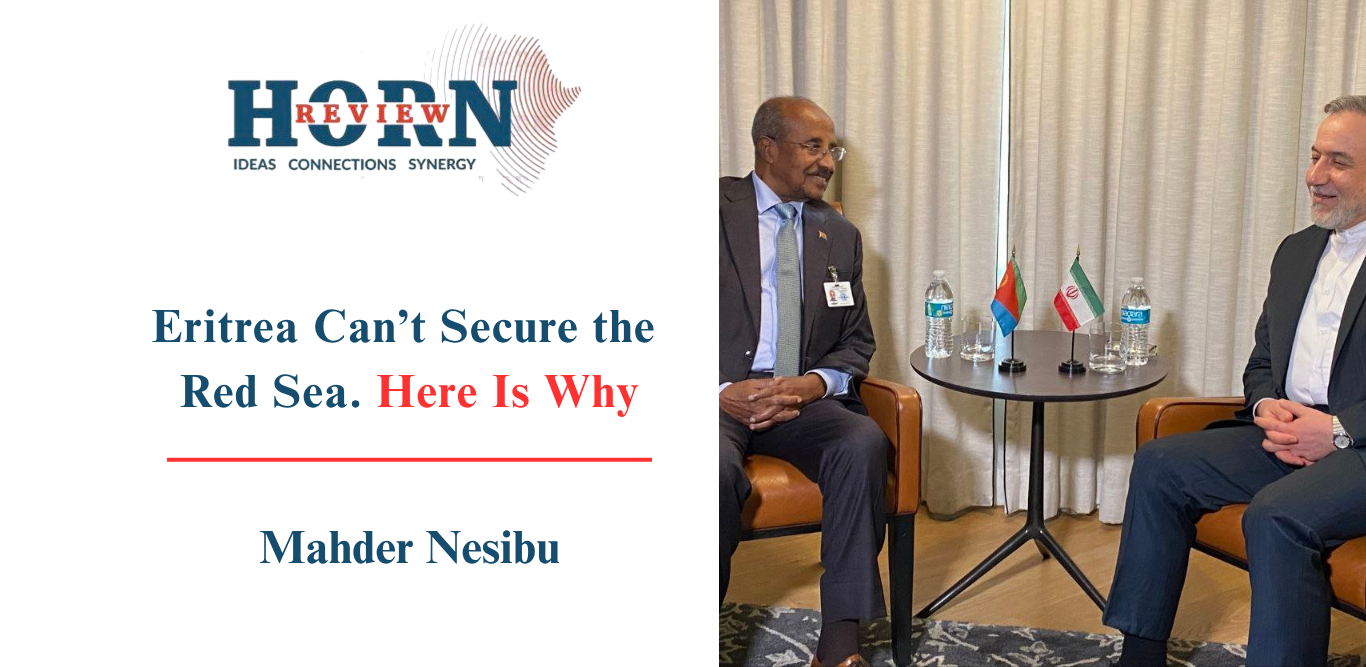
Title: Eritrea’s Red Sea Gamble: Why Asmara Is Drifting Toward the Houthi-Iran Axis
Meta Description: As the Houthis seize Bab el-Mandeb, Eritrea refuses to join the Saudi-led coalition. This analysis reveals how Asmara’s rivalry with Ethiopia and alliance with Sudan’s army are pulling it into Iran’s orbit, reshaping Red Sea security.
When Saudi Arabia assembled a coalition of Red Sea states in July 2026 to counter a Houthi blockade on shipping, one conspicuous absence underscored a shifting geopolitical fault line: Eritrea. Despite a lengthy coastline stretching over 1,000 kilometres and a historical narrative championing “littoral state responsibility” alongside Egypt, Asmara chose ambiguity over alignment. As the Houthis execute a lightning offensive to seize Yemen’s western coast and the strategic Bab el-Mandeb strait, Eritrea’s silence is not neutrality—it is a calculated hedging strategy that risks drawing the Horn of Africa nation deeper into the Iranian axis.
The Red Sea Flashpoint: Beyond the Gaza Narrative
International focus on the Red Sea intensified following the outbreak of direct conflict between Iran, the United States, and Israel. After Tehran successfully leveraged the Strait of Hormuz early in the fighting, fears mounted that Iran would replicate this chokehold strategy at the Red Sea’s southern gateway. The Houthis (Ansar Allah), strategically positioned in Yemen, emerged as the primary instrument for this pressure.
Initially, the movement framed its attacks as solidarity with Gaza, targeting Israeli-linked shipping. However, the dynamic shifted dramatically as hostilities between the Houthis and Saudi Arabia reignited. A fragile 2022 truce collapsed, leading the Houthis to add Riyadh to their blockade list. By September 2026, a successful Houthi offensive seized the entirety of Yemen’s Red Sea coastline and Perim Island, placing the entrance to the Red Sea firmly under their control.
This escalation prompted condemnations from Egypt and Türkiye, particularly following a Houthi strike on the East-West pipeline—Saudi Arabia’s critical artery for bypassing Hormuz. Yet, Eritrea’s response, articulated by Foreign Minister Osman Saleh in an interview with Middle East Eye, diverged sharply. Saleh refused to condemn the Houthi blockade, declaring “Yemen is non-existent. The official government has no control,” while launching scathing attacks on the UAE and Israel’s recognition of Somaliland.
The Ethiopia Factor: The Hidden Driver of Asmara’s Policy
To understand Eritrea’s apparent indifference to Houthi expansionism, one must look south, not north. Asmara’s rhetoric regarding “littoral state responsibility” is primarily a diplomatic weapon aimed at Ethiopia.
Since a falling out circa 2022, relations with Addis Ababa have deteriorated into proxy confrontation. Eritrea has cultivated relationships with Ethiopian insurgent groups—reportedly aiming at “toppling” the federal government—while Addis Ababa aggressively pursues Red Sea access, citing the 1993 secession that left it landlocked. Ethiopia views the port of Assab as a historical right; Eritrea views Ethiopia’s exclusion as the foundation of its own strategic relevance.
By framing Red Sea access as the exclusive sovereign right of littoral states, Eritrea and Egypt jointly undermine Ethiopian ambitions. This stance aligns Asmara against the UAE and Israel, both key backers of Ethiopia’s maritime quest. In this calculus, the Houthis’ disruption of the status quo is a secondary concern compared to the existential imperative of containing Ethiopia.
The Sudan Corridor: The Bridge to Tehran and Sanaa
The mechanism pulling Eritrea toward the Houthi-Iran axis runs through Sudan. Since the Sudanese civil war erupted in 2023, Asmara has become a primary backer of the Sudanese Armed Forces (SAF).
- Training & Deployment: Eritrea hosts SAF training camps and has deployed its own forces inside Sudan.
- Logistics Hub: Eritrean airports and seaports (Massawa, Assab) serve as secure transit routes for weaponry reaching the SAF.
- The Iranian Link: Iran is a principal supplier of drones, missiles, and radar to the SAF, often facilitated by IRGC personnel. This supply chain relies heavily on Eritrean territory.
This creates a structural alignment: Eritrea facilitates Iranian arms transfers to the SAF; the SAF maintains a supply line to the Houthis; the Houthis provide Red Sea leverage for Iran. A recent report by The Century Foundation notes the Houthis are actively establishing themselves as a “node” in the Axis of Resistance, cultivating the SAF as a partner. For Asmara, the ideology of the SAF’s Islamist factions or the Houthis’ Zaidi theology is irrelevant—the utility lies in projecting power into Sudan and securing depth against Ethiopia.
A History of Hedging: From Al-Shabaab to the UAE Base
Eritrea’s current opacity is consistent with a decades-long pattern of transactional realignment:
| Era | Alignment | Strategic Driver |
|---|---|---|
| 2000s (War on Terror) | Iran / Al-Bashir / Al-Shabaab | Breaking international isolation; Eritrea facilitated Iranian support to Somali insurgents. |
| Late 2010s (Yemen War) | Saudi Arabia / UAE | Granted UAE a military base in Assab to fight Houthis; pursued economic lifelines. |
| Current (Post-2022) | Iran / SAF / Houthis (De Facto) | Containing Ethiopia; securing Sudanese depth; acquiring advanced drone/missile tech. |
The Military Calculus: Drones Over Diplomacy
The pivot toward the Axis of Resistance offers Asmara a specific military advantage the Saudi-UAE bloc cannot: asymmetric warfare technology. As tensions with Ethiopia approach a potential flashpoint, Eritrea views the Houthis’ proven expertise in drones, anti-ship missiles, and radar evasion as a force multiplier. Riyadh and Abu Dhabi, despite their air power, are constrained by strategic ties to Addis Ababa and may withhold such sensitive capabilities.
Simultaneously, Saudi Arabia’s regional position has weakened. A falling out with the UAE, friction with Israel, and a nascent defence pact with Türkiye and Pakistan that has yet to yield results have left Riyadh exposed. Reports suggest US reluctance to strike the Houthis—partly due to Saudi diplomatic overtures toward Tehran—further erodes the security umbrella Asmara might have relied upon.
Implications for Red Sea Security
Eritrea’s drift presents a profound dilemma for the Saudi-led coalition and freedom of navigation. The “littoral state” framework championed by Cairo and Asmara is fracturing; Asmara’s definition of security now prioritizes the containment of Ethiopia over the containment of the Houthis.
By serving as a logistical artery for the Iran-SAF-Houthi supply chain, Eritrea transforms its coastline from a passive geographic asset into an active node in a network challenging the regional order. Unless Riyadh can offer a compelling alternative that addresses Asmara’s core insecurity—Ethiopia—the Kingdom’s southern flank will remain a vulnerable gap in the Red Sea’s security architecture.
Key Entities & Resources:
