




Meta Description: The UN Security Council extends the Darfur arms embargo by one month via Resolution 2828, deferring a US push for a nationwide ban. Deep divisions between Washington, Khartoum, Moscow, and Beijing reveal a sanctions framework failing to match the reality of Sudan’s expanding war.
UN Extends Darfur Arms Embargo One Month as US Push for Nationwide Ban Stalls
Focus Keyword: UN Sudan arms embargo extension
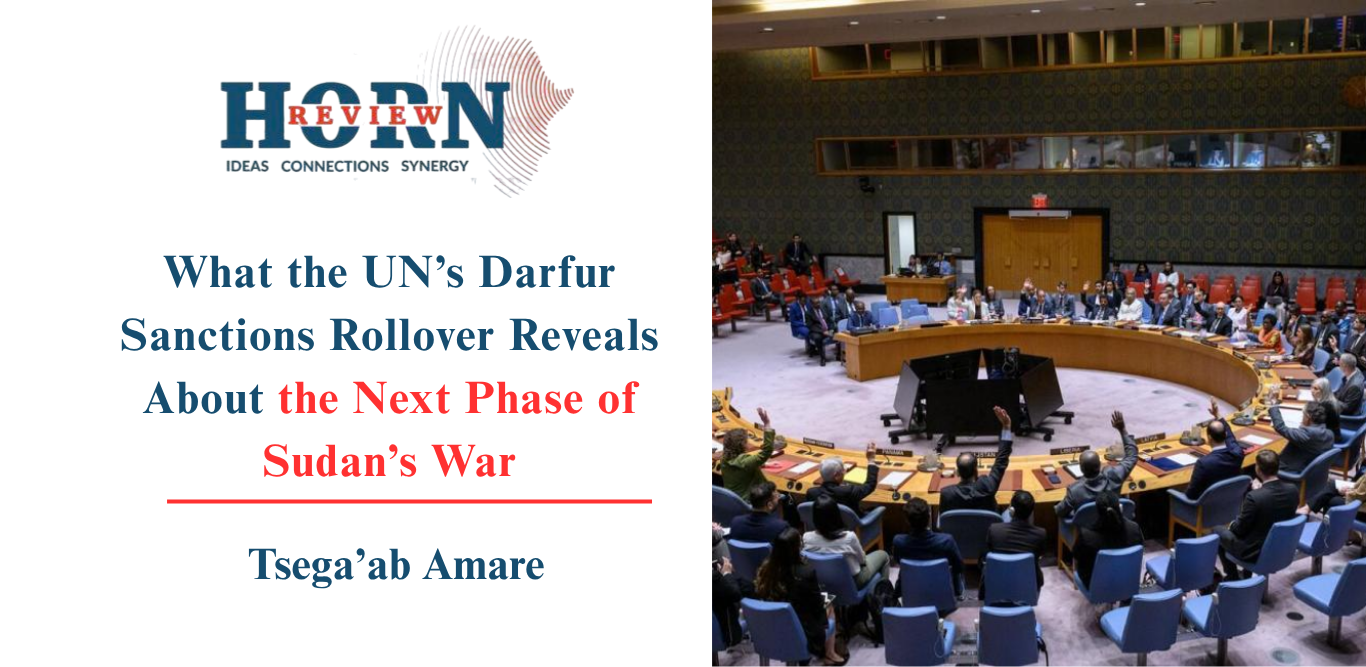
The United Nations Security Council adopted Resolution 2828 on September 11, extending the Darfur-specific arms embargo and asset freeze for a single month. While technically a procedural “housekeeping” measure to prevent the sanctions regime from lapsing, the vote exposed a deepening geopolitical fracture over how to address a conflict that has long since spilled beyond Darfur’s borders.
The one-month rollover—pushing the mandate expiry to October 9 and the Panel of Experts’ mandate to November 9—was the narrowest common ground the Council could reach. It deferred the central question: whether a sanctions architecture designed in 2005 for a regional militia conflict can regulate a national war economy now stretching from the Red Sea to Blue Nile.
A Three-Way Split in the Security Council
Negotiations revealed three distinct positions, rendering a substantive annual renewal impossible before the deadline.
United States: The Framework Is Obsolete
US Ambassador Jeffrey DeLaurentis (referred to as Ambassador Bartos in chamber discussions) argued forcefully that the twenty-year-old Darfur-only framework is outdated. Washington tabled a proposal to:
- Expand the arms embargo nationwide across all of Sudan.
- Strengthen the Panel of Experts monitoring capacity.
- Add new designation criteria targeting conflict-related sexual violence, kidnapping, and attacks on humanitarian workers.
Washington’s stance marks a significant policy shift from the Darfur-centric posture held for two decades. Senior Advisor for Arab and African Affairs Massad Boulos framed the expansion as a leverage tool, warning that a simple rollover is “unacceptable” and that members blocking an expanded embargo risk “abetting those who are destroying Sudan.”
Key Context: The US push cites the destruction of over 50 metric tons of World Food Programme (WFP) aid in South Kordofan as evidence that civilians outside Darfur lack protection. Read the Al Jazeera report on the UN session.
Russia and China: Preserve the Status Quo
Russia’s Ambassador Anna Evstigneeva drew “clear red lines” against expansion, aligning explicitly with Khartoum and advocating for a clean one-year rollover of the existing text. Analysts link this stance to Moscow’s strategic interests, including a long-stalled bid for a naval facility at Port Sudan.
China’s Ambassador Sun Lei echoed the caution, arguing that forcing a contentious text could fuel Sudan’s fragmentation and insisting sanctions must not substitute for diplomacy. As permanent members, both hold veto power over any Chapter VII expansion text.
Sudan (SAF-Aligned Government): Sovereignty and Self-Defense
Sudan’s UN Ambassador Al-Harith Idriss al-Harith Mohamed rejected a nationwide embargo outright, framing it as an assault on national sovereignty and the inherent right to self-defense under international law. Khartoum argues the embargo would constrain the Sudanese Armed Forces (SAF)—the internationally recognized government—while non-state actors like the Rapid Support Forces (RSF) continue to receive external support.
Khartoum’s rebuttal leaned on two historical grievances:
- The international community failed to back the 2020 disarmament framework the RSF ultimately rejected.
- Two decades of sanctions hampered Sudanese law enforcement more than Darfur’s armed groups.
The Geography Gap: Why the 2005 Framework Fails 2026 Realities
The core tension is structural. The current regime—born from Resolution 1591 (2005)—targets non-state militias in one region. Today’s conflict involves a national army, a powerful paramilitary rival (RSF), and sprawling smuggling networks.
The Attribution Problem
The US cited an airstrike in South Kordofan destroying WFP stockpiles to justify geographic expansion. However, neither the US nor the WFP attributed the strike to a specific party. Some monitors attributed it to the RSF, not the SAF air force. This ambiguity highlights the current framework’s limitation: its geographic scope and designation architecture are poorly suited for incidents where perpetrators are contested and locations fall outside Darfur.
This strengthens the case for conduct-based listing criteria (attacks on aid, sexual violence, kidnapping) applicable regardless of faction or geography—a potential compromise mechanism.
Battlefield Dynamics and Procurement
A nationwide embargo fundamentally alters the calculus for Khartoum. A regional embargo criminalizes flows to non-state actors; a national embargo constrains the SAF’s legitimate procurement. Russia noted this pointedly, highlighting that government forces currently hold a battlefield advantage, making an embargo politically costly for the SAF-aligned government.
Four Dynamics to Watch Before the October 9 Deadline
The one-month extension buys time, but the structural mismatch remains. Four dynamics will define the next negotiation round:
1. US Bilateral Pressure (OFAC) as Plan B
Washington has a track record of pairing UN stalemates with unilateral OFAC designations. Recent sanctions targeting networks recruiting foreign fighters for the RSF and entities linked to alleged chemical weapons use signal that if the Council text stalls, the US will lean harder on bilateral financial tools rather than wait for consensus.
2. The “Atrocity-Based” Compromise
The proposal for new listing criteria—conflict-related sexual violence, kidnapping, and attacks on aid workers—is a narrower, atrocity-based mechanism. It could survive where a blanket nationwide embargo cannot, making it the most plausible fallback compromise to secure Russian/Chinese abstention or support.
3. Durability of Russian and Chinese Red Lines
Moscow and Beijing may recalibrate if:
- Humanitarian evidence (like the South Kordofan strike) becomes impossible to deflect.
- SAF battlefield gains consolidate, reducing Moscow’s incentive to protect SAF procurement freedom.
- Gulf diplomacy shifts the cost-benefit analysis for Beijing’s regional investments.
4. Gulf Diplomacy Outpaces New York
The Quad Roadmap (US, Saudi Arabia, UAE, Egypt) and the Berlin Declaration/Quintet track offer leverage over external backers on both sides. How Riyadh, Abu Dhabi, and Cairo manage arms flows and financial support bilaterally may ultimately matter more to the war’s trajectory than the UNSC mandate text.
The Legal Architecture Has Not Kept Pace
The same week as the vote, drone strikes hit Ed Damazin in Blue Nile state, and arms seizures were reported on the Red Sea coast. These incidents underscore a reality the Council has yet to internalize: the conflict’s front lines and logistics chains have migrated far beyond the Darfur-bound instrument renewed annually since 2005.
A regime built to regulate one region’s militias is being asked to police a national war economy it was never designed to reach. That mismatch—more than any single veto threat—guarantees this fight survives past October 9, regardless of how the veto math resolves.
Frequently Asked Questions (FAQ)
What does Resolution 2828 actually do? It extends the existing Darfur arms embargo, asset freeze, and travel ban for one month (until October 9) and the Panel of Experts mandate until November 9. It does not expand the embargo nationwide.
Why did the US want a nationwide embargo? The US argues the conflict has spread nationally (Kordofan, Blue Nile, Khartoum, Red Sea), leaving civilians outside Darfur without sanctions protection. They cite attacks on humanitarian aid and the need for conduct-based listing criteria (sexual violence, kidnapping).
Why did Russia and China oppose expansion? They argue expansion violates sovereignty, risks fragmenting Sudan, and undermines diplomacy. Russia specifically aligns with the SAF government’s position on self-defense and has strategic interests (Port Sudan naval base).
Can the US impose sanctions without the UN? Yes. The US frequently uses OFAC (Office of Foreign Assets Control) designations under its own legal authorities (e.g., Executive Orders on Sudan) to target individuals and networks bilaterally, independent of UN consensus.
What happens on October 9? The Council must vote again. Options include: another short extension, a year-long rollover of the status quo (if US drops expansion), a nationwide embargo (if Russia/China abstain), or a compromise text focused on atrocity-based listing criteria.
