




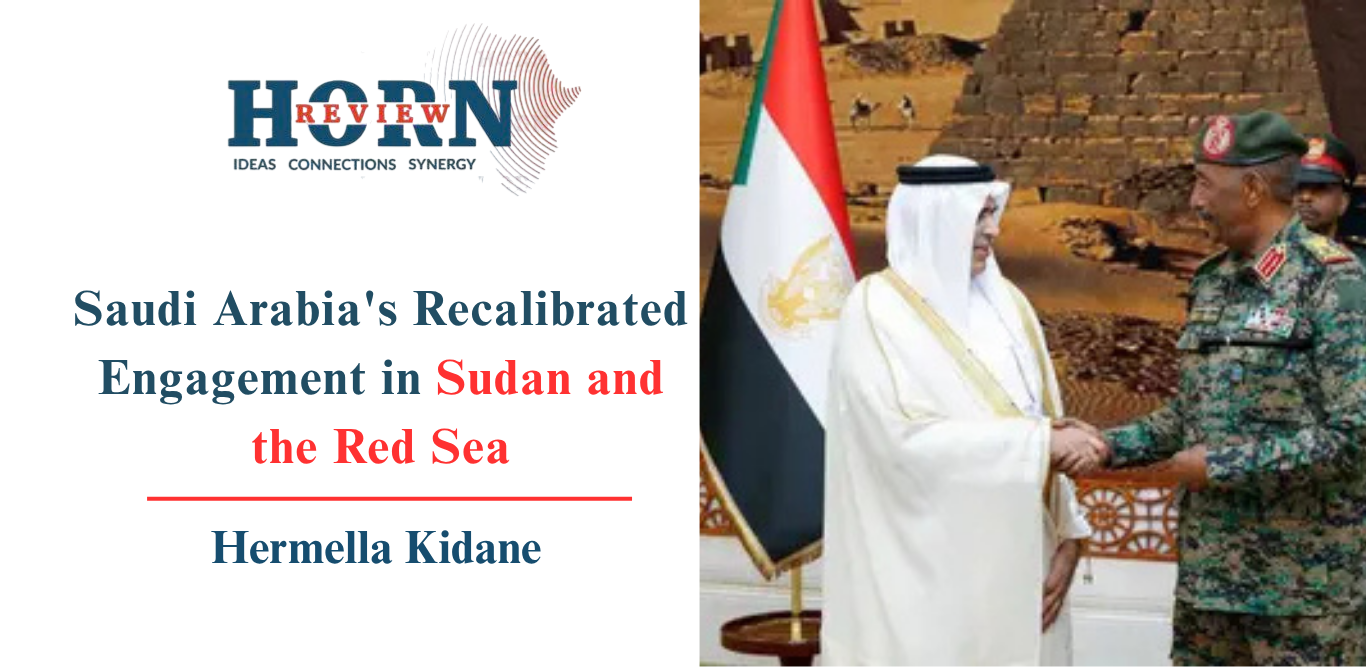
Saudi Arabia Signals Strategic Shift in Sudan with New Ambassador Appointment Amid Red Sea Security Concerns
The formal presentation of diplomatic credentials is typically a routine affair in international relations. However, the arrival of Dr. Zaid bin Mukhlad Al Harbi at the Republican Palace in Khartoum in August 2026, and his reception by General Abdel Fattah al-Burhan, signaled a distinct recalibration in Saudi Arabia’s approach to the Sudanese conflict. Far from mere protocol, the event underscored Riyadh’s deepening commitment to the Sudanese Armed Forces (SAF)-aligned administration, driven by Red Sea security imperatives and the management of competing regional influences.
Why the Republican Palace Ceremony Matters for Sudan’s Legitimacy
Since the outbreak of hostilities in April 2023, control over territory and symbols of state authority has remained fiercely contested between the Sudanese Armed Forces (SAF) and the Rapid Support Forces (RSF). The decision to conduct the accreditation ceremony at the Republican Palace—an enduring emblem of central sovereignty—carries significant political weight.
Contested Sovereignty: SAF vs. RSF
By receiving the Saudi envoy in Khartoum, General al-Burhan reinforced a narrative of institutional continuity for the Port Sudan-based government. For Riyadh, proceeding with formal accreditation in this specific setting constitutes active participation in affirming the interlocutor status of the authorities controlling the palace, effectively shaping perceptions of legitimacy without resolving the underlying military stalemate.
Saudi Recognition of Port Sudan Authority
This diplomatic move aligns with Riyadh’s public stance emphasizing Sudan’s sovereignty, territorial integrity, and stability. It complements ongoing humanitarian channels, suggesting a dual-track strategy: political recognition of the SAF leadership paired with uninterrupted relief operations.
Related Reading: Analysis: Burhan at the Presidential Palace in Khartoum – A Return of the State or Just Symbolic Power?
Profile of Dr. Zaid bin Mukhlad Al Harbi: A Sahel Specialist for a Complex Theater
The professional background of the new ambassador is a central indicator of Saudi intent. Dr. Al-Harbi is not a career diplomat limited to ceremonial functions; his resume points toward operational security diplomacy.
Experience in Niger and Security Diplomacy
Dr. Al-Harbi previously served as Saudi Ambassador to Niger, a posting that required navigating porous borders, non-state armed groups, and intricate regional networks in the Sahel. Reports indicate he holds advisory roles within the Saudi Foreign Ministry and possesses specific experience in security-related diplomacy and communications.
Operational Diplomacy vs. Ceremonial Role
This profile suggests his mandate in Khartoum will extend beyond bilateral representation to include coordination on practical matters of mutual concern—intelligence sharing, border security, and logistical support. The appointment reflects a broader pattern observed in protracted conflicts where diplomatic presence intersects directly with security and operational requirements.
Background: Biographical Details: Zaid bin Mukhlad Al Harbi | Saudi Embassy in Niger – Ambassador Page
Red Sea Security: The Core Driver of Saudi Recalibration
Geography dictates strategy. Saudi Arabia’s western flank rests on the Red Sea, a critical global maritime corridor. The prospect of expanded influence by competing external actors—reportedly including actors supplying advanced military technologies to various Sudanese factions—on the western shore of this waterway has prompted a reassessment in Riyadh.
Countering External Influence on the Western Red Sea
During earlier phases of the conflict, the SAF engaged with a range of international partners. The introduction of specific military capabilities associated with these relationships generated alarm among Gulf states regarding potential shifts in the regional balance of power. Saudi Arabia appears to have concluded that direct, robust support for the SAF better secures its maritime interests than allowing a vacuum that other powers could fill.
Trade and Security Frameworks as Alignment Mechanisms
Publicly framed agreements on trade and security cooperation, concluded around the period of the credentials ceremony, function as mechanisms to institutionalize coordination on maritime domain awareness and economic integration. These arrangements are best understood as efforts to align interests structurally rather than unilateral impositions of control.
Context: Bloomberg Feature: The 2024 Sudan Civil War and External Actors | Africa Intelligence: New Saudi Ambassador Set to Play More Active Role in Khartoum
The Dual-Track Approach: Humanitarian Aid Meets Security Alignment
A defining feature of Saudi engagement is the coexistence of hard security diplomacy with substantial humanitarian outreach. This is not contradictory; it is a standard feature of statecraft in civil conflicts where addressing immediate human needs buys political capital for long-term strategic goals.
KSRelief’s Ongoing Role
The King Salman Humanitarian Aid and Relief Centre (KSRelief) continues to operate as a primary vehicle for Saudi assistance, delivering aid through established logistical channels. This humanitarian track runs in parallel to the political-military track led by the new ambassador, ensuring Riyadh maintains access and goodwill across the Sudanese population regardless of battlefield fluctuations.
Source: Arab News: Saudi Arabia Continues Humanitarian Assistance to Sudan via KSRelief
Regional Ripple Effects: Ethiopia, Al-Fashaga, and Border Dynamics
The ramifications of a Saudi-backed SAF consolidation extend well beyond Khartoum, particularly toward Ethiopia and Eritrea.
Spillover Risks in Eastern Sudan
Eastern Sudan—adjacent to Ethiopia and Eritrea—has long featured unresolved border demarcations (notably the Al-Fashaga area), cross-border migration, and localized tensions. Should enhanced external support enable the SAF to consolidate territorial control more effectively, the possibility of increased military or administrative activity near these frontiers constitutes a structural risk factor for Addis Ababa.
Managing Secondary Pressures
The risk is not primarily direct confrontation between Sudan and Ethiopia, but rather secondary pressures arising from shifting balances of power and the activities of external patrons operating in Sudan. For Ethiopia, continued vigilance, diplomatic communication, and border management remain the prudent strategic responses.
Background: Al Jazeera: Sudan Denies Occupying Ethiopian Territory – Al-Fashaga Context | Atlas Institute: Regional and International Actors in Sudan’s Current Conflict
Key Takeaways: Legitimacy, Proxy Competition, and Maritime Strategy
The accreditation of Dr. Al-Harbi marks a noticeable evolution in Saudi posture, offering three clear lessons for contemporary geopolitics in the Horn of Africa:
- Legitimacy is Co-Produced: In fragmented states, international recognition and material support are prerequisites for political survival, not just rewards for victory.
- Mediators Have Interests: When core security interests (Red Sea access, regional balance of power) are engaged, external actors rarely remain neutral mediators; they become stakeholders in the outcome.
- Internal Wars Become Regional Arenas: The Sudanese theater demonstrates how civil conflicts become proxies for broader rivalries, where the pursuit of influence by multiple parties—each claiming to advance stability—can prolong complexity even as it alters resource flows to local actors.
Conclusion
Saudi Arabia’s deployment of a Sahel-experienced envoy to Khartoum signals a shift from reactive crisis management to sustained, structural engagement with the SAF-led administration. Motivated by Red Sea security, the desire to limit rival influence, and the imperative to shape a stable maritime periphery, this recalibration does not guarantee a rapid resolution to Sudan’s civil war. However, it confirms that Riyadh views the survival and consolidation of the current military leadership as a non-negotiable component of its own national security architecture. Understanding the trajectory of Sudan now requires sustained attention to both the formal rituals of diplomacy at the Republican Palace and the practical security alignments developing beneath them.
