




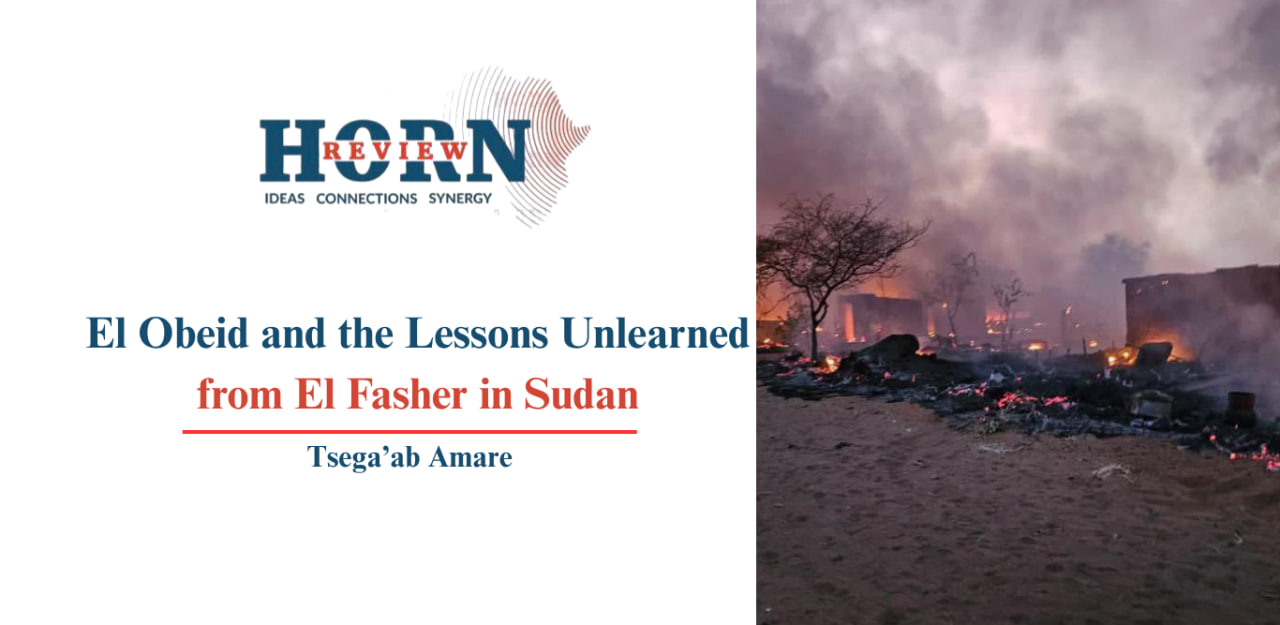
RSF Encirclement of El Obeid: Why This Offensive Could Redefine Sudan’s Civil War
Focus keyword: RSF encirclement of El Obeid
Introduction – A Turning Point in Sudan’s Conflict
The Rapid Support Forces’ (RSF) encirclement of El Obeid is the most consequential operational development in Sudan’s civil war since the fall of El Fasher in October 2025. The maneuver is critical on three fronts:
- Strategic – El Obeid’s location makes its possible capture far more destabilising than the loss of Darfur.
- Evidentiary – The RSF’s preparations have moved beyond speculation to measurable, operational activity.
- Systemic – The RSF is testing a precedent (the El Fasher siege) that proved ineffective as a deterrent.
H2 | Why El Obeid Is Strategically Different From El Fasher
H3 | Geography and Logistics
El Obeid sits at the junction of Sudan’s two primary highway arteries – the east‑west corridor linking Kordofan to Khartoum and the Nile Valley, and the north‑south route that runs through South Kordofan toward the oil‑rich border with South Sudan (captured by the RSF in December 2025).
If the RSF takes the city, it would:
- Sever the Sudanese Armed Forces’ (SAF) western supply corridor.
- Eliminate the SAF’s main command hub for central Sudan.
- Create a continuous RSF‑controlled arc from Darfur through Kordofan to the Nile.
The fight will therefore shift from “Can the RSF consolidate its western gains?” to “Can the SAF keep Sudan’s heartland under its control?”
H3 | Humanitarian Hub
El Obeid is also the primary distribution centre for humanitarian assistance across Greater Kordofan. UN Secretary‑General António Guterres called it “a crucial hub for humanitarian response efforts” on 18 June 2026.
- 500,000 people live in the city, including over 100,000 internally displaced persons (IDPs).
- The loss of the city would cripple aid routes serving South and West Kordofan, where access is already extremely limited.
H2 | Evidence That the RSF Is Preparing an Offensive
H3 | Daily Drone Strikes
Since 10 June, the RSF has launched daily drone attacks on El Obeid, targeting:
- At least eight SAF fuel depots and several fuel tankers – creating widespread shortages.
- The city’s main power station, which has cut water supply and forced several hospitals to shut down.
Source: Global R2P Atrocity Alert #487
H3 | Troop Movements and Equipment
- RSF units have redeployed from western Sudan to positions near Kazgil and Um Sumeima, bringing dozens of armored vehicles and possibly air‑defence systems.
- Simultaneously, the group has intensified the siege of Dilling, 100 mi south of El Obeid, doubling its monthly strikes since March.
Video warnings broadcast to El Obeid residents echo the RSF’s pre‑offensive messaging before the assaults on Babanusa and El Fasher.
H2 | International Reaction – Strong Words, Weak Action
| Body | Statement | Legal/Enforcement Power |
|---|---|---|
| UN High Commissioner for Human Rights Volker Türk | Warned on 18 June that an imminent offensive could constitute an international crime, citing the El Fasher pattern. | Normative weight only; no enforcement mechanism. |
| UN Human Rights Council (29‑nation coalition) | Issued a joint statement urging “grave alarm” over potential large‑scale atrocities. | No binding authority; previous El Fasher investigation led to sanctions on three RSF commanders but did not stop fighting. |
| UN Security Council | Adopted a press statement on 20 June demanding the RSF halt its assault, reaffirming Sudan’s territorial integrity, and urging states to stop external interference. | Not a binding resolution; cites existing Monitoring Mandate (Resolution 2791, 2025) which expires Oct 2026, but imposes no new sanctions or enforcement. |
Sources: UN High Commissioner press release, 18 June 2026; UN Security Council press statement, 20 June 2026
Why These Statements Have Limited Impact
- High Commissioner’s warnings lack operational teeth.
- The Human Rights Council can only name‑and‑shame; its past genocide finding on El Fasher led to limited sanctions.
- The Security Council press release is not a binding resolution and does not name any state that supplies the RSF, leaving the RSF’s logistics untouched.
H2 | The Geopolitical Context Behind the Inaction
- UAE – Western Links – The United Arab Emirates’ security and economic ties with the United States, United Kingdom, and France keep Sudan off the agenda for direct bilateral confrontation.
- Russia and China – Both powers oppose “sovereignty‑intrusive” measures, providing diplomatic cover that lets the P3 (US, UK, France) issue unanimous condemnations without concrete action.
Since April 2023, the Security Council has issued unanimous statements after every major escalation in Sudan, yet none have altered RSF operational planning.
H2 | The El Fasher Precedent – What It Teaches Us
During the 18‑month siege of El Fasher, the international community amassed extensive documentation:
- 65+ reports by Yale’s Humanitarian Research Lab.
- A UN Fact‑Finding Mission that labelled the assault genocide (Feb 2026).
- A Quad meeting in Washington days before the city fell.
Despite these warnings, at least 6,000 civilians were killed in the first 72 hours after the city fell. The RSF quickly redeployed to Kordofan, keeping supply lines open, and proceeded to encircle El Obeid.
Secretary‑General Guterres observed on 18 June 2026 that “far too many times in this conflict, clear warnings have failed to trigger concerted action,” underscoring a structural failure rather than a simple coordination lapse.
H2 | What Could Actually Change the Calculus?
H3 | Targeted Pressure on the Emirati Supply Chain
The UAE’s logistical network has proven sensitive to disruption:
- January 2026 closures of Somali overflight corridors and constraints on the Libyan route forced the RSF to adjust its supply lines.
A focused diplomatic campaign that:
- Imposes sanctions on specific UAE‑registered aircraft, companies, and transit hubs;
- Presses the UAE to halt overflight and cargo services to RSF‑controlled areas;
could impose real operational costs on the RSF, unlike the generic UN statements that have so far been ignored.
Source: Panel of Experts reports, 2025‑2026
H3 | Comprehensive Accountability
While the RSF bears primary responsibility for the encirclement, the Sudanese Armed Forces (SAF) also share culpability for actions that have eroded Sudan’s political order and harmed civilians. Any durable post‑conflict settlement must:
- Hold both parties accountable without hierarchy.
- Support the emergence of a broad civilian coalition that can articulate core priorities—civilian protection, unhindered humanitarian access, and a transitional governance framework.
Without such a civilian anchor, external pressure and shifting military balances are unlikely to translate into a genuine political resolution; instead, they risk simply prolonging the war by other means.
H2 | Conclusion – The Stakes of El Obeid
The RSF’s encirclement of El Obeid marks a potentially decisive shift in Sudan’s civil war:
- Strategically, it threatens to cut the SAF’s lifeline to the western front and give the RSF a contiguous territorial corridor.
- Humanitarian consequences would be severe, endangering half a million people and crippling aid distribution across Kordofan.
- Politically, the episode shows the limits of existing international mechanisms, echoing the failed deterrence in the El Fasher siege.
Targeted, entity‑specific sanctions on the UAE’s logistics network represent the most promising lever to alter the RSF’s calculus. Simultaneously, a balanced accountability framework that includes both the RSF and SAF, coupled with a strong civilian coalition, is essential for any lasting peace.
