




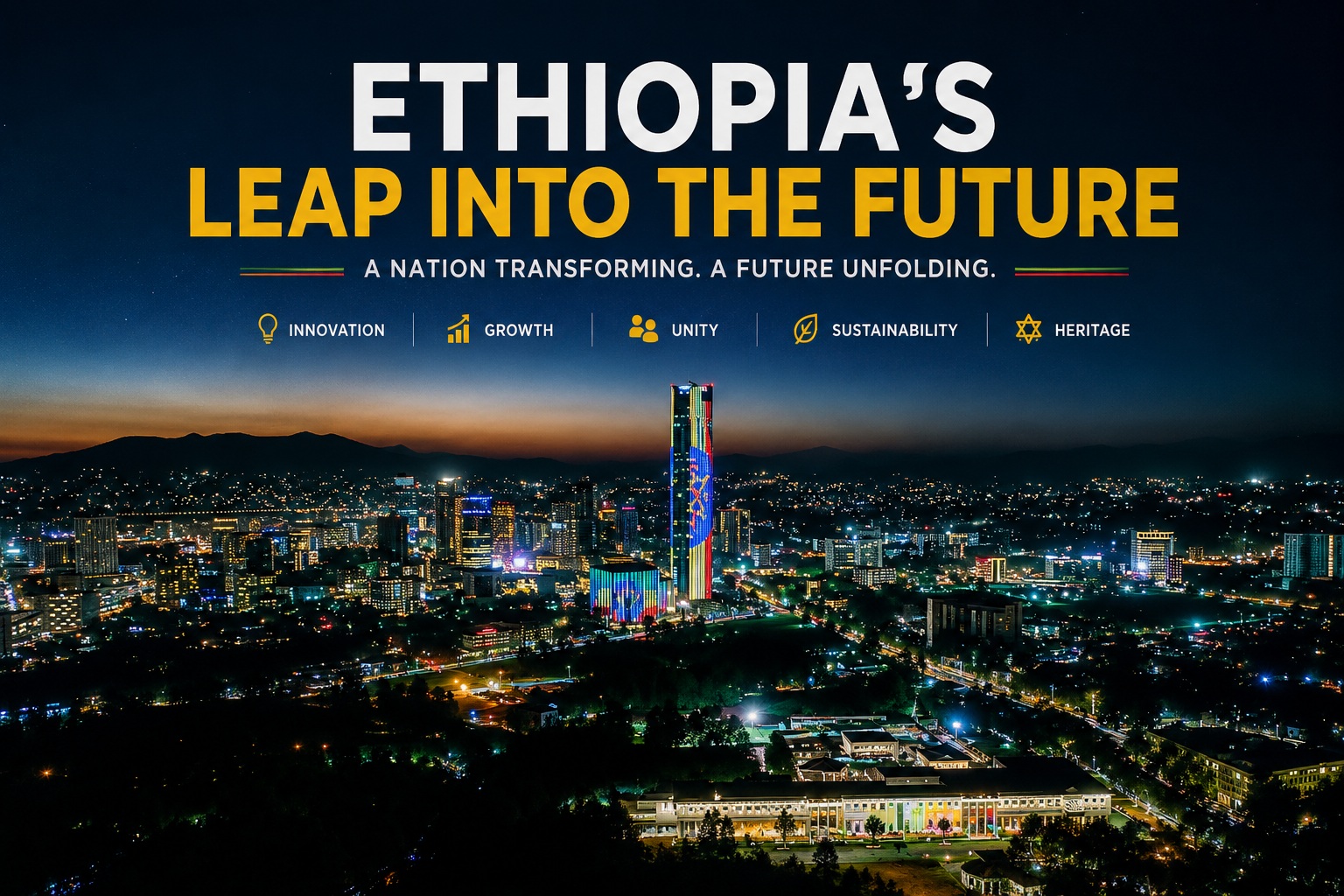
Ethiopia’s Leap Forward: How the Nation Is Turning Reform Into Sustainable Growth
Published: June 25, 2026
Why Ethiopia’s Transformation Matters Now
History sometimes forces a nation to choose between simply surviving and actively shaping its destiny. For Ethiopia—home to more than 130 million people and one of the world’s oldest civilizations—this moment has arrived. Prime Minister Abiy Ahmed recently asked policymakers, investors, and development partners a single, powerful question: “What does it mean for Ethiopia not merely to catch up with the future, but to leap into it?”
The answer is already taking shape across the country, moving the narrative beyond conflict, inflation and humanitarian crises toward a story of economic resurgence, digital inclusion, and shared nation‑building.
A New Narrative for Ethiopia
From Crisis Headlines to Growth Headlines
For decades, international coverage of Ethiopia focused on wars, food insecurity and soaring inflation. While those challenges remain real, they no longer define the whole picture. Recent data show a dramatic turnaround:
- Inflation fell from over 30 % to single‑digit levels in early 2024.
- Exports are climbing toward historic peaks.
- GDP growth is projected at 10.2 % for the 2025/26 fiscal year—one of the fastest rates on the continent and among the highest worldwide.
These figures are the product of deliberate policy choices, not luck. At the “Ethiopia Delivers” summit, Prime Minister Abiy emphasized that “the results we see today are the outcome of confronting long‑standing structural challenges head‑on.”
The Human Face of Reform
Numbers tell one part of the story; personal experiences tell another.
A market‑seller from a rural town, who once operated entirely outside the formal economy—without a bank account, credit history, or legal business registration—found new opportunity through Fayda, Ethiopia’s national digital identification system. After enrolling, she could open a digital bank account, access credit and expand her business. Her talent stayed the same; access changed.
Stories like hers illustrate how reforms are translating into real‑world opportunities for millions.
Pillars of Ethiopia’s Integrated Development Model
1. Economic Reform & Stabilization
- Fiscal discipline and monetary tightening have tamed inflation.
- Private‑sector incentives are attracting foreign direct investment, particularly in manufacturing and mining.
2. Social Protection & Inclusive Growth
- Expanded cash‑transfer programs and health subsidies are reducing poverty gaps.
- Rural electrification projects are bringing power to previously off‑grid communities.
3. Digital Innovation & Financial Inclusion
- The Fayda ID platform links citizens to banking, e‑government services and market information.
- Mobile money usage has surged, with transaction volumes up 45 % year‑on‑year.
4. Human Development & Education
- Investment in STEM curricula and vocational training aims to equip young Ethiopians for a technology‑driven economy.
- Scholarships for higher education are targeting under‑represented regions.
5. Local Empowerment & Regional Cohesion
- Decentralized budget allocations give regional governments more control over infrastructure projects.
- Inter‑ethnic dialogue forums foster national unity while respecting cultural diversity.
These pillars are mutually reinforcing, creating a virtuous cycle where economic growth fuels social investment, and digital tools amplify the impact of both.
Shared Responsibility: Partnerships That Drive Progress
Transformation cannot be achieved by the state alone. Ethiopia’s roadmap calls for a collaborative ecosystem:
- Government – designs enabling policies, safeguards rule of law, and ensures transparency.
- Private sector – invests in modern factories, adopts clean technologies, and mentors startups.
- Communities – participate in local planning, adopt sustainable practices, and hold leaders accountable.
- International partners – provide technical expertise, fair trade access, and climate‑finance support.
This multi‑stakeholder approach is already evident in projects such as the Grand Ethiopian Renaissance Dam (GERD), which combines national ambition with regional water‑management cooperation.
Remaining Challenges and the Road Ahead
Despite impressive momentum, Ethiopia faces significant hurdles:
| Challenge | Why It Matters | Current Action |
|---|---|---|
| Uneven wealth distribution | High inflation eroded household purchasing power, leaving many families in hardship. | Targeted cash‑transfer programs and progressive taxation reforms are being expanded. |
| Youth employment | Over 60 % of the population is under 25; job creation must keep pace with demographic growth. | Scaling up vocational training, entrepreneurship incubators, and public‑private job‑matching platforms. |
| Infrastructure gaps | Rural roads, energy grids and digital broadband remain under‑developed. | Accelerated investment in road networks, renewable energy, and 5G rollout. |
| Education quality | School curricula need alignment with future‑ready skills. | Curriculum overhaul emphasizing STEM, digital literacy and critical thinking. |
Addressing these issues requires honest assessment and continuous policy refinement—the same mindset that turned Ethiopia’s economy around once before.
Ethiopia Manserarat: “A Leap Into Tomorrow”
Prime Minister Abiy repeatedly referenced the Amharic term “Ethiopia Manserarat” – literally “Ethiopia’s leap forward.” It captures a vision that goes beyond a single growth target:
- Inclusive prosperity – every citizen, regardless of region or gender, should share in the gains.
- Strong institutions – transparent bureaucracy, independent courts and reliable public services.
- Sustainable development – growth that respects the environment and future generations.
The world is watching. Some observers cheer Ethiopia’s bold reforms; others remain skeptical. Regardless of external opinions, the nation’s core mission stays the same: to broaden opportunity, fortify institutions and build a future worthy of its ancient legacy and modern potential.
Key Takeaways
- Economic stabilization (inflation control, strong growth) is the foundation for broader reform.
- Digital ID (Fayda) and mobile finance are unlocking financial inclusion for informal workers.
- Integrated development—linking fiscal policy, social protection, education, and infrastructure—creates a resilient growth model.
- Shared responsibility among government, business, civil society and international partners accelerates progress.
- Challenges remain, especially in equitable wealth distribution and youth employment, demanding ongoing policy focus.
Ethiopia’s leap forward is already underway. By maintaining disciplined reforms, fostering inclusive partnerships, and investing in its people, the country is poised to turn possibility into lasting reality—and to inspire other nations navigating the path from crisis to prosperity.
For further reading on Ethiopia’s economic reforms, see the International Monetary Fund’s latest country report here. Information on the Fayda digital ID program is available from the World Bank here.
