




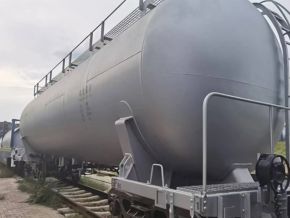
Meta Title: ATLS Doraleh Petroleum Terminal: New Rail-Linked Fuel Hub for Ethiopia (2027)
Meta Description: African Terminal & Logistics Services (ATLS) is building a 288,000 m³ petroleum terminal at Doraleh Port, Djibouti, with direct rail links to Ethiopia. Set for June 2027 launch, the project aims to shift 5M tons of fuel from road to rail.
Focus Keyword: ATLS Doraleh Petroleum Terminal
Slug: atls-doraleh-petroleum-terminal-ethiopia-rail-fuel
ATLS Doraleh Petroleum Terminal to Boost Ethiopia Fuel Supply via Rail in 2027
Djibouti City — A major shift in the Horn of Africa’s energy logistics is underway. African Terminal & Logistics Services (ATLS), a subsidiary of the privately held Hayel Saeed Anam (HSA) Group, is developing a state-of-the-art petroleum terminal at the Port of Doraleh. Scheduled to commence operations in June 2027, the facility is designed to decongest the critical Addis Ababa–Djibouti corridor by introducing direct rail-loading capabilities for fuel bound for Ethiopia.
The project addresses a long-standing bottleneck: despite handling over 95% of Ethiopia’s import-export volume, the corridor has relied almost exclusively on road tankers for petroleum transport. The new terminal promises to rewrite that dynamic.
Project Overview: Phased Capacity Growth at Doraleh Port
The ATLS Doraleh Petroleum Terminal is being executed in three distinct phases, scaling storage capacity to meet rising regional demand.
| Phase | Timeline | Storage Capacity | Key Features |
|---|---|---|---|
| Phase 1 | June 2027 | 288,000 m³ | Marine unloading, storage, rail & road dispatch |
| Phase 2 | Post-2027 | ~500,000 m³ | Expanded tank farm, increased throughput |
| Phase 3 | Long-term | ~750,000 m³ | Full strategic reserve capability |
Phase 1 delivers 288,000 cubic meters of storage. The site integrates marine unloading arms, a modern tank farm, and a dual-distribution system: railcar loading racks connected directly to the Ethiopia-Djibouti standard gauge railway (SGR), and multiple truck loading bays for last-mile delivery.
Key Takeaway: The terminal creates a seamless “ship-to-rail” logistics chain, reducing reliance on the congested road network connecting Djibouti’s ports to the Ethiopian hinterland.
Strategic Shift: Moving 5 Million Tons from Road to Rail
Historically, Ethiopia’s petroleum supply chain has been entirely road-dependent. According to the Djibouti Ports and Free Zones Authority (DPFZA), approximately 5 million tons of petroleum products are transported annually via tanker trucks, with zero volume moving via rail tank wagons until now.
This over-reliance on road transport creates significant vulnerabilities:
- Congestion: Chronic delays at border crossings (Galafi/Nagad) and port gates.
- Cost: High per-ton-kilometer cost compared to rail freight.
- Safety & Environment: Elevated accident risks and carbon emissions.
- Supply Security: Exposure to driver shortages, vehicle breakdowns, and road closures.
The ATLS terminal is engineered to capture a significant share of this volume. By offering direct railcar loading at the port quay, it enables fuel to travel the ~750 km to Addis Ababa and inland depots (like Awash and Kaliti) in dedicated tank wagons—a faster, cheaper, and safer alternative.
Solving the Horizon Terminal Capacity Crisis
The urgency of this project was underscored in July 2024, when the Ethiopian Petroleum Supply Enterprise (EPSE) formally notified the DPFZA of critical constraints at the existing Horizon Terminal.
EPSE reported that two primary storage tanks were offline for maintenance, causing severe delays for truck loading operations. This disruption forced EPSE to scramble for alternative supply routes to prevent stockouts in Addis Ababa. The incident highlighted the systemic risk of a single-point-of-failure infrastructure and validated the need for the ATLS facility’s additional capacity and modal diversity.
DPFZA’s Masterplan: An Integrated Rail-Fuel Network
The ATLS development aligns perfectly with the DPFZA’s strategic vision to maximize the utility of the Ethiopia-Djibouti Railway (EDR), financed and built by Chinese consortiums (CREC/CCECC) and operated by Ethio-Djibouti Standard Gauge Railway Share Company (EDR).
In February 2025, the DPFZA confirmed active discussions to connect the railway network directly to:
- Awash Oil Depot (Ethiopia’s primary inland fuel hub).
- Horizon Djibouti Terminal Limited (Existing port storage).
These two nodes alone represent roughly 1.4 million tons of annual throughput. Integrating the new ATLS terminal into this network creates a redundant, resilient “Iron Triangle” of fuel logistics: Port Storage (Doraleh) → Rail Line → Inland Depot (Awash).
Operational Model: Multimodal Flexibility
While rail is the strategic priority, the terminal retains robust road capabilities. This multimodal design is essential because:
- Rail Catchment: Efficiently serves Addis Ababa, Awash, Dire Dawa, and Modjo dry ports.
- Road Necessity: Remains the only option for regions outside the rail corridor (e.g., Jijiga, Assosa, Gambella, Mekelle).
This flexibility ensures ATLS can service 100% of the Ethiopian market while optimizing the 70-80% of volume located along the rail spine.
Economic & Geopolitical Implications
| Stakeholder | Impact |
|---|---|
| Ethiopia | Lower logistics costs (estimated 30-40% cheaper per ton via rail); improved fuel security; reduced foreign exchange spend on trucking. |
| Djibouti | Increased port throughput revenue; diversification of port income beyond container transshipment; fulfillment of EDR revenue guarantees. |
| HSA Group / ATLS | Strategic foothold in East Africa’s downstream oil & gas infrastructure; long-term tolling/storage revenue contracts. |
| Region | Blueprint for integrating port infrastructure with hinterland railways (replicable for Lamu Port/South Sudan, Berbera/Ethiopia). |
The project also supports the African Continental Free Trade Area (AfCFTA) objectives by hardening physical trade infrastructure between member states.
Timeline & Milestones to Watch
- Q3 2024: EPSE signals infrastructure distress at Horizon Terminal.
- Feb 2025: DPFZA announces rail linkage talks for Awash & Horizon.
- Sept 2027 (Target): Phase 1 Commissioning – First rail tank wagons loaded at ATLS Doraleh.
- 2028–2030: Phase 2 Expansion toward 500,000 m³.
- Long-term: Full 750,000 m³ capacity; potential integration with Djibouti’s Damerjog Industrial Park refining/petrochemical projects.
Conclusion: A New Era for Horn of Africa Energy Logistics
The ATLS Doraleh Petroleum Terminal is more than a storage depot; it is the linchpin for modal shift in the region’s most vital economic artery. By unlocking the Ethiopia-Djibouti Railway for petroleum transport, it solves a decades-old structural inefficiency.
For importers, it means predictable supply and lower landed costs. For governments, it means revenue protection and strategic resilience. As the June 2027 commissioning date approaches, all eyes will be on Doraleh to see the first tank wagons roll—marking the day Ethiopia’s fuel supply finally arrived by train.
Frequently Asked Questions (FAQ)
Q: Who owns the ATLS Doraleh Terminal? A: It is developed by African Terminal & Logistics Services (ATLS), a subsidiary of the Hayel Saeed Anam (HSA) Group, a Yemeni conglomerate with extensive East African investments.
Q: When will the terminal open? A: Phase 1 operations are scheduled to start in June 2027.
Q: How much fuel can it store initially? A: 288,000 cubic meters (approx. 220,000–250,000 metric tons depending on product mix).
Q: Will it replace road transport entirely? A: No. It will shift the bulk corridor volume to rail, but road tankers remain essential for destinations not connected to the railway network.
Q: How does this affect the Ethiopia-Djibouti Railway? A: It provides a high-volume, anchor commodity (fuel) for the railway, improving the line’s financial viability and utilization rates.
External Resources & Further Reading
- World Bank: Ethiopia-Djibouti Corridor Economic Impact (Context on 95% trade volume statistic)
- DPFZA Official Portal: Djibouti Ports and Free Zones Authority Updates (Source for 5M tons rail/road stats & 2025 railway linkage talks)
- Ethiopian Petroleum Supply Enterprise (EPSE): Official Website (Source for Horizon Terminal maintenance notices)
- Ethio-Djibouti Railway (EDR): Railway Operations & Freight Tariffs (Technical specs for tank wagon operations)
- Hayel Saeed Anam Group: Corporate Profile & Investments (Parent company background)
Schema Markup Suggestion (JSON-LD): json { “@context”: “https://schema.org“, “@type”: “NewsArticle”, “headline”: “ATLS Doraleh Petroleum Terminal to Boost Ethiopia Fuel Supply via Rail in 2027”, “datePublished”: “2025-05-22”, “author”: “text”:”var:preset, “publisher”: color, “mainEntityOfPage”: “https://example.com/atls-doraleh-petroleum-terminal-ethiopia-rail-fuel“, “keywords”: “ATLS Doraleh Terminal, Ethiopia Fuel Rail, Djibouti Port, HSA Group, Petroleum Logistics Horn of Africa”, “articleSection”: “Energy & Infrastructure”, “about”: [ “text”:”var:preset, { “@type”: “Place”, “name”: “Port of Doraleh” }, { “@type”: “Organization”, “name”: “Ethiopian Petroleum Supply Enterprise” } ] }
