




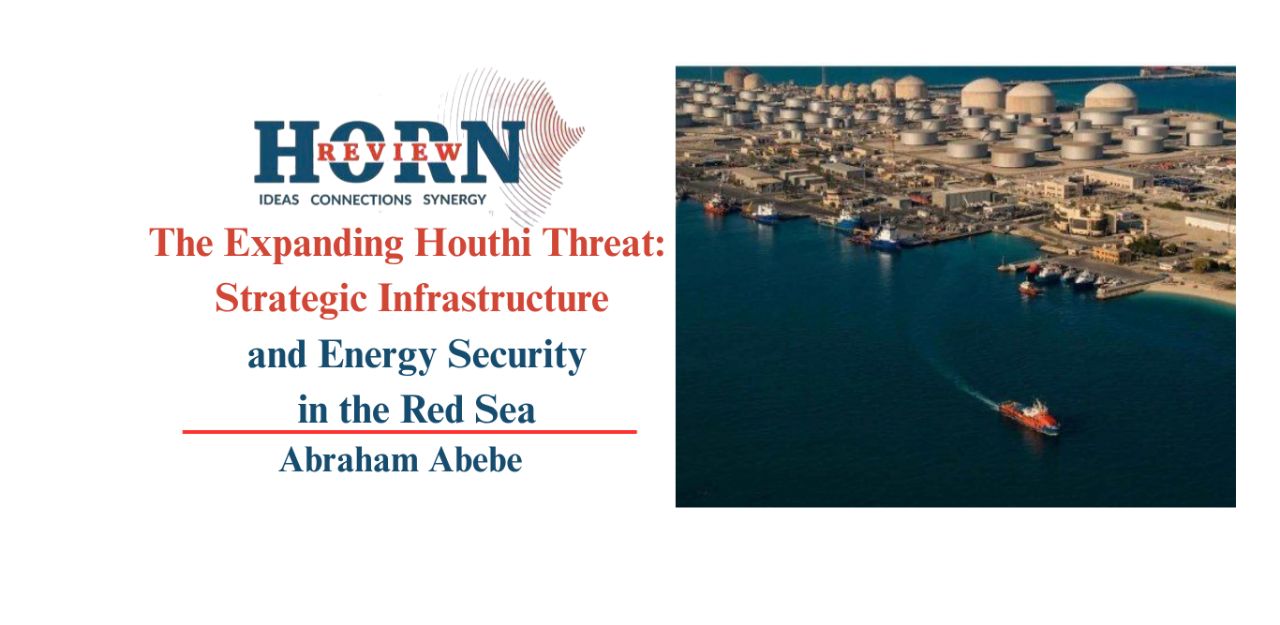
Houthi Red Sea Infrastructure Attacks Signal Dangerous Escalation in Maritime Security
Meta Description: Analysis of the strategic shift in Houthi operations from targeting commercial shipping to attacking critical energy infrastructure in the Red Sea, examining the July 2026 escalation against Saudi assets and implications for global supply chains.
The security landscape of the Red Sea has undergone a fundamental transformation. Throughout 2024 and 2025, the primary threat vector centered on commercial shipping, with Houthi attacks against merchant vessels forcing major rerouting around the Cape of Good Hope and disrupting global supply chains. International naval responses, coordinated through frameworks like the International Maritime Organization (IMO), focused narrowly on freedom of navigation and defensive interceptions.
However, as the wider Iran-US-Israel confrontation intensified in 2026, the strategic calculus shifted. The Houthis have expanded their coercive strategy beyond individual vessels to target the critical infrastructure underpinning regional trade and global energy flows. This evolution marks a transition from maritime interdiction to economic warfare, with profound implications for the stability of the Bab el-Mandeb strait, the Suez Canal, and global energy markets.
From Commercial Shipping to Critical Infrastructure: The Strategic Pivot
2024–2025: The Era of Vessel Targeting
For nearly two years, the Red Sea crisis was defined by missile, drone, and small-boat attacks on commercial traffic. Shipping giants suspended transits, redirecting vessels via the Cape of Good Hope. This added 10–14 days to voyage times, spiked freight rates by over 200% at peaks, and injected significant inflationary pressure into global logistics. The international response—multinational naval deployments and defensive operations—was designed to keep sea lanes open, treating the symptoms of the conflict rather than its expanding strategic scope.
2026: Integration into the Regional Confrontation
The dynamic changed decisively in mid-2026. As tensions between Iran, the US, and Israel escalated, the Houthis signaled their readiness to act as a pressure valve for Tehran’s “Axis of Resistance.” In mid-July, intelligence reports indicated Houthi-linked actors were preparing measures against maritime traffic through the Bab el-Mandeb in direct response to potential US military action against Iran.
This signaling revealed a critical doctrinal shift: the chokepoint itself was becoming a strategic pressure tool, not merely an operational area for opportunistic attacks. The target set broadened from ships to the fixed infrastructure enabling regional commerce—ports, oil terminals, export facilities, and logistics networks.
July 2026: A Timeline of Escalation Against Saudi Assets
The abstraction of “infrastructure targeting” became concrete reality over a single week in July 2026, demonstrating a deliberate campaign to undermine the Saudi Red Sea economy.
Weaponizing the Bab el-Mandeb Chokepoint
On July 16, the strategic threat moved from rhetoric to operational posture. Houthi leadership signaled that the strait—the gateway for roughly 10% of global seaborne trade—could be closed or heavily restricted in retaliation for strikes on Iran. This moved the threat beyond “freedom of navigation” into the realm of “energy security denial.”
Expanding Target Criteria: The Saudi Maritime Ban
On July 20, the Houthis formally declared a naval blockade against Saudi Arabia, announcing that Saudi vessels and maritime interests were now legitimate targets. This represented a significant expansion from previous criteria, which had focused largely on vessels associated with Israel.
Crucially, the same day, Houthi authorities warned international shipping companies that any vessel loading or unloading at Saudi ports—regardless of flag or ownership—faced attack. This tactic weaponized commercial connectivity, forcing global carriers to choose between Saudi market access and vessel safety.
Direct Strikes on Energy Hubs: Yanbu and Jizan
The most consequential escalation occurred July 25, when Houthi forces launched attacks against Saudi energy facilities at Yanbu and Jizan, confirmed by Reuters reporting on subsequent Saudi strikes on Hodeidah.
- Yanbu: A linchpin of Saudi energy security. It serves as the Red Sea terminus for the East-West Pipeline (Petroline), allowing the Kingdom to bypass the Strait of Hormuz for a significant portion of its crude exports.
- Jizan: A major industrial and refining complex critical to the domestic economy and export capacity.
Targeting these facilities signals an intent to degrade the alternative energy routes Gulf states built precisely to mitigate Hormuz vulnerability. Between July 22–23, Houthi forces had already claimed attacks on Saudi-linked oil tankers in the Red Sea, a claim acknowledged by Saudi Press Agency reports, confirming the shift from merchant shipping to energy logistics.
Why Infrastructure Targeting Changes the Risk Calculus
This evolution carries distinct strategic implications that differ fundamentally from the shipping attacks of 2024–2025.
Fixed Assets vs. Mobile Shipping
Commercial vessels are mobile; they can reroute, change flags, or anchor in safe harbors. Ports, storage tanks, pipeline terminals, and desalination plants are fixed. They cannot be relocated. Their vulnerability is permanent, and their destruction or degradation requires years and billions of dollars to repair. Even limited physical damage—or the credible threat of it—creates a permanent risk premium.
The Leverage of Uncertainty: Insurance and Markets
The strategic impact does not require a successful strike on a storage tank. Uncertainty itself is the weapon.
- Insurance Markets: War risk premiums for Red Sea ports spike immediately following infrastructure threats. Insurers may exclude coverage for specific terminals, effectively closing them to commercial finance.
- Energy Traders: Cargoes are redirected preemptively; term contracts for Red Sea crude are discounted or restructured.
- Shipping Operators: Vessels avoid ports not due to physical blockage, but due to “charterer refusal” clauses triggered by heightened risk ratings.
By July 27, this dynamic was empirically visible: maritime activity through the Bab el-Mandeb declined sharply as operators reassessed risk. A “virtual blockade” achieved through risk perception is often more sustainable and less escalatory for the attacker than a physical one requiring constant kinetic enforcement.
Regional Spillover: Suez Canal and Hormuz Alternatives
The consequences radiate beyond Saudi Arabia.
- Suez Canal Revenue: Egypt’s critical foreign currency earner depends on vessel confidence transiting the Red Sea. A shift away from Red Sea infrastructure undermines the canal’s viability.
- Gulf Energy Resilience: For years, Gulf states invested in Red Sea export infrastructure (like Yanbu) specifically to reduce reliance on the Strait of Hormuz. Houthi attacks on Yanbu close the strategic backup option, concentrating global energy risk back into a single chokepoint (Hormuz) controlled by Iran.
- Global Supply Chains: Just-in-time manufacturing and European energy security remain tethered to the reliability of this corridor.
The Challenge for International Security Responses
Current multinational maritime security frameworks—such as Operation Prosperity Guardian or EUNAVFOR ASPIDES—are optimized for naval escort, air defense of moving vessels, and freedom of navigation operations (FONOPs). They are not designed for static asset protection across hundreds of kilometers of coastline.
Protecting dispersed coastal infrastructure requires a fundamentally different toolkit:
- Integrated Air and Missile Defense (IAMD): Layered systems (THAAD, Patriot, naval SM-6/Standard Missile) covering fixed sites, not just escort corridors.
- Persistent ISR (Intelligence, Surveillance, Reconnaissance): 24/7 monitoring of launch sites deep inside Houthi-held territory, requiring sophisticated overhead assets.
- Civil-Military Fusion: Real-time data sharing between naval commands, port authorities, pipeline operators, and commercial insurers.
- Counter-UAS/CUSV Capabilities: Cost-effective defeat mechanisms for the high-volume, low-cost drone and boat swarms targeting stationary infrastructure.
Conclusion: A New Phase of Economic Warfare
The Red Sea conflict has entered a second, more dangerous phase.
- Phase One (2023–2025): Disruption of Flows (Freedom of Navigation). The goal was political signaling through shipping interference.
- Phase Two (Mid-2026 Onward): Degradation of Nodes (Critical Infrastructure). The goal is strategic coercion through economic strangulation.
By extending pressure from individual vessels to the economic architecture—ports, pipelines, and export terminals—behind international commerce, the Houthis have expanded both the strategic reach and the potential consequences of the conflict. A decline in attacks on merchant ships should no longer be interpreted as de-escalation; it may simply indicate a shift in targeting priority toward higher-value, fixed infrastructure.
Strategic assessments must now pivot. Resilience planning, insurance modeling, and military posture must prioritize the survivability and redundancy of Red Sea energy and logistics infrastructure. The security of the global economy depends not just on open sea lanes, but on the integrity of the terminals that feed them.
