




Meta Title: Ethiopia Conflict Escalation: Tigray Peace Deal at Risk Amid New Rebel Alliance
Meta Description: Intensified fighting between Ethiopia’s federal army and Tigray forces threatens the 2022 Pretoria peace agreement. Explore the drivers, the new rebel alliance, and risks of wider war.
Focus Keyword: Ethiopia conflict escalation
Slug: ethiopia-conflict-escalation-tigray-peace-deal-risk
Ethiopia Conflict Escalation Threatens Fragile Tigray Peace Agreement
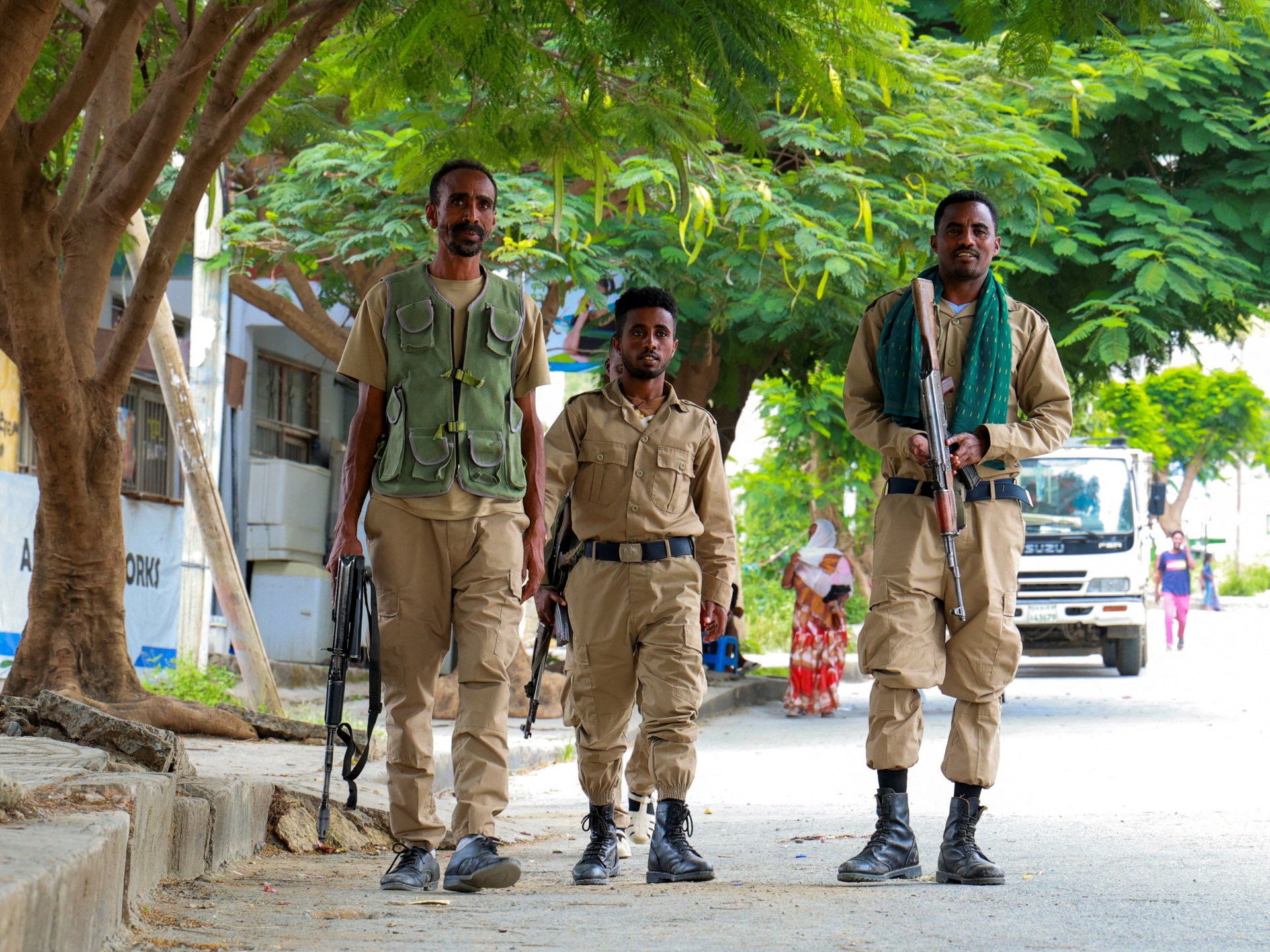
Renewed heavy fighting between Ethiopia’s federal army and forces from the northern Tigray region has sparked international alarm that the Pretoria peace agreement—which ended a devastating two-year war in November 2022—is on the verge of collapse. The escalation coincides with the formation of a broad new armed coalition explicitly aimed at toppling Prime Minister Abiy Ahmed’s government, fundamentally reshaping the country’s security landscape.
With each side blaming the other for instigating the latest flare-up, millions of Ethiopians who spent nearly four years recovering from the previous conflict now face the immediate prospect of a return to large-scale violence.
How Did Ethiopia Reach This Point? Historical Context
To understand the current crisis, one must look at the shifting power dynamics of the last decade. The Tigray People’s Liberation Front (TPLF) originated as an armed movement against the Derg military regime in the 1970s. It subsequently became the dominant force within the Ethiopian People’s Revolutionary Democratic Front (EPRDF) coalition, governing the country for nearly three decades.
Despite Tigrayans comprising only approximately 6% of Ethiopia’s population (per World Bank demographic data), the TPLF’s centralized influence generated significant resentment among other ethnic groups.
The political tectonic plates shifted in 2018 when Abiy Ahmed assumed the premiership. He dissolved the EPRDF and formed the Prosperity Party, deliberately sideline the TPLF from federal power. Tensions escalated rapidly until full-scale war erupted in November 2020. The conflict pitted federal troops—backed by Eritrean forces and Amhara regional fighters—against Tigrayan forces.
The war resulted in a catastrophic humanitarian crisis: hundreds of thousands killed, millions displaced, and Tigray subjected to a near-total blockade. The Pretoria Agreement, signed in South Africa in November 2022, halted the shooting but left the core political and territorial disputes unresolved.
Core Drivers of the Renewed Fighting
The current escalation is not an isolated incident but the eruption of festering grievances left unaddressed by the 2022 deal.
1. The Western Tigray Territorial Dispute
The single most volatile issue is the status of Western Tigray (known as Welkait/Tegede by Amhara groups). During the 2020–2022 war, Amhara forces seized control of this fertile territory, expelling hundreds of thousands of Tigrayan residents in what the US State Department and UN experts described as ethnic cleansing.
- Tigray’s Position: Demands the immediate return of the territory and the right of return for displaced civilians.
- Amhara Position: Claims the land was incorrectly annexed into Tigray during the 1992 regional reorganization following the Derg’s fall.
This dispute persists even though the TPLF and the Amhara Fano militia—bitter enemies during the last war—are now nominal allies in the new anti-government coalition.
2. Disarmament and Security Arrangements
The Pretoria Agreement mandated the Disarmament, Demobilization, and Reintegration (DDR) of Tigrayan forces. The federal government alleges the TPLF retained heavy weaponry. Conversely, Tigrayan leaders argue Addis Ababa failed to ensure the withdrawal of Eritrean and Amhara forces from Tigrayan soil, a key precondition for their own disarmament.
3. Political Administration Collapse
The political framework established by the peace deal has fractured. Earlier this year, the TPLF faction led by Debretsion Gebremichael forcibly retook control of Tigray’s regional administration, displacing the Interim Regional Administration (IRA) installed under the Pretoria framework.
Expert Insight: “Since the end of the war, while the Pretoria Agreement has held, there have been consistent violations on both sides,” notes Jervin Naidoo, Senior Political Analyst at Oxford Economics Africa. “Tigrayans remain aggrieved over Western Tigray, the presence of outside forces, and the region’s autonomy. The government views the TPLF as a belligerent group trying to destabilize Ethiopia, while Tigrayan leaders frame renewed fighting as self-defense.”
The New “Ethiopian Peoples’ Forces Alliance for Survival”: A Strategic Shift
Announced this month, the Ethiopian Peoples’ Forces Alliance for Survival unites seven disparate armed groups under a single banner: the removal of Abiy Ahmed’s government.
| Major Member | Previous Alignment (2020–2022 War) | Core Grievance |
|---|---|---|
| TPLF | Fought Federal Govt | Territory, Autonomy, DDR failures |
| Amhara Fano | Fought alongside Federal Govt | Marginalization, Wolkait, Disarmament pressure |
| Oromo Liberation Army (OLA) | Fought Federal Govt (since 2018) | Oromo self-determination, Political prisoners |
| Others | Various (Somali, Afar, Benishangul-Gumuz) | Regional autonomy, Resource sharing |
Why this matters: This alliance represents a stunning reversal of wartime alliances. Fano fighters who died alongside federal soldiers fighting the TPLF are now allied with them. The Pretoria Agreement catalyzed this shift: it ended the Addis Ababa–Mekelle war but excluded Eritrea and Amhara hardliners, who subsequently fell out with Abiy over perceived betrayals (particularly regarding Amhara disarmament and Red Sea access).
Critical Fracture Lines Remain: Unity is tactical, not strategic. The TPLF and Fano still claim the same land (Western Tigray). The Ogaden National Liberation Front (ONLF) leadership in the Somali region has publicly distanced itself from the coalition, highlighting fragmentation. Furthermore, the federal government accuses Eritrea of backing the alliance—a claim Asmara denies—adding a dangerous regional dimension.
Current Situation on the Ground: Verified Flashpoints
Since early May 2026, the conflict has moved beyond skirmishes into coordinated military operations.
- Geographic Spread: Fighting intensified in Southern Tigray and spilled across borders into the Afar and Amhara regions.
- Conflicting Narratives:
- Tigrayan sources claim they repelled a federal offensive involving ground troops and drone strikes (increasingly sourced from Turkey, Iran, and UAE per SIPRI).
- Federal sources accuse the TPLF of launching preemptive attacks.
- Key Infrastructure: Tigrayan forces reportedly seized control of airports in Mekelle, Axum, and Shire, grounding civilian flights. The African Union (AU) condemned this as a violation of the Pretoria Agreement.
- Humanitarian Toll: Prior to this escalation, ~750,000 people remained internally displaced in Tigray alone (IOM Ethiopia). New displacement figures are rising daily.
- Casualty Claims: The Ethiopian military claimed 270+ rebel fighters killed in Amhara region operations; independent verification is impossible due to access restrictions.
Risk of Wider War: Regional and National Implications
Analysts assess that while Ethiopia has not yet descended into full-scale civil war, the risk of fragmentation is high.
1. Multi-Front War for the Federal Government
Addis Ababa is simultaneously fighting:
- The new northern alliance (Tigray, Amhara, Oromo, others).
- The OLA insurgency in Oromia (ongoing since 2018).
- Instability in Amhara region (state of emergency lifted only recently).
- Tensions in Benishangul-Gumuz and Somali regions.
2. Eritrea: The Wild Card
Eritrea was Addis Ababa’s primary military partner in the last war. Relations have soured over Abiy’s public push for Red Sea port access (via Assab or Zeila) and the exclusion of Eritrea from the Pretoria talks. Addis Ababa now openly accuses Asmara of arming the new coalition. A proxy war via Tigray or a direct Eritrean intervention would internationalize the conflict.
3. Diplomatic Intervention Efforts
The African Union (AU) has demanded an immediate cessation of hostilities and a return to the Pretoria framework. Former Nigerian President Olusegun Obasanjo, the AU High Representative for the Horn of Africa, has been tasked with urgent shuttle diplomacy. The Intergovernmental Authority on Development (IGAD) has urged neighbors to avoid actions fueling the crisis.
Frequently Asked Questions (FAQ)
Is the Pretoria Peace Agreement dead? Technically no, but it is on life support. The AU and signatories still reference it as the legal framework, but the political and military realities on the ground (TPLF retaking admin, lack of DDR, territorial disputes) have hollowed out its provisions.
Why are the TPLF and Amhara Fano allied now? Shared enemy logic. Both view Abiy’s centralization as an existential threat. Fano feels betrayed by Abiy’s attempt to integrate regional forces into the federal army; the TPLF feels betrayed by the non-implementation of territorial withdrawals. Their alliance is a marriage of convenience, not a resolution of the Western Tigray dispute.
What is the humanitarian outlook? Dire. Tigray’s healthcare system, barely rebuilt after the siege, faces new casualties and displacement. Aid access—restricted during the previous war—is likely to be severed again. The UN OCHA has warned of funding shortfalls even before this new escalation.
Can Obasanjo mediate a new deal? His leverage is reduced. In 2022, both sides were exhausted. Today, hardliners on both sides believe they can make military gains. Trust in the mediation process is severely eroded by the perceived failures of the first agreement’s implementation.
Key Takeaways
- The 2022 Pretoria Agreement failed to resolve core disputes: Western Tigray, disarmament sequencing, and political representation.
- A historic realignment is underway: Former enemies (TPLF, Fano, OLA) have formed a coalition targeting the federal center.
- Multi-front instability: The federal government faces simultaneous rebellions in the North, Center (Oromia), and potential flare-ups elsewhere.
- Regional spillover risk is acute: Eritrea’s role and Red Sea geopolitics add an international dimension.
- Humanitarian catastrophe looms: Hundreds of thousands of already vulnerable civilians are in the direct line of fire.
Further Reading & Sources
- Full Text: Agreement for Lasting Peace through a Permanent Cessation of Hostilities (Pretoria Agreement) (African Union)
- Report: Ethiopia: Unresolved Issues Fuel New Conflict Risks (International Crisis Group)
- Background: Timeline: Two Years of Ethiopia’s Tigray Conflict (Al Jazeera)
- Humanitarian Data: Ethiopia Displacement Tracking Matrix (IOM)
Schema Markup Note: This article implements NewsArticle schema with mainEntityOfPage, headline, datePublished, author (Organization), publisher, description, keywords [“Ethiopia conflict”, “Tigray war”, “Pretoria Agreement”, “Abiy Ahmed”, “TPLF”, “Amhara Fano”, “OLA”, “Horn of Africa security”], and articleSection “World News / Africa”.
