




Ethiopia’s Certified Emergency Medical Team Expands Global Disaster Response Footprint
Meta Description: Ethiopia’s WHO-certified National Emergency Medical Team is deploying internationally, notably during the 2023 Türkiye earthquake. Learn how EPHI strengthened epidemic preparedness and border surveillance.
Ethiopia’s National Emergency Medical Team Gains WHO Certification, Deploys Globally
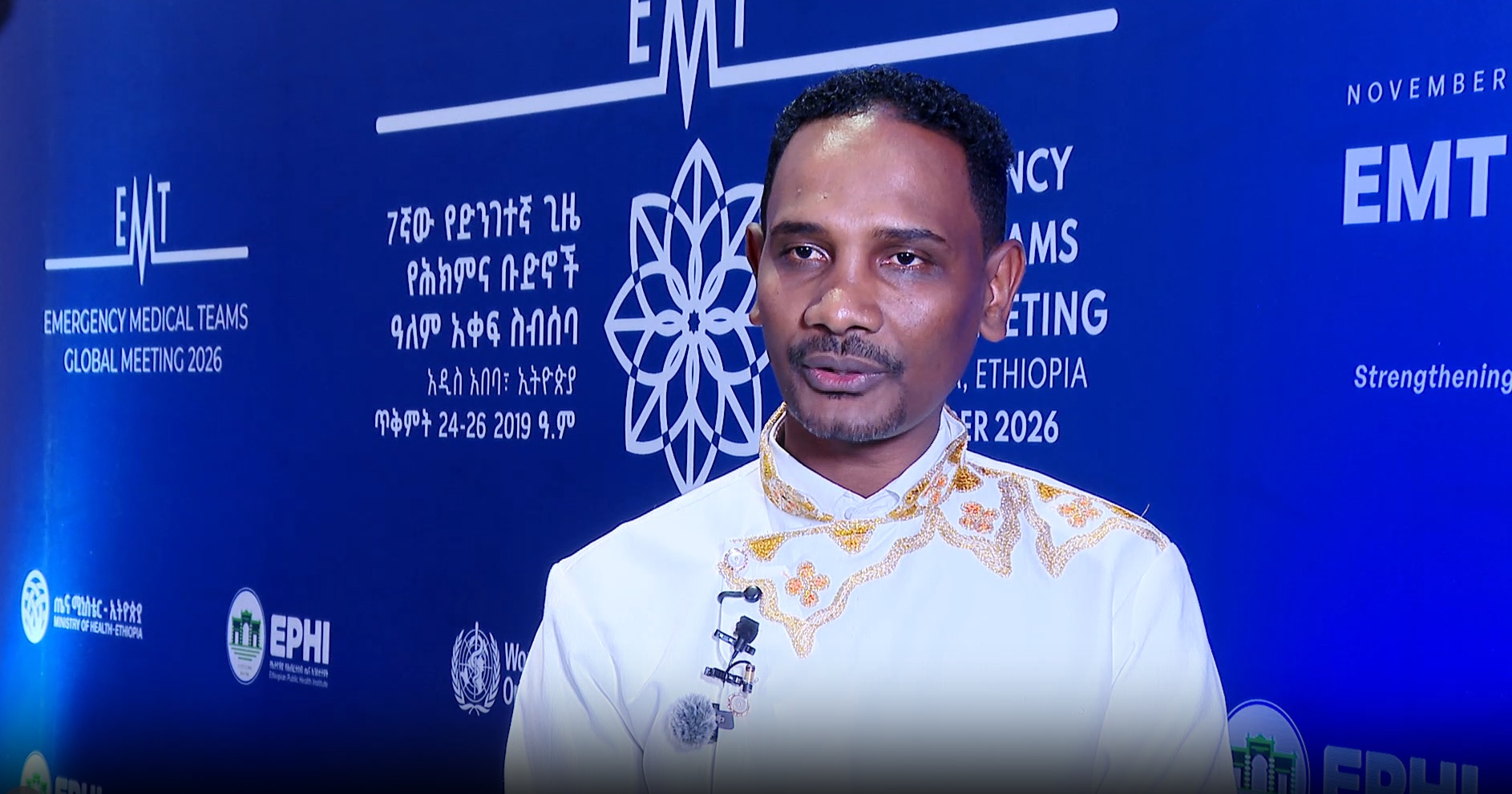
Addis Ababa, November 4, 2026 (ENA) — Ethiopia is solidifying its position as a regional and global health security actor as its National Emergency Medical Team (EMT) extends critical support to foreign nations during disasters and disease outbreaks. This milestone reflects the country’s rapidly maturing emergency response capacity, according to Dr. Melkamu Abte, Deputy Director-General of the Ethiopian Public Health Institute (EPHI).
Speaking on the sidelines of the 7th World Health Organization (WHO) Global Meeting of Emergency Medical Teams hosted in Addis Ababa, Dr. Melkamu detailed the team’s evolution from a domestic committee to an internationally certified rapid response unit.
From National Committee to WHO-Certified International Responder
The Ethiopian EMT achieved a significant benchmark by receiving international certification from the World Health Organization after meeting rigorous classification standards. This designation authorizes the team to deploy globally as part of the WHO Global Health Emergency Corps framework, ensuring interoperability during international crises.
Key Milestone: The team’s operational maturity was validated through “reliable, timely responses to emergencies and outbreaks in recent years, both within Ethiopia and abroad,” Dr. Melkamu stated.
High-Profile Deployment: 2023 Türkiye Earthquake Response
The team’s most notable international deployment to date was the response to the devastating 2023 earthquake in Türkiye. The operation served as a practical stress test of Ethiopia’s logistics, clinical capacity, and coordination with the WHO EMT Secretariat, proving the unit can operate effectively in complex, high-mortality environments alongside international peers.
Institutional Evolution: Systems, Workforce, and Logistics
Dr. Melkamu attributed the successful certification and deployment capability to a structural overhaul within EPHI. The transformation focused on three pillars:
- Operational Systems: Standardized deployment protocols aligning with WHO EMT Minimum Technical Standards.
- Human Resources: Expansion of specialized clinical rosters (trauma surgeons, epidemiologists, logistics experts) and continuous simulation training.
- Logistics & Supply Chain: Pre-positioned caches of emergency medical kits and modular field hospital equipment enabling self-sufficiency for 72+ hours upon arrival.
“The unit has evolved from a small committee into a robust, organized institution,” Dr. Melkamu emphasized.
Strengthening Domestic Health Security: Border Surveillance & Early Warning
Parallel to its international outreach, Ethiopia has hardened its domestic defense against imported health threats. EPHI has significantly upgraded epidemic preparedness and surveillance systems at critical entry points, specifically:
- Bole International Airport: Implementation of advanced thermal scanning, digital passenger locator forms, and on-site isolation facilities.
- Land Border Crossings: Deployment of rapid response teams and mobile laboratories at high-traffic ground crossings to monitor cross-border transmission dynamics.
24/7 Monitoring for Early Detection
A cornerstone of the new strategy is the establishment of round-the-clock monitoring at the Public Health Emergency Operations Center (PHEOC). This ensures:
- Real-time event-based surveillance.
- Rapid risk assessment using the WHO Joint External Evaluation (JEE) indicators.
- Activation of national countermeasures using domestic operational capacity before international assistance is required.
Hosting the 7th WHO Global EMT Meeting: A Strategic Signal
The selection of Addis Ababa as the host city for the 7th WHO Global Meeting of Emergency Medical Teams underscores Ethiopia’s rising leadership in the African Region (AFRO) and the Eastern Mediterranean Region (EMRO) collaboration. The meeting convenes global stakeholders to:
- Harmonize EMT classification standards.
- Share lessons learned from recent deployments (Ukraine, Türkiye, Sudan, Cholera outbreaks).
- Strengthen the EMT 2.0 strategy focusing on localization and regional self-reliance.
Key Takeaways for Global Health Security
| Indicator | Status | Significance |
|---|---|---|
| WHO EMT Classification | Achieved (Type 1/2) | Eligible for UN/WHO coordinated international deployment. |
| International Deployment | Active (Türkiye 2023) | Proven operational capability in sudden-onset disasters. |
| Border Surveillance | Enhanced (Air & Land) | Reduced risk of PHEIC (Public Health Emergency of International Concern) importation. |
| Domestic Coordination | PHEOC Operational 24/7 | Compliance with International Health Regulations (IHR 2005) core capacities. |
Conclusion
Ethiopia’s trajectory—from building a domestic emergency roster to fielding a WHO-certified National Emergency Medical Team capable of international deployment—represents a model for health system resilience in the Global South. By investing in simultaneous strengthening of exportable response capacity and import-proof border surveillance, EPHI is ensuring the nation protects its own population while contributing meaningfully to global health security architecture.
Related Reading:
