




AU-EU Senior Officials Meet in Addis Ababa to Operationalize Luanda Summit Commitments
Meta Description: African Union and European Union senior officials convene in Addis Ababa to adopt a concrete implementation plan for 2030, focusing on trade, AI governance, climate action, and resolving EU trade barriers like CBAM and EUDR.
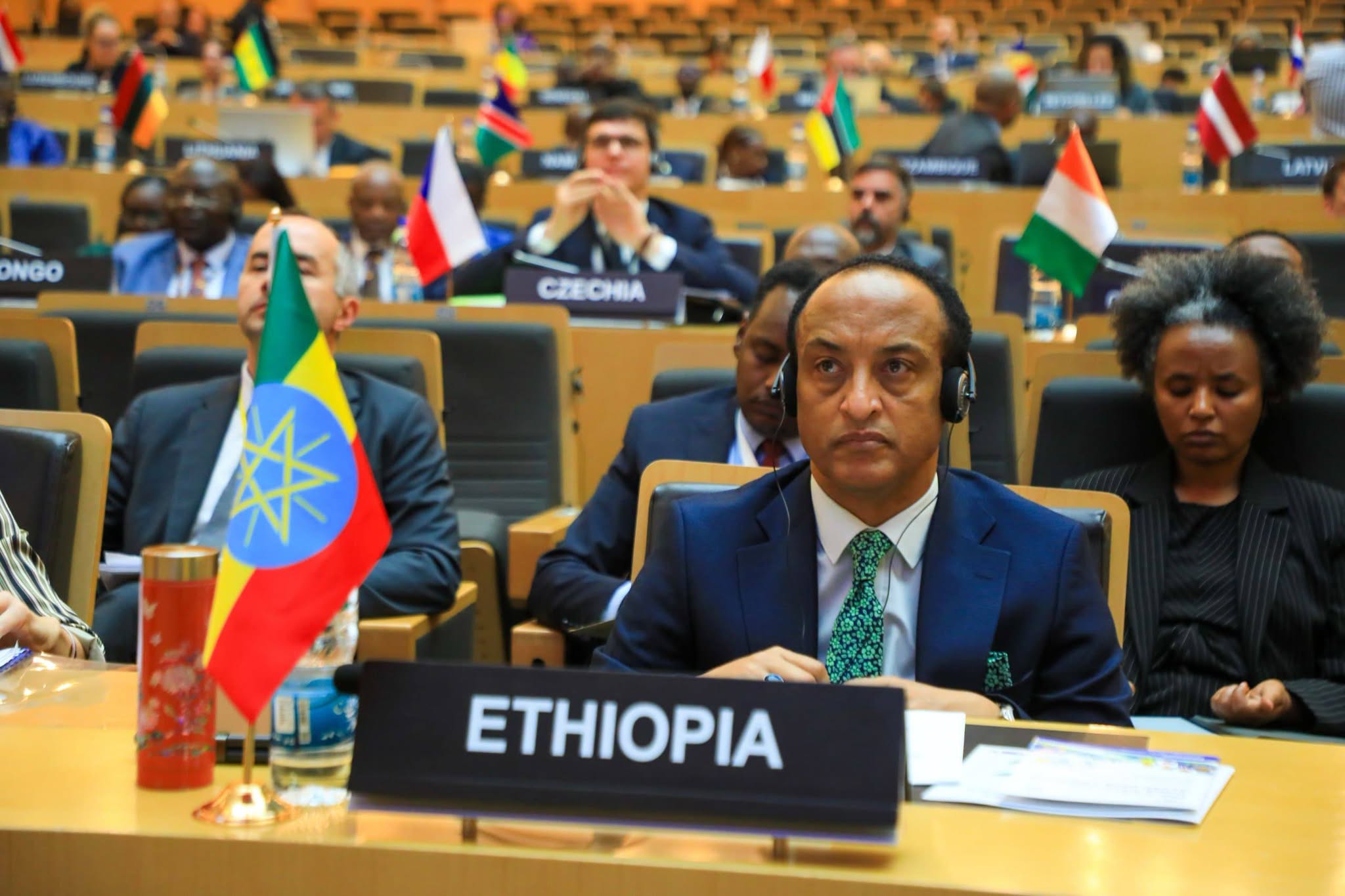
ADDIS ABABA, Ethiopia – Senior officials from the African Union (AU) and European Union (EU) Commissions and Member States converged at the AU Headquarters in Addis Ababa on November 4, 2026, for the AU-EU Senior Officials’ Meeting (SOM). The high-level gathering marks a critical step in translating the political momentum from the 7th AU-EU Summit in Luanda into tangible, results-oriented cooperation.
Operationalizing the Luanda Vision for 2030
The meeting serves as the primary technical platform to advance the outcomes of the 7th AU-EU Summit held in Luanda, Angola, in November 2025. That summit, convened under the theme “Promoting Peace and Prosperity through Effective Multilateralism,” set an ambitious agenda for the bilateral relationship.
According to officials familiar with the agenda, the SOM is focused on two core thematic pillars derived from the Luanda commitments: multilateralism and prosperity. The central objective is the adoption of a comprehensive Implementation Plan designed to deliver concrete deliverables across seven strategic clusters:
- Peace and Security
- Strengthening Multilateralism
- Trade and Economic Development
- Climate Action
- Food Security
- Digital and AI Development and Governance
- Investment in Human Capital
This plan acts as the operational engine for the Joint Vision for 2030, ensuring alignment with the AU’s Agenda 2063 and the EU’s Global Gateway strategy.
Related: Read the full Joint Vision for 2030 document on the European Commission website
Ethiopia Leads Continental Push on AI and Digital Governance
A significant highlight of the session was Ethiopia’s presentation of the common African position on Digital and AI Governance. This intervention was delivered in Ethiopia’s capacity as the AU Champion for AI and Digital Health, a role spearheaded by Prime Minister Abiy Ahmed.
Ambassador Lemlem Fiseha outlined the Champion’s strategic priorities to the assembly, emphasizing a holistic approach to the continent’s digital transformation:
- Policy Mainstreaming: Integrating AI and digitalization into the core policy agendas of AU Member States.
- Universal Digital Literacy: Scaling skills development to bridge the digital divide.
- Infrastructure Investment: Enhancing capital flow into critical cyber infrastructure.
- Startup Ecosystems: Fostering conducive environments for digital entrepreneurship and innovation hubs.
- Linguistic Inclusivity: Promoting the inclusion of African languages in Large Language Models (LLMs) and digital tools.
- Risk Mitigation: Building continental capacity to manage the ethical, security, and societal risks associated with AI deployment.
External Resource: African Union’s Continental Artificial Intelligence Strategy (PDF)
Addressing Trade Asymmetries: CBAM, EUDR, and EBA
Beyond the digital sphere, Ambassador Meles Alem, Director General for European and American Affairs at Ethiopia’s Ministry of Foreign Affairs, articulated specific asks to deepen the AU-EU trade and investment partnership. He identified three key sectors for expanded cooperation: trade facilitation, energy development, and manufacturing industrialization.
However, Ambassador Alem issued a pointed call to action regarding non-tariff barriers currently hindering African exports. He specifically urged the EU to address implementation challenges within the Everything But Arms (EBA) initiative, citing two major regulations creating “serious impact” on strategic African commodity sectors—particularly cocoa and coffee producers:
- The EU Deforestation Regulation (EUDR): Requires rigorous due diligence proving commodities are not linked to deforestation, posing traceability challenges for smallholder farmers.
- The Carbon Border Adjustment Mechanism (CBAM): Imposes a carbon price on imports of certain goods, raising costs for African exporters lacking green industrial infrastructure.
Context: European Commission: Carbon Border Adjustment Mechanism (CBAM) Explained Context: EU Deforestation Regulation (EUDR) Guidance
Ambassador Alem advocated for the lifting or significant adjustment of these measures to ensure the EBA preference scheme delivers its intended developmental impact.
Energy Partnership: Unlocking PIDA Projects
On the energy front, the Ethiopian delegation invited the EU to move beyond technical assistance toward concrete financial investment in priority projects identified under the Programme for Infrastructure Development in Africa (PIDA). PIDA remains the continental blueprint for bridging Africa’s massive infrastructure gap, and officials stressed that European capital is essential for bankable energy projects—ranging from regional power pools to renewable energy corridors—that support both Agenda 2063 and global net-zero goals.
Learn More: African Development Bank: Programme for Infrastructure Development in Africa (PIDA)
A Results-Oriented Partnership
The Addis Ababa SOM follows a series of intensive technical negotiations aimed at ensuring the Luanda Summit does not remain a symbolic milestone. Both unions are signaling a shift from “declaratory diplomacy” to implementation diplomacy, focusing on delivery mechanisms that yield tangible benefits for the 1.4 billion people in Africa and 450 million in the European Union.
As the meeting concludes, the adopted Implementation Plan is expected to serve as the roadmap for the next Ministerial and Summit engagements, setting the tempo for a partnership increasingly defined by digital sovereignty, green industrialization, and equitable trade rules.
