




Sources: Quintet to Meet with Suumod and Tasis in Addis Ababa Next Monday and Tuesday
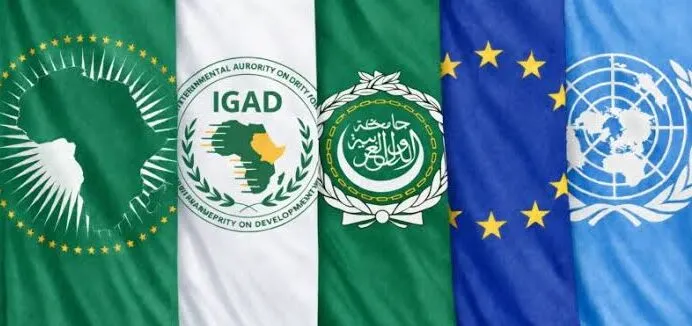
CAIRO — Informed diplomatic sources have confirmed that the Quintet Mechanism—comprising the African Union (AU), the United Nations (UN), the Arab League, the Intergovernmental Authority on Development (IGAD), and the European Union (EU)—is scheduled to convene critical talks with representatives of Suumod and Tasis in Addis Ababa, Ethiopia, next Monday and Tuesday.
The back-to-back meetings signal a renewed multilateral push to bridge divides in the ongoing Sudanese crisis, focusing on ceasefire enforcement, humanitarian corridors, and the architectural framework for a civilian-led transition.
Quintet Mechanism Unifies International Pressure
The convergence of the five major international bodies in the Ethiopian capital underscores the urgency the global community places on de-escalating the conflict between the Sudanese Armed Forces (SAF) and the Rapid Support Forces (RSF). Since the outbreak of hostilities in April 2023, the Quintet Mechanism has served as the primary coordination platform for international diplomacy, attempting to harmonize often-disparate regional and global approaches.
- The African Union provides the continental political mandate and the Peace and Security Council framework.
- IGAD, as the regional bloc, leads proximity talks and monitors ceasefire violations through its expanded observation mechanism.
- The United Nations facilitates humanitarian coordination via OCHA and political good offices through UNITAMS (United Nations Integrated Transition Assistance Mission in Sudan).
- The Arab League engages key Arab stakeholders influencing the warring parties.
- The European Union leverages development aid, sanctions regimes, and diplomatic weight to support a civilian democratic transition.
According to the sources, the Monday session will focus on Suumod, while Tuesday is dedicated to Tasis. While the specific organizational identities of these two entities remain closely held by mediators, diplomatic circles in Addis Ababa suggest they represent significant constituencies—likely coalition fronts of political parties, civil society resistance committees, or armed movements—that hold veto power over any durable settlement.
Agenda: From Cessation of Hostilities to Political Process
The talks are expected to address three core pillars identified in previous communiqués from the AU Peace and Security Council and the UN Security Council Resolution 2724:
1. Strengthening the Ceasefire Monitoring Architecture
Despite repeated truces negotiated in Jeddah and Manama, violations remain rampant. The Quintet is expected to press Suumod and Tasis for concrete commitments to:
- Endorse the deployment of an enhanced IGAD-EU-AU joint monitoring force.
- Support the establishment of “Humanitarian Notification Mechanisms” to protect aid convoys.
- Agree on confidence-building measures, including the release of political detainees and prisoners of war.
2. Unimpeded Humanitarian Access
With over 25 million people in need of assistance—according to the latest UN OCHA Humanitarian Response Plan—the meetings will prioritize securing binding guarantees for cross-line and cross-border aid delivery. The Quintet will likely reference the IPRAM (Integrated Phase Classification) warnings of catastrophic famine levels in Darfur, Kordofan, and Khartoum.
3. Broadening the Political Ownership
A persistent criticism of previous tracks (Jeddah, Manama, Cairo) has been the exclusion of the revolutionary front and civilian democratic forces. Engaging Suumod and Tasis directly in Addis Ababa—host to the AU Headquarters—represents a tactical shift toward a “broad-based” political process envisioned in the Framework Agreement of December 2022.
Addis Ababa: The Diplomatic Epicenter
Choosing Addis Ababa as the venue is strategically significant. As the seat of the African Union Commission, it provides the Quintet with immediate access to the AU Commissioner for Political Affairs, Peace and Security, Bankole Adeoye, and the IGAD Executive Secretary, Workneh Gebeyehu.
Furthermore, Ethiopia’s current chairmanship of IGAD (despite its own internal complexities) places it at the logistical center of regional shuttle diplomacy. The meetings will likely run parallel to technical sessions involving the Trilateral Mechanism (AU, UN, IGAD) to ensure operational alignment.
Challenges and Skepticism
Despite the high-level engagement, significant hurdles remain:
- Fragmentation of Actors: The proliferation of armed movements and political blocs (signatories and non-signatories of the Juba Peace Agreement) complicates representation.
- SAF/RSF Intransigence: Both generals—Abdel Fattah al-Burhan and Mohamed Hamdan “Hemedti” Dagalo—have historically resisted ceding political space to civilian blocs unless military advantages are secured.
- External Interference: Competing agendas from neighboring states and global powers continue to fuel the war economy, undermining the Quintet’s unified front.
What Comes Next?
Observers anticipate a joint communiqué following Tuesday’s session outlining a “Roadmap for Addis Consultations.” This would ideally pave the way for a larger, all-inclusive Sudanese conference—potentially under the “Addis Ababa Process” banner—before the end of Q4 2026.
The success of these Monday-Tuesday engagements will be measured not by the rhetoric released, but by whether Suumod and Tasis can deliver enforceable commitments on the ground, and whether the Quintet can translate diplomatic consensus into tangible leverage—sanctions, arms embargo enforcement, and aid conditionality—against the warring generals.
Related Reading:
