




Meta Title: Northern Ethiopia Conflict Renewed: Pretoria Agreement Failures & Regional Escalation | Analysis
Meta Description: Explore the drivers behind the renewed northern Ethiopia conflict. Analysis of the Pretoria Agreement collapse, TPLF internal splits, Eritrea’s buffer strategy, Sudan’s war spillover, and diplomatic failures leading to the September offensive.
Focus Keyphrase: Northern Ethiopia conflict renewal
Slug: northern-ethiopia-conflict-renewal-pretoria-agreement-failures
Unresolved Pretoria Terms Trigger Renewed Northern Ethiopia Conflict: A Comprehensive Analysis
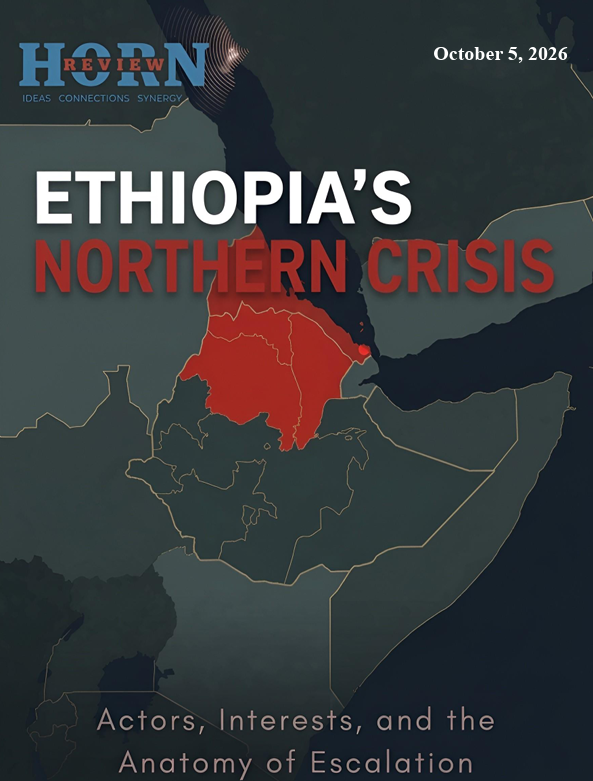
The fragile peace in the Horn of Africa has shattered once again. A detailed examination of the renewed northern Ethiopia conflict reveals that the collapse of the Pretoria Agreement’s implementation created a vacuum rapidly filled by rival factions, regional power plays, and a dangerous escalation culminating in the major offensive launched on 23 September. This analysis maps the complex web of actors, the strategic interests of neighboring states, and the diplomatic breakdown that preceded the return to warfare.
The Pretoria Agreement: A Flawed Foundation for Peace
Signed in November 2022, the Pretoria Agreement was hailed as the framework to end the devastating two-year war between the Federal Government of Ethiopia and the Tigray People’s Liberation Front (TPLF). However, the accord contained ambiguous provisions regarding the disarmament of Tigrayan forces, the withdrawal of Eritrean troops, and the political status of disputed territories like Western Tigray (Welkait).
The failure to resolve these core terms left a “grey zone” of control. Neither side fully disengaged, and the mechanisms for verification and dispute resolution proved insufficient. This ambiguity did not merely pause the war; it institutionalized the grievances that would eventually ignite the September 2024 offensive. The lack of a clear timeline for the integration of Tigray forces into the national security apparatus or a definitive resolution on territorial administration meant that both Addis Ababa and Mekelle continued to prepare for the possibility of renewed hostilities.
Internal Fractures: The TPLF Split and the Alliance of Armed Movements
A critical driver of the current escalation is the deepening internal split within the TPLF. The once-monolithic front has fractured along ideological and generational lines, broadly dividing between a “hardline” faction resistant to the Pretoria compromises and a “pragmatic” faction currently leading the Tigray Interim Administration.
This schism has paralyzed decision-making in Mekelle. Hardliners view the Interim Administration as illegitimate collaborators, while the Interim leadership struggles to assert authority over restive commanders. This fragmentation has created an opening for the alliance of armed movements operating in the region. Groups such as the Oromo Liberation Army (OLA) and factions within the Fano militia (Amhara irregular forces) have exploited the TPLF’s disunity, coordinating pressure on multiple fronts to advance their own territorial and political agendas.
Each actor enters this fray with distinct objectives and fears:
- Federal Government (Addis Ababa): Seeks to centralize authority, dismantle regional special forces, and secure the Amhara region’s border claims. Fear: State fragmentation and loss of monopoly on violence.
- TPLF Hardliners: Aim to reclaim pre-war borders (including Western Tigray) and retain autonomous military capacity. Fear: Political annihilation and accountability for past actions.
- Interim Administration: Struggles to deliver governance and aid while maintaining relevance. Fear: Irrelevance and displacement by hardliners.
- Amhara Forces (Fano/Regional Special Forces): Seek annexation of Western Tigray and protection of Amhara communities. Fear: Encroachment by OLA and federal marginalization.
- OLA: Aims to leverage northern instability to weaken federal control in Oromia. Fear: Military isolation and defeat.
Regionalization: Eritrea’s Buffer Zone, Sudan’s Chaos, and Egypt’s Leverage
The northern Ethiopia conflict renewal cannot be understood in isolation; it has fused seamlessly with the broader geopolitics of the Horn of Africa. Three external vectors are critically shaping the battlefield dynamics.
Eritrea’s Buffer-Zone Strategy
Asmara remains the most potent external spoiler. Eritrea views a strong, autonomous Tigray as an existential threat. Its strategy focuses on establishing a permanent buffer zone inside Ethiopian territory, effectively preventing the TPLF from regrouping near the Eritrean border. Eritrean forces never fully withdrew per the Pretoria terms, retaining control over key highlands and border crossings. Their presence emboldens Amhara claims on Western Tigray and complicates any federal attempt to impose a centralized settlement.
Sudan’s Civil War Spillover
The outbreak of war in Sudan (April 2023) between the SAF and RSF has destabilized Ethiopia’s western flank. The collapse of Sudanese border control has facilitated arms flows, refugee movements, and the movement of non-state armed groups across the porous Ethiopia-Sudan border. Both Addis Ababa and regional actors exploit this chaos—Khartoum’s weakness removes a historical mediator and creates a security vacuum that Ethiopian federal and regional forces rush to fill, often clashing in the process.
Egypt’s Strategic Pressure on Ethiopia
Cairo’s involvement adds a layer of interstate tension. Egypt views the Grand Ethiopian Renaissance Dam (GERD) and the potential fragmentation of Ethiopia through a security lens. Cairo has increased diplomatic, intelligence, and reportedly material support to various Ethiopian opposition groups, including the OLA and potentially factions in Tigray and Amhara. This Egyptian pressure on Ethiopia aims to distract Addis Ababa from the Nile dam project and weaken its regional hegemony, turning the northern conflict into a proxy theater for Red Sea geopolitics.
Why Diplomacy Fell Short Before the Offensive
The most damning aspect of this crisis is the failure of preventive diplomacy in the months preceding the 23 September offensive. Despite clear intelligence indicators—troop mobilizations, inflammatory rhetoric, and the breakdown of the Disarmament, Demobilization, and Reintegration (DDR) process—international and regional mediators failed to convene a credible dialogue.
Key diplomatic failures include:
- AU Panel Paralysis: The African Union’s High-Level Panel, led by former presidents, lacked the leverage and mandate to enforce compliance on Eritrean withdrawal or the Western Tigray status.
- US/EU Focus Shift: Western attention pivoted heavily toward the Sudan conflict and the Red Sea crisis (Houthi attacks), downgrading the Ethiopian file despite Pretoria being a Western-brokered deal.
- Exclusion of Spoilers: Negotiation frameworks repeatedly excluded hardline TPLF commanders, Fano leadership, and Eritrea, ensuring any agreement lacked buy-in from the men holding the guns.
- Ignoring the “Western Tigray” Flashpoint: Diplomats treated the status of Welkait as a technical administrative issue rather than the existential, identity-driven flashpoint it is for both Tigrayans and Amharas.
By the time the offensive launched, the “diplomatic track” had been overtaken by the “military track.” The combatants calculated that battlefield gains would yield better negotiating positions than the stalled talks offered.
The Path Forward: Beyond Military Solutions
The current trajectory suggests a protracted, multi-layered conflict with no clear military victor. The northern Ethiopia conflict renewal demonstrates that the Pretoria Agreement was a cessation of hostilities agreement, not a peace treaty. It lacked the political architecture to address the root causes: the contestation of the Ethiopian state structure, the question of self-determination vs. territorial integrity, and the predatory involvement of neighbors.
Any sustainable resolution now requires:
- An Inclusive Political Process: Moving beyond the binary Federal-TPLF framework to include Amhara political opposition, Fano representatives, OLA, and civil society.
- International Guarantees for Eritrean Withdrawal: A verified, staged withdrawal of Eritrean forces backed by UN/AU monitors, not just bilateral promises.
- Resolution of Western Tigray: A mechanism—likely a referendum or binding arbitration—acceptable to both Tigrayan and Amhara constituents, decoupled from immediate military control.
- Regional Security Framework: A Horn of Africa dialogue addressing Eritrea’s security fears, Egypt’s water security, and Sudan’s stabilization simultaneously.
Without addressing these structural drivers, the September offensive will merely be the latest chapter in a cycle of violence that has defined the region for decades.
Further Reading & Context
- Primary Framework: Read the full text of the Pretoria Peace Agreement (PDF) to understand the specific clauses that remained unimplemented.
- Regional Dynamics: Explore the International Crisis Group’s analysis on Eritrea’s role in Tigray for deeper context on the buffer-zone strategy.
- Humanitarian Impact: Monitor the UN OCHA Ethiopia Situation Reports for real-time data on displacement and access constraints resulting from the renewed fighting.
- GERD Geopolitics: Understand the Nile Basin Initiative context regarding Egypt-Ethiopia tensions mentioned in the regional analysis.
