




Meta Title: Halima Kedir & Ethiopia’s Green Legacy: How One Woman’s Trees Fight Climate Change
Meta Description: Discover how Halima Kedir transformed her Ethiopian community through reforestation. Explore the impact of Ethiopia’s Green Legacy Initiative, survival rate challenges, and the cultural roots driving landscape restoration.
Focus Keyphrase: Ethiopia reforestation Green Legacy Initiative
Slug: halima-kedir-ethiopia-green-legacy-reforestation
Rooted in Resilience: How Halima Kedir and Ethiopia’s Green Legacy Are Rewriting a Climate Future
<h2>The Woman Who Planted a Forest</h2>
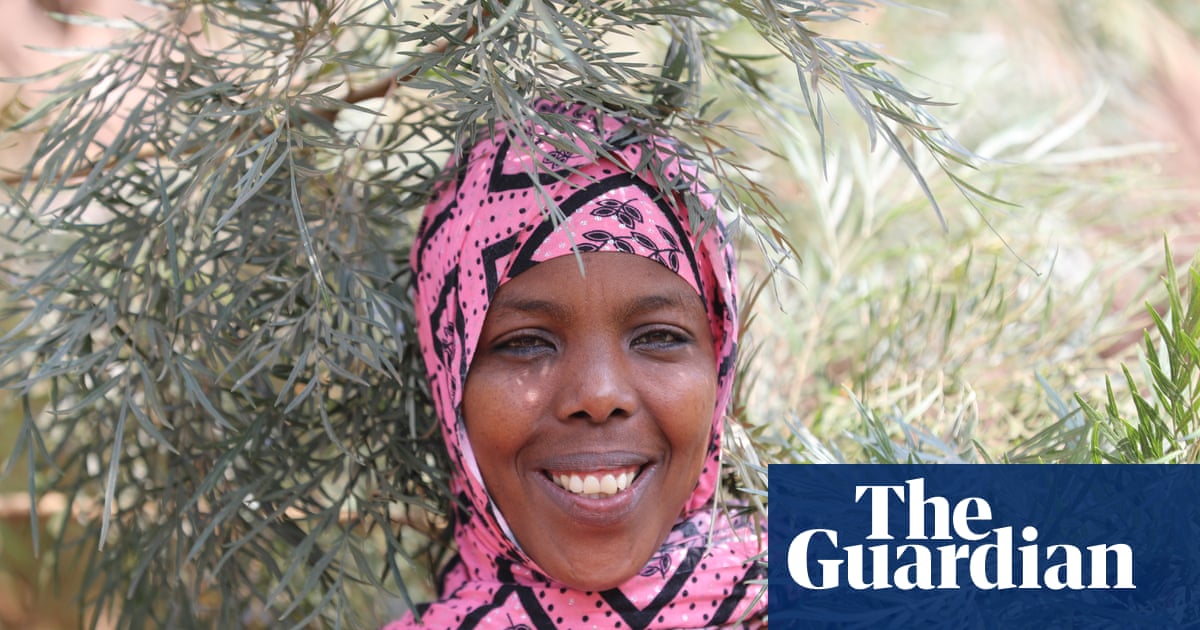
<p>When <strong>Halima Kedir</strong> first dug holes for seedlings in her yard in the <strong>Berbere district of Ethiopia’s Oromia region</strong>, the reaction wasn't admiration—it was mockery. Neighbors whispered she was "striving for nothing." Today, 35-year-old Kedir sits under a canopy of banana, olive, and grevillea trees, a living testament to the power of persistence.</p>
<p>“They thought I was striving for nothing, but with time, many are realising that trees can be part of the solution to our problems as a way to fight <a href="https://www.ipcc.ch/" target="_blank" rel="noopener noreferrer">climate change</a> and food insecurity,” Kedir says.</p>
<p>She has lost count of the thousands of trees she has planted. In a nation scarred by large-scale <a href="https://www.worldwildlife.org/threats/deforestation" target="_blank" rel="noopener noreferrer">deforestation</a>, her moral courage has shifted community mindsets. “Now, everything has changed. Those who tried to dissuade me are envious of my effort and commitment.”</p>

<h2>Ethiopia’s Deforestation Crisis: The Context</h2>
<p>To understand the magnitude of Kedir’s achievement, one must grasp the scale of the loss. Since the turn of the century, Ethiopia has lost <strong>560,000 hectares (2,160 sq miles) of tree cover</strong>—an area roughly the size of Delaware—according to <a href="https://globalnaturewatch.org/dashboards/country/ETH/?category=forest-change" target="_blank" rel="noopener noreferrer">Global Forest Watch data</a>. The drivers are familiar: agricultural expansion, commercial logging, and reliance on charcoal for fuel.</p>
<p>The consequences have been devastating: plummeting <a href="https://www.unccd.int/land-and-life/biodiversity" target="_blank" rel="noopener noreferrer">biodiversity</a>, degraded soil quality, depleted water resources, and heightened vulnerability to climate disasters. For a nation ranked among the <a href="https://climateknowledgeportal.worldbank.org/sites/default/files/country-profiles/15463A-WB_Ethiopia%20Country%20Profile-WEB.pdf" target="_blank" rel="noopener noreferrer">world’s most climate-vulnerable</a> by the World Bank, the stakes are existential.</p>

<h2>The Green Legacy Initiative: A National Pivot</h2>
<p>In 2019, the Ethiopian government launched the ambitious <a href="https://sdgs.un.org/partnerships/green-legacy-initiative" target="_blank" rel="noopener noreferrer">Green Legacy Initiative (GLI)</a>, a massive tree-planting scheme aiming to reverse decades of degradation. The results have been statistically significant:</p>
<ul>
    <li><strong>Deforestation Rate Drop:</strong> Annual loss fell from <strong>92,000 hectares (2013)</strong> to <strong>27,703 hectares (2023)</strong>, per <a href="https://www.wri.org/insights/ethiopia-invests-big-restoring-degraded-land" target="_blank" rel="noopener noreferrer">World Resources Institute (WRI)</a> analysis.</li>
    <li><strong>Forest Cover Growth:</strong> National forest cover increased from <strong>15.5% to 23.6%</strong> over the same decade, according to the <a href="https://www.efd.gov.et/wp-content/uploads/2025/05/ETH_FOREST_COVER-_DEFORESTATION_report_final_EFD_JUNE_2024.pdf" target="_blank" rel="noopener noreferrer">Ethiopian Forestry Development (EFD)</a>.</li>
    <li><strong>Planting Volume:</strong> The government reports <strong>48 billion seedlings planted</strong> in seven years, including a single-day record of <a href="https://www.theguardian.com/world/2019/jul/29/ethiopia-plants-250m-trees-in-a-day-to-help-tackle-climate-crisis" target="_blank" rel="noopener noreferrer">353 million seedlings</a>. The target is <strong>50 billion by 2030</strong>.</li>
</ul>

<figure class="inline-image">
    <img src="https://i.guim.co.uk/img/media/8ff52aff-8d71-4811-a522-97704aa3f012/0_0_4000_2400/master/4000.jpg?width=1200&quality=85" alt="Aerial view of reforestation efforts in Oromia's Berbere district showing greening landscape" loading="lazy" width="1200" height="800" />
    <figcaption>Oromia’s Berbere district. Reforestation in Ethiopia has seen the most success in the highlands. Photograph: Amanuel Gebremedhin</figcaption>
</figure>

<h2>Cultural Roots: <em>Guddifachaa</em> and the Maternal Bond</h2>
<p>Why do Kedir’s trees survive where others wither? The answer lies partly in culture. As an Oromo woman, Kedir draws on <em><strong>guddifachaa</strong></em>—the traditional practice of adopting a child and integrating them fully into society.</p>
<p>“Just like we adopt a child in our tradition, I see them like my own children,” she explains. This maternal framework transforms tree planting from a chore into a sacred duty of care.</p>
<p>This dedication is physical as much as spiritual. Despite severe water scarcity, Kedir walks an hour each way to fetch water for her seedlings. Her 13-year-old son, Anwar Hassen, watches with pride: “I want to make a lifelong commitment in the fight against climate change.”</p>

<h2>Community Replication: The WaterAid Model</h2>
<p>Kedir’s influence has rippled outward. Neighbor Fate Abdulahi admits, “She proved us wrong and she has become a role model and someone willing to find local solutions to our issues.”</p>
<p>Thousands of households across local <em>kebeles</em> (neighbourhoods) have joined the movement. With support from <a href="https://www.wateraid.org/" target="_blank" rel="noopener noreferrer">WaterAid Ethiopia</a>, degraded lands are greening. Alebachew Adem, WaterAid Ethiopia Director, reports:</p>
<blockquote>
    <p>“To date, approximately <strong>55,000 indigenous tree seedlings</strong> have been distributed to households and community institutions across the area. <strong>85% have grown successfully.</strong> In dry, climate-vulnerable areas such as Berbere, these efforts help communities build resilience against the increasing impacts of climate change.”</p>
</blockquote>

<h2>The Survival Rate Debate: Planting vs. Growing</h2>
<p>While the headline numbers are impressive, the critical metric is <strong>long-term survival</strong>. Government-backed GLI technical committees reported average survival rates of <strong>83.4% (2019)</strong> and <strong>79% (2020)</strong>. However, these figures face scrutiny.</p>
<ul>
    <li>A <a href="https://www.bbc.co.uk/news/world-africa-63638459" target="_blank" rel="noopener noreferrer">BBC investigation</a> highlighted skepticism regarding such high success rates.</li>
    <li>Global research in <a href="https://royalsocietypublishing.org/doi/10.1098/rstb.2021.0090" target="_blank" rel="noopener noreferrer">Asia published by the Royal Society</a> found nearly half of reforestation trees died within five years.</li>
    <li>A study of <a href="https://www.sciencedirect.com/science/article/pii/S0301479724034613" target="_blank" rel="noopener noreferrer">15 tree-planting schemes in Ethiopia</a> revealed 10 achieved less than 50% success.</li>
</ul>
<p>Yitebitu Moges, coordinator of the UN <a href="https://unfccc.int/topics/land-use/workstreams/redd/what-is-redd" target="_blank" rel="noopener noreferrer">REDD+</a> programme in Ethiopia, acknowledges the gap: “We are collecting data and are now committing ourselves to a systematic assessment of survival rates.” He notes the greatest success has been in the <strong>highlands</strong>, whereas lowland areas like Berbere face harsher conditions.</p>
<p>Yet, Moges argues the mindset shift is the truest victory: “Our history has shifted from deforestation to forestation... Even if half of the trees that have been planted survive, we are already gaining moisture, keeping soil and sequestering carbon.”</p>

<h2>Institutionalizing Green Growth: Finance and Policy</h2>
<p>Ethiopia is backing ambition with budget. In 2022, parliament established the <a href="https://www.ena.et/web/eng/w/eng_6691117" target="_blank" rel="noopener noreferrer">Green Legacy and Landscape Restoration Special Fund</a>, allocating <strong>0.5% to 1% of the federal budget</strong> (approx. £50m–£110m from a 2.339 trillion birr budget) to landscape restoration.</p>
<p><a href="https://www.aau.edu.et/" target="_blank" rel="noopener noreferrer">Addis Ababa University</a> environmentalist Teshome Soromessa emphasizes that restoration is now a national priority uniting communities, civil society, universities, and development partners. He cites Kedir as a prime example of how <strong>individual agency catalyzes systemic change</strong>.</p>

<h2>Global Stage: Hosting COP32</h2>
<p>Ethiopia’s emergence as a green energy leader in Africa has earned it the host slot for the <strong>32nd UN Climate Summit (COP32)</strong> in Addis Ababa, November 2027. As the nation prepares to welcome the world, Halima Kedir has a direct message for delegates:</p>
<blockquote>
    <p>“They should give the issues of water and trees, which many in such communities lack, the priority they deserve.”</p>
</blockquote>

<h2>Key Takeaways</h2>
<ul>
    <li><strong>Individual Action Scales:</strong> Halima Kedir’s cultural ethos (<em>guddifachaa</em>) turned personal conviction into community transformation.</li>
    <li><strong>Policy Works:</strong> The <a href="https://sdgs.un.org/partnerships/green-legacy-initiative" target="_blank" rel="noopener noreferrer">Green Legacy Initiative</a> has measurably slowed deforestation and expanded forest cover (15.5% → 23.6%).</li>
    <li><strong>Survival > Planting:</strong> The critical challenge remains seedling survival in arid lowlands; current verification efforts are underway via UN REDD+.</li>
    <li><strong>Finance Follows Policy:</strong> Dedicated national funding (Special Fund) signals long-term commitment beyond political cycles.</li>
    <li><strong>Global Recognition:</strong> Hosting COP32 positions Ethiopia as a case study for Global South climate leadership.</li>
</ul>