




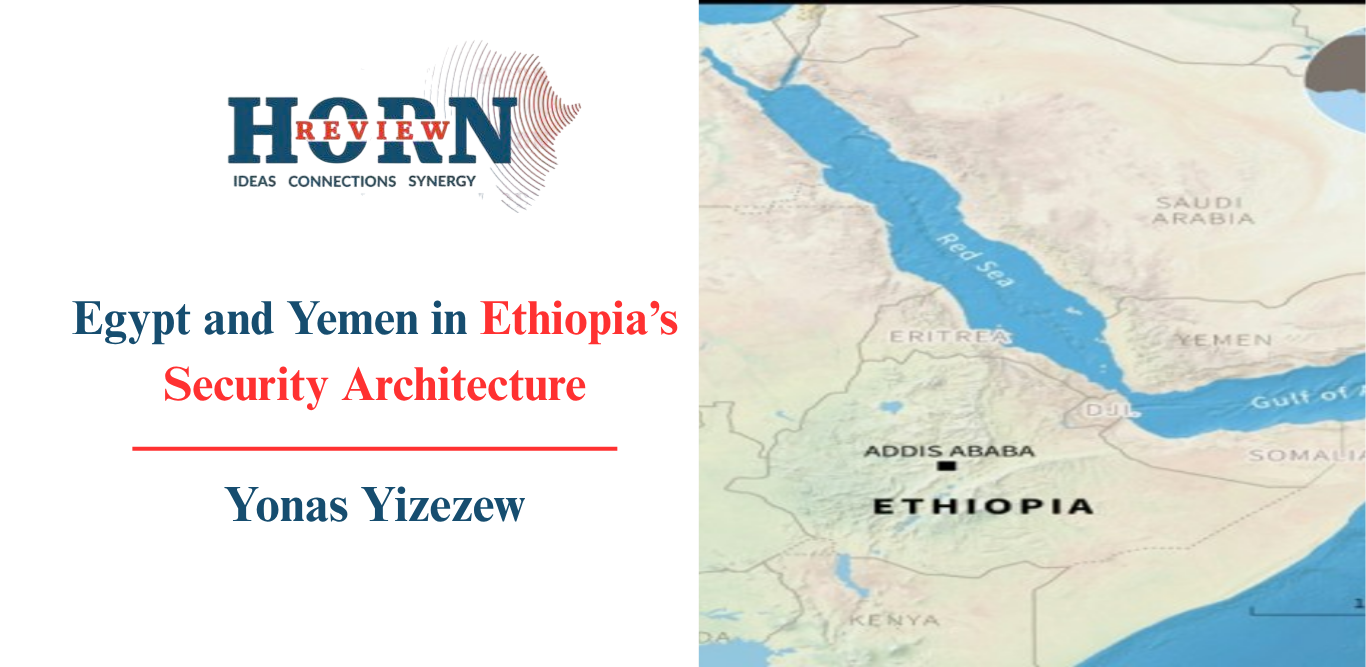
Meta Title: Redefining Horn of Africa Geopolitics: Why Egypt and Yemen Are Ethiopia’s New Strategic Neighbors
Meta Description: Explore the shift from territorial to relational geography in the Horn of Africa. Understand why Egypt and Yemen are now critical strategic neighbors for Ethiopia, impacting Red Sea security, GERD dynamics, and trade chokepoints.
Focus Keyphrase: Horn of Africa Geopolitics
Secondary Keywords: Ethiopia Red Sea access, Bab el-Mandeb security, Grand Ethiopian Renaissance Dam (GERD), Egypt Ethiopia relations, Yemen Houthi Red Sea, relational geography.
Redefining Horn of Africa Geopolitics: The Shift from Borders to Relational Geography
The conventional map of the Horn of Africa—typically limited to Ethiopia, Eritrea, Djibouti, and Somalia—no longer reflects the region’s geopolitical reality. In an era defined by hybrid warfare, great power competition, and the weaponization of critical infrastructure, proximity is a function of exposure, not just geography.
As state fragility deepens and extra-continental powers vie for control of maritime chokepoints, Ethiopia faces a strategic imperative: recognize Egypt and Yemen as de facto neighbors. This conceptual shift—from fixed territorial neighborhoods to flow-based, relational geographies—is essential for Addis Ababa to secure its economic lifelines and national security.
Why the Traditional Map Fails: The Rise of Flow-Based Power
The international system is transitioning from order defined by static borders to one defined by control over flows: trade, energy, data, water, and arms.
Key Insight: Power is increasingly exercised through control of chokepoints, definition of institutional membership, and the capacity to impose or mitigate cascading vulnerabilities.
Three interlocking developments drive this new reality:
- Weaponization of Chokepoints: The precedent of Iran at the Strait of Hormuz demonstrates how control over a narrow passage secures multi-domain leverage. This logic now extends to the Bab el-Mandeb Strait.
- Fusion of State and Non-State Agency: Blurred attribution lines (e.g., Houthi actions, proxy militias) complicate deterrence and response thresholds.
- Convergence of Vulnerabilities: Water, energy, food, shipping, and undersea digital infrastructure have merged into a single “surface of vulnerability.”
The Digital Chokepoint: The Red Sea is not just a trade route; it is the world’s primary digital artery. An estimated 90% of undersea fiber-optic cables linking Europe and Asia transit these waters, making cable security a sovereign priority comparable to oil security (Council on Foreign Relations).
Egypt: From Riparian Rival to Multi-Theatre Strategic Neighbor
Egypt’s role has evolved far beyond the Nile Basin. Having failed to halt the Grand Ethiopian Renaissance Dam (GERD) via bilateral negotiations, Cairo has pivoted to a comprehensive strategy of containment across multiple theatres.
Instruments of Egyptian Leverage
- Institutional Weaponization: Utilizing the Arab League to codify its hydro-hegemonic position on Nile waters.
- Red Sea Coalition Building: Opposing Ethiopian sea access initiatives to define the “Red Sea order” on Cairo’s terms.
- Forward Presence: Deepening defense cooperation with Somalia, engaging in port development in Djibouti, and involvement in the Sudanese conflict creates a strategic arc around Ethiopia (DW Analysis on Egypt-Somalia Ties; The National on Egypt-Djibouti Port Deal).
Strategic Implication: Egypt operates as a relational neighbor whose actions materially alter Ethiopia’s security environment without consent and with limited warning time. Treating Cairo solely as a “downstream riparian” ignores its capacity to project power across the Red Sea littoral.
Yemen: The Maritime Neighbor at the Gate of Bab el-Mandeb
Yemen occupies a distinct, parallel position in this relational geography. Its centrality stems from the Bab el-Mandeb Strait—the mandatory gateway for ~95% of Ethiopia’s seaborne trade via the Port of Djibouti.
Dimensions of Yemen’s Strategic Impact
| Domain | Impact on Ethiopia |
|---|---|
| Trade & Economy | Sustained Houthi attacks or exclusion zones sever Ethiopia’s primary import/export artery, threatening food, fuel, and fertilizer security. |
| Arms Proliferation | Yemen hosts one of the world’s densest civilian armories (~17M firearms estimated mid-2000s). Illicit flows cross the strait bidirectionally, fueling instability in the Horn (Small Arms Survey / ETH Zurich). |
| Non-State Actors | Historical sanctuary for Horn-based insurgents (e.g., Islamic Courts Union regrouping in Yemen post-2006) creates direct internal security threats (ReliefWeb Report). |
| Institutional Overlap | Djibouti and Somalia engage Yemen via the Arab League, creating a diplomatic framework excluding Ethiopia. |
The Bystander Problem: Despite existential exposure, Ethiopia remained largely absent from the Saudi-led Multinational Maritime Defense Coalition and diplomatic tracks managing Red Sea security post-October 2023. Exposure without representation creates a dangerous strategic deficit.
The Eritrea-Iran-Houthi Nexus: A Hidden Vector
The permeability of the Red Sea corridor is amplified by Eritrea’s strategic relationship with Iran and its proximity to Houthi-controlled Yemen. This triad creates a conduit for:
- Advanced weaponry transfers (drones, missiles).
- Intelligence sharing on maritime traffic.
- Coordination of asymmetric pressure on Ethiopian interests.
This dynamic underscores that the Red Sea is a connective corridor, not a barrier, for materiel and malign networks.
Operationalizing Relational Geography: A Strategic Framework for Ethiopia
Recognizing Egypt and Yemen as “neighbors” requires a shift from reactive diplomacy to proactive corridor governance. Ethiopia must build a full-spectrum toolkit:
1. Hard Deterrence & Maritime Domain Awareness (MDA)
- Invest in coastal radar, satellite AIS tracking, and naval patrol capability (even via partnerships) to monitor Bab el-Mandeb independently.
- Develop credible anti-access/area denial (A2/AD) capabilities to protect shipping lanes.
2. Institutional Contestation & Membership
- Pursue observer status or strategic dialogue mechanisms with the Arab League, GCC, and Indian Ocean Rim Association (IORA).
- Revitalize the Sana’a Forum for Cooperation (2002) as a structured trilateral track with Yemen and Sudan for maritime security and counter-smuggling (Sudan Tribune Archive).
3. Dual-Track Diplomacy (State & Non-State)
- State Track: Negotiate transit guarantees and port diversification (e.g., Berbera, Massawa, Lamu) to break single-corridor dependency.
- Non-State Track: Engage Yemeni tribal/regional authorities (beyond just the Houthis) and Somali federal states to manage arms flows and refugee/militant movements.
4. Cascading Vulnerability Management
- Establish a National Chokepoint Resilience Council integrating ministries of Defense, Transport, Trade, Water, and Cybersecurity.
- Stockpile strategic reserves (fuel, wheat, fertilizer) calibrated for Red Sea closure scenarios (30/60/90 days).
5. Digital Infrastructure Sovereignty
- Partner with global cable consortia (Google, Meta, Telecom Egypt) to secure landing station diversity and repair agreements independent of hostile littoral states.
Conclusion: Strategic Clarity Begins with Accurate Mapping
In the new Horn of Africa geopolitics, borders are defined by intensity of consequence, not lines on a map. Egypt and Yemen meet the operational definition of neighbors: their actions can unilaterally degrade Ethiopia’s security and economy with minimal warning.
Strategic clarity demands:
- Formal recognition of this relational reality in national security doctrine.
- Resource allocation matching the Red Sea’s weight in Ethiopia’s survival calculus.
- Sustained engagement—not episodic crisis management—in the institutions and waters shaping the region’s future.
Ethiopia’s ability to thrive in a flow-based world depends on its capacity to govern the corridors it depends on, rather than merely traversing them.
Frequently Asked Questions (FAQ)
Why is the traditional definition of the Horn of Africa outdated? The traditional definition (Ethiopia, Eritrea, Djibouti, Somalia) ignores the functional impact of extra-regional actors and maritime chokepoints. Today, a state across the Red Sea (Yemen) or a downstream riparian with maritime reach (Egypt) exerts more leverage on Ethiopia’s trade and security than some inland neighbors.
How does the Bab el-Mandeb Strait affect Ethiopia’s economy? Ethiopia is a landlocked nation reliant on the Port of Djibouti for over 95% of its maritime trade. Any disruption in the Bab el-Mandeb—Houthi attacks, naval mines, or geopolitical closures—immediately strangles imports of fuel, food, fertilizer, and capital goods, and halts export revenue.
What is “relational geography” in this context? It defines neighbors based on functional exposure and consequence rather than physical adjacency. If State A’s actions can materially alter State B’s security/economic environment without consent (e.g., blocking a strait, weaponizing a river, hosting insurgents), State A is a relational neighbor.
What is the Sana’a Forum for Cooperation? Established in 2002 between Yemen, Ethiopia, and Sudan, it was an early attempt at structured trilateral engagement on shared security and development interests. Though currently dormant, it offers a viable institutional skeleton for renewed Ethiopia-Yemen dialogue on Red Sea security.
How does undersea cable security relate to Ethiopian national security? The Red Sea carries ~90% of Europe-Asia data traffic. Disruption (intentional or collateral) degrades Ethiopia’s financial systems, government communications, and digital economy. Protecting this “invisible infrastructure” is now a core sovereign requirement.
Schema Markup (JSON-LD) for Article:
json
