




Title: How Plant Clinics Are Strengthening Biosecurity and Food Security in Ethiopia
Meta Description: Discover how Ethiopia’s network of plant clinics, supported by PlantwisePlus and CABI, empowers farmers, enables early pest detection, and strengthens national biosecurity systems for sustainable agriculture.
Focus Keyword: Plant clinics Ethiopia biosecurity
Related Keywords: PlantwisePlus, national plant protection, pest surveillance, integrated pest management, Ethiopian Agricultural Authority, fall armyworm detection
Introduction: Biosecurity as the Backbone of Ethiopian Agriculture
19 August 2026, Ethiopia — Biosecurity is no longer a peripheral concern; it is the cornerstone of food security, agricultural trade, and rural livelihoods in Ethiopia. At its core, biosecurity involves preventing the introduction and spread of harmful plant pests and diseases while detecting emerging threats early enough for rapid response. This proactive approach strengthens national plant health systems, safeguarding the agricultural engine that drives the Ethiopian economy.
This critical theme took center stage at the 28th Annual Conference of the Plant Protection Society of Ethiopia (PPSE). The conference convened researchers, policymakers, and development partners to align on a singular vision: stronger plant protection and phytosanitary systems are essential for sustainable agriculture and robust national biosecurity.
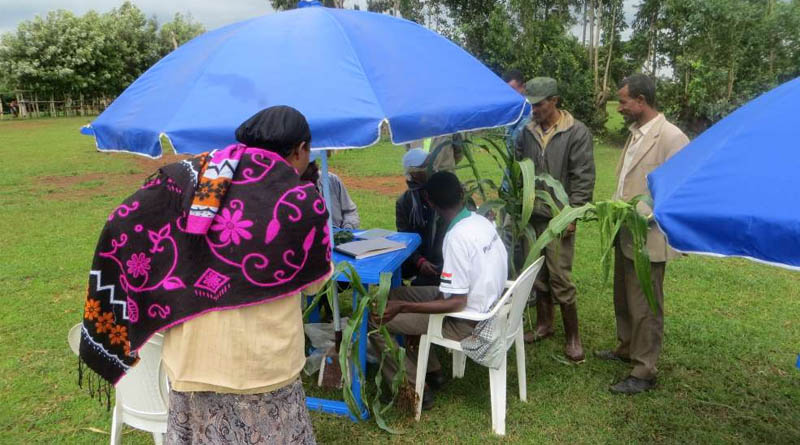
A pivotal component of this national strategy is already operational in farming communities nationwide. Through PlantwisePlus, CABI—alongside national governmental and non-governmental partners—supports a vast network of community-based plant clinics. These clinics serve a dual purpose: delivering immediate, practical plant health services to farmers and generating high-quality surveillance data that fortifies national pest monitoring and biosecurity frameworks.
Providing Farmers with Practical Plant Health Services
Bridging the Extension Gap with Local Diagnostics
Plant clinics function as primary healthcare centers for crops. Staffed by trained agricultural advisors—often referred to as “plant doctors”—these clinics offer local farming communities accessible pest diagnostic support and actionable plant health advice.
Operating on the principles of Integrated Pest Management (IPM), plant doctors diagnose crop problems on the spot and recommend sustainable solutions. These recommendations prioritize cultural, biological, and mechanical controls, resorting to chemical pesticides only as a last resort. This approach helps farmers protect crop yields while significantly reducing unnecessary pesticide use, lowering production costs, and minimizing environmental and health risks.
External Resource: Learn more about the principles of Integrated Pest Management (IPM) from the FAO.
A Decade of Growth and National Ownership
Over the past 12 years, CABI has collaborated closely with Ethiopia’s Ministry of Agriculture (MoA) and regional partners to institutionalize this model. The results speak to the model’s scalability and acceptance:
- 240 plant clinics established across diverse agroecological zones.
- 126 clinics currently active, supported by national and regional implementation partners.
- ~99,400 farmers reached directly through PlantwisePlus clinic sessions.
- Hundreds of thousands more reached via complementary advisory approaches (radio, digital tools, farmer-to-farmer extension).
Crucially, the Ministry of Agriculture now integrates the plant clinic approach into its regular budget, co-financing activities. This financial commitment signals deep national ownership and marks the successful transition of plant clinics from a donor-supported project into a permanent fixture of Ethiopia’s public agricultural extension system.
Plant Clinics: The Frontline of National Biosecurity
Turning Consultations into Surveillance Intelligence
The value of plant clinics extends far beyond individual farm gates. Every consultation generates a structured data point: the affected crop, observed symptoms, the diagnosis, and the management advice prescribed. Aggregated across the national network, this data creates a powerful, real-time surveillance stream.
This intelligence allows researchers, extension services, and the National Plant Protection Organization (NPPO) to:
- Identify shifting pest patterns (e.g., range expansion due to climate change).
- Detect emerging threats earlier than traditional survey methods allow.
- Respond more effectively with targeted interventions.
In a country as ecologically diverse as Ethiopia—spanning highlands, lowlands, and rift valleys—this granular, geographically dispersed data is indispensable. It enables surveillance resources to be targeted precisely where risk is highest, supporting the National Plant Protection Strategy and a coordinated, evidence-based approach to biosecurity.
External Resource: Read about the International Standards for Phytosanitary Measures (ISPMs) guiding national plant protection.
The Ghana Model: A Blueprint for Community-Level Preparedness
The potential of clinic networks for early warning systems is validated by PlantwisePlus experiences in Ghana. Following a horizon scanning exercise, Ghana prioritized four high-risk invasive pests for community-level preparedness:
- Banana Bunchy Top Virus (BBTV)
- Citrus Greening Disease (HLB)
- Cassava Brown Streak Disease (CBSD)
- Fusarium Wilt Tropical Race 4 (Foc TR4)
Over 1,500 farmers across 28 communities were trained to recognize key symptoms and report suspected cases to extension officers. Because farmers are invariably the first to observe unusual crop symptoms, this “community-level awareness” acts as a vital additional layer of early warning, complementing formal government surveillance.
For Ethiopia—where an established clinic network already links communities to trained advisors—this model illustrates a clear pathway: empowering plant doctors and lead farmers with pest recognition skills transforms the clinic network into a sensor grid for national biosecurity.
Proven Track Record: Detecting Fall Armyworm
The surveillance power of this network is not theoretical. The wider PlantwisePlus programme has documented clinic networks contributing to the detection of new invasive pests, most notably the Fall Armyworm (Spodoptera frugiperda). This precedent proves that local plant health services are functional components of national early detection and rapid response systems.
Digital Tools: Connecting Local Observations to National Decision-Making
Recognizing that data flow is the lifeblood of biosecurity, PlantwisePlus is deploying digital infrastructure to bridge the gap between field-level observations and national policy planning. At the PPSE conference, CABI showcased how these tools are operationalizing this connection in Ethiopia.
1. PlantwisePlus Factsheets App: Empowering the Frontline
The PlantwisePlus Factsheets App equips plant health professionals with offline access to expert-written pest management factsheets covering thousands of crop-pest combinations. Key features enhancing field diagnostics include:
- Photo upload capability for remote diagnostic support.
- Local weather data integration for pest development modeling.
- Pesticide application rate calculators promoting safe, effective use.
This tool ensures that the advice given at the clinic level aligns with global best practices and national regulations.
2. National-Level Risk Analysis: Horizon Scanning & PRA Tools
At the strategic level, PlantwisePlus supports the Ethiopian Agricultural Authority (EAA)—Ethiopia’s designated NPPO—and partners like the Ethiopian Institute of Agricultural Research (EIAR). The focus is on building institutional capacity for Pest Risk Analysis (PRA).
- Horizon Scanning Tool: Identifies and prioritizes potential pest threats before they arrive.
- Pest Risk Analysis Tool: Facilitates detailed, science-based assessments of prioritized risks.
CABI is actively supporting the establishment of a multidisciplinary Ethiopian National Pest Risk Analysis Team, ensuring the country has the domestic expertise to evaluate threats independently and negotiate phytosanitary trade measures effectively.
External Resource: Explore the CABI Horizon Scanning Tool for invasive species prioritization.
3. A Unified Data Ecosystem
Together, these tools create a feedback loop:
- Bottom-up: Clinic data (via apps/forms) feeds national databases.
- Top-down: Risk analyses and horizon scanning outputs inform clinic advisory content and farmer training priorities.
This integration supports a coordinated approach to surveillance, preparedness, and biosecurity, moving Ethiopia from reactive pest control to proactive plant health management.
Conclusion: A Model for Resilient Agricultural Systems
Ethiopia’s experience demonstrates that plant clinics are not merely extension outlets—they are critical biosecurity infrastructure. By combining farmer-centric service delivery with systematic data generation and digital decision-support tools, the PlantwisePlus network strengthens the entire plant health continuum: from the smallholder field to the national policy table.
As climate change alters pest distributions and global trade introduces new pathways for invasive species, this integrated model—anchored in national ownership and powered by community vigilance—offers a replicable blueprint for nations seeking to secure their food systems and agricultural trade futures.
Frequently Asked Questions (FAQ)
What is the main goal of plant clinics in Ethiopia?
The primary goal is to provide farmers with accessible, accurate crop pest diagnosis and Integrated Pest Management (IPM) advice, while simultaneously generating surveillance data to strengthen national biosecurity.
How many plant clinics are currently active in Ethiopia?
As of the latest reporting, 126 plant clinics are active across the country, supported by national and regional partners under the PlantwisePlus programme.
How do plant clinics contribute to national biosecurity?
Clinics act as early warning nodes. Consultation data (crop, symptoms, diagnosis) is aggregated to detect emerging pest outbreaks, track pest distribution changes, and inform national pest risk analyses conducted by the Ethiopian Agricultural Authority (EAA).
What digital tools support the plant clinic network?
Key tools include the PlantwisePlus Factsheets App (for offline diagnostics and advisory support at field level) and the Horizon Scanning & Pest Risk Analysis Tools (for national-level threat prioritization and policy planning).
Who manages the plant clinics?
Clinics are staffed by trained agricultural advisors (plant doctors) and are integrated into the Ministry of Agriculture’s regular extension system, with technical support from CABI through the PlantwisePlus programme.
This article is based on discussions and presentations from the 28th Annual Conference of the Plant Protection Society of Ethiopia (PPSE) and the ongoing implementation of the PlantwisePlus programme in Ethiopia.
