




For decades, Africa’s economy and image were defined by others, its growth measured in external indices, its struggles narrated through foreign headlines, and its potential assessed by distant institutions. Yet beneath those narratives, another story has been unfolding: one of renewal, sovereignty, and self-definition. Across the continent, nations are not waiting for validation; they are setting their own standards of progress.
Food aid once symbolized compassion; now it represents a system past its moral expiry date. High-interest loans, proxy interventions, and inflated poverty narratives have long constrained Africa’s development, not through lack of capacity, but through control of narrative and access. Today, that grip is loosening. From Ouagadougou to Addis Ababa, a new generation of African leaders and citizens is rewriting the terms of development and doing so with quiet, unshakeable confidence.
From Dependency to Determination
The decades of externally driven aid cycles left deep imprints. Many programs brought temporary relief but rarely long-term growth. Too often, they disrupted local markets, undermined production, and replaced participation with dependence. But the shift underway is profound: Africa is now investing in self-sufficiency, interdependence, and innovation, rather than external prescriptions.
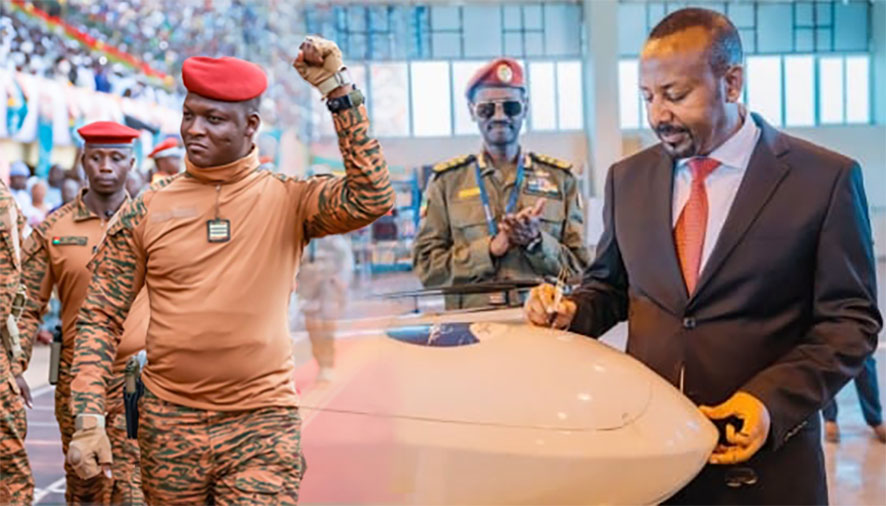
In Burkina Faso, President Ibrahim Traoré articulates what Pan-African thinkers like Dr. Walter Rodney envisioned “debt-free development” grounded in African resources, skills, and solidarity. His message is simple yet revolutionary: prosperity should come from the continent’s soil, not from someone else’s ledger.
While the country’s debt remains around $10 billion (VOA News, 2024), its policy direction signals a break from dependency-based governance. Burkina Faso’s focus on local value addition, renewable energy, and cooperative trade within the Sahel Alliance reflects a broader regional awakening, one that redefines strength as self-determination rather than alignment.
The lesson is not defiance for its own sake. It is a recalibration, a continent choosing collaboration without submission, partnership without paternalism, and investment without instruction.
Ethiopia’ s Medemer Model: Growth Through Synergy
On the other side of the continent, Ethiopia’s Medemer (Synergy) philosophy embodies this African-centered development. Under its homegrown reform program, the nation has managed to significantly reduce its foreign debt from more than $23 billion to approximately $4.5 billion (Financial Afrik, 2025). This reduction was achieved not through austerity imposed from abroad, but through domestic mobilization, fiscal discipline, and infrastructure-led growth.
Despite inflationary challenges, Ethiopia injected 440 billion birr ($7.6 billion) into stabilization and reform. Inflation has since fallen to 11.7%, its lowest level in years, signaling a disciplined yet independent approach. (IMF, 2025) The message is clear: sustainable growth need not come from external borrowing, it can be nurtured from within through institutional trust and citizen participation.
Ethiopia’s model also challenges old hierarchies of expertise. Its engineers, scientists, and local administrators are proving that African technical competence is not a rarity, it is a resource that flourishes when unshackled by conditional aid.
The Hidden Cost of Aid and the Rise of Economic Agency
For too long, food aid and development loans were framed as lifelines. In truth, they often distorted agricultural incentives, flooded local markets, and created artificial dependence. Imported grain meant less incentive for local production; foreign consultants meant fewer opportunities for domestic innovation.
As droughts and conflicts created humanitarian crises, aid became a political instrument, a way to reward compliant governments and isolate those seeking autonomy. The economic language of “relief” masked the geopolitical practice of control.
But that cycle is breaking. Nations such as Ghana, Kenya, and Senegal are increasingly financing domestic projects through local capital markets, diaspora bonds, and public-private partnerships. Continental initiatives like the African Continental Free Trade Area (AfCFTA) are further reinforcing internal trade, reducing reliance on external markets. The shift is not rhetorical; it is institutional.
Africa is learning that real sovereignty means managing both how money is earned and how it is borrowed. It means mastering the financial systems that once defined dependency, and reorienting them toward inclusive growth.
Security and Sovereignty: Breaking the Chain of Proxy Destabilization
Economic freedom and security independence are inseparable. The continent’s history of proxy conflicts shows how external interventions can fracture states, derail reforms, and justify further dependence.
Across the Sahel, from Mali to Niger to Burkina Faso, regional defense initiatives are replacing foreign-led missions. These nations are now crafting homegrown security architectures, integrated command structures and joint defense zones, built on shared accountability rather than imported blueprints. (AP News, 2025)
This assertive stance is not isolationism; it is autonomy through collaboration. The continent’s new security logic aligns with its economic one: stability built from within is more durable than protection purchased from without.
Rebalancing the Global Order
Africa’s reawakening is not about rejecting the world; it is about rebalancing it. As the global economy shifts toward multipolarity, Africa’s position as a supplier of critical minerals, renewable energy potential, and demographic dynamism places it at the heart of the next century’s growth story.
China’s Belt and Road Initiative, Gulf investment corridors, and Western trade missions all converge on the same reality: the continent is no longer a frontier of extraction. Africa is a partner in production. Yet this partnership must evolve beyond transactional economics. It must recognize Africa not as a passive beneficiary but as an equal co-architect of a fairer world order.
When African leaders negotiate energy or digital infrastructure projects, they are increasingly doing so through regional blocs, ensuring shared ownership and transparent returns. The principle is not isolation; it is alignment — development aligned with Africa’s own priorities, values, and future generations.
The New African Consensus
Across capitals and countrysides, a common understanding is taking root. Africa’s destiny cannot be outsourced. Its future will not be written in donor reports or dictated by credit ratings. It will emerge from the creativity, courage, and collaboration of its own people.
Challenges of governance gaps, climate shocks, and infrastructure deficits still remain and weigh heavily. Yet the direction is unmistakable. From Ethiopia’s disciplined economic reforms to Burkina Faso’s assertive resource nationalism, from Rwanda’s tech-driven urbanization to Kenya’s renewable energy surge, Africa is showing that progress and dignity are not opposing forces, but interwoven threads of the same renaissance.
As fiscal reform meets social renewal, a new generation of Africans is redefining what it means to “develop.” No longer a synonym for catching up, it now means creating differently, guided by cultural authenticity, ecological responsibility, and moral clarity.
A Continent Rising on Its Own Terms
Africa’s renaissance will not come from charity or imitation. It will come from confidence, the quiet power of nations standing in their own truth. The continent once portrayed as the recipient of the world’s mercy is now emerging as a teacher of balance: between growth and ecology, sovereignty and cooperation, modernity and heritage.
The world may not yet be watching closely, but it soon will. For the first time in a generation, Africa is breathing freely, defining prosperity on its own terms, building partnerships rooted in respect, and leading not from reaction but from purpose.
Africa’s debt-free future is not a dream in motion. It is motion itself.
