




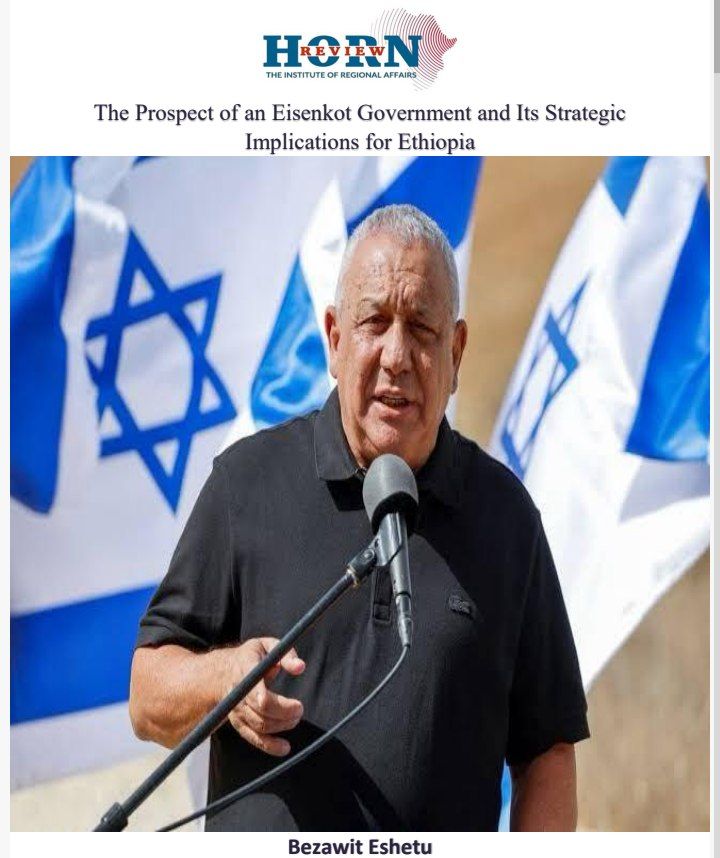
Israel Election Shifts Regional Strategy: What an Eisenkot-Led Government Means for Ethiopia Relations
Israel’s latest election has opened a decisive new chapter in the country’s political trajectory, thrusting competing visions of governance, security, and regional engagement into the international spotlight. As coalition negotiations unfold, the prospect of a government influenced heavily by Gadi Eisenkot—the former IDF Chief of Staff and current National Unity Party minister—raises critical questions about the direction of Israeli foreign policy. For observers in Addis Ababa and across the Horn of Africa, the strategic implications for Israel-Ethiopia relations are profound, potentially reshaping security cooperation, technological exchange, and diplomatic alignment in a volatile region.
Israel’s Political Crossroads: Governance and Security in Flux
The recent electoral cycle did not merely determine the composition of the Knesset; it exposed a deep societal debate regarding the balance between judicial reform, military readiness, and democratic institutions. The rise of the National Unity party, led by Benny Gantz and anchored by Eisenkot’s security credentials, signals a voter appetite for a security-first approach anchored in institutional stability.
Unlike previous administrations that prioritized domestic judicial overhauls, an Eisenkot-influenced platform emphasizes IDF readiness, the rehabilitation of reserve duty morale, and a recalibration of the “security cabinet” decision-making process. This shift suggests a foreign policy that is less ideological and more pragmatic, calculated, and military-professional in its orientation.
The Eisenkot Doctrine: Pragmatism Over Populism
Gadi Eisenkot brings a distinct “Eisenkot Doctrine” to the table—characterized by strategic containment, clear red lines, and a reluctance for open-ended military entanglements without defined exit strategies. During his tenure as Chief of Staff (2015–2019), he architected the “Campaign Between the Wars” (CBW), a doctrine of kinetic prevention against Iranian entrenchment in Syria.
Redefining Regional Partnerships
Under a government where Eisenkot holds significant sway, Israel’s regional engagement is expected to prioritize functional alliances over rhetorical solidarity. This means deepening ties with countries that offer tangible intelligence sharing, airspace access, and counter-terrorism cooperation.
- The Abraham Accords Framework: Expect a push to expand the Abraham Accords mechanismically—focusing on defense tech, water security, and cyber defense—rather than ceremonial normalization.
- Jordan and Egypt Anchors: Stabilizing the peace treaties with Amman and Cairo remains a non-negotiable strategic asset, particularly regarding border security and Gaza reconstruction frameworks.
- Saudi Trajectory: While normalization with Riyadh remains a prize, an Eisenkot-led security portfolio would demand verifiable security guarantees (e.g., U.S. defense pacts, nuclear safeguards) as preconditions.
Strategic Implications for Ethiopia: A Renewed Partnership?
Ethiopia occupies a unique niche in Israeli strategic thinking: a non-Arab, majority-Christian nation with a significant Jewish historical connection (Beta Israel), sitting at the gateway to the Red Sea and the Nile Basin. The election outcome could catalyze a shift from episodic engagement to a structured strategic partnership.
1. Security Cooperation & Counter-Terrorism
Ethiopia faces persistent threats from Al-Shabaab in the region and internal instability in Amhara and Oromia. Israel, under Eisenkot’s influence, views the Horn of Africa as the southern flank of its Iranian containment ring. Enhanced Israeli defense exports—specifically loitering munitions (Harop/Harpy), border surveillance radars, and cyber-intelligence platforms—could see accelerated delivery schedules to Addis Ababa.
Joint training exercises between the Ethiopian National Defense Force (ENDF) and IDF special forces units (Sayeret Matkal, Shaldag) would likely move from ad-hoc to institutionalized annual cycles.
2. Water Security & Agricultural Technology
With the Grand Ethiopian Renaissance Dam (GERD) nearing full operation, water management is existential for Ethiopia. Israel’s world-leading Mekorot water technology (drip irrigation, desalination, leakage detection) aligns perfectly with Ethiopia’s agricultural transformation agenda. A pragmatic Israeli government would likely facilitate sovereign-guaranteed financing for Israeli agri-tech deployments in Ethiopian lowlands.
3. The Red Sea & Geopolitical Leverage
As Ethiopia seeks reliable sea access—negotiating with Somaliland, Djibouti, and Eritrea—Israel’s naval presence in the Red Sea (Eilat base) and its intelligence sharing with US CENTCOM make it a critical node. An Eisenkot-led security cabinet understands that a stable, friendly Ethiopia acts as a bulwark against Iranian proxy influence (via Houthis in Yemen or militias in Sudan/Somalia) threatening the Bab-el-Mandeb strait.
4. The Beta Israel Bridge & Soft Power
Beyond hard security, the Beta Israel community remains a potent “living bridge.” A government emphasizing national unity (Mamlachtiyut) would likely increase funding for heritage preservation in Gondar, aliyah absorption programs, and people-to-people academic exchanges, reinforcing the unique historical bond that distinguishes Israel-Ethiopia ties from purely transactional diplomacy.
Potential Friction Points: Navigating Complexities
Despite alignment, an Eisenkot-influenced administration will not ignore human rights benchmarks entirely. The UN Human Rights Council scrutiny on Ethiopia’s internal conflicts creates diplomatic friction. Israel may face pressure from Washington and Brussels to condition certain sensitive defense exports on humanitarian access compliance. Addis Ababa must navigate this by institutionalizing human rights compliance mechanisms within its security forces to maintain the flow of high-end Israeli capabilities.
Conclusion: A Window for Strategic Depth
The Israeli election has produced a constellation where security professionals like Gadi Eisenkot hold the lever on foreign policy. For Ethiopia, this presents a strategic window of opportunity. By moving beyond ad-hoc arms deals toward a comprehensive Memorandum of Understanding (MoU) covering defense, water, cyber, and health, Ethiopia can lock in a partnership with a key Western-aligned technological power.
As the Middle East realigns and the Red Sea becomes the world’s most contested maritime highway, the Israel-Ethiopia axis—rooted in history but modernized by shared threats—could emerge as a stabilizing pillar for the Horn of Africa.
Frequently Asked Questions
Who is Gadi Eisenkot and why does he matter for Israeli foreign policy?
Gadi Eisenkot is a former IDF Chief of Staff (2015-2019) and current Minister in the National Unity party. He is the architect of the “Campaign Between the Wars” doctrine targeting Iranian entrenchment. His influence signals a shift toward pragmatic, military-professional foreign policy focused on containment and regional alliance management.
How does the Israeli election affect Ethiopia-Israel relations?
A government influenced by Eisenkot prioritizes functional security partnerships. For Ethiopia, this means potential acceleration in defense procurement (loitering munitions, radar), water technology transfer (critical for GERD/agriculture), and intelligence sharing regarding Red Sea security and counter-terrorism.
What is the “Campaign Between the Wars” (CBW) doctrine?
The CBW is an Israeli military strategy developed under Eisenkot involving continuous, low-signature kinetic operations (primarily airstrikes in Syria) to prevent Iranian military buildup and weapons transfers to Hezbollah, without triggering a full-scale war.
Why is the Red Sea strategic for Israel-Ethiopia cooperation?
The Red Sea (Bab-el-Mandeb) is a global trade chokepoint. Israel seeks to deny Iranian proxies (Houthis) control over it; Ethiopia seeks reliable port access. Converging interests in maritime domain awareness and freedom of navigation create a natural basis for naval and intelligence cooperation.
