




Meta Title: Michael Froman Praises Ethiopia’s Economic Reforms & Investment Climate During CFR Visit | ENA
Meta Description: US Council on Foreign Relations President Michael Froman acknowledges Ethiopia’s progress in economic liberalization, banking, and telecom reforms during high-level talks in Addis Ababa with Finance Minister Fitsum Assefa and Central Bank Governor Eyob Tekalign.
Focus Keyphrase: Ethiopia economic reforms investment opportunities
Slug: /michael-froman-cfr-ethiopia-economic-reforms-investment-2026
US Council on Foreign Relations Lauds Ethiopia’s Economic Liberalization Push
ADDIS ABABA – President of the US Council on Foreign Relations (CFR), Michael Froman, has formally acknowledged Ethiopia’s significant strides in economic reform, highlighting the nation’s expanding investment landscape and commitment to private sector growth following high-level diplomatic engagements in the capital.
The endorsement came after a series of constructive discussions between the CFR delegation and Ethiopia’s top economic leadership, signaling a potential inflection point for US-Ethiopia bilateral trade relations and American private capital flows into the Horn of Africa nation.
High-Level Dialogue Focuses on Reform Implementation
On November 20, 2026, the CFR delegation convened with key architects of Ethiopia’s homegrown economic agenda. The meetings included:
- Finance Minister Fitsum Assefa – Overseeing fiscal policy and macroeconomic stability.
- National Bank of Ethiopia (NBE) Governor Eyob Tekalign – Steering monetary policy and the historic liberalization of the foreign exchange regime.
- State Minister of Foreign Affairs Ambassador Hadera Abera – Managing the diplomatic framework for economic cooperation.
Discussions centered on the outcomes of recent macroeconomic reforms, specifically the transition to a market-based foreign exchange system, the liberalization of the banking sector, and the partial opening of the telecommunications industry to foreign competition. These structural shifts represent the core of Ethiopia’s strategy to attract foreign direct investment (FDI) and integrate deeper into the global economy.
Related Reading: World Bank Overview of Ethiopia’s Economy | IMF Ethiopia Staff Reports
Froman: “Impressive” Progress Over Two Decades
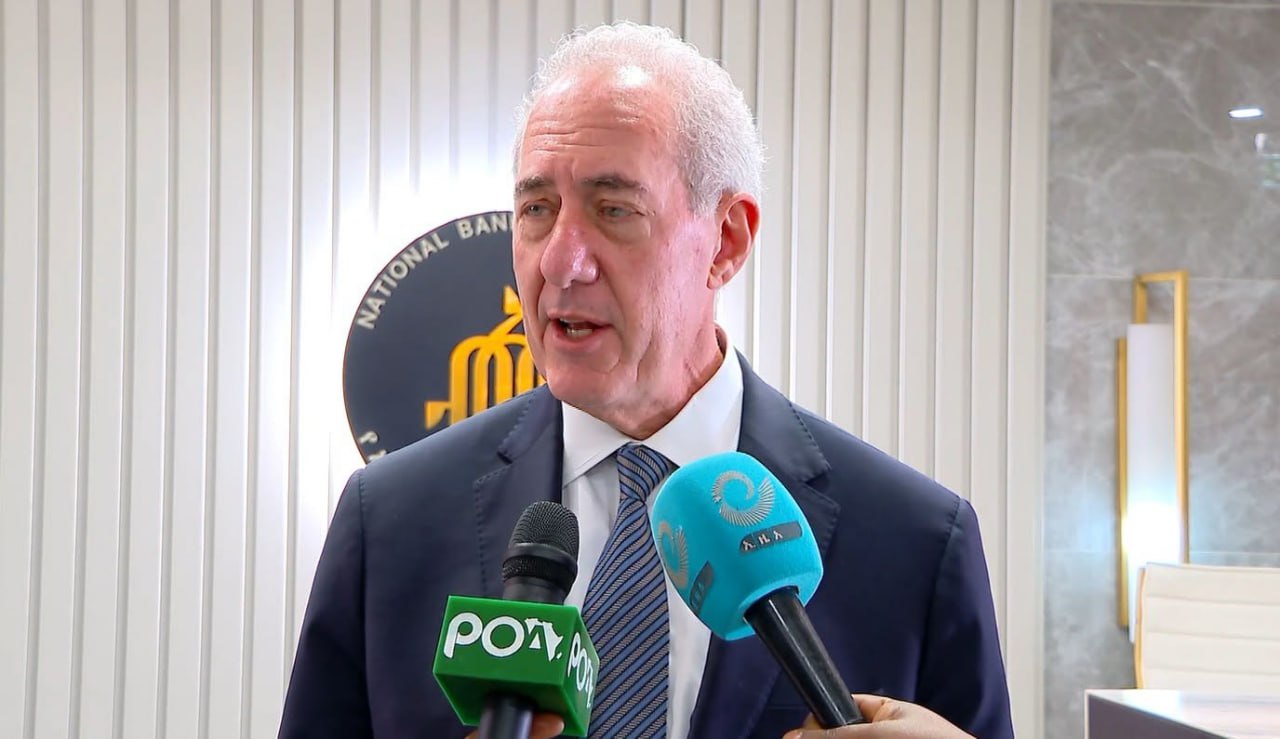
Speaking to Pulse of Africa following the sessions, Michael Froman offered a candid assessment rooted in long-term institutional memory. Having visited Ethiopia regularly for 20 to 25 years, he contrasted past policy debates with current realities.
“I have been coming here for 20, 25 years, and over that period of time, many of those issues, for example, around the banking sector or the telecom sector, were issues of discussion. Now to see the liberalization, the opening up, the degree of economic activity here, the high levels of growth, these are all very impressive,” Froman stated.
His remarks underscore a critical validation: the liberalization of strategic sectors—long advocated by international financial institutions and development partners—has moved from negotiation tables to implementation.
Key Reform Pillars Attracting US Investor Interest
The CFR delegation’s agenda explicitly targeted sectors where American businesses possess comparative advantage and where Ethiopia has recently reformed regulatory frameworks:
1. Financial Sector Liberalization
The National Bank of Ethiopia has embarked on a ambitious path to open the banking sector to foreign strategic investors. Recent directives allow foreign banks to establish subsidiaries, branches, or representative offices, ending a decades-long monopoly. This move aims to deepen financial intermediation, introduce global risk management standards, and improve access to finance for the private sector.
2. Telecommunications Opening
Following the awarding of a license to a global consortium (Safaricom Ethiopia), the sector is undergoing a structural transformation. The government has committed to issuing additional licenses and listing Ethio Telecom shares on the capital market, creating entry points for US technology and infrastructure firms.
3. Macro-Fiscal Stabilization
Under the Homegrown Economic Reform Program (HGER 2.0), authorities are addressing foreign exchange distortions, rationalizing subsidies, and enhancing domestic revenue mobilization—prerequisites for sustainable investment-grade sovereign ratings.
Bridging the Information Gap: CFR as a Conduit
A pivotal outcome of the visit is the CFR’s role as an information bridge between Addis Ababa and Washington. Froman confirmed the delegation would disseminate its findings to US government stakeholders and the American business community.
This outreach is designed to:
- De-risk perception: Counteract outdated risk narratives regarding the Ethiopian operating environment.
- Highlight bankable projects: Identify specific opportunities in manufacturing, agro-processing, digital economy, and renewable energy.
- Strengthen bilateral architecture: Support frameworks like the US-Ethiopia Trade and Investment Framework Agreement (TIFA) and potential future Bilateral Investment Treaty (BIT) negotiations.
External Resource: Office of the U.S. Trade Representative – Ethiopia Page | Prosper Africa Initiative
Constructive Engagement on Regional Dynamics
Beyond economics, the talks touched upon regional political and economic developments in the Horn of Africa. The CFR—an independent, nonpartisan think tank—values on-the-ground context for its policy analysis regarding the African Continental Free Trade Area (AfCFTA) implementation, Red Sea security dynamics, and regional integration efforts led by the Intergovernmental Authority on Development (IGAD).
Ethiopia’s role as the host of the African Union Headquarters and its status as the second-most populous nation in Africa make its economic trajectory a determinant variable for continental stability and growth.
The Road Ahead: Translating Dialogue into Capital Flows
While the visit marks a diplomatic and analytical success, the true metric lies in capital deployment. For US private sector investment to accelerate, investors will monitor:
- FX Market Depth: Continued liquidity and price discovery in the interbank foreign exchange market.
- Regulatory Predictability: Consistent application of the new Investment Proclamation and competition laws.
- Debt Restructuring Conclusion: Finalization of the G20 Common Framework process to normalize sovereign credit access.
- Security Environment: Sustained stability in key economic corridors.
Summary
Michael Froman’s validation of Ethiopia’s economic liberalization agenda—specifically citing the resolution of long-standing issues in banking and telecom—provides a high-profile endorsement for the reformist trajectory led by Prime Minister Abiy Ahmed’s administration. As the CFR channels these insights to Wall Street and Washington policy circles, the onus remains on Ethiopian institutions to deepen implementation, ensuring the “impressive” opening translates into durable, job-creating foreign direct investment.
Tags: Ethiopia Economic Reform, Michael Froman, Council on Foreign Relations, US-Ethiopia Relations, Foreign Direct Investment Ethiopia, Banking Liberalization Ethiopia, Telecom Reform, Fitsum Assefa, Eyob Tekalign, Homegrown Economic Reform Program.
