




Ethiopia Advances Tigray Peace Process Through Combatant Reintegration and Skills Development Program
ADDIS ABABA – Ethiopia is intensifying efforts to consolidate lasting peace in the Tigray Regional State by prioritizing the rehabilitation and socio-economic reintegration of former combatants, positioning skills development and economic self-reliance as the cornerstones of the nation’s post-conflict recovery strategy.
Through the national Disarmament, Demobilization, and Reintegration (DDR) programme, the federal government is facilitating the transition of former fighters from armed struggle to productive civilian life. The initiative aims to rebuild livelihoods, foster social cohesion, and stimulate regional development in areas heavily impacted by the recent conflict.
High-Level Delegation Assesses Progress at Mekelle Rehabilitation Center
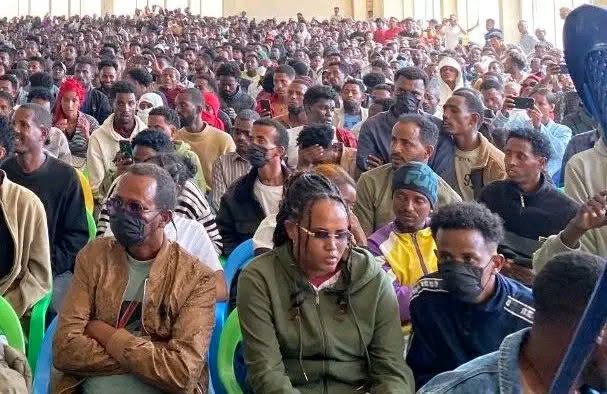
Underscoring the political commitment to this process, a high-level government delegation visited a rehabilitation center at the Meles Campus of Mekelle University on November 16, 2026. The delegation was led by Minister of Labor and Skills, Awolu Abdi, and Getachew Reda, the Prime Minister’s East Africa Affairs Advisor with the rank of Minister.
During the visit, officials held direct discussions with former combatants who have completed rehabilitation training. They assessed the operational progress of programmes designed to prepare participants for successful reintegration into their communities. The engagement highlighted the government’s focus on a people-centered approach to peacebuilding, moving beyond security arrangements to address the human dimension of the conflict.
Skills Development as a Pillar of Economic Independence
Speaking at the facility, Minister Awolu Abdi emphasized that the training programmes are strategically designed to enable former combatants to develop sustainable sources of income and achieve genuine economic independence.
“Providing these citizens with market-relevant skills and capabilities is essential for them to engage in productive economic activities as they resume civilian life,” Minister Awolu stated. “Economic empowerment is the bedrock of sustainable reintegration.”
The curriculum focuses on vocational training and entrepreneurship, targeting the specific needs of a demographic that is predominantly young. By equipping participants with practical trades, the programme seeks to transform a potential security liability into a demographic dividend for regional reconstruction.
National Rehabilitation Commission Reaffirms Mandate
The National Rehabilitation Commission reiterated its mandate to advance lasting peace in Tigray by supporting youth in their transition from armed activity to peaceful, productive, and socially meaningful engagement. The Commission’s strategy aligns with international DDR standards, which advocate for a comprehensive approach combining security, political, and socio-economic dimensions.
This commitment reflects the understanding that the Pretoria Peace Agreement requires more than the silence of guns; it demands the active restoration of dignity and livelihoods for those who bore arms.
A Holistic Approach to Sustainable Peace
The initiative reflects a broader recognition that sustainable peace is inextricably linked to post-conflict reconstruction and livelihood restoration. Government officials stressed that ending hostilities is merely the first step. True stability depends on:
- Restoring Livelihoods: Replacing the economy of war with an economy of production.
- Rebuilding Social Ties: Healing community fractures through shared economic purpose.
- Creating Opportunities: Ensuring conflict-affected populations can participate fully in economic and community life.
By linking rehabilitation directly to skills development and economic reintegration, Ethiopia is attempting to turn the complex transition from conflict into an opportunity for recovery, renewed civic participation, and long-term development.
Regional Implications for the Horn of Africa
As the Horn of Africa continues to navigate complex security dynamics, Ethiopia’s handling of the Tigray DDR process serves as a critical case study for regional peacebuilding architectures. The emphasis on local ownership—utilizing institutions like Mekelle University—and the integration of labor ministry resources into the security sector reform framework offers a model for nationally led, internationally supported transitions.
The success of this programme will likely determine the trajectory of stability not just in Tigray, but across the wider Ethiopian federation, signaling whether a development-first approach to DDR can effectively break cycles of violence.
