




Ethiopia Imports Boer and Kalahari Red Goats to Double Meat Yields and Boost Food Security
Meta Description: Ethiopia’s Ministry of Agriculture launches a strategic program importing 1,700 Boer and Kalahari Red goats from South Africa. Learn how this initiative aims to double carcass weights, transform smallholder livelihoods, and support the “Lemat Trufat” food security agenda.
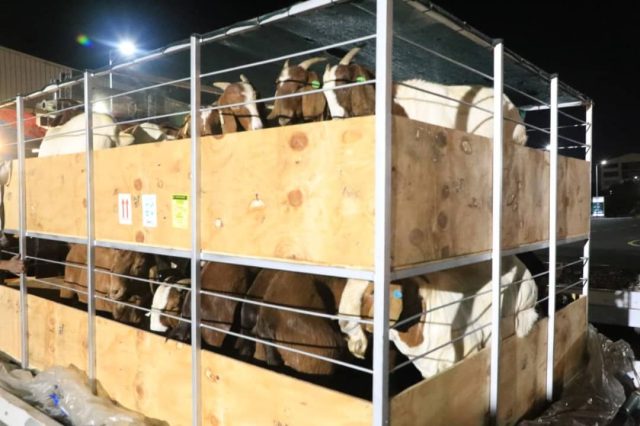
The Ethiopian Ministry of Agriculture has launched a landmark genetic improvement program, importing the first batch of high-performance Boer and Kalahari Red goats from South Africa. Announced on November 14, 2026, the initiative signals a decisive shift in the country’s strategy to overcome low productivity in the small ruminant sector, which has long relied on indigenous breeds with limited meat yields.
With a total target of 1,700 breeding animals to be imported in phased shipments, the program aims to establish a robust nucleus population for national breed multiplication, directly supporting the government’s “Lemat Trufat” (Bounty of Basket) Initiative for food and nutritional security.
Why South African Genetics? The Productivity Gap
The rationale for the import is grounded in stark performance data. According to Yimer Dawod, Communication Director at the Ministry of Agriculture, indigenous Ethiopian goats typically yield a dressed carcass weight of no more than 8 kilograms.
In contrast, the imported Boer and Kalahari Red breeds—globally recognized as premier meat goat genetics—average 14 to 15 kilograms of pure meat per carcass, nearly double the yield of local animals.
“The case for importing them is clear,” Yimer told Ethiopian Business Review. “With proper care and nutrition, these breeds reach market weight within six months of birth. Fattening them for six to nine months could raise yields even further.”
Both breeds are celebrated internationally for:
- Rapid growth rates and excellent feed conversion ratios.
- Large body frames and high dressing percentages.
- Strong adaptability to diverse agro-ecological zones, including semi-arid regions prevalent in Ethiopia.
- Hardiness and disease resistance developed in the harsh South African veld.
External Resource: Learn more about the breed standards for the Boer Goat (South African Boer Goat Breeders’ Society) and the Kalahari Red (Kalahari Red Club).
Phased Import Logistics and Biosecurity Protocols
The first consignment comprises 352 goats. Because procurement is staggered over time, the Ministry noted that the final cumulative cost will be calculated upon completion of all phases, accounting for the time value of money.
Biosecurity is the immediate priority. Upon arrival, the animals enter a mandatory 21-to-30-day quarantine at the Holeta Agricultural Research Center. This standard veterinary procedure, aligned with World Organisation for Animal Health (WOAH) terrestrial code standards, verifies health status and mitigates the risk of introducing transboundary animal diseases.
Following clearance, the breeding stock will be transferred to designated agricultural research centers and Haramaya University—a leading institution in Ethiopian agricultural research—for the nucleus multiplication phase.
A Controlled Breeding Strategy: Purity First, Crossbreeding Later
The Ministry has outlined a rigorous, multi-stage breeding roadmap designed to protect the genetic integrity of the imported lines while eventually benefiting smallholder farmers.
Phase 1: Nucleus Multiplication (Year 1)
- Purebred imports are mated only with each other.
- Goal: Produce pure male and female offspring (F1 purebreds).
- No crossbreeding with local goats occurs at this stage.
- The first year is dedicated entirely to building population numbers at research centers.
Phase 2: Controlled Dissemination to Farmers
- Purebred offspring are distributed to farmers within a 100-kilometer radius of the research centers.
- Management is supervised through controlled agricultural extension programs.
- Growth performance and breeding are closely monitored.
Phase 3: Strategic Crossbreeding (Scale-Up)
- Only after sufficient purebred numbers are established will crossbreeding with selected local breeds begin.
- This produces F1 crosses (50% exotic blood) combining the growth potential of Boer/Kalahari Reds with the adaptive traits of indigenous goats.
- Objective: Enable large-scale meat goat production for both domestic and export markets.
This phased approach mirrors successful models used in community-based breeding programs (CBBPs) supported by ILRI and ICARDA across the Ethiopian highlands, ensuring genetic gains are not diluted by indiscriminate mating.
Economic Outlook: Domestic Supply First, Exports Later
Yimer confirmed that export markets are not the immediate focus. The first year is strictly for multiplication. However, once production volumes reach critical mass, the Ministry projects a dual-market supply chain:
- Domestic Market: Addressing rising urban demand for red meat and improving per capita protein consumption.
- Export Market: Positioning Ethiopia to meet stringent quality standards for Middle Eastern and North African markets, which prefer heavier carcasses.
Specific Key Performance Indicators (KPIs)—including target meat yield per goat, projected domestic volumes, and export revenue forecasts over a five-year horizon—will be finalized and announced once the crossbreeding phase commences.
Alignment with “Lemat Trufat” and National Food Security
The goat improvement program is not an isolated livestock project; it is a pillar of the “Lemat Trufat” Initiative, the flagship agricultural transformation agenda aimed at ensuring food self-sufficiency, job creation, and nutritional security.
By upgrading the national flock, the Ministry targets several “Lemat Trufat” outcomes:
- Job Creation: Opportunities along the value chain (fattening, slaughter, processing, transport, marketing).
- Nutritional Security: Increased availability of affordable animal-source protein (micronutrients like Iron, Zinc, B12) for rural and urban households.
- Foreign Exchange: Future export earnings from high-value meat cuts.
- Climate Resilience: Goats are browsers with lower water footprints than cattle, making them ideal for Ethiopia’s drought-prone lowlands. FAO highlights small ruminants as critical for climate adaptation in the Horn of Africa.
The Road Ahead
The success of this 1,700-head import program hinges on the effective execution of the extension-monitoring loop during Phase 2. Ensuring that farmers within the 100km radius receive adequate veterinary support, improved forage seeds, and market linkages will determine if the genetic potential of the Boer and Kalahari Red translates into tangible income gains at the farm gate.
As Ethiopia seeks to modernize its livestock sector—historically the largest in Africa by population but low by productivity—this strategic infusion of South African meat genetics represents a calculated bet on quality over quantity.
Related Reading:
