




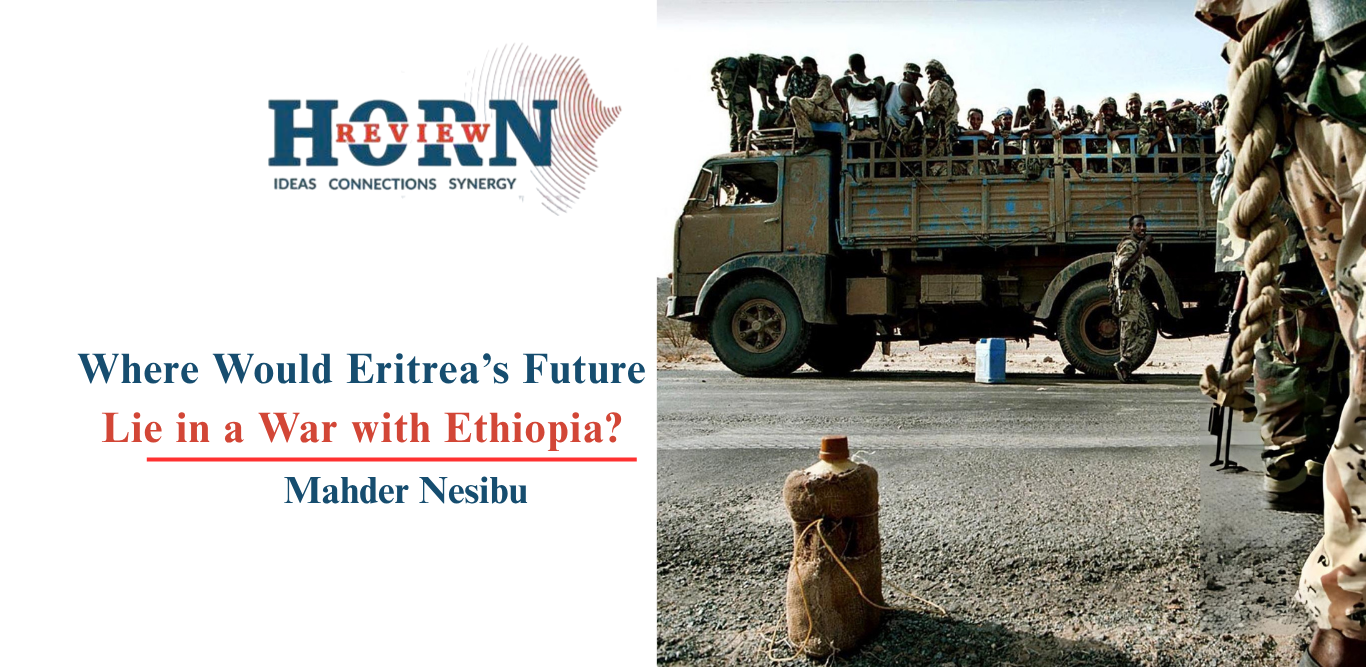
Title: Ethiopia-Eritrea Conflict 2026: Drone Warfare, Proxy Collapse, and the Fight for Red Sea Access
Meta Description: As Ethiopia and Eritrea stand on the brink of war, analyze the ENDF’s drone superiority, the collapse of Asmara’s proxy strategy, and the three potential futures for the Isaias Afwerki regime.
The Horn of Africa on a Knife’s Edge
After years of escalating tensions, the armies of Ethiopia and Eritrea now stand face-to-face, bringing a direct confrontation—long in the making—into the realm of immediate possibility. According to the International Crisis Group, any resulting war would pit two deeply mismatched neighbors against each other in a consequential contest for the future of the Horn of Africa.
Ethiopia, the larger and better-resourced power, fields the Ethiopian National Defence Force (ENDF), a military substantially strengthened by the rapid and sophisticated integration of drone technology into combat operations. Opposing them is the Eritrean Defence Forces (EDF), a tough but potentially brittle force backed by a garrison-state system capable of mobilizing hollowed-out national resources. In an all-out conventional war, Asmara stands at a marked disadvantage, raising serious speculation regarding the survival of the Eritrean state itself—a polity molded entirely around President Isaias Afwerki and his inner circle.
The Collapse of Asmara’s Proxy Strategy
The current standoff traces back to the spectacular failure of a strategy the Eritrean leadership had spent years assembling. Following the cessation of the northern Ethiopia conflict in 2022, friction between Asmara and Addis Ababa grew. To offset its weaker conventional position, Eritrea reverted to a decades-old asymmetric playbook: destabilizing the Ethiopian security landscape through proxy forces.
This strategy manifested in three key alliances:
- The TPLF Alliance: Eritrea partnered with the Tigray People’s Liberation Front (TPLF), its former adversary in the recent war.
- The Amhara Front: Cultivation of the Fano insurgency in the Amhara region.
- The Eastern Front: Reactivation of the Afar Revolutionary Democratic Unity Front (ARDUF), a long-standing proxy investment.
On September 20, these groups coalesced. Three days later, spearheaded by TPLF forces, they launched an offensive against Ethiopian military positions. The gamble failed rapidly. The ENDF—capabilities revitalized by the post-2022 build-up—reversed the offensive, seizing major roads and urban centers. By mid-October, Ethiopian forces had retaken Mekelle, Adwa, and Shire, pushing TPLF remnants into the countryside and effectively dismantling the proxy network.
The Buffer Zone Doctrine Fails
For Eritrea, the battlefield defeat signaled the collapse of its “buffer-zone strategy”. As detailed by the Horn Review, this doctrine envisioned Tigray—controlled by a friendly TPLF—as a strategic depth arena. From there, Asmara could project influence toward other rebel groups deeper inside Ethiopia, sustaining a permanent state of insecurity for its neighbor.
The investment was heavy. The Ethiopian military later revealed that the TPLF had sourced a formidable quantity of weapons systems, including drone technology, directly through Eritrean channels. When TPLF lines broke, the EDF entered Tigray directly to prop up its failing proxies, only to become targets themselves. The ENDF used drones to strike EDF positions inside Tigray and along the border, forcing an Eritrean retreat behind their own sovereign lines.
Addis Ababa’s Strategic Dilemma
The present moment poses a direct, high-stakes question to the leadership in Addis Ababa. By dismantling Eritrea’s proxy architecture and pushing back the EDF, the ENDF has exercised Ethiopia’s right to self-defense. Officially, Addis Ababa maintains that war with Eritrea should be avoided.
However, the nature of the regime in Asmara—its inherent antagonism toward Ethiopia and the permanent threat it poses—may compel a strategic recalculation. Addis Ababa may judge it necessary to confront the Eritrean army and leadership comprehensively. Two primary military pathways exist:
- Conventional War: A full-spectrum operation to degrade the EDF.
- Decapitation Strategy: Targeting the small circle at the regime’s core, an operation that could render the Eritrean state apparatus dysfunctional.
The Red Sea Imperative
A conflict also presents a historic opportunity to resolve Ethiopia’s quest for sea access—a top-tier national interest since the country’s diplomatic push intensified in January 2024. The strategic dilemma dates back to Eritrea’s secession, an arrangement that left Ethiopia landlocked.
Addis Ababa has set its sights on the port city of Assab. Located in the east along the shared border, Assab is assessed as comparatively easier to capture than the mountainous terrain surrounding the capital, Asmara. Seizing Assab would allow Ethiopia to present a case for legitimate sovereignty over the port—backed by historical and legal precedent—to the international community.
Three Scenarios for the Eritrean Regime
Regardless of Ethiopia’s specific war aims, direct fighting places the future of Isaias Afwerki’s “black box” regime into play. Analysts anticipate three primary outcomes, all of which exclude an Eritrean victory.
1. The EPLF Meets the TPLF’s Fate
The Eritrean People’s Liberation Front (EPLF), the insurgent root of the current regime, could follow the trajectory of its former rival, the TPLF. Just as the TPLF reverted to 1970s-style guerrilla warfare after its conventional defeat, a collapsed Eritrean state could give way to a weakened EPLF fighting a protracted insurgency—either against Ethiopia or against whatever successor structure emerges in Asmara.
2. Internal Palace Coup and Compromise
The current leadership, including President Isaias, could be removed by a faction from within the regime willing to negotiate. This new leadership would likely offer concessions on national security guarantees and Red Sea access sufficient to satisfy Addis Ababa. While this opens a new chapter in bilateral relations, it risks preserving the authoritarian governance architecture that produced the current crisis.
3. Installation of a Friendly Opposition Government
Ethiopia possesses leverage through the Eritrean opposition movements it hosts. A prominent candidate is the Eritrean Blue Revolution Front (EBRF), a largely diaspora-based movement with a significant following in Addis Ababa’s refugee community. The EBRF presents itself as committed to liberalizing Eritrea and maintaining friendly ties with Ethiopia. Installing such a government would allow Addis Ababa to secure its long-term interests, project power through Eritrea, and strengthen its position in the wider Red Sea basin.
The Ghost of 1998: Risks of Escalation
History urges caution. The last all-out war (1998–2000) caused substantial destruction. The fighting was brutal, and the rationale for the war remains widely viewed as peculiar and unconvincing—driven by border claims that negotiation could have resolved.
Ethiopia ultimately broke Eritrean defenses and neared Asmara before withdrawing to sign the 2000 Algiers Agreement. Addis Ababa considered the subsequent border demarcation decision a poor reflection of military realities, viewing it as favoring Eritrea.
This history leaves Ethiopia facing a profound dilemma: how to permanently neutralize a regime that has posed a national security threat since its origins as an insurgency in the 1960s, and as a sovereign state since 1993. As the drones circle and the armies dig in, the next move by Addis Ababa will likely redraw the map of the Horn of Africa for decades to come.
