




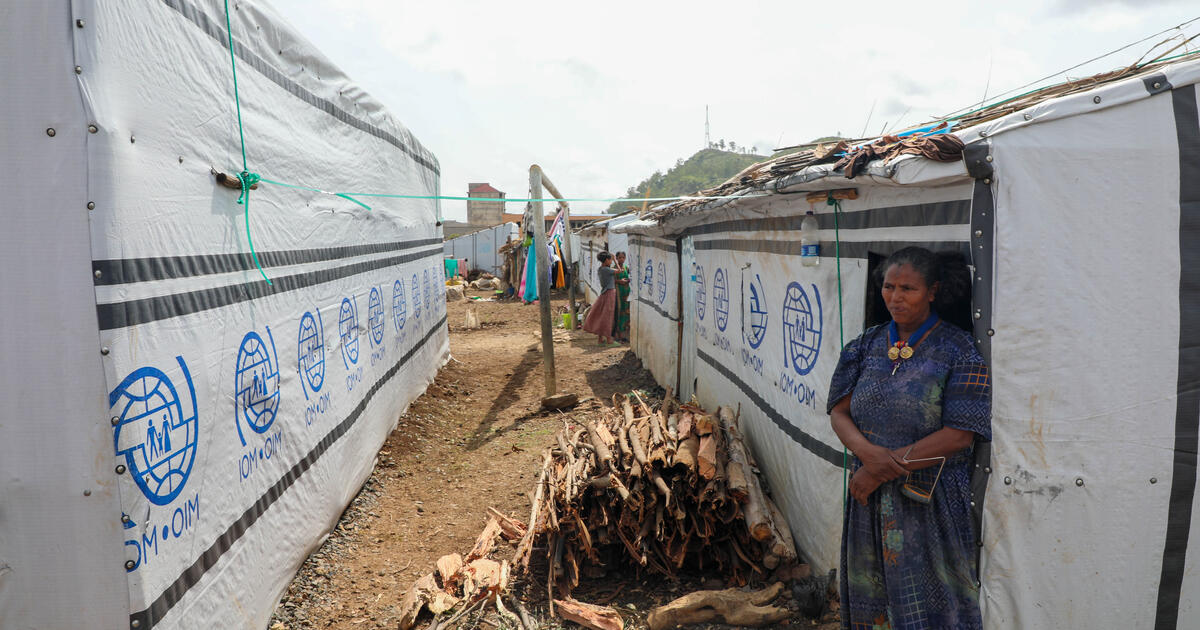
Global Humanitarian Crisis Update: Escalating Needs in Ethiopia, Yemen, Gaza, Haiti, and Ukraine
Humanitarian operations across six critical theaters are facing compounding challenges—from renewed armed conflict blocking access in Northern Ethiopia and spreading gang violence in Haiti, to the looming threat of winter floods in Gaza and sustained attacks on energy infrastructure in Ukraine. The UN and partners continue to scale up assistance where access permits, but funding gaps and security constraints threaten life-saving reach for millions.
Ethiopia: Renewed Fighting Threatens Northern Access
UN Relief Chief Demands Safe Passage for Aid Workers
Under-Secretary-General for Humanitarian Affairs and Emergency Relief Coordinator, Tom Fletcher, warned that renewed hostilities in northern Ethiopia risk deepening suffering in a region still recovering from the previous two-year conflict. In a public statement, Fletcher emphasized that humanitarians require safe, unimpeded, and sustained access to assess needs and scale up operations rapidly.
Protection of Civilians & Operational Disruptions
UN Resident and Humanitarian Coordinator Ozonnia Ojielo echoed these concerns, voicing alarm over civilian protection amid the rapidly evolving security situation. Growing insecurity in recent months has already disrupted humanitarian operations and increased risks for aid workers on the ground.
Regional Breakdown: Access & Needs
- Tigray: Flights to and from the region remain suspended, severely limiting personnel rotation and cargo movement. Hospitals report receiving large numbers of conflict-wounded patients.
- Amhara: Insecurity persists in North Wollo and Wag Himra zones. However, improved conditions on key routes allowed a humanitarian convoy to travel safely from Sekota to Lalibela, a positive signal for negotiated access.
- Afar: The UN and partners are actively negotiating with parties to the conflict to utilize transport corridors for humanitarian movement into and out of Tigray.
Outlook: Humanitarian teams remain on standby to assess needs and scale up response immediately once security guarantees are in place. Restoring essential services and guaranteeing unhindered access remain the top priorities.
Related: OCHA Ethiopia Country Page | WHO Ethiopia Emergency Updates
Yemen: 125,000 Reached Amid Rising Displacement & Civilian Harm
Emergency Assistance Delivered
Despite a volatile security environment, the UN and humanitarian partners have delivered emergency assistance to over 125,000 people across Yemen. Aid packages include food security support, emergency shelter, water, sanitation, and hygiene (WASH) services, and healthcare.
Displacement & Civilian Casualties Surge
- Displacement: The International Organization for Migration (IOM) reports over 148,000 people newly uprooted, with many families forced into secondary or tertiary displacement.
- Casualties: The UN Human Rights Office (OHCHR) has verified 163 civilian casualties (44 killed, nearly 120 injured). Critically, half of those killed were children.
OCHA reiterates its call on all parties to the conflict to uphold International Humanitarian Law (IHL), protect civilian infrastructure, and facilitate safe, unhindered humanitarian access.
Related: OCHA Yemen Country Page | UNICEF Yemen Appeal
Occupied Palestinian Territory: Gaza Braces for Rainy Season Amid Catastrophic Conditions
Race Against Time: Flood Preparation & Relocation
With the rainy season approaching, humanitarian partners are racing to mitigate flood risks. Since Monday, teams have assessed three potential relocation sites for temporary shelters targeting families in flood-prone areas or structurally unsound buildings. Simultaneously, over 450 existing displacement sites—hosting roughly one-fifth of Gaza’s population—have been identified as high-risk for flooding.
Critical Pre-Conditions for Relocation
Before voluntary relocation can occur at scale, partners highlight a complex checklist of prerequisites that remain unmet:
- Explosive ordnance risk assessment and clearance at new sites.
- Ground leveling, drainage installation, and water/lighting provision.
- Establishment of access roads and resolution of land ownership disputes.
The Access Stranglehold
The primary obstacle remains restrictions on 65% of Gaza’s land. The remaining 35% is severely overcrowded. Humanitarians urgently require:
- Increased Israeli approvals for import of heavy machinery, spare parts, engine oil, and critical shelter supplies.
- Urgent funding for fuel, shelter materials, and longer-term solutions (solar energy, home repair materials).
Health System on the Brink
Non-Communicable Diseases (NCDs) & Cancer Care
While partners train local staff to manage NCDs, critical shortages of medicines and medical supplies cripple early detection and treatment. Life-threatening gaps persist in specialized cancer care:
- Severe shortages of essential chemotherapy and radiotherapy supplies.
- Diagnostic services severely affected by lack of generator engine oil, spare parts, and consumables.
- Mammography and CT services at Al-Ahli Hospital suspended earlier this month, leaving Gaza City with extremely limited breast cancer diagnostics.
Communicable Disease Surveillance
In the third week of September, communicable diseases accounted for 18% of nearly 280,000 consultations across Gaza. Supply shortages are driven by a triple threat: funding gaps, governmental clearance delays, and import restrictions.
Related: OCHA oPt | WHO oPt Emergency
Haiti: Deadly Violence Spreads Beyond Capital to Artibonite
Gros-Morne Attack Triggers Displacement
OCHA expresses alarm over a deadly attack on Monday in Gros-Morne (Artibonite department). Local authorities confirm at least 11 people killed and homes burned, forcing residents to flee to surrounding neighborhoods and Gonaïves. This incident underscores a disturbing trend: armed violence is spreading geographically beyond Port-au-Prince, endangering communities, essential services, and humanitarian corridors.
Staggering Human Cost & Funding Gap
- Fatalities: OHCHR documented over 3,000 killings between January and June 2024 alone.
- Needs: 6 million people (over half the population) require humanitarian assistance.
- Response Plan: The US$880 million Humanitarian Needs and Response Plan (targeting 4.2 million people) is less than 50% funded ($416M received) with only three months remaining in the year.
The UN and partners continue delivering food, healthcare, WASH, mental health support, and emergency cash, but resources are being vastly outpaced by escalating needs.
Related: OCHA Haiti Country Page | UN in Haiti
Ukraine: Civilian Casualties Mount as Strikes Target Energy Infrastructure
Latest Toll: Civilians & Infrastructure Hit
Between yesterday and this morning, attacks killed at least five civilians (including a child) and injured nearly 30 others (including children), per local authorities. A school in Sumy was severely damaged; students and staff survived by sheltering in time.
Energy Crisis Deepens
Strikes on energy infrastructure cut power to parts of Kyiv and five additional regions. Repair crews are on standby to begin work as soon as security conditions permit, highlighting the difficulty of maintaining critical civilian infrastructure under active bombardment.
Humanitarian Reach (Jan–Aug 2024)
Despite the intensity of hostilities, the UN and partners reached 3.5 million people in the first eight months of the year:
- 1.9 million in front-line areas.
- 1.5 million following direct attacks.
- Nearly 270,000 with evacuation assistance.
Related: OCHA Ukraine Country Page | UNHCR Ukraine Situation
Central Emergency Response Fund (CERF): New Advisory Group Appointed
Secretary-General Appoints Eight New Advisers
UN Secretary-General António Guterres has appointed eight new members to the CERF Advisory Group. Established by the General Assembly in 2005, the group provides strategic guidance on the Fund’s use and impact via the Emergency Relief Coordinator.
CERF: The “First Responder” of Humanitarian Finance
Tom Fletcher underscored the Fund’s unique value: When crises strike, CERF helps us turn the first hours of crisis into life-saving action. It gets resources moving quickly, reaching people when they need us most. With humanitarian needs soaring and resources stretched to the limit, this Fund is more vital than ever.
The outgoing members were thanked for their service. The new advisers will focus on making CERF “even stronger” as global demand for rapid-onset emergency funding reaches record highs.
Related: Central Emergency Response Fund Official Site | CERF Advisory Group Mandate
