




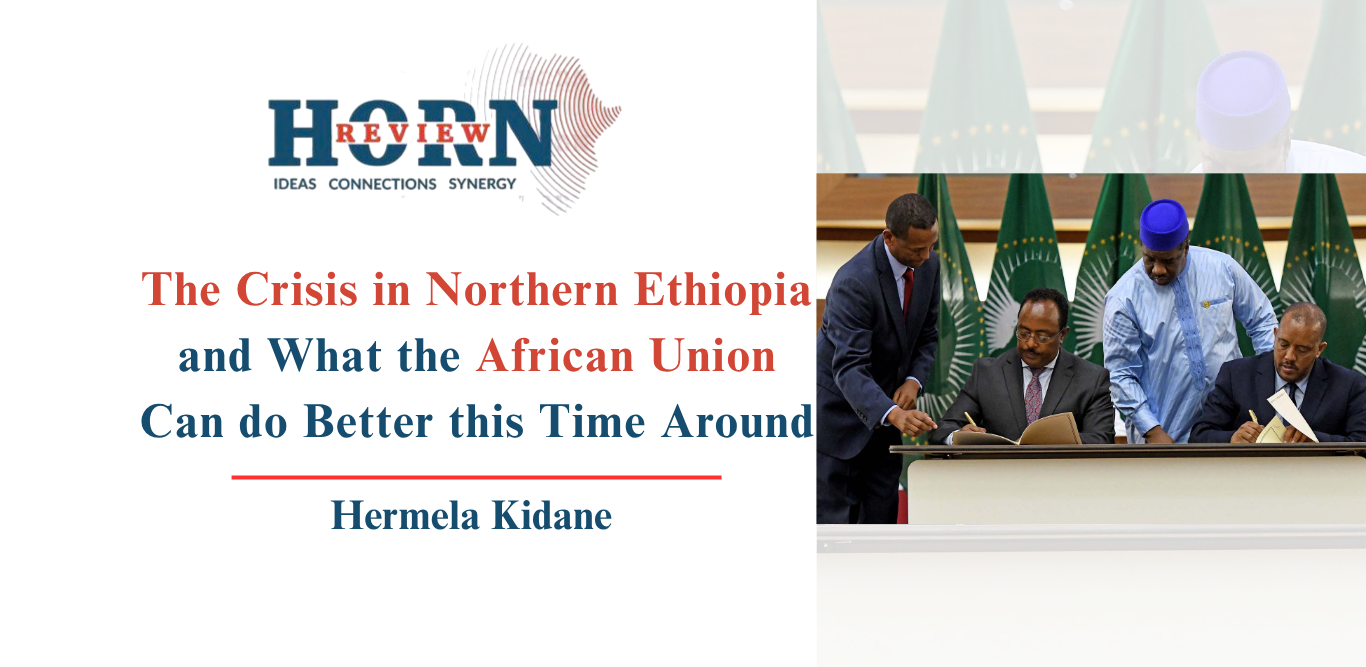
Meta Title: Pretoria Agreement at a Crossroads: Reinforcing AU-Led Peace in Tigray Amid Renewed Conflict
Meta Description: Analysis of the 2022 Pretoria Agreement’s achievements, implementation gaps, and the urgent need for stronger AU monitoring, funding, and Eritrean engagement to secure lasting peace in Northern Ethiopia.
Focus Keyphrase: Pretoria Agreement implementation
Slug: /pretoria-agreement-tigray-peace-implementation-challenges
Pretoria Agreement at a Crossroads: Reinforcing AU-Led Peace in Tigray Amid Renewed Conflict
The Pretoria Agreement, signed on 2 November 2022, remains the African Union’s (AU) most significant mediation achievement in recent decades. It successfully halted large-scale combat in Tigray, restored federal authority, and validated the principle of “African solutions to African problems.” However, the renewed hostilities of September 2026—marked by the seizure of airports in Mekelle, Axum, and Shire by Tigrayan forces and the emergence of a broader armed alliance—expose critical structural gaps in the agreement’s implementation mechanisms.
Preserving the peace requires not abandoning the Pretoria framework, but reinforcing it with robust verification, dedicated financing, and inclusive regional diplomacy.
The Pretoria Breakthrough: African Ownership in Action
When the AU High-Level Panel—led by former Presidents Olusegun Obasanjo, Uhuru Kenyatta, and former Deputy President Phumzile Mlambo-Ngcuka—facilitated talks in Pretoria, they achieved what prolonged external pressure could not. The Agreement for Lasting Peace through a Permanent Cessation of Hostilities (CoHA) reflected deliberate design choices that prioritized sovereignty and discretion.
Key Pillars of the Initial Success:
- Discreet Negotiations: Talks avoided public performative posturing, creating space for genuine compromise.
- Panel of the Wise Authority: The Panel carried continental legitimacy without imposing external blueprints.
- Ethiopian Ownership: The Federal Government and the Tigray People’s Liberation Front (TPLF) retained agency over the process.
Immediate Tangible Outcomes:
- Cessation of large-scale military operations.
- Restoration of federal services (banking, telecom, electricity) to Tigray.
- Supervised handover of heavy and medium weapons.
- Establishment of the Interim Regional Administration in Mekelle.
- Deployment of the AU Monitoring, Verification and Compliance Mission (AU-MVCM) based in Mekelle, authorized by the AU Peace and Security Council (PSC).
- Disbursement from the AU Crisis Reserve Facility to support Disarmament, Demobilization, and Reintegration (DDR).
Further Reading: Full Text of the Cessation of Hostilities Agreement (AU Peace and Security Department).
Structural Gaps: Why Implementation Stalled
The Pretoria Agreement was designed as a cessation of hostilities instrument, not a comprehensive political settlement. It aimed to silence the guns and create space for dialogue on governance, territorial disputes, and reconciliation. That deeper dialogue never fully materialized. Three critical limitations emerged:
1. Mediator vs. Guarantor Mandate
The AU was designated a mediator, not a guarantor with independent enforcement authority. The AU-MVCM relied entirely on the cooperation of the signatories. As political trust eroded, verification capacity collapsed, leaving the Joint Committee (AU, IGAD, signatories) without reliable data to adjudicate disputes.
2. The Eritrean Dimension: The Missing Signatory
Eritrean forces fought alongside Ethiopian federal troops during the 2020–2022 war, yet Eritrea was excluded from the Pretoria negotiations. The agreement lacked a verified timeline or mechanism for the withdrawal of non-federal forces.
Subsequent developments complicated this vacuum:
- The political rehabilitation of the TPLF and the formation of the Interim Administration shifted regional balances perceived as threatening by Asmara.
- Ethiopia’s public push for Red Sea access (citing a population of 150M+) heightened sensitivities regarding Assab port and the broader Ethiopia-Eritrea relationship.
- Northern Ethiopia became a theater for indirect regional rivalry.
Context: Analysis on how Red Sea tensions weaponized the Tigray peace deal (The Conversation).
3. Unresolved Political Questions
Critical issues—territorial administration (Western Tigray), transitional justice, and electoral timelines—were deferred to a “national dialogue” that lacked a binding framework or deadline.
The IGAD–AU Division of Labor: A Strategic Asset
The Intergovernmental Authority on Development (IGAD) has consistently affirmed the Pretoria Agreement as the sole valid framework, pledging support for the AU’s diplomatic lead. This division of labor is structurally sound and must be operationalized:
| Actor | Mandate | Comparative Advantage |
|---|---|---|
| African Union (AU) | Overall Custodianship & Political Mediation | Continental legitimacy; High-Level Panel stature; PSC authority. |
| IGAD | Sub-Regional Operationalization | Geographic proximity; direct borders with Eritrea/Ethiopia; economic/security linkages; capacity for continuous early warning. |
Empowering IGAD to manage practical border security coordination along the Tigray-Eritrea frontier and maintain direct channels with Asmara allows the AU to focus on high-level political tracking without diluting African ownership.
Source: IGAD reaffirms support for AU-led Pretoria process (The Reporter Ethiopia).
Three Imperatives to Salvage the Framework
The current escalation demands the AU consolidate three complementary measures that build directly on existing structures.
1. Harden the Monitoring Mandate (AU-MVCM)
The AU-MVCM must transition from “cooperation-dependent” to “pre-authorized access.”
- Standing PSC Agenda Item: Mission reports should be transmitted systematically to the Peace and Security Council under a permanent agenda item, not ad-hoc sessions.
- Transparency as Default: Regular, objective reporting—rather than reporting contingent on political goodwill—creates an evidentiary baseline for diplomatic intervention.
2. Establish a Dedicated AU Implementation Fund
The 2022 disbursement from the Crisis Reserve Facility proved that modest, rapid funding unlocks DDR progress. A standing AU Implementation Fund, capitalized by member states and international partners, would convert rhetorical support for “AU ownership” into operational capacity for:
- Accelerated DDR logistics.
- Civilian protection monitoring.
- Interim Administration operational costs.
3. Open a Structured Eritrean Channel
The AU High Representative must be mandated to open a formal, structured diplomatic channel with Eritrea, coordinated with IGAD.
- Objective: Not to legitimize specific policies, but to integrate the Eritrean security calculus into the same negotiated framework that succeeded in Pretoria.
- Mechanism: Parallel track to the Joint Committee, feeding into the PSC.
The Role of International Partners: Support, Don’t Supplant
Western partners and the UN Secretary-General have repeatedly declared that the Pretoria Agreement must endure and that the AU must retain ownership. This political endorsement is necessary but insufficient.
Effective partnership requires:
- Technical Support: Funding the AU-MVCM’s technical upgrades (satellite imagery, secure comms).
- Financial Capitalization: Contributing to the proposed AU Implementation Fund without attaching conditionalities that undermine AU decision-making.
- Political Cover: Backing AU-led enforcement decisions at the UN Security Council.
Reference: UN Secretary-General Statement on Ethiopia (UN Ethiopia).
Conclusion: Durable Implementation is Achievable
The Pretoria Agreement stopped a devastating war through African diplomacy grounded in Ethiopian ownership. The AU does not need to become a supranational enforcement body. It needs only to equip the custodianship it already exercises with the practical tools of verification, resourcing, and inclusive engagement.
For Ethiopia’s stability, the integrity of its territorial sovereignty, and the credibility of “African solutions to African problems,” reinforcing the Pretoria structure is not optional—it is the only viable path forward.
Frequently Asked Questions (FAQ)
What is the Pretoria Agreement?
The Agreement for Lasting Peace through a Permanent Cessation of Hostilities, signed in Pretoria on 2 November 2022, ended the two-year war between the Government of Ethiopia and the TPLF. It was mediated by the African Union High-Level Panel.
Why did the Pretoria Agreement fail to prevent the 2026 escalation?
The agreement was a cessation of hostilities deal, not a final political settlement. It lacked enforcement mechanisms (AU as mediator, not guarantor), excluded Eritrea (a key belligerent), and deferred contentious issues (territory, justice) to a stalled national dialogue.
What is the AU-MVCM?
The AU Monitoring, Verification and Compliance Mission is a team of African experts based in Mekelle, mandated to verify disarmament, withdrawal of foreign forces, and humanitarian access. Its effectiveness has been hampered by lack of guaranteed access.
What is IGAD’s role in the Tigray peace process?
IGAD (Intergovernmental Authority on Development) supports the AU’s political lead but handles sub-regional security coordination, specifically border monitoring on the Tigray-Eritrea frontier and maintaining diplomatic channels with Eritrea.
How can the Pretoria Agreement be saved?
By granting the AU-MVCM pre-authorized access, creating a dedicated AU Implementation Fund for DDR and governance, and mandating the AU High Representative to engage Eritrea directly within a structured framework coordinated with IGAD.
