




Meta Title: Ethiopia-Eritrea Tensions: General Bacha Debele on the Unsustainable 7-Group Coalition & Cairo’s Strategic Role
Meta Description: Ambassador General Bacha Debele analyzes the fracturing TPLF leadership, the “Tsimdo” coalition’s fatal flaws, Eritrea’s proxy strategy, and why Cairo is the strategic center of Horn of Africa instability.
Focus Keyword: Ethiopia Eritrea regional instability
Slug: ethiopia-eritrea-instability-bacha-debele-interview-analysis
Ethiopia’s Security Crossroads: Why the 7-Group Coalition Is Doomed and Cairo Holds the Strings
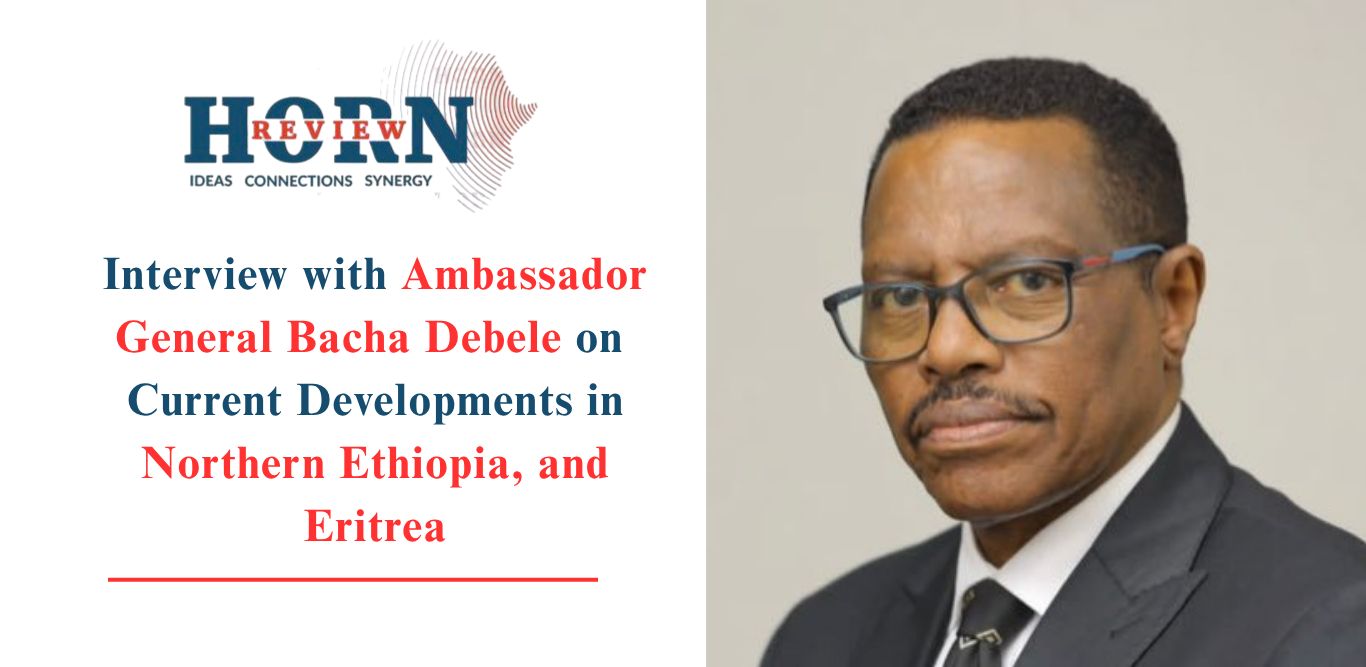
The Horn of Africa stands at a precarious inflection point. As a new seven-group opposition coalition—dubbed Tsimdo—forms against the Ethiopian federal government, seasoned strategists are sounding the alarm on its fundamental viability. In an exclusive, wide-ranging interview with Horn Reviews, Ambassador General Bacha Debele, a veteran of Ethiopian military command and diplomatic service, dismantles the strategic logic of the alliance, exposing a web of external manipulation centered on Asmara and Cairo.
General Bacha’s assessment is unsparing: the coalition lacks the “essential attributes of a viable political or military alliance,” and its true strategic center of gravity lies not in Mekelle or Asmara, but in Cairo.
The Anatomy of a Failed Alliance: No Unity of Command, No Unity of Purpose
The emerging coalition arrays diverse actors—including the TPLF, Fano factions, and the OLA—against Addis Ababa. However, General Bacha argues that strategic convergence is absent.
“An alliance becomes strategically consequential only when its political objective, military objective, command structure, logistics, territorial calculations, and ultimate end-state converge. I do not see that convergence here.”
He identifies three fatal structural flaws undermining the coalition’s sustainability:
- Divergent Political DNA: The constituent groups emerged from fundamentally different political circumstances. Their grievances are not interchangeable, nor are their constituencies a single coherent bloc.
- Legitimacy Deficit: The TPLF’s popular mandate has “severely eroded,” while groups like Fano and the OLA have yet to articulate a “nationally inclusive political project” capable of anchoring a national alliance.
- Absence of Unified Command: Without a clearly defined chain of command or common end-state, the alliance can generate only “temporary pressure,” not sustainable strategic outcomes.
Read the full analysis on Horn of Africa geopolitical dynamics to understand the historical context of these shifting alliances.
The Puppet Masters: Isaias Afwerki and the Egyptian Calculus
General Bacha pulls no punches regarding the external architects of this instability. He identifies Eritrean President Isaias Afwerki as the primary driver (“behind this entire drama”), pursuing a “personal and regime-centric” agenda intertwined with Egyptian strategic interests.
Why Cairo is the Strategic Center
When asked why he locates the coalition’s center of gravity in Egypt, General Bacha outlines a clear geopolitical logic:
- Eritrea as Conduit: Asmara provides the regional access, training, and logistical backend.
- Ethiopian Actors as Instruments: Internal groups provide the “political and military instruments” on the ground.
- Cairo as Director: Egypt possesses the overarching strategic interest in “constraining Ethiopia’s regional position”—specifically regarding the Grand Ethiopian Renaissance Dam (GERD), Red Sea access, and the Nile Basin balance of power.
“The foundation of Tsimdo… lies neither in Mekelle nor in Asmara. In my assessment, its strategic direction comes from Cairo.”
This alignment transforms internal Ethiopian grievances into tools for a broader regional power play. Explore Egypt’s strategic interests in the Nile Basin for deeper context on this hydro-political rivalry.
The TPLF’s Dangerous Gamble: Purging Professionals for Proxy War
Perhaps the most damning revelation concerns the internal dynamics of the TPLF. General Bacha asserts the current military leadership—specifically naming Debretsion Gebremichael, Getachew Assefa, Haileselassie Girmay, and Birhane Negash (Woldemedhen)—is driving the organization toward catastrophe.
The Purge of Institutional Memory
He reveals that experienced Tigrayan military and intelligence officers—veterans of the 2020 conflict—have been recently dismissed, marginalized, or imprisoned.
“Their opposition was not simply a disagreement over personalities. They understood the military consequences of another confrontation with the federal government, and they opposed any strategic alignment with the Eritrean regime.”
This purge signals a subordination of professional military judgment to a political agenda. By silencing officers who oppose alignment with Eritrea—the very force they fought devastating wars against twice—the leadership risks turning Tigrayan youth into “instruments of the Eritrean regime.”
The Human Cost: Tigray’s Youth Cannot Pay Again
General Bacha frames this as a moral and demographic crisis. With nearly 600,000 young Tigrayans lost in the previous war, he argues the leadership has lost the legitimacy to demand another generation’s sacrifice.
“Tigrayan youth should no longer be sacrificed to cover the heinous crimes and irredeemable sins of senior figures within the TPLF… No responsible military leadership should ask another generation to pay that price for a political objective that has already failed.”
Ethiopia’s Strategic Restraint: A Calculated Decision, Not Weakness
Addressing the lack of Ethiopian military retaliation against Eritrean provocations, General Bacha reframes “restraint” as strategic discipline.
- Refusing the Bait: Ethiopia recognized that responding on Eritrea’s terms would manufacture the precise conditions Asmara seeks: internationalization of the conflict and justification for deeper proxy intervention.
- The “Last Card”: With direct provocation failing, the Tsimdo coalition represents Isaias Afwerki’s “last card,” backed by Cairo.
- Limits of Restraint: He issues a stark warning to Asmara: “A government that repeatedly tests another state’s restraint must understand that restraint has limits. If Eritrea chooses escalation, it must also be prepared to bear the consequences.”
This posture aligns with Ethiopia’s broader doctrine of strategic patience in national security, prioritizing internal consolidation over reactive external wars.
The Path Forward: Transactional Diplomacy Over Perpetual Confrontation
General Bacha concludes with a direct message to Asmara: Recalibrate or face irrelevance.
Eritrea’s future, he argues, cannot be built on the calculations of one man or the preservation of one regime. He advocates for a “disciplined policy of transactional diplomacy”—engaging neighbors based on mutual interest, sovereignty, and reciprocal arrangements (port access, trade, security) rather than proxy warfare.
“The ball is in Asmara’s court. It can pursue a working relationship with Ethiopia… or it can continue down a path that will inevitably generate pressures for political change.”
Key Takeaways: Decoding the Horn’s New Geopolitical Map
| Actor | Assessed Role | Strategic Vulnerability |
|---|---|---|
| 7-Group Coalition (Tsimdo) | Tactical pressure tool | No unified command, divergent goals, zero political legitimacy. |
| TPLF Leadership | Proxy instrument | Purged professional officer corps; lost popular mandate; aligned against Tigray’s interests. |
| Eritrea (Isaias Afwerki) | Regional Spoiler / Conduit | Regime-centric strategy; sovereignty violations; testing Ethiopian red lines. |
| Egypt (Cairo) | Strategic Architect | Uses Eritrea/proxies to constrain Ethiopia (GERD, Red Sea, Nile leverage). |
| Ethiopia (Federal Gov) | Strategic Defender | Exercising calculated restraint; preserving capability for decisive action if red lines crossed. |
Frequently Asked Questions (FAQ)
What is the “Tsimdo” coalition? Tsimdo is the label used for the emerging seven-group alliance of Ethiopian opposition forces (including TPLF, OLA, and Fano factions) arrayed against the federal government in Addis Ababa.
Why does General Bacha say the coalition is “fundamentally unsustainable”? He cites a lack of unified command, divergent political objectives among members, incompatible constituencies, and a critical legitimacy deficit—specifically noting the TPLF’s eroded support and the lack of a coherent national program from other groups.
Who does General Bacha identify as the strategic sponsor? He explicitly names President Isaias Afwerki of Eritrea as the primary actor behind the coalition, but asserts the strategic direction originates in Cairo (Egypt), which seeks to constrain Ethiopia’s regional influence.
What is happening inside the TPLF military command? According to General Bacha, the current leadership has purged, imprisoned, or sidelined veteran commanders who opposed a new war with the federal government and rejected strategic alignment with Eritrea.
What is Ethiopia’s current military posture toward Eritrea? Ethiopia is exercising strategic restraint, deliberately refusing to retaliate against provocations to avoid falling into a trap designed to justify external intervention. However, General Bacha warns this restraint has finite limits.
This analysis is based on an exclusive interview conducted by Blen Mamo, Executive Director of Horn Reviews, with Ambassador General Bacha Debele.
